THE NIBBLE BLOG: Products, Recipes & Trends In Specialty Foods


Also visit our main website, TheNibble.com.

TIP OF THE DAY: The Dirty Dozen & The Clean Fifteen

We are encouraged to eat 5 servings of fruits and vegetables daily for health and nutrition; but the items we buy are often heavily coated with pesticides residue. A quick rinse them doesn’t remove all of them; a sustained rinse under cold water with a light scrub from a vegetable brush is better. We use this special antimicrobial sponge; it’s easier to use than a conventional vegetable brush.

One reason to buy organic produce is to avoid these potentially harmful chemicals—especially for children and people with compromised health. Animal studies indicate toxicity that disrupts the normal functioning of the nervous and endocrine system, and increases risks of cancer.

Each year the Environmental Working Group releases a list of produce with the most pesticides—The Dirty Dozen—and the least pesticides—The Clean 15. Here’s the Executive Summary of the most recent report.

Pesticide residue testing data from the U.S. Department of Agriculture and Food and Drug Administration are analyzed, and result in rankings for the most popular fresh produce items. Blueberries and snap peas showed sharply different results for domestic-grown and imported. Here’s the list of the 50 most pesticide-laden fruits and vegetables.
 

THE DIRTY DOZEN

These are the results of the 2015 ranking of the produce with the greatest amount of pesticide residue. The list actually shows 15, not 12: The last three items were next in line and have been added to the list because of their popularity. Foods are listed in order of pesticide amount.

  • Apples
  • Peaches
  • Nectarines
  • Strawberries
  • Grapes
  • Celery
  •    

    Apple Varieties

    Celery Stalks With Leaves
    Top: An apple a day…is covered with residual pesticide. Photo courtesy US Apples. Bottom: Celery has more pesticide residue than any other vegetable. Photo courtesy Good Eggs.

  • Spinach
  • Sweet Bell Peppers
  • Cucumbers
  • Cherry Tomatoes
  • Snap Peas (Imported)
  • Potatoes
  • + Hot Peppers
  • + Kale
  • + Collard Greens
  •  

    Hass Avocado

    Green Cabbage
    Avocado is the fruit with the least pesticide; cabbage is the most residual-free vegetable. (Photos: Avocado Board and Good Eggs).

      THE CLEAN FIFTEEN

    These fruits and vegetables are listed in order of least residue.

  • Avocados
  • Sweet corn
  • Pineapples
  • Cabbage
  • Sweet peas (frozen)
  • Onions
  • Asparagus
  • Mangoes
  • Papayas
  • Kiwi
  • Eggplant
  • Grapefruit
  • Cantaloupe
  • Cauliflower
  • Sweet potatoes
  •  
    DOWNLOAD A POCKET COPY OF THE GUIDE AT EWG.com.
     
    _______________________________
    *A small amount of sweet corn, papaya and summer squash sold in the U.S. is produced from genetically engineered seedstock. Buy organic varieties of these crops if you want to avoid GE produce.


    Comments off

    Steamed Mussels Recipe: Moules Marinières Thai Coconut Broth

    One of our favorite bistro foods is Moules Marinières (mool marin-yair), Sailor-Style Mussels. The mussels are steamed in a flavorful broth, to which they add their briny juice.

    We recently had a pot of the classic dish at Restaurant Dominique in Greenwich Village—a handsome room with big windows facing charming West Village streets.

    We not only ate every mussel; we scraped the pot for every last bit of the divine broth. We can’t wait to go back for more mussels…and everything else on the classic bistro menu.

    There’s also a mussels restaurant in New York City that serves 21 different variations, from the classic (white wine broth with garlic, shallot, parsley) to cuisine-specific riffs.

    We’ve tried everything from Indian Moules (cinnamon, curry, garlic, star anise, white wine) to Mexican Moules (calamari, chipotle in adobo, chorizo, posoles), even Meatball Moules (meatballs, tomato, onion, garlic, pesto, Parmesan cheese).

    During our most recent mussels foray, however, we were reminded of how cramped and noisy the restaurant is; not to mention that one needs to book a table days in advance. The next day we came across the following recipe from Chef Eric LeVine, for our favorite Moules Marinières: Thai curry with coconut milk and lemongrass.

    We were hit with a blinding revelation of the obvious: We can make this at home in short order. Mussels are $4 a pound, compared with a $25 restaurant serving.

    If you don’t like Thai flavors, find a recipe for what you do like. Here’s one for classic Moules Marinières, plus how to buy and clean mussels.

    Steamed mussels are low in calories and gluten-free.

    > November 10th is National Mussels Day.

    > The year’s 56 fish and seafood holidays.

    > Below: The history of mussels.

    A Bowl Of Thai Curry Mussels

    [1] You’re half an hour away from enjoying this dish (photo © Chef Eric Levine).
     
     
    RECIPE: MOULES MARINIÈRES (STEAMED MUSSELS)
    IN THAI CURRY BROTH

    Prep time is 10-15 minutes and cooking time is 12-15 minutes.

    Ingredients For 4 First Courses Or 2 Mains

  • 8 sprigs cilantro, separate leaves and stems and roughly chop both
  • 4 cloves of garlic, sliced thin
  • 2 small shallots, sliced thin
  • ½ teaspoon whole coriander seeds
  • ½ teaspoon red chili flakes
  • 1 teaspoon zest plus 1 tablespoon juice from 1 lime
  • Kosher salt
  • 1 can (15 ounces) coconut milk
  • 1 tablespoon olive oil
  • 1 tablespoon Thai green curry paste
  • 1 tablespoon brown sugar
  • 1 tablespoon fish sauce, plus more to taste
  • 2 pounds fresh mussels (ours were from Prince Edward Island), scrubbed with beards removed
  • 1 small Thai or Serrano chile, thinly sliced
  •  
    Preparation

    1. COMBINE the cilantro stems, 2 cloves of garlic, 1 shallot, the coriander seed, chili flakes, lime zest, and a pinch of salt in a mortar and pestle. Grind into a smooth paste.

    2. SCOOP 2 tablespoons of thick cream from the top of the coconut milk into a large saucepan. Add the oil and heat over medium heat. Add the remaining garlic, shallots, and ground paste plus the green curry paste. Cook for 4 minutes.

    3. ADD the remaining coconut milk, sugar, and fish sauce. Bring to a simmer and cook for about 3 minutes. Taste and season as desired,

    4. ADD the mussels, first discarding any that are cracked or already opened. Stir, cover, and cook, shaking the pan until the mussels open. Stir in the chopped cilantro, sliced chile, and lime juice.

    5. DISCARD any mussels that haven’t opened in the pot. Divide the contents, including the broth, among two or four bowls.
     
    THE HISTORY OF MUSSELS

    Mussels as a group are hundreds of millions of years old. Bivalves—which include clams, mussels, oysters, and scallops—have inhabited the the oceans for more than 500 million years, first appearing in the middle Cambrian (about 300 million years before the dinosaurs).

    However, a disclosure: The specific modern mussel species we eat today are not quite so old!

    Early humans and proto-humans relied heavily on shellfish. Research suggests that the nutrient-rich shellfish allowed proto-humans to grow large brains, leaving the other primates behind (although primates like baboons also dig for shellfish, and macaques in Myanmar and Thailand are exceptional divers and swimmers and divers who forage along the ocean floor commonly use tools to open shellfish).

    Archaeological evidence shows that early humans harvested mussels from the shores of Europe, North America, and Asia as far back as the Paleolithic era (a.k.a. the Old Stone Age*). They were an important food source for coastal communities due to their abundance, ease of harvest, and high nutritional value.

    Around the world, archaeologists find piles and piles of mussel shells. In Scotland, many prehistoric settlements that date back more than 20,000 years are identified by the proximity of large piles of mussel shells.

    The ancient Greeks and Romans were among the first to cultivate mussels, and the shellfish became a regular feature in their diets. The Romans particularly loved them and used them in a variety of dishes.


    Raw Mussels
    [2] Wild mussels (photo © Good Eggs).

    Steamed Mussels
    [2] Into the pot (photo © Le Creuset).

    Can Of Thai Kitchen Coconut Milk
    [4] Coconut milk, a versatile and delicious ingredient (Gemini Photo).

    Cilantro & Lime Wedges
    [5] Cilantro, a Thai staple (photo © Lindsay Moe | Unsplash).

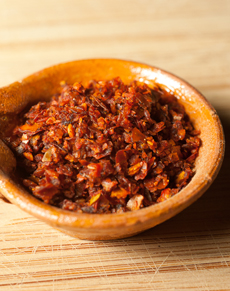
    Jar Of Chile Flakes
    [6] Red chile flakes (photo © The Spice House).

    Jar Of Thai Green Curry Seasoning
    [7] Thai green curry seasoning. You can find it at Asian food stores or online (photos #7 and #8 © Savory Spice Shop).

    Whole Coriander Seeds
    [8] Whole coriander seeds are ground with other seasonings in this recipe; but we used the ground coriander we already had in our spice rack. Not as intense as grinding whole coriander, of course.

     
    In the early 13th century, mussel farming in Europe has an interesting tale. It was supposedly invented by shipwrecked Irish sailor named Patrick Walton, who found himself on the coast of France, in the Bay of Aiguillon after losing his boat in a storm. Starving, he erected crude nets between wooden poles to catch seabirds.

    But he quickly realized that tiny seed mussels gathered on the poles and quickly fattened up, leading him to put up more poles and enjoy a diet of mussels. These wooden poles, called bouchots, are still widely used in France today.

    In the U.S. during World War II, mussels were commonly served in diners and restaurants across the country due to wartime rationing and shortages of red meat.

    Mussels are a very sustainable food to farm, and are considered a “superhero seafood” because they filter water, require no commercial feed, and even capture and store CO2 from the atmosphere!

    And thanks to aquaculture they’re catching on elsewhere.

    ________________
     
    *The Paleolithic era began around 3.3 million years ago with the first use of stone tools, and ended approximately 10,000 to 12,000 years ago with the end of the last ice age. It represents the longest period of human prehistory, during which early humans evolved from simple hunter-gatherer societies into more complex ones, and modern humans (Homo sapiens) first appeared.
     

    CHECK OUT WHAT’S HAPPENING ON OUR HOME PAGE, THENIBBLE.COM.


    Comments off

    KENTUCKY DERBY: 2016 Woodford Reserve Commemorative Bottle

    Woodford Reserve Kentucky Derby Bottle
    Equine artist Thomas Allen Pauly’s painting featured on commemorative bottle. Photo courtesy Brown-Forman Corporation.


    Can’t make it to the Kentucky Derby on May 7th? Treat yourself to a special bottle of Woodford Reserve Bourbon.

    The Official Bourbon of the Kentucky Derby, Woodford Reserve is honoring this year’s “Run for the Roses” with the release of its 2016 Kentucky Derby commemorative bottle. Woodford Reserve has been the “Official Bourbon of the Kentucky Derby” for 18 years.

    The 2016 limited-edition bottle features artwork from award-winning equine artist Thomas Allen Pauly. His painting, “Barreling Down”—two thoroughbreds and jockeys neck and neck—is featured on the front of the Woodford Reserve bottle.

    The neck band is Woodford Reserve’s signature copper color with the Kentucky Derby 142 (it’s the 142nd annual race) and Thomas Allen Pauly’s signature sealing the top of the bottle. A neck tag provides details about the product and the artist

    The commemorative liter-size bottle is available nationwide at a suggested retail price of $43.99. It also makes nice gift for a race-loving parent (think the upcoming Mother’s Day andFather’s Day).

    There’s more about the brand at WoodfordReserve.com.


    Comments off

    TOP PICK OF THE WEEK: Australian Lamb

    While Mom always served great meals, a leg of lamb was a special treat. It was the star of our yearly Easter dinner, served with mint jelly and sides of spring peas and roasted potatoes.

    When the folks from Aussie Lamb contacted us with the offer to try Australia-raised lamb, they didn’t have to twist arms. The lamb arrived frozen, but it didn’t stay that way for long. We defrosted a different cut overnight in the fridge, and the next day enjoyed an exceptional lamb dinner.

    Australia is known worldwide as a producer and exporter of high-quality lamb with a top food safety record. The lamb is 100% free-range, feeding on grass. It is all-natural, free of artificial additives including hormone.

    Naturally lean, tender and juicy with superb flavor, the lamb is aged to retain moisture and then vacuum-packed. Our “Lambathon”—three consecutive days of lamb dinners—has made us a big fan. The chops were wonderful, the rack of lamb celestial.

    All of the cuts are available, from ground meat and kabobs to shank and shoulder—for special occasions to every day. The lamb is certified Halal.

    And, it is half the price of fresh lamb (we checked prices at FreshDirect.com). No one could tell the difference.

      Rack Of Lamb
    Cooked Lamb Shank

    Top: Elegant rack of lamb for special occasions. Bottom: Luscious lamb shank for every day. Photos courtesy Australian Lamb.

     
    LAMB: A HEALTHY RED MEAT

    Lamb is a lean protein with low cholesterol. An average 3-ounce serving is just 175 calories. Lamb is an excellent source of protein, niacin, selenium and vitamin B12, and a good source of riboflavin.

    And here’s a surprise: Lamb has three times more iron than chicken and two times m ore iron than pork and salmon. While fish contains the highest level of omega-3 fatty acids, lean lamb is close behind.

    Australian Lamb is a healthy choice for any lifestyle—a naturally nutrient-rich food with high levels of zinc, Vitamin B12, iron, riboflavin and thiamin.

    In our neighborhood, it is carried by the best markets, Citarella and Whole Foods among them. Here’s a store locator.

    There are more recipes than you can shake a tail at, at AustralianLamb.com, along with cooking tips and a video library.

    The council will also send you a free cookbook.

    Could you ask for anything more?


    Comments off

    TIP OF THE DAY: Other Uses For A Paella Pan

    Shrimp Paella
    A paella pan from IMUSA USA. The delicious shrimp and bay scallop paella has lots of fresh spring peas.
     

    Today is National Paella Day, one of our favorite foods. It’s a great party dish. It can feed a crowd. It can be served at the table or can sit on a buffet. It can be a special weekend dinner. Any leftovers can be microwaved for lunch at work—but it tastes just fine at room temperature.

    Paella can be made on a stovetop or atop a grill. In fact, it was originally a worker’s meal, cooked in the field over a wood fire.

    Here’s the history of paella, and a recipe for paella on the grill.

     
    DO YOU NEED A PAELLA PAN TO MAKE PAELLA?

    Paella pans—called paelleras in Spanish—were developed to meet specific criteria for cooking the dish. If you don’t have a paella pan, you can use a large skillet, of course.

    Be sure that it’s a flat-bottomed conventional, nonstick skillet. If you want soccorat, the caramelized rice an the bottom of the pan which many people cherish, it won’t happen in a nonstick pan. (That said, there are nonstick paella pans for those who would rather not scrub the rice off the bottom of the pan.)

    The major “pro” for the skillet is that you don’t have to buy a piece of specialized cookware.

     
    Not surprisingly, there are more reasons to use a paella pan.

  • First is the diameter. Paella pans are very large so you can make a lot at once. Paella is usually served as a large family meal or for a party. It takes enough effort so that you want leftovers, too. A 15″ pan is fine for family dinners, and since the pans are made in one-inch increments (15″, 16″, 17″, 18″, etc.) the choices are staggering,
  • Diameter is important so the rice can be spread out to cook properly; a layer half an inch deep is ideal. Pans are made up to 50 inches in diameter. The jumbo ones are for restaurant use; but on a consumer level.
  • Another important criterion is even heat distribution.
  •  
    In sum, the shape was developed over time to be ideal for…cooking paella!
     
    OTHER USES FOR A PAELLA PAN

    Beyond paella, the pan can easily substitute for skillets, griddles and baking and roasting pans.

  • Make breakfast. You can cook larger amounts of bacon, eggs, and pancakes in a wok than in most frying pans and griddles.
  • Fry or sauté fish and meat. A paella pan is much larger than a standard frying pan. You can fit numerous chicken breasts, chops, fish fillets or steaks, even large steaks, without crowding the pan.
  • Make stir fries. Don’t have a wok? Use your paella pan to stir fry.
  • Bake and roast. Need an extra baking sheet or roasting pan? Bake those biscuits or roast that chicken in your paella pan!
  • Serve. If your pan looks new enough, use it as a serving tray.
  • Use as a plancha. A plancha is a flat-top metal grill that gets very hot, enabling cut-up food or small items like shrimp to cook quickly. It’s the high-heat, quick-cooking Spanish version of a wok.
  •  
    If you have other kitchen uses for paella pans, we’d love to hear them!


    Comments off

    The Nibble Webzine Of Food Adventures
    RSS
    Follow by Email


    © Copyright 2005-2026 Lifestyle Direct, Inc. All rights reserved. All images are copyrighted to their respective owners.