|
Baileys Irish Cream Liqueur had us at “hello.”
Over the years, the liqueur’s portfolio has expanded far beyond Original Irish Cream liqueur, to Chocolate Cherry, Espresso Crème, Salted Caramel, Vanilla Cinnamon and limited-edition flavors for the holidays (Pumpkin Spice, Baileys Strawberries & Cream).
Each flavor is an indulgent drinking experience…a substitute for ice cream…a treat whenever you need one…a way to wow guests.
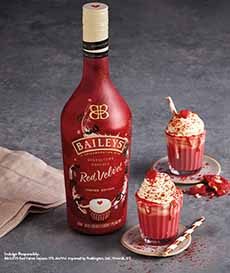
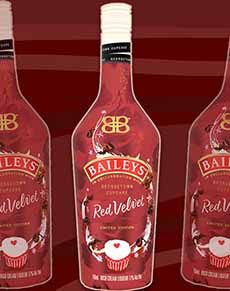
And now, for Holiday 2019, there’s a new way to wow: Baileys Red Velvet Irish Cream (photo #1).
The flavor was created in collaboration with Georgetown Cupcake, a cupcake bakery that originated in D.C. Their best cupcake seller is (drum roll…) the Red Velvet cupcake.
But the liqueur it is oh, so much better than any red velvet cupcake or layer cake.
Baileys Red Velvet liqueur has rich cocoa flavor that classic red velvet cake should have, but most rarely do (that’s our humble opinion).
It smells like cocoa, tastes like cocoa made with heavy cream, and for eye appeal, it’s a dusty rose color.
TIP: Before it sells out, buy more for Valentine gifts and Mother’s Day. Freshness is guaranteed for two years.
The 750mL bottle lists for $23.99. For more information visit Baileys.com.
USES FOR BAILEYS RED VELVET IRISH CREAM LIQUEUR
Sip it straight! This stuff is just too good to mix into cocktails, to bake into brownies or red velvet cake, or to swirl into cheesecake.
But you can:
Drizzle it over cheesecake and ice cream.
Add it to hot whole milk or half-and-half and drink it as “hot red velvet chocolate.”
Make a float, as in photo #1: Fill a small glass halfway with Baileys Red Velvet, add vanilla or chocolate ice cream, and top with whipped cream.
THE HISTORY OF BAILEYS IRISH CREAM
Baileys Irish Cream was created almost 50 years ago by Gilbeys of Ireland, part of International Distillers & Vintners (which is now part of Diageo), as it searched for something new to introduce to the international market.
Research began in 1971, and the liqueur was formulated by an internal team plus consultants.
The formulation of Baileys was created with a surfeit of alcohol from a distillery and a desire to use surplus cream from an Irish dairy business, both owned by by the parent company, Grand Metropolitan (Irish cows are known for quality of their milk).
The first trial formulation included alcohol, cream and Nesquik, the classic chocolate milk powdered drink made by Nestlé.
Finally, the approved formulation: a delectable concoction of the cream from the cows, Irish whiskey, cocoa extract, both beet and cane sugar, and some proprietary ingredients we can’t suss out (Vanilla extract? Sweetened condensed milk? A hint of coffee? None of these?).
When it was time for branding, the name was inspired by the Bailey’s Hotel in London, although the liqueur’s registered trademark omits the apostrophe. R.A. Bailey, whose signature adorns the label of the Original bottle, is a fictional character.
The liqueur was launched in Ireland in 1974, the first Irish cream liqueur on the market [source].
ABOUT BAILEYS
The Bailey’s brand is now owned by Diageo, the alcoholic beverages giant.
It’s available in 180 markets worldwide. It’s the number one selling liqueur in the world, and is currently ranked 7th among all distilled spirits sold worldwide!
|
|

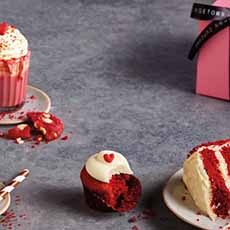
[1] Sip the pink elixir from a liqueur glass, or turn it into an ice cream float (photos #1, #3 ad #4 © Diageo).
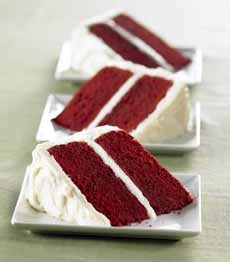
[2] Have some as a chaser after a piece of red velvet cake. Here’s the recipe from McCormick.
[3] Red Velvet: Baileys float, cookies, cupcakes, layer cake.
[4] Before it sells out, buy it now for Christmas and Valentine gifts. |