THE NIBBLE BLOG: Products, Recipes & Trends In Specialty Foods


Also visit our main website, TheNibble.com.

Guacamole Topped With Lobster Recipe: Luxury For Cinco De Mayo

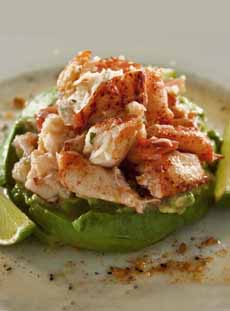
Go luxe this Cinco de Mayo with lobster-topped guacamole (recipe below).

RA Sushi, a small restaurant group in the southern U.S., has imagination and class.

With locations in Atlanta, Arizona (5 locations), Baltimore, Chicago, Florida (3), Leawood, Kansas, Las Vegas, Southern California (5) and Texas (6), sushi lovers can experience creations that the sushi bars we frequent can only aspire to.

While neither sushi nor sashmi, we picked this tasty dish as the one we’d most like to have for Cinco de Mayo:

A lettuce cup of guacamole, topped with a king’s ransom of lobster.

We’d also like to have it for Mother’s Day, Father’s Day, and, oh…any day.

You don’t even need to cook anything: Just assemble the ingredients.

We’re making ours with a garnish of salmon caviar (ikura in Japanese—photo #2). Tobiko or any whitefish caviar (they’re available in several flavors) will do just fine.

We’re also making a chunky guacamole, a better texture contrast with the lobster.

If you’re a really affluent foodie, sturgeon caviar is not discouraged.

You may notice the plate garnish in the photo includes herbs, spices and a drizzle of flavored olive oil. Plate garnishes add not only color and texture, but extra bits of flavor.
 
 
RECIPE: LOBSTER-TOPPED GUACAMOLE-LETTUCE CUP

  • A lettuce cup, created from pliant butter lettuce (Bibb, Boston)
  • Guacamole: your favorite recipe
  • Lobster meat
  • Lime wedges
  • Plate garnish: black or toasted sesame seeds, citrus zest, minced chives or other green herb (cilantro, parsley), red chili flakes, etc.
  • Optional garnish: caviar of choice*
  •  

    Lobster Guacamole Salad
    [1] What better topping for guacamole than this creation, from RA Sushi?

    Salmon Caviar
    [2] Salmon caviar, ikura in Japanese (photo courtesy Petrossian).


    DRESSINGS

    With flavorful guacamole, you don’t need much more than lime juice as a dressing. But for those who want more:

  • Basil-Jalapeño Dressing
  • Creamy Citrus Dressing
  • Mimosa Dressing (olive oil, champagne, orange juice)
  • Spicy Lemon Dressing
  •  
    A simple drizzle of basil olive oil with fresh lime juice is also delicious.
    ________________

    *Affordable caviar types include capelin (masago in Japanese), flying fish (tobiko in Japanese), lumpfish, salmon, trout or whitefish roe. The latter two are often available flavored, with everything from mango to truffle to wasabi. They are delicious!


    Comments off

    Healthy Toppings For A Fun, Delicious Bagel Buffet

    Bagel Buffet
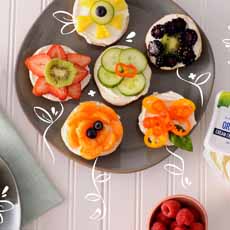
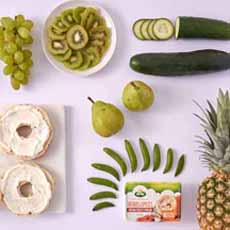
    [1] Bagel topping ideas from Arla, which makes delicious flavored cream cheeses including Herbs & Spices, Natural, Natural Light and Pineapple, with seasonal specialties (photos © Arla).

    Fruit Topped Bagels
    [2] Fruit on bagels? Sure…and you can put it on raisin bagels for a double fruit hit.

    Fruit & Vegetable Bagel Toppings
    [3] A stylish color match of fruits and veggies.

    Bagel Caprese
    [4] This bagel “Caprese” also works as holiday colors. Almonds are added for extra protein.

      If your idea of brunch includes bagels, it may also include pricey fish:

  • Herring salad
  • Sable
  • Smoked bluefish
  • Smoked salmon
  • Smoked sturgeon
  • Smoked trout
  • Smoked tuna
  • Whitefish salad
  • and other delights of the sea.
  •  
    While we love all of these, we can run up quite a tab at the cash register.

    So here’s a colorful—and less expensive—alternative that may even look like more of a feast:
     
     
    THE NEW BAGEL TOPPINGS

  • Chopped red onions
  • Cucumber slices
  • Different flavors of cream cheese
  • Fresh fruits
  • Fresh vegetables (including basil)
  • Jalapeño slices
  • Nuts and seeds
  • Olives, capers, pickled vegetables
  • Pickled vegetables
  • Scrambled eggs
  •  
    It’s easy to pull together.

    Head to the market to see what looks good. Buy a variety of bright colors, both sweet (fruit) and savory (veggies).
     
    Buy a selection of different bagel flavors, and don’t forget the cream cheese: plain plus a fruit flavor (blueberry, strawberry, etc.) and a veggie flavor (herbs, jalapeño, etc.)

    Philadelphia Cream Cheese has outdone itself with cream cheese spreads, currently:

    Sweet Cream Cheese Flavors

  • Blueberry
  • Brown Sugar & Cinnamon
  • Dark Chocolate
  • Honey Pecan
  • Milk Chocolate
  • Pineapple
  • Strawberry
  •  
    Savory Cream Cheese Flavors

  • Chipotle
  • Chive & Onion
  • Garden Vegetable
  • Jalapeños
  • Salmon
  • Spicy Jalapeño & Bacon Flatbread…
  •  
    …plus Original (plain) and a variety of protein-enhanced, reduced fat, and fat-free flavors.
     
     
    Other Spreads

    It doesn’t have to be cream cheese. Consider other spreads:

  • Guacamole
  • Hummus (many flavors!)
  • Pesto (many flavors!)
  • Spinach or Onion dip/spread
  • Taramasalata
  • Yogurt spreads
  •  
    This little post makes us so hungry, that we’re off to create our own bagel.

    Maybe jalapeño cream cheese topped with red bell pepper and pineapple.
     
     
    MORE BAGEL HOLIDAYS

  • January 15: National Bagel Day
  • February 9: National Bagel & Lox Day
  • July 26: National Bagelfest Day
  • December 11: National Have a Bagel Day
  •  
     
    > The history of bagels.


    CHECK OUT WHAT’S HAPPENING ON OUR HOME PAGE, THENIBBLE.COM.


    Comments off

    Fried Egg Breakfast Quesadilla Recipe & Quesadilla History

    We don’t know what Chef Ingrid Hoffmann is making for Cinco de Mayo, but we’re breakfasting on our adaptation of her Fried Egg Quesadillas (photos #1 and #8).

    A simple Mexican snack food. A basic Quesadilla is a Mexican snack food: a turnover (photo #1) made with an uncooked tortilla and a variety of fillings—beans, cheese, meats, potatoes, then folded and toasted on a hot griddle (comal) or fried.

    Regional variations abound.

  • In the northern states, it can be filled simply, with strips of Chihuahua cheese (queso Chihuahua—photo #3), a soft white cheese made in braids, balls or rounds and similar to mild white cheddar or Monterey Jack—all good melters.
  • The cheese originated in the Mexican state of Chihuahua. (Interestingly, in Chihuahua, where it originated, it is called queso menonita after the Mennonite community that first produced it.)
  • In central Mexico, the preference is for braided Oaxaca cheese (photo #4), some leaves of fresh epazote, and strips of peeled chile poblano.
  • A favorite filling is potato and chorizo; the “deluxe” versions contain sautéed squash blossoms or huitlachoche, the highly-esteemed corn blossom fungus.
  •  
    September 25th is National Quesadilla Day.

    The history of the quesadilla is below.

    > The year’s 25+ Mexican food holidays.

    > The year’s 116 breakfast holidays.
     
     
    RECIPE: FRIED EGG & AVOCADO QUESADILLAS

    Ingredients For 2 Servings

  • 1 teaspoon oil
  • 2 large eggs
  • 2 large whole-grain tortillas
  • 1 ripe Hass avocado, peeled, seeded and mashed
  • 1 medium tomato, sliced
  • 1 tablespoon pine nuts or pumpkin seeds (pepitas)
  • 2 tablespoons fresh cilantro, chopped
  • Optional: ½ jalapeño, seeded and thinly sliced (optional)
  • Optional: 1/2 cup grated cheese
  • Extra-virgin olive oil for drizzling
  • Kosher salt
  • Freshly ground black pepper
  • Optional garnishes: crema (sour cream), salsa
  •  
    Preparation

    There are more complex tortilla recipes, including a “sandwich” style with a top and bottom tortilla, cut into wedges (photo #2).

    It can be served with sides of crema (sour cream), guacamole, or salsa for customization.

    This recipe (photo #1) is a much quicker version.

    1. BRUSH a small nonstick skillet with the oil and heat over medium heat.

    2. ADD the eggs one at a time and cook sunny side up for about 2 minutes. Using a spatula, transfer to a plate. While the eggs are cooking…

    3. WARM the tortillas in a separate, hot skillet (no oil needed).

    4. ASSEMBLE: Spread the warm tortilla with half of the mashed avocado, tomatoes, pine nuts, cilantro, and jalapeño.

    5. TOP with an egg, drizzle with extra virgin olive oil, and season with salt and pepper. Fold over and serve.

    If you’re making multiples, quesadillas can be kept warm in 300°F oven on a baking sheet, until ready to serve.

       
    Breakfast Quesadilla
    [1] Quesadilla, loaded and ready to fold, grab and go (photos #1 and #8 © Chef Ingrid Hoffmann).

    Breakfast Quesadilla
    [2] A more formal quesadilla presentation requires a knife and fork, is made between two tortillas and then cut into triangles (photo © Cabot Cheese).

    Queso Chihuaha
    [3] Queso chihuahua from Mozzarella Company (photo © iGourmet).

    Queso Oaxaca Ball
    [4] Queso oaxaca, braided (photo © Food & Travel Mexico).

     
    Fried Egg & Avocado Quesadilla
    [8] A different view of Chef Ingrid’s fried egg and avocado quesadilla.

    THE HISTORY OF MEXICAN COOKING & THE QUESADILLA

    The quesadilla was born in New Spain (what is now Mexico) during colonial times: the period from the arrival of the conquistadors in 1519 to the Mexican War of Independence in 1821, which ended Spanish rule.
     
    For thousands of years, the local cuisine had consisted of the area’s staples: avocados, beans, cacao (available to the rich and famous), chiles, corn (made into a variety of foods, including tortillas), papayas, pineapples, potatoes (which originated in Peru), tomatoes, squash (including pumpkin) and vanilla.

    Dishes included corn pancakes; tamales; tortillas with pounded pastes or wrapped around other foods; all flavored with numerous salsas (sauces), intensely flavored and thickened with seeds and nuts.

    The Spanish brought with them wheat flour and new types of livestock: cattle, chicken (and their eggs), goat, pigs, sheep. Before then, local animal proteins consisted of fish, quail, turkey, and a small, barkless dog bred for food, the itzcuintli, a [plump] relative of the chihuahua.

    Cooking oil was scarce until the pigs arrived, yielding lard for frying. Indigenous cooking techniques were limited to baking on a hot griddle, and boiling or steaming in a pot. While olive trees would not grow in New Spain, olive oil arrived by ship from the mother country.


    Bean Quesadilla
    [5] Basic quesadilla: cheese and beans (here’s the recipe from Taste Of Home).

    Steak Quesadillas
    [6] Grilled flank steak tortillas (photo © Kings Ford Charcoal).

    Lobster Quesadillas
    [7] Going gourmet: lobster quesadillas from Mackenzie Ltd.


    The Spanish brought dairying, which produced butter, cheese, and milk.

    The sugar cane they planted provided sweetness. Barley, rice, and wheat were important new grains. Spices for flavor enhancement included black pepper, cloves, cinnamon, coriander and cilantro (the leaves of the coriander plant), cumin, garlic, oregano, and parsley.

    Almonds and other sesame seeds augmented native varieties. Produce additions included apples, carrots, cauliflower, lettuce, onions, and oranges.

    While grapes, like olive trees, would not grow in the climate, imported raisins became an ingredient in the fusion cuisine—i.e., Mexican cooking.

    (Mind you, the peasant diet was still limited to beans, corn tortillas, and locally gathered foods like avocados.)

    While the Spanish could not make wine locally, they did teach the Aztecs how to distill agave, into what was called mezcal.

    The pre-Columbian cultures of Mesoamerica brewed a fermented alcoholic beverage called pulque (think corn-based beer). With the barley they brought, the Spanish brewed their home-style beer.

    The development of the cuisine was greatly aided by the arrival of Spanish nuns [source].

    Experimenting with what was available locally, nuns invented much of the more sophisticated Mexican cuisine, including, but hardly limited to:

  • Buñuelos.
  • Cajeta, a type of dulce de leche made with goat’s milk. It is a type of dulce de leche.
  • Chiles rellenos, stuffed with beef, cheese or pork.
  • Escabeche, a variety of marinades for fish.
  • Guacamole (New Spain had the avocados, tomatoes and chiles, but Spain brought the cilantro (the leaves of the coriander plant) and the onions.
  • Mole sauce.
  • Rompope, an eggnog-like drink.
  • Lomo en adobo: pork loin in a spicy sauce. [source]
  •  
    So whence the quintessentially Mexican quesadilla?

    It’s half indigenous, half Spanish.

  • From the New World: the corn tortilla, hot sauce and other salsas.
  • From Spain, the cheese, beef-chicken-pork and the shredded lettuce…as well as the wheat for flour tortillas and the eggs for breakfast quesadillas.
  •  
    And it’s very, very popular, from Mexican street food to restaurant fare in Mexico and the U.S.


    CHECK OUT WHAT’S HAPPENING ON OUR HOME PAGE, THENIBBLE.COM.


    Comments off

    Truffles Vs. Not Truffles: What Is A Chocolate Truffle?

    Original Chocolate Truffles
    [1] The original truffles (photo © Roz Marina | 123rf).

    Classic Chocolate Truffles
    [2] The selection at Pierre Hermé, a top Paris destination.

    Flavored Chocolate Truffles
    [3] Contemporary flavors of ganache enrobed in chocolate (photo © Good Eggs).

    Royce Chocolate Truffles
    [4] Royce Chocolate, a commercial producer in Japan, prefers rectangle truffles (they’re easier to make and pack).

    Perigord Black Truffle
    [5] The Périgord black truffle, more than $1,000 per pound, inspired the naming of chocolate truffles (photo © D’Artagnan).


    May 2nd is National Truffle Day. Truffles: so delicious, somewhat confusing.

    The word truffle has several meanings in the world of confection. Like the word praline, you have to clarify what is being discussed.

    That’s because, in different regions, words mean different things; and American English incorporates used by immigrants from the world over.

    Even in northern Europe, one person’s truffle is another’s praline (which, in turn, has nothing to do with brown sugar-pecan pralines of the American South).

    We’re not going near the truffle fungus, for which the chocolate was named. But if you want to take a tour, here’s an extensive article on the world’s costliest vegetable.

    Truffles are members of the Tuberaceae family of fungi, like their cousins, the mushrooms (truffles are not mushrooms, but a different genus—Tuber for truffles, Agaricus for mushrooms).

    Truffles, the tubers, inspired truffles, the chocolates.

    You can skip to “what is and what isn’t a truffle,” below. But first:
     
     
    THE HISTORY OF CHOCOLATE TRUFFLES

    Truffles are balls of ganache; so first, someone had to invent ganache (gah-NOSH).

    According to legend, this happened in the kitchen of French culinary giant Auguste Escoffier, during the 1920s.

    One day, as his stagiaire (apprentice) attempted to make pastry cream, he accidentally poured hot cream into a bowl of chocolate chunks rather than the bowl of sugared egg for which it was destined. He yelled “Ganache!” at the boy—the French word for idiot.

    As the chocolate and cream mixture hardened, Escoffier found that he could work the chocolate paste with his hands to form a bumpy, lopsided ball. He must have had a sense of humor, since he called the creamy paste ganache.

    After rolling the new creation in cocoa powder (to contain the creamy ganache—although in doing so, one ended up with cocoa powder fingers instead of ganache fingers), he was struck by their resemblance to the luxurious truffles from the French Périgord region (photo #4). It tasted great.

    As the concept developed, different truffle textures and flavors were created by variously rolling balls of ganache in white confectioner»s sugar or finely chopped nuts. The ganache was flavored with Champagne, Cognac, raspberry and other liqueurs. For starters.

    In the classic repertoire, any other type of bonbon, including chocolate-enrobed fruit cremes and other creme centers, whipped cream-filled chocolates, and any filled chocolate that isn’t filled with ganache—is not a truffle. However…

    Today, the term truffle is often used in America to describe any filled chocolate, and it becomes very confusing. If you see a box labeled “chocolate truffles,” are you going to get round balls of ganache or ganache-filled chocolates? Or are you going to get a box of assorted cremes and other mixed chocolates?

    As Forrest Gump observed, you never know what you’re going to get. There is no standard of identity to stop any confectioner from selling whatever he or she wants as “truffles.”

    Not to mention, these days people tend to bestow names without knowing (or caring) about history and accuracy. Is this a serious problem?

    No, but it does a disservice to whomever sees different terms and tries to figure them out. We’re one country, we should have one standard. E trufflis unum.
     
     
    SO WHAT IS A CHOCOLATE TRUFFLE?

    What Is A Truffle

  • Balls of ganache, coated classic-style, or enrobed in chocolate.
  • Ganache in other shapes (rectangles, squares—see photo #3), with a powdered or hard chocolate coating.
  • Modern truffles can be coated in the classic powders (cocoa, nuts, sugar) or modern spice trends (curry, peppercorns, sea salt, paprika etc.)
  • They can be enrobed in hard chocolate, known as couverture chocolate; or used to fill chocolate shells (see MODERN TRUFFLES), below.
     
    The commonality, regardless of shapes, flavor or coating, is ganache.
  •  
    What Is Not A Truffle

    Anything else, including fruit cremes and other creme centers, whipped cream-filled chocolates, and any filled chocolate that isn’t filled with ganache.

    Now, this pronouncement here doesn’t stop any confectioner from selling whatever he or she wants to call “truffles.”
     
     
    MODERN TRUFFLES

    In 1912, the Belgian chocolatier Jean Neuhaus invented the first hard chocolate shell, enabling the production of hard chocolates with soft centers.

    While he called them pralines (see the discussion of this term), and it became the term used in Belgium, French and other chocolatiers referred to them as truffles because the early chocolate shells were filled with ganache.

     
    As words evolve, the term truffle is often used in America to describe any filled chocolate, and it becomes very confusing: chocolate cremes or assorted chocolates, e.g., would be more accurate. If the term is applied to a filled, hard-shell chocolate, the use should be limited to round shells filled with ganache.

    But the good news in truffledom is the explosion of flavors, based on America’s greater foray into international cuisines.

    Over the last few decades, the classic European flavors paired with chocolate—berry, citrus, coconut, coffee, nut—has been augmented with trending flavors such as pumpkin and salted caramel.

    White chocolate ganache was created for variety, and as a carrier for flavors that didn’t mix as well with milk and dark chocolate ganache.

    Then, there are the global flavors that may sound unusual but are actually delicious fusion with chocolate.

    Today’s chocolatiers can roll their balls of ganache—or infuse the ganache itself—with spices such as curry, flavored salts, paprika peppercorns…or teas such as Earl Grey, jasmine and matcha…or anything they like. The Smokey Blue Cheese Truffles from Lille Belle are outstanding!


    LINDOR FROM LINDT: AMERICA’S FAVORITE TRUFFLES

    Rodolphe Lindt of Switzerland, one of the most famous chocolate-makers of his day (1855-1909), created the technology to turn hard chocolate into creamy chocolate (called conching).

    Before then, chocolate was roughly-hewn, as it were: not the creamy, smooth, melt-in-your-mouth chocolate we know today.

    Lindt’s conching technique enabled the manufacture of a superior chocolate, with finer aroma and texture.

    His “melting chocolate,” as it was known, soon achieved fame, and contributed significantly to the worldwide reputation of Swiss chocolate.

    His company merged to become Lindt & Sprungli.

    The Lindor line of truffles was introduced in 1949. A hard chocolate shell enrobes a smooth, melty filling: currently 20 flavors of fillings, plus seasonal varieties.

    The shells are in your choice of dark, milk or white chocolate.

    Once you bite into the shell, the creamy filling starts to melt onto your tongue. If this sounds good to you, head to your nearest retailer, or to Lindt USA.
     
    Lindt Chocolate Shops

    One of the most memorable chocolate “field trips” you can take is to a Lindt Chocolate Shop.

    It’s like Chocolate Disneyland—so many different types of chocolate, so many different flavors, so much you haven’t seen elsewhere.

    You don’t know where to head first!

    Lindt operates more than 50 U.S. retail stores, including Lindt Chocolate Shops, Lindt Outlets, Lindt Chocolate Drinks Bars, and Lindt Factory Outlets.

    You get to try before you buy, and buy you must! Everyone who eats chocolate will want a box or bag.

    Here’s a store locator.
     
    You can buy single flavors or assortments; online as well, and at retailers nationwide.
     
     
    HAPPY NATIONAL TRUFFLE DAY!
     
     
    > SPEAK “CHOCOLATE” LIKE THE EXPERTS <
     
     
    > THE HISTORY OF CHOCOLATE <


    Lindor Assorted Truffles
    [6] A bag of assorted Lindor Truffles (photos © #6, #7, and #8 © Lindt.

    Lindor Chocolate Truffles
    [7] Open the wrapper and gaze fondly.

    Lindor Chocolate Truffles
    [8] Here’s what the truffles look like cut in half.


    CHECK OUT WHAT’S HAPPENING ON OUR HOME PAGE, THENIBBLE.COM.


    Comments off

    TIP OF THE DAY: Celebrate Cinco De Mayo With Tres Leches Cake

    Plain Tres Leches Cake
    [1] Basic tres leches cake with added rum. Here’s the recipe from Bake Or Break.

    Tres Leches Cake With Fruit
    [2] Add some fruit garnish. Here’s the recipe from Renee’s Kitchen Adventures.

    Chocolate Tres Leches Cake
    [3] Go chocolate, with this recipe from The Domestic Rebel.

    Raspberry Tres Leches Cake
    [4] Go fancy for a special occasion. Here’s the recipe from Vika’s Home Goods.


    First: There’s a recipe for Tres Leches Cake below, Caramel Coconut Tres Leches Cake.

    Tres Leches cake is a vanilla sponge cake that is baked, perforated and soaked in three different milk products: evaporated milk, sweetened condensed milk and whole milk. The cake absorbs the milks, making it moister and richer.

    It is then frosted with whipped cream or meringue, and often garnished with caramel, chocolate, coconut, liqueurs, nuts and tropical fruits. It’s not your grandmother’s sponge cake.
     
    Tres Leches has been a favorite cake for celebrations throughout Central America since at least World War II era, and become popular in the U.S. at the end of the 20th century (Jenna Bush Hager served it for her wedding cake).
     
    It is kin to other sponge cakes and angel food cakes, which are light and airy because they use beaten eggs to rise. Chiffon cake and génoise are two you may be familiar with. Here are:

    > The different types of sponge cakes.

    > The different categories of cake.

    > The history of cake.
     
     
    THE HISTORY OF TRES LECHES CAKE

    Popular in Central America since the 19th century, pastel de tres leches (pastry with three milks)

    While the origin lacks clean documentation, food historians believe that tres leches cake most likely originated in Nicaragua in the early 1900s. The recipe was printed on the label of sweetened condensed milk cans to spur sales of the product.

    A number of recipe sources place the origin of the tres leches cake in Nicaragua, born from a recipe on the label of Nestle’s sweetened condensed milk. (More than a few recipes, from cheesecake to Chex Party Mix and Rice Krispies Marshmallow Treats, began in the development kitchens of manufacturers to promote more uses for their products.)

    Some sources say the recipe dates to 1875—but that’s the year Nestlé began distributing its condensed and evaporated milks, and seems to soon (their original purpose was to provide milk in areas where fresh milk was not available).

    Nestle Mexico cannot confirm a date, but did say that the company had published a recipe for Tres Leches Cake on the labels of milk cans sold in that country, and that the firm began manufacturing milk products in Mexico around World War II.

    Whatever the truth, “soaked” cakes had been a European tradition since medieval times: British rum cake, trifle, and fruitcake; Italian zuppa inglese and tiramisu, not to mention the soaked foods of the poor, bread pudding and pain perdu (French toast).

    The missing link is believed to be a Mexican cookbook with a recipe for “antes,” a bread soaked in wine and layered with milk custard, that appeared in Mexico in the 19th century [source].

    A search of Mexican cookbooks by journalist M.M. Pack produced these related recipes:

  • Torta de leche (milk cake), cake batter poured into a pan of sweetened scalded milk, baked, and served floating in its milk sauce.
  • Antes, bread soaked in wine and layered with milk custard and fruit or nuts, which appears in Mexico in the 19th century.
  • Sopa Borracha and Ante de Almendra, two soaked cakes from Oaxaca.
  • Cookbook author Patricia Quintana, in her book The Taste of Mexico, opines that Tres Leches comes from Sinaloa, a state on the country’s west coast across from Baja. She provides a colonial-era recipe for Viceroy’s Cake: sherry-drenched layers of cake, custard, fruit, and meringue.
  •  
    And then, a cake called Tres Leches emerges.

    As the recipe traveled from region to region, local bakers added their own touches. In the rum-focused Caribbean islands, rum was added to the “soak.” In U.S. chefs added caramelized milk to create a cuatro leches cake [source].
     
     
    Modern Tres Leches Cake

    Tres Leches Cake began to get noticed north of the border toward the end of the 20th century.


  • In 1997, Rich’s, an American food manufacturer, began to sell a premixed, liquid dairy product called Tres Riches, a soak for food-service tres leches cakes.
  • Both Häagen-Dazs and Blue Bell ice cream introduced a tres leches ice cream flavor in 2003.
  •  
    And American home cooks have created every variation: Bailey’s Irish Cream, berry, chocolate, coconut, coffee, marble, peach, pecan, pumpkin, red velvet…

    Not to mention Bundts, cupcakes, naked cakes, puddings and stack cakes (the originals were sheet cakes baked in rectangular pans), iced with cinnamon cream cheese frosting, dulce de leche buttercream, even topped with a layer of flan.
     
    Many thanks to journalists M.M. Pack and Patricia Sharpe for their intrepid research into the topic. We hope they enjoyed many slices of Tres Leches Cake along the way.


    RECIPE: CARAMEL COCONUT TRES LECHES CAKE

    Ingredients For One 8″-9″ Cake
     
    Ingredients For The Cake

  • 4 eggs, room temperature, separated
  • ¾ cup flour
  • ¾ cup sugar
  • ½ teaspoon vanilla extract
  •  
    Ingredients For The Soak

  • 1 16-ounce can coconut milk
  • ¼ cup dulce de leche (or caramel sauce)
  • ½ cup whole milk
  • 1 tablespoon rum
  •  
    Ingredients For The Topping

  • 1 cup heavy whipping cream
  • ½ cup toasted coconut
  • Dulce de leche for drizzling
  •  
    Preparation

    Audra, The Baker Chick, notes that she used a 7 inch springform pan, but thinks an 8- or 9-inch cake pan works the best. “The thicker the cake, the harder it is to really get those liquids to soak. Any of those options are fine, or you could double the recipe and use a 9 x 13 rectangular pan.

    1. PREHEAT the oven to 350°F. Generously butter the inside and sides of a 8 or 9 inch round cake pan* and line with a parchment round. Sprinkle with flour- set aside.

    2. COMBINE the egg yolks and ½ cup of the sugar in a large mixing bowl. Whisk until smooth and creamy. Set aside.

    3. BEST the egg whites on medium high in a very clean stand mixer bowl or a large mixing bowl, using a whisk attachment until soft peaks form. Gradually add the sugar while the mixer runs and continue beating until stiff peaks form.


    Tres Leches Cake
    [5] Tres Leches Cake with a whipped cream top—the fourth “leche.” Here’s the recipe (photos #5 and #6 © The Baker Chick).

    Slice Of Tres Leches Cake
    Here’s a slice.

     
    4. PILE about one-third of the egg whites into the yolk mixture. Gently fold them together until smooth. Add half of the flour and continue to gently fold, being careful to not deflate the egg whites. Repeat with another third of egg whites, the rest of the flour, and the last third of whites. Do not over-mix, but the batter should be smooth, airy and fluffy.

    5. POUR the batter into the prepared pan. Bake for 20-30 minutes, or until the top of the cake springs back when lightly touched or a toothpick inserted into the middle comes out clean. While the cake is baking, combine the soak ingredients in a liquid measuring cup and set aside.

    6. RUN a knife around the edge of the cake pan, and invert the cake onto a wire rack. Peel off the parchment, then flip the cake right side up so it can cool. After the cake has cooled for about 15 minutes, use a fork to prick it all over, not forgetting the sides, edges and all over the top. Try to get pretty close to the bottom of the cake.

    7. USE a spoon or pour the soaking liquid over the cake, a little at a time, waiting for it to absorb before adding more. Use the spoon and gently press the liquid into the cake•. It may seem like a lot of liquid, but use as much as you can to soak the cake.

    8. CHILL the cake in the fridge for an hour or more, to really let the flavors soak and set.

    9. WHIP the cream and once the cake is done chilling, dollop on the whipped cream, drizzle with extra dulce de leche and sprinkle on the toasted coconut. Store in the fridge until you’re ready to serve.

    ________________

    *Audra, The Baker Chick actually used a new syringe to inject the liquid. You can buy similar devices for shooting liquid into cakes. She says: Pull up the liquid and then literally inject it into the sides and top of the cake. It works surprisingly well.


    CHECK OUT WHAT’S HAPPENING ON OUR HOME PAGE, THENIBBLE.COM.


    Comments off

    The Nibble Webzine Of Food Adventures
    RSS
    Follow by Email


    © Copyright 2005-2026 Lifestyle Direct, Inc. All rights reserved. All images are copyrighted to their respective owners.