THE NIBBLE BLOG: Products, Recipes & Trends In Specialty Foods


Also visit our main website, TheNibble.com.

FOOD FUN: Chocolate Bacon Potato Chips Recipe


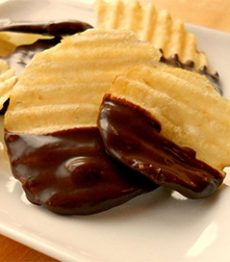
[1] Chocolate bacon potato chips, a delicious snack or dessert with ice cream (photos #1 and #2 © Castle Ranch Steakhouse [since closed]).


[2] If you prefer, you can cut crinkle chips, but they will be thicker.

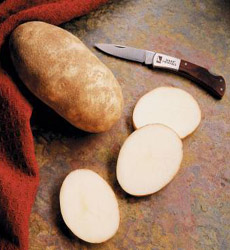
Idaho Russet Potatoes
[3] Idaho Russet Potato† (photo © Idaho Potato Commission).


[4] Huckleberries are a different species in the same genus as blueberries and cranberrries* (photo © Artem Beliaikin | Unsplash)


September 5th is International Bacon Day, a day to enjoy bacon from all over the world (here are the different types of bacon).

How about food fun with bacon?

You can have these Chocolate Bacon Potato Chips as a snack or as dessert, with chocolate or vanilla ice cream.

This recipe includes homemade huckleberry sauce, which is a berry native to Idaho (and the official state fruit).

Not everybody can get hold of huckleberries. You can substitute blueberries, which are a different genus* in the same species.

Or, use no dipping sauce whatsoever.

And, you can take the easy way out: Buy the potato chips and just make the chocolate-bacon topping.

Thanks to Idaho Potato for sending us this recipe created by Executive Chef Dean Fuller, when he was at Castle Ranch Steakhouse in Boise, Idaho (since closed).
 
 
> The Different Types Of Potatoes

> The History Of Bacon
 
 
RECIPE: CHOCOLATE BACON POTATO CHIPS

Ingredients For 30-35 Chips

  • 1 large Idaho® potato (about 12 ounces)
  • 3 bacon slices
  • 2 tablespoons brown sugar
  • ¼ – ½ teaspoon red pepper flakes
  • Idaho Huckleberry Sauce (recipe follows)
  • 8 ounces chocolate chips or chopped chocolate
  • Oil for deep frying
  •  
    For The Huckleberry Dipping Sauce

    Ingredients For 1 Cup

  • 4 ounces huckleberries
  • ½ cup sugar
  • ¼ cup water
  • 2 teaspoons lemon juice
  •  
    Preparation

    1. MAKE the Huckleberry Sauce: Place the sugar and water into a small saucepan over medium high heat. Once the mixture starts bubbling, cook for 2 minutes. Add the huckleberries and cook for 1 minute. Remove from the heat and stir in the lemon juice. Let the sauce come to room temperature, stirring occasionally.

    2. COOK the bacon. Preheat the oven to 350°F. Line a baking sheet with parchment paper. Lay the bacon slices onto the prepared pan. Sprinkle each slice with the brown sugar, then with the red pepper flakes. Bake for 10-12 minutes until they are cooked completely. Set aside to cool. Once cool, dice the bacon into ¼” pieces.

    3. HEAT the frying oil to 350°F. Slice the potato on a mandoline to about 1/10th of an inch slices. Line a baking sheet with parchment paper.

    4. BLANCH the potato slices in the oil for 5 seconds, then lay them on the prepared baking sheet in a single layer. Bake them at 350°F for 8-10 minutes until they are all golden brown. Let them cool. Meanwhile…

    5. MELT the chocolate in the microwave in 20-second intervals, stirring each time until completely melted. Dip each chip into the chocolate, covering about 85% of the chip. Place back onto the parchment-lined baking sheet.

    6. PLACE a few pieces of the bacon onto the chocolate-covered chip. Repeat until you have dipped all of the chips and added all the bacon. Cool for 1 hour at room temperature or place in the refrigerator for one minute. Place chips on a serving platter and serve with the Idaho Huckleberry Sauce.

     
    ________________

    *The Ericaceae family of flowering plants, commonly known as the heather family, includes 124 genera. The genus Vaccinium includes bilberries, blueberries, cranberries and huckleberries. Blueberries are Vaccinium sect. cyanococcus, huckleberries are Vaccinium parvifolium.

    †“Idaho Potato®” is a trademarked variety of russet potato, that ensures the potato has been grown in Idaho soil and its specific terroir. Terroir, pronounced tur-WAH, is a French agricultural term referring to the unique set of environmental factors in a specific habitat that affect a crop’s qualities. It includes climate, elevation, proximity to a body of water, slant of the land, soil type and amount of sun. These environmental characteristics gives the potato (or other agricultural product) its unique character.


    Comments off

    RECIPE: Savory Cheesecake As A First Course

    We love cheesecake. Ninety-nine percent of the time it’s a sweet cheesecake, but every once in a while we come across—or decide to bake—a savory cheesecake.

    There’s no sugar.

    Using a base of cream cheese—just like dessert cheesecake—it’s an unsweetened cheesecake that combines savory ingredients: herbs, vegetables, seafood and/or other cheeses.

    Savory cheesecakes are always a big hit, because few people have ever had one—and most people welcome a new way to enjoy cheese.

    They can combine just about any flavors, from shrimp to jalapeño to roquefort.

    Savory cheesecakes can be served as/at:

  • Party Food: Served it as a cocktail spread, with party bread and crackers.
  • Buffet: Slice the cheesecake and place on a buffet with its garnishes.
  • First Course: Serve as first course or cheese course with a mesclun salad.
  • Cheese Course: Serve it before or instead of a dessert.
  • Tea Time: Serve at afternoon tea, instead of tea sandwiches and scones.
  • Sliced Or Individual: Can be a large cheesecakes or individual cheesecakes.
  •  
    In addition to the featured Garlic & Herb recipe below, try these delicious recipes, courtesy of the Wisconsin Milk Marketing Board.

    Just take a look at the photos: You’ll want to make them all!

  • Blue Cheese Cheesecake Recipe
  • Cool & Creamy Tuna Cheesecake Recipe
  • Grand Cru Gruyère & Lobster Cheesecake Recipe
  • Nacho Cheesecake Recipe
  • No Bake Savory Basil Cheesecake Recipe
  • Provolone & Corn Cheesecake Recipe
  •  

    GARLIC & HERB CHEESECAKE WITH BOURSIN

    This is a savory cheesecake using Boursin Garlic & Fine Herbs Cheese, with a Parmesan cracker crust, topped with whipped Boursin® and a fresh tomato-olive salsa.

    Chef James Musser used the lighter Boursin Garlic & Fine Herbs Cheese instead of cream cheese.

    The crust is made from parmesan crackers, but you can use wheat crackers or any savory cracker (we used Wheat Thins).

    This is a party-size recipe, but you can cut it in half. Alternatively, since it’s made with two pans, you can freeze the second pan (here’s how to freeze cheesecake batter).

    For a first course or a cheese course, serve it with a salad lightly dressed with Dijon vinaigrette.

    For a wine pairing, try a Chardonnay or Chenin Blanc. If you prefer a red wine, try a lighter style like Beaujolais or Pinot Noir.
     
     
    Ingredients For 24 Slices

  • 18 ounces wheat crackers
  • 1¾ packed cups grated parmesan cheese
  • 1 cup unsalted butter, melted, plus extra for brushing
  • 8 packages Boursin Garlic & Fine Herbs Cheese
  • 6 eggs
  • 3 egg yolks
  • 1 cup sour cream
  • 1 cup shredded colby or mild cheddar cheese
  • ¼ cup sliced scallions
  • 1 teaspoon kosher salt
  • ¼ teaspoon black pepper
  • ¼ teaspoon white pepper
  •  
    For The Tomato-Olive Salsa

  • 2 pints grape tomatoes, quartered
  • 1 pint herb-marinated kalamata olives, sliced
  • ¼ cup shaved red onion
  • 2 tablespoons red wine vinegar
  • Salt and pepper to taste
  •  
    For The Whipped Boursin Topping

  • 4 packages Boursin Black Pepper Cheese
  • 1 cup heavy cream
  • 2 teaspoons dried herbs, such as herbes de Provence
  • Salt and pepper to taste
  • Optional garnish: microgreens, slice of red onion, halved cherry tomato (see photo #1)
  •  


    [1] Garlic-herb cheesecake made with Boursin cheese. The recipe is below (photo © Carlos Garcia | Flavor & The Menu).

    Basil Cheesecake Recipe
    [2] A no-bake savory basil cheesecake. Here’s the recipe (photo courtesy Eat Wisconsin Cheese).

    Nacho Cheesecake Recipe
    [3] Nacho cheesecake. Here’s the recipe (photo © Taste Of Home).

    Slice Of Savory Blue Cheese Cheesecake
    [4] Blue cheese cheesecake. Here’s the recipe (photo © Wisconsin Milk Marketing Board).

    Savory Goat Cheese Cheesecake With Basil
    [5] Goat cheese and basil cheesecake. Here’s the recipe from Love And Olive Oil (photo © Love And Olive Oil).

     
    Preparation

    1. MAKE the cheesecake: Preheat a convection oven to 350°F. Line the bottom of two 9-inch springform pans with parchment paper. Brush the sides and bottom with melted butter.

    2. PROCESS the wheat crackers into a fine crumb (we pulsed it in a food processor), then combine with 1 cup of the parmesan cheese and the melted butter, until moistened. Press the crumbs into the bottom of each pan and bake for 5 minutes. Remove and allow to cool. Turn the oven down to 250°F.

    3. PLACE the Garlic & Fine Herbs Boursin in a stand mixer fitted with the paddle attachment. Mix on medium speed for 3 minutes.
    Scrape down the sides and blade and add the eggs, yolks and sour cream. Mix for 3 minutes, until incorporated with no lumps remaining. Scrape the sides and blade and mix in any unincorporated cheese.

    4. ADD the colby, the remaining ¾ cup Parmesan, the onions, salt, black pepper and white pepper. Mix for 3 minutes on medium until incorporated. Divide the filling between the two pans.

    5. BAKE at 250°F for 1½ hours, until set and lightly browned on top. Remove and allow to cool at room temperature for 1 hour before wrapping and refrigerating. Once cooled…

    6. UNWRAP and run a knife around the perimeter of the cheesecakes to release from the pans. Cut each pie into 12 even slices.

    7. MAKE the Tomato-Olive Salsa: In a bowl, combine the tomatoes, olives, onion, vinegar, salt and pepper until incorporated. Allow the salsa to marinate while the cheesecakes are cooking. Taste and adjust the seasoning as needed.

    8. MAKE the whipped Boursin topping: In a food processor, combine the Black Pepper Boursin, heavy cream and dried herbs. Process to combine, then adjust seasoning with salt and pepper.

    9. TO PLATE: Rewarm the cheesecake slices in a 350°F oven for 4 to 6 minutes, until heated throughout. Place a dollop (about 1 tablespoon) of whipped Boursin on top of each. Add the Tomato-Olive Salsa to the side of each slice. Garnish the top with microgreens.
     
     
    > Discover The History Of Cheese

    > Find More Types Of Cheese In Our Cheese Glossary


    Comments off

    RECIPE: A Welsh Rarebit For National Welsh Rarebit Day


    [1] A modern execution of the Welsh Rarebit, topped sauce instead of a pourover (photo by Tristan Kenney is licensed under-CC-BY-2.0).


    [2] This upscale version uses an artisan bread loaf with the crusts cut off (photo by The Food Place.co_.uk is licensed under CC-BY-2.0).


    [3] This creation has a side of tomatoes, a fried egg and sliced avocado. Do we spy cubes of ham? That’s not a Welsh Rarebit; it’s a Welsh Meatbit—for the bit o’ meat (photo by by Tim Brauhn is licensed under CC-BY-2.0).


    [4] This version couldn’t be simpler, with a side of berries (photo by by Pod Chef is licensed under CC-BY-2.0).


    [5] A tasty execution of toast, tomatoes and lots of sauce (photo © Wisconsin Milk Marketing Board).


    [6] A Buck Rarebit, topped with an egg (photo by Tubblesnap is licensed under CC-BY-2.0).


    [7] An “Irish Rarebit” turns the cheese sauce green with lots of herbs (photo by Brian Fling is licensed under CC-BY-2.0).


    [8] How classy has Rarebit become from its peasant origins? It’s sold in jars at tony Fortnum & Mason (photo by Viv Lynch is licensed under CC-BY-2.0).


    September 3rd is National Welsh Rarebit Day, but it’s a misnomer, as you’ll see in the next section.
     
     
    THE HISTORY OF WELSH RAREBIT

    The simple dish of melted cheese over toasted bread—and possibly some beer or ale—was originally called Welsh Rabbit.

    It was so named because it was a meal for poor families who had no meat.

  • It was a dinner substitute when the man of the family had been unsuccessful in hunting down a rabbit.
  • In town, there was no hunting and meat came from the butcher. Poor people could not afford a rabbit, or even a chicken—much less beef or pork.
  •  
    Perhaps ironically, perhaps hopefully, it the dish was called a rabbit. Certainly, no one would refer to a mean meal of toasted stale bread topped with a sauce of melted cheddar bits as a “rare” bit.

    The earliest known use of the term “Welsh Rabbit” was in 1725.

    The misnomer, rarebit, is first noted 60 years later, in 1785.

    Why a misnomer? The word “rarebit” has no meaning beyond referring to this dish.

    Was “Rarebit” made up on purpose, was it a typo, or did someone simply mis-year “rabbit?”

    We don’t know.

    So “rarebit” it remained. It’s now a traditional British dish, available everywhere from pubs and finer restaurants alike (photo #2)—with a pint of beer or ale, of course.

    The modern cheese sauce is more tasty than the original, flavored with not only beer or ale, but with Worcestershire sauce, cayenne, mustard and paprika—ingredients unknown to a poor family (and Worcestershire sauce not invented until 1837).

    Sometimes an egg is served atop the Rarebit, and then it’s called a Buck Rarebit (although a “cluck” rarebit sounds more logical to us).
     
     
    RECIPE: WELSH RAREBIT

    You can use this cheese sauce on anything, from mac and cheese and Eggs Benedict to cheeseburgers and vegetables (how about a loaded baked potato?).

    Don’t just cut the cheddar into large hunks, place it in the microwave and hope for the best. Shred, grate, or chop the cheese finely. Place your ingredients into a heavy-bottomed saucepan, then use a low heat to melt the cheeses. It is very helpful here to stir constantly, especially with a whisk.

    Keep stirring and don’t allow the melting cheese to settle in any area on the bottom of the pan—it could scorch.

    Welsh rabbit is similar to fondue, except that the melted cheese is poured over toast instead of dipping bread chunks into a pot of melted cheese.

    Ingredients For 2 Servings (2 Slices Each)

  • 2 tablespoons butter
  • 2 tablespoons all-purpose flour
  • 1/3 cup milk
  • 1/2 cup beer or ale
  • 1 teaspoon dry mustard
  • 1/4 teaspoon each cayenne pepper and paprika
  • 1 teaspoon Worcestershire sauce
  • 1-1/2 cups sharp Cheddar, shredded
  • 1 egg yolk
  • 4 slices bread for toast
  • Optional: sliced tomato
  • Optional garnishes: fresh snipped chives, parsley or thyme
  •  
    Variations

    Cheddar was most common in poor households, but you can afford any cheese you like. In fact, you can:

  • Vary The Cheese: You can use any semi-hard cheese, or a blend of cheeses. Like fondue, Welsh rabbit is a great way to use up scraps of cheese. If it’s a blend, you can even add softer cheese.
  • Vary The Alcohol: Instead of beer or ale, use white wine. You can also add Kirschwasser* along with the wine, as is done with fondue.
  • Add Herbs To The Sauce. Any herb or combination of herbs will enhance the sauce. If you like heat, add chiles, too; or more cayenne.
  • Make A Playful Sauce. Add sliced olives or sweet gherkins, diced pimento or artichoke hearts—whatever.
  • Vary The Bread: You can (and should!) use artisan bread. We like a rustic country loaf; although semolina and raisin or raisin-nut bread elevate the dish, indeed. Perhaps an English muffin?
  • Add Vegetables. Top the bread with tomatoes, broccoli florets, kale, sliced baby potatoes, whatever you like. Then pour the sauce over them.
  • Add Bitter Greens: Arugula or watercress in a Dijon vinaigrette is an excellent counterpoint to the richness of the cheese.
  • Add A Side Salad: A salad dressed in vinaigrette .
  • Add An Egg: Atop the cheese, a fried egg turns the Welsh Rarebit into a Buck Rarebit.
  • Add Fruit: A side of sliced apples or grapes is a different variation of “cheese and fruit.”
  • Serve With Toasted Baguette & Crudités: Instead of pouring over toast, use the cheese sauce to dip small toasts and raw vegetables.
  •  
    Preparation

    1. PREPARE THE TOAST. If you’re not using artisan bread, try rye toast or whole grain toast because of the added flavor; but use whatever bread you have.

    2. MAKE THE ROUX. Melt the butter in a saucepan over low heat; whisk in the flour until smooth and simmer the roux for two minutes.

    3. ADD THE LIQUIDS. Whisk in the milk, then the beer. You can use leftover beer: The effervescence cooks out. The more flavorful the beer, the better the dish.

    4. ADD THE SEASONINGS. Add cayenne, mustard and paprika one at a time, whisking until smooth. Add the Worcestershire sauce and whisk to combine.

    5. ADD THE CHEESE. Whisk in the cheddar, 20% at a time, and blend until smooth.

    6. ADD THE YOLK. Remove the pan from the flame; whisk in the egg yolk for extra richness and body.

    7. PLATE. Place two pieces of toast on each plate. Top with tomato slices. Pour the cheese sauce over toast. Garnish with herbs.

    Who needs a real rabbit: This “poor man’s supper” is delicious!
     
     
    > Find More Types Of Cheese In Our Cheese Glossary
     
     
    > Discover The History Of Cheese


    Comments off


    © Copyright 2005-2026 Lifestyle Direct, Inc. All rights reserved. All images are copyrighted to their respective owners.