|
Updated September 2026
September is California Wine Month, and one of California’s most exciting wines is Zinfandel.
Some of the world’s best Zinfandel comes from California, so we made a point of trying several we hadn’t had before.
You’ll see some of them in the photos. Each was distinctive and wonderful.
And we don’t have to wait long for an occasion to try more. National Zinfandel Week is the third week in November and National Zinfandel Day is the third Wednesday in November.
And Zinfandel is a great pairing with Thanksgiving turkey. Plan to open a bottle!
> What is Zinfandel?
> What is White Zinfandel?
> Ridge Zinfandel: the benchmark for great Zin.
> Other top Zinfandels.
> Food pairings with Zinfandel.
> Zinfandel in other countries.
> The history of Zinfandel.
Elsewhere on The Nibble:
> The year’s 25 red wine holidays.
> The year’s 22 white wine holidays.
1. WHAT IS ZINFANDEL
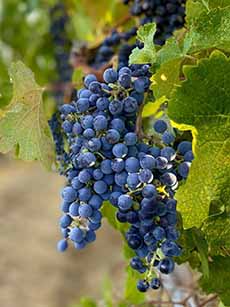
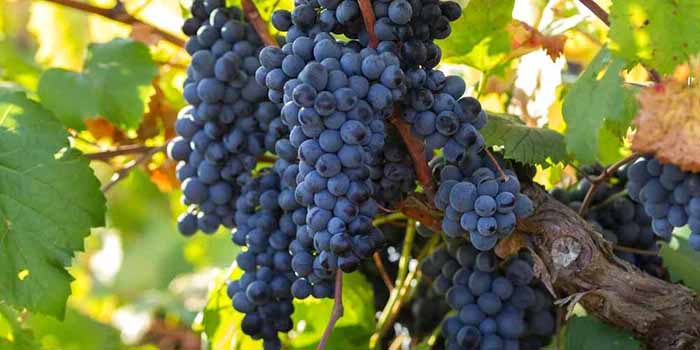
Zin, as it’s called for short, is a black-skinned wine grape (photo #6) that produces a robust, bold and spicy red wine that can stand up to the most robust and rich foods.
While the Zinfandel grape is only grown in some 10% of California vineyards, one of the Zins, made by Ridge Vineyards near Santa Cruz, California, is known the world over.
Zinfandel grapes have a high sugar content that enables the wine to be fermented into higher levels of alcohol, the best frequently reaching 15.5% A.B.V.
The taste of the Zin depends on the ripeness of the grapes from which it is made and the microclimate in which it is grown.
- Red berry fruit flavors like raspberry predominate in wines from cooler areas.
- Blackberry, anise and pepper notes are found in wines made in warmer areas.
Classic California Zinfandel is defined by ripe, plush, jammy fruit, higher alcohol, generous oak aging, and a full-bodied mouthfeel.
- Dark Fruit Profile: Ripe to overripe dark fruits—think blackberry jam, stewed plums, sweet black cherries, and raisin notes.
- High Alcohol Level (ABV): Typically ranging from 14.5% to 15.5%+ ABV, the alcohol provides noticeable warmth (“heat”) on the palate and a round, viscous body.
- Aging In Oak: Substantial aging in American or mixed French oak imparts distinct aromas of vanilla, sweet tobacco, coconut, cinnamon, and baking spice.
- Moderate Tannins & Acidity: The wines have medium-to-low acidity and smooth tannins, making the wine approachable and lush when young.
2. WHAT IS WHITE ZINFANDEL?
Popularly-priced White Zin was the darling of 1980s and 1990s wine sales—and a punch line among serious wine drinkers.
The wine was created by accident at Sutter Home Family Vineyards in 1975‡, when the fermentation of a vat of Zinfandel suddenly stopped in the middle (a “stuck fermentation”), leaving wine with a pink shade.
The winemaker tasted it, and found it to be like a semi-sweet rosé. He named the blush-style (i.e. pinkish) wine White Zinfandel.
It subsequently had six times the sales of his Red Zinfandel (a function of America’s sweet tooth), and the California blush wine craze was on.
At its peak in the mid-1990s, White Zinfandel accounted for more than 20% of all California wine sold by volume, far surpassing traditional red Zinfandel and even Chardonnay.
While mass-market brands like Sutter Home, Beringer, and Barefoot still produce millions of cases of sweet, inexpensive White Zin, the category has contracted largely because subsequent generations pivoted heavily toward dry Provence-style rosé wines, leaving the sweet White Zin behind.
There Is Quality White Zin
These Zin makers produce a quality White Zinfandel that will blot out memories of the vapid White Zins. Look for:
- Martha Stoumen Wines: Zinfandel rosé / white Zin
- Monte Rio Cellars: Dry White Zinfandel
- The Prisoner Wine Company: Saldo White Zinfandel
- Turley Wine Cellars: White Zinfandel (Dry Rosé)
Also take a look at Bedrock Wine Co.’s Ode to Lulu Rosé—not Zin but a rosé made from old-vine Mourvèdre, blended with Carignan and Grenache (a traditional Southern Rhône blend).
3. RIDGE VINEYARDS ZINFANDEL
The Zinfandel we like best is produced by Ridge Vineyards, headquartered in Cupertino, California. They have numerous vineyards in northern California, and they’ve been producing Zinfandel since 1964. (That first vintage was made from 19th-century vines at the Pichetti Ranch, located near the base of the Monte Bello Ridge.)
A collector’s wine, it is made to age for 10 to 20 years, and ideally not opened until 5 to 8 years after the vintage date. The best wines in the best years will be exciting at 15 or 20 years of age.
The winery focuses on single-vineyard bottlings, with each vineyard’s Zin displaying the unique qualities of its terroir*.
Ridge has some 20 different Zinfandel vineyards†. Some produce full-bodied wines, others are medium-bodied. Each vineyard’s harvest is labeled with its vineyard’s name. You don’t buy “Ridge Zinfandel,” but Ridge Geyserville, Ridge Lytton Springs, Ridge Paso Robles, and so on.
You can see all the vineyards on the company website.
We could tell you that two of our favorite vineyards are Geyserville and Lytton Springs (alas, we don’t encounter a lot of Paso Dobles)—but why drive the prices up even more?
The signature wine of Ridge is not a Zin, but the world-renowned Ridge Monte Bello, a Bordeaux-style blend of Cabernet Sauvignon mixed with varying percentages of other grapes grown in the same location: usually Merlot, Petit Verdot, and occasionally, Cabernet Franc. It’s been made since the winery opened in 1962 (photo #7).
Monte Bello is simply splendid, a wine ready for long aging. Just about every wine collector wants it. Older wines can be found on fine wine exchanges, online wine auction houses, or rare wine merchants.
- The 2013 vintage currently sells for $399.99 per bottle.
- We found the 2014 for $185 to $290 (you have to check webites and auctions—it’s no longer in stores).
- You can find the 2016 vintage for $224.94.
- The current vintage, 2022, sells for $299 on the Ridge website—and it won’t be ready to drink for years.
(Note that these are point-in-time market prices, in effect when we updated this article in September 2026.)
A good vintage can be laid down for several decades, and still show its great structure, complexity, and balance.
Pardon our digression; now, back to the Zins.
4. OTHER TOP ZINFANDELS
While Ridge Vineyards is a benchmark for balanced, site-driven Zinfandel, other prestigious California producers showcase the grape’s diverse expressions.
Styles range from historical old-vines to modern, low-intervention styles.
The Old-Vine & Heritage Zins
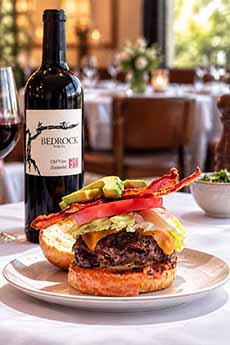
- Bedrock Wine Co. (Sonoma Valley): Complex, structured, and terroir-focused heritage wines from pre-Prohibition vineyards. Look for the Bedrock Heritage, Monte Rosso, and Old Hill Ranch bottlings (photo #3).
- Carlisle Winery (Sonoma County): The winery specializes in small-batch, old-vine Zinfandels and mixed-blacks from sites like Papera Ranch and Montafi Ranch in the Russian River Valley. The wines are deep, aromatic, and dark-fruited with refined structure.
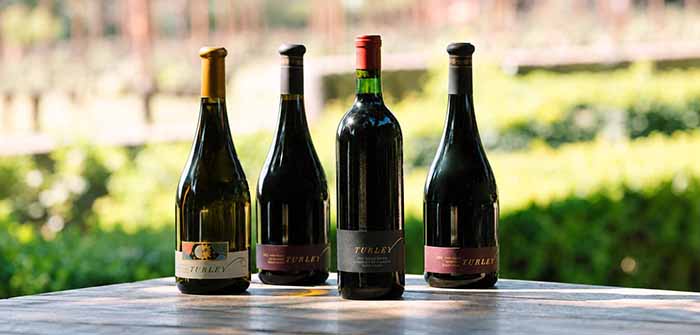
- Turley Wine Cellars (Napa Valley & Paso Robles): Turley focuses almost exclusively on historic, old-vine sites across California, producing wines that are old, plush, and opulent, yet balanced with vibrant acidity. Look for Hayne Vineyard (Napa Valley), Uberroth or Pesenti (Paso Robles), and the widely accessible Juvenile blend (photo #10).
|
|

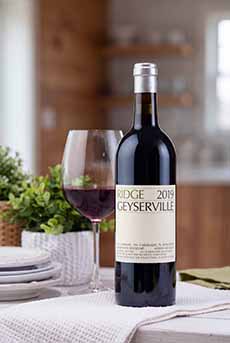
[1] A bottle and glass of Ridge Geyserville Zinfandel is a reason to celebrate. This benchmark is elegant and balanced, with great aging potential (photo © The Nibble).
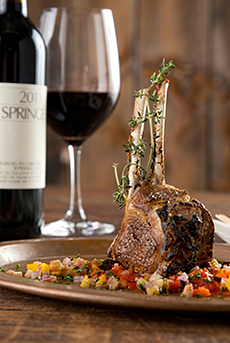
[2] Ridge Lytton Springs Zin with rack of lamb. Made with grapes from Sonoma’s Dry Creek Valley, it’s known for its dense structure, dark berry fruit, and earthy depth (photo © Ridge Vineyards).
[3] Zins are also great drinking with a deluxe burger, but this particular great wine should grace Wagyu beef or heritage lamb. Made with grapes from historic, often century-old California vineyards, it’s packed full of fruit: cherry, raspberry, blackberry, and blackcurrant (photo © The Nibble).
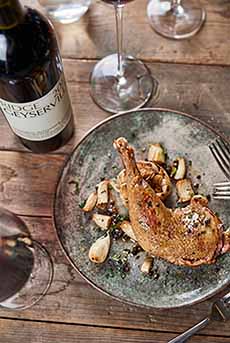
[4] Zin is great with roast poultry: chicken, duck, or turkey. Here, the lucky duck (confit) is paired with Ridge Geyserville, one of the top three Ridge Zins based on ratings from major wine critics that range from 90 to 95 points (photo © Ridge Vineyards).
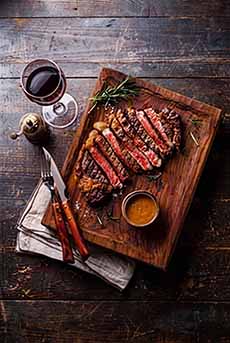
[5] You can’t go wrong drinking Zinfandel with steak. Its bold, spicy flavor profile balances the rich fat and savory char of beef (photo © Ridge Vineyards).
[6] A cluster of Zinfandel grapes: black-hued, large and juicy (photo © Turley Wine Cellars).
[7] Ridge Monte Bello, Ridge’s signature wine, is not a Zin but a Bordeaux blend. Sought after by collectors, it’s hundreds of dollars a bottle. The Zinfandels are more “accessible” (photo © Ridge Vineyards).
|
And of course, there are very good mid-prized Zins. Your local wine store can make recommendations.
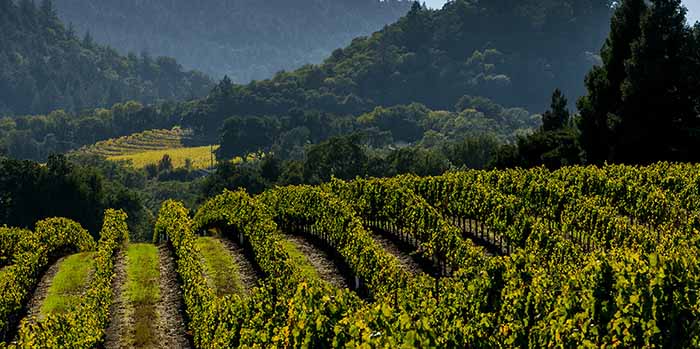
[8] A beautiful Zin vineyard: Dry Creek’s Wallace Ranch Vineyards is a shining example of the preservation of old vine Zinfandel. (photo © Dry Creek Vineyard).
Napa & Sonoma Defining Zins
- A. Rafanelli Winery (Dry Creek Valley): Classic and velvety with a refined balance of spice and brambly red fruit. The wines are highly sought after and have limited distribution.
- Limerick Lane Cellars (Russian River Valley): Fresh, high-acid, and energetic, these estate-grown old-vine Zinfandels benefit from cool coastal breezes, yielding grapes that deliver concentration without heavy heat, resulting in bright fruit notes.
- Robert Biale Vineyards (Napa Valley): Elegant, polished Zins made in the historic Napa Valley style. Famous for their flagship Black Chicken Zinfandel, and single-vineyard benchmarks like Morisoli Vineyard.
- Seghesio Family Vineyards (Sonoma County): Producing Zinfandel since 1895, Seghesio makes wines that are spicy and structured. Their Cortina (Dry Creek) and Old Vine bottlings are classics.
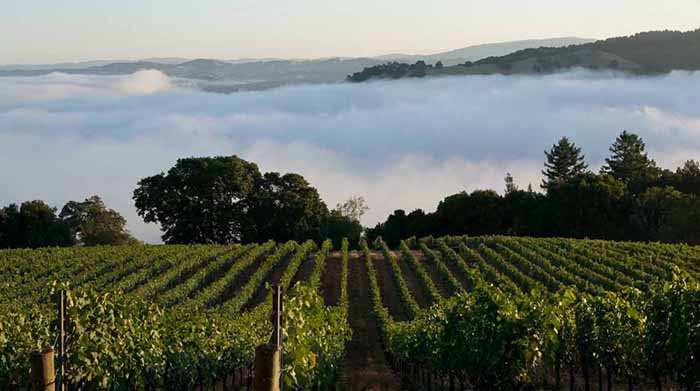
[9] Up in the clouds, one of Seghesio’s mountain vineyards (photo © Seghesio Family Vineyards).
Mountain Zins
Mountain-grown grapes are defined by their elevation, which brings extreme diurnal temperature swings and rocky, nutrient-poor soils.
These soils—rocky, sandy, or chalky earth—produce great wines because they limit excessive plant growth and force grapevines to concentrate their energy into producing high-quality fruit. Rich soils can have too much nutrition; grapevines grow a large leafy canopy with extra clusters of grapes that dilute the concentration in each cluster.
Vineyards planted in regions like Howell Mountain, Mount Veeder, Moon Mountain, or the Sierra Foothills also face high ultraviolet exposure and well-draining slopes, forcing vines to struggle and yield very small, concentrated grapes.
In the hands of the right winemaker, these Zins are powerful with dark fruit, rich spice, and long cellaring potential. Exciting on their own, they’re fascinating to taste and contrast with lower-elevation Zins.
Profile characteristics include:
- Significantly higher, firm tannic structure compared to valley-floor Zinfandel, giving them serious aging potential.
- Intense dark fruits (blackberry, wild blueberry) paired with signature notes of cracked black pepper, crushed rock minerality, pine, and cured meat (yes, that’s a reference term).
- The high natural acidity preserves freshness, despite alcohol often reaching 15%+ ABV.
Look for:
- Bella Vineyards (Rockpile AVA, Sonoma): Rocks Edge Zinfandel. Rockpile sits high above the fog line with fierce winds, forcing grapes to grow thick skins that create massive structure and concentrated fruit.
- Opolo Vineyards (Paso Robles): Mountain Zinfandel. Sourced from steep, limestone-rich hills in Paso Robles, the grapes produce bold, dark-fruited wines.
- Outpost Wines (Howell Mountain, Napa Valley): Howell Mountain Zinfandel. Sourced from iron-rich volcanic soils around 2,200 feet, the wine delivers notes of dense dark berries, game, and crushed black pepper.
- Storybook Mountain Vineyards (Mayacamas Mountains, Napa Valley): Mayacamas Range Estate. Perched at up to 1,300 feet, the wines showcase minerality, firm tannic structure, and ageability that rivals classic Cabernet Sauvignon.
- Turley Wine Cellars (Mountain Vineyards): Rattlesnake Ridge or Cedarman Vineyard (Howell Mountain). While Turley makes valley wines too, wines from their mountain sites are dense, brambly, and intensely tannic.
An interesting evening would be tasting them together.
Alternative Zins
Some winemakers have a different vision of Zin, and produce lighter styles.
These winemakers pick earlier, use minimal intervention, and aim for low extraction, resulting in translucent, high-acid, translucent reds around 12.5%–13.5% ABV. Wines to look for:
- Arnot-Roberts (Sonoma/Lodi): Kirchenmann Vineyard Zinfandel. With grapes sourced from 1930s sandy-soil vines in Lodi, the wine has a relatively low ABV, 12.5%–13%, with delicate rose petal and red berry notes.
- Birichino (Santa Cruz/Central Coast): Saint Georges Old Vines Zinfandel. The wine focuses on delicate aromatics, moderate alcohol, and high acidity rather than heavy extraction.
- Broc Cellars (Sonoma County/Lodi): Vine Starr Zinfandel. Fermented with native yeast in neutral oak and concrete, the wines are light-bodied, highly aromatic, and tart.
- Dashe Cellars (San Francisco Bay): Les Enfants Terribles Zinfandel. Made using carbonic maceration (similar to Beaujolais), the lively, crunchy, fruit-forward style meant to be served slightly chilled. (Crunchy in wine talk describes a wine with vibrant, mouth-watering acidity and a fresh, snappy texture that feels like biting into a crisp, just-ripe or slightly underripe fruit.)
- Martha Stoumen Wines (Northern California): Benchlands or single-vineyard Zinfandels. The winemaker advocates natural winemaking and organic farming, prioritizing freshness, snappy acidity, and dynamic drinkability over heavy oak.
[10] Four different bottlings of Turley Zinfandel, including an Old Vines blend made from vines aged 50 to 140 years, and a Zinfandel rosé. All Turley Zins are farmed organically (photo © Turley Wine Cellars).
5. PAIRING FOODS WITH ZINFANDEL
While a good Zin pairs with the finest steak, it also pairs with a more humble burger. With turkey, it’s a winner (we always have a bottle on Thanksgiving).
Zinfandel pairs with foods that demand full- or medium-bodied red wines. Note that different brands of Zin are light, medium or full-bodied. Most of the Ridge wines are full-bodied.
- Cheese: Zin stands up to hearty cheeses: aged Cheddar, Asiago/Parmesan, Gorgonzola/Roquefort, Gruyère, smoked Gouda and other smoked cheeses.
- Fish & Shellfish: grilled/seared fish, seafood stews and soups.
- Meats: Beef, lamb, pork, venison, sausage; and meat-based dishes like chili (great with barbecue, too).
- Pasta/Pizza: With tomato-based sauces.
- Poultry: Duck, game fowl, turkey and chicken (roasted or with a heavier sauce).
- Soups & Stews: bold and hearty recipes.
For Rosé (White) Zinfandels:
- Starters: goat cheese, feta, melon and prosciutto salad. Light salads (try watermelon, mint, and feta), salami and salty nuts.
- Spicy Foods: Thai, other Asian, Mexican, anything with chili peppers and heavy spices. Plus smoky-sweet barbecue chicken.
- Milder Mains: grilled shrimp, seafood boil, pork tenderloin.
[11] Zinfandel is genetically identical to Italy’s Primitivo grape (in photo). The variety likely originated in Croatia, where it is known as Crljenak Kaštelanski or Tribidrag. Here’s more about the grape (photo © La Cave Éclairée).
6. ZINFANDEL IN OTHER COUNTRIES
Other countries produce Zinfandel, although it often goes by different local names. Key producing countries
are:
- Australia. Australia has a small but dedicated footprint for Zinfandel, grown in McLaren Vale, Barossa Valley, and Margaret River. Winemakers often style it like a local Shiraz—rich, dark-fruited, spice-heavy, and high in alcohol. (Notable producer: Kalleske in Barossa).
- Croatia (as Tribidrag or Crljenak Kaštelanski). This is the grape’s ancestral homeland. Grown today along the Dalmatian Coast and offshore islands, Croatian winemakers have revived native plantings under their historical names. These wines have notes of vibrant red berries and Mediterranean herbs, with firm structure and high natural acidity.
- Italy (as Primitivo—photo #11), grown in Puglia, the “heel” of Italy’s boot). Primitivo tends to ripen slightly earlier than California Zinfandel. The wines are full-bodied and warm, but generally lean more savory, earthy, and mineral-driven compared to California’s sweeter, jammy fruit profile. Under European Union wine regulations, Italian producers in Puglia are allowed to label their Primitivo wines as Zinfandel for export markets (especially the lucrative U.S. market), while U.S. labeling laws traditionally keep the terms distinct**.
- Mexico. In the Valle de Guadalupe of Baja California, the warm, coastal Mediterranean climate produces plush, rustic, highly concentrated Zinfandels with distinctive salinity and ripe fruit notes.
- South Africa. A small amount of Zinfandel is grown in Stellenbosch and Paarl. South African Zinfandel yields deep, smoky, dark-berry flavors influenced by warm-climate clay and granite soils. (Notable producer: Blaauwklippen).
7. HISTORY OF ZINFANDEL
Based on archaeological studies, domestication of the wild grape vine, Vitis vinifera, occurred around 6000 B.C.E. in the southern Caucasus. A mountainous region at the intersection of Europe and Asia, it stretches between the Black Sea and the Caspian Sea.
Shortly thereafter, winemaking commenced and grape cultivation spread to the Mediterranean and surrounding regions. Different grape varieties mutated or were bred. Zinfandel’s progenitor seems to have come from Croatia.
Croatia once had several indigenous grape varieties related to Zinfandel. This diversity suggests that the grapes have been grown in Croatia longer than anywhere else—perhaps as early as 1300 B.C.E., making it one of the oldest grape cultivars grown today [source].
Known as Crljenak Kaštelanski (“black grape of Kastel,” pronounced tserl-yee-EHNAK kash-tell-ANN-skee), these wines formed the basis of Croatia’s wine industry in the 19th century.
In 2001, DNA profiling confirmed that Zinfandel (United States), Primitivo (Italy), and ancient native grapes in Croatia (Crljenak Kaštelanski and Tribidrag) are genetically the exact same grape variety.
The Primitivo grape variety was introduced in the 18th century to the Apulia region of Italy (the “heel” of the boot)—likely from Croatia.
Many of the vines of Europe were wiped out in the phylloxera epidemic of the late 19th century, spanning from the 1860s to the 1890s. It was thought to have wiped out Crljenak Kaštelanski until nine vines were discovered in 2001 on the Dalmatian coast of Croatia.
Before phylloxera, Crljenak Kaštelanski found its way to the U.S.
- In 1814, Colonel George Gibbs (1776 – 1833), a celebrated American mineralogist and mineral collector, bought a scenic tract of land in on Long Island, in a waterfront neighborhood known as Ravenswood (now part of Astoria, Queens). His plan was to grow grapes there.
- In 1829, he received shipments of different grapevines from the Schoenbrunn Collection of horticultural materials in Vienna, which documented and maintained grapevines from the Austrian Empire.
- Gibbs visited Boston in 1830 and sold some vines to local horticulturist Samuel Perkins, who began selling “Zenfendal” soon afterward [source].
- In 1830, Gibbs also supplied horticulturalist William Robert Prince, who ran the famous Linnaean Botanic Garden and Nursery in Flushing, New York, with “Black St. Peters,” a similar variety that may have come from England, where many vines have “St. Peters” in their names.
- Little is known about this vine, except that the Black St. Peters vines that arrived in California in the 1850s were the same as what became known as Zinfandel by the 1870s [source].
Zinfandel grapes were brought to California in 1852 by Frederick Macondray, a sea captain who carried on trade between California and Massachusetts and who was also involved in horticulture ventures.
Zinfandel soon was planted in Napa and Sonoma Valleys and rapidly became California’s most important wine grape. “Zeinfandall” was first exhibited at the Mechanics Institute Exhibition in San Francisco in 1858.
Much of the early planting of Zin was done by New Englanders who had come to California with the Gold Rush. They had planted 34,000 acres of Zin by 1888, making it California’s most planted wine grape of the time. [source]
(Today, the red grape plantings are 22% Cabernet Sauvignon, 18% Pinot Noir, 14% Merlot, 9%-10% Zinfandel, with lesser amounts of other grapes [source]).
Zinfandel was adopted by the Italian immigrants who arrived in the late 1800 and early 1900s who kept it alive and thriving during Prohibition with their home winemaking.
We thank them for the survival of this wonderful wine.
Many years later, in 1976, winemaker Joel Peterson established the acclaimed Ravenswood Winery in California. He chose the name specifically to honor Colonel Gibbs’ historic New York estate where American Zinfandel cultivation originally began.
Where Did The Name Zinfandel Come From?
A lot of research has been done to make a connection between Crljenak and Zinfandel. Here’s a full discussion.
The short version includes the names found in a Czech ampelography book—ampelography being an area of botany focusing on identification and classification of grapevines.
The names were Zierfandler and Zierfahndler, vines which may have been the Czech versions of Crljenak. A version of the names likely arrived with the Schoenbrunn grapevines. “Zinfandel,” or a variation of the spelling, was likely bestowed by Gibbs on the Crljenak Kaštelanski vines.
At least, that’s how we piece together the story!
*Terroir, pronounced tur-WAH, is a French agricultural term referring to the unique set of environmental factors in a specific habitat that affect a crop’s qualities. It includes climate, elevation, proximity to a body of water, slant of the land, soil type and amount of sun. These environmental characteristics give the wine (or other agricultural product) its character.
*Following the genetic breakthrough in the 1990s, the European Union updated its guidelines to allow the terms Primitivo and Zinfandel to be used interchangeably, giving Italian producers a strong marketing tool to sell their wines abroad under a name highly recognized by international consumers.
†In addition to Zin, Ridge produces an acclaimed Cabernet Sauvignon; and in small quantities, Carignane, Grenache, Petite Sirah and Syrah. Its one white wine, Chardonnay, is made in limited quantities.
‡While Sutter Home started experimenting with a dry White Zinfandel in 1972, the famous sweet, accidental style that launched the craze is attributed to the 1975 stuck fermentation.
CHECK OUT WHAT’S HAPPENING ON OUR HOME PAGE, THENIBBLE.COM.
|