THE NIBBLE BLOG: Products, Recipes & Trends In Specialty Foods


Also visit our main website, TheNibble.com.

What Is Nut Milk & How To Make Your Own Nut Milk

November 23rd is National Cashew Day. This year, take a step away from the snack nuts and take a look into the newest cashew product: cashew milk. But first, for your consideration:

> The history of cashew nuts.

> The year’s 38 nut holidays.
 
 
WHAT IS NUT MILK?

Nut milks are non-dairy milks made from ground nuts. The liquid looks like cow’s milk, hence the name.

Basic nut milk comprises nuts crushed into a paste and blended with water. Nut milk dates back centuries, if not millennia, particularly in nut-rich areas like the Mediterranean and much later, the southern U.S.

Nut milks are usually quite nutritious, protein- and nutrient-packed: another reason why people who could opt for dairy milk are attracted to them. And yet another reason: sustainability, the desire to eat more plant-based foods for not just health reasons, but environmental ones.

Many people use nut milks as a cow’s milk replacement, whether in coffee or tea, cereal, shakes, cooking, or simply as a refreshing glass of “milk.”

Nut milks are a boon for people who are dairy-allergic, lactose-intolerant, vegan or kosher. They also have fewer calories than dairy milks.

Types Of Nut Milks

After decades of soy milk as the only non-dairy milk on the shelf, the market has exploded.

Now, there are three nut milks, plus non-dairy milks that are made other plant sources. The category is called non-dairy milk, and includes:

  • Almond milk
  • Cashew milk
  • Coconut milk
  • Hazelnut milk
  • Hemp milk
  • Macadamia nut milk
  • Oat milk
  • Rice milk
  • Soy milk
  •  
    Each option has its own unique nutritional benefits, flavor, and consistency.

    Nut milks are shelf stable: They require no refrigeration until the package is open.

    Flavored Non-Dairy Milks

    In the U.S., most nut milks are available in original (plain), chocolate and vanilla. Original and vanilla are typically available in sweetened or unsweetened.
     
     
    PACIFIC FOODS’ NUT MILK

    The latest nut milk on the shelves is cashew milk.

    The people we know who consume only dairy milk find cashew milk to be creamier than most other non-dairy milks, and neutral in flavor, i.e., closer in flavor to cow’s milk*.

    We loved the samples sent to us by Pacific Foods. Their cashew milk is:

  • Sustainably sourced.
  • Fair Trade Certified.
  • Low in calories: 50 calories per 8-ounce glass of unsweetened, 70 calories for sweetened.
  •   Cashew Milk
    [1] Homemade cashew milk. You can make your own with this recipe (photo © A Family Feast).

    Carton & Glass Of Pacific Foods Cashew Milk
    [2] Pacific Foods’ cashew milk is made in Original and Vanilla, both available in sweetened and unsweetened versions (photo © Pacific Foods).

    Fruit & Cereal With Cashew Milk
    [3] A warm fruit and granola dessert with cashew milk. Here’s the recipe from Nutrition Stripped (photo © Nutrition Stripped).

  • Substitutable. Cashew milk can be substituted on a 1:1 ratio in everything from baked goods and soups to mashed potatoes. (Be sure to purchase the unsweetened variety for use in cooking.)
  •  
    The company has a portfolio of non-dairy milks, including almond, cashew, coconut, hemp, hazelnut, oat, rice and soy milks.
     
     
    MAKE YOUR OWN CASHEW MILK

    Some consumers don’t like the fact that shelf-stable milks contain preservatives and stabilizers†. They make their own nut milk from scratch.

    If the idea appeals to you (it’s an interesting for kids to experience), here’s a recipe. Look for less expensive bulk cashews.

    ________________

    *Some non-dairy milks taste like their source material, e.g., almond milk has a subtle flavor of almonds. Those who prefer almond milk find this feature to be a bonus; i.e., you get a cup of almond-accented coffee or a chocolate-almond drink.

    Pacific Foods cashew milk contains water, cashew butter (made from cashews and sunflower oil), cane sugar and less than 1% of gellan gum (a natural gelling agent made from the lily plant), guar gum (a natural thickener made from guar beans), sea salt, sodium citrate (a preservative, the salt of citric acid, derived from citrus fruits), tricalcium phosphate (a calcium salt) and xanthan gum (a thickener derived from simple sugars).


    CHECK OUT WHAT’S HAPPENING ON OUR HOME PAGE, THENIBBLE.COM.


    Comments off

    RECIPE: Cranberry-Orange Relish & Variations


    [1] Cranberry-orange relish is one of our favorite Thanksgiving sides (photo © Ocean Spray).

    Cranberry-Orange Relish
    [2] This recipe, from Healthy Seasonal Recipes, substitutes raspberry jam for some of the sugar (photo © Healthy Seasonal Recipes).

    Fresh Cranberries In Bowl
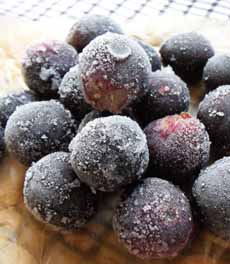
    [3] Whole fresh cranberries last for months in the fridge. We pop them into the freezer to make this relish year-round (photo © Ocean Spray).


    November 22nd is National Cranberry Relish Day. Tomorrow, November 23rd, is National Eat a Cranberry Day.

    In terms of National Cranberry Day: There is none. Not yet. Nor is there a National Cranberry Sauce Day.

    But this is as good a time as any to state the difference between the two:

  • Cranberry sauce is cooked, and usually sweeter than cranberry relish.
  • Cranberry relish is uncooked. Fresh cranberries are grated in a food processor with any variation of orange segments, nuts, citrus peel, ©and sugar.
  •  
    On to the relish. This classic cranberry-orange relish recipe from Ocean Spray is simple and delicious—and there’s no cooking required!

    We make it year-round*, and enjoy it as a condiment with grilled meats and fish, sandwiches, and as a yogurt and mayo mix-in. You can use it to top ice cream, sorbet, waffles—it’s a very flexible condiment.

    We’ve appended our own list of optional mix-ins to Ocean Spray’s recipe.

    For a formal dinner, such as Thanksgiving or Christmas, we add Grand Marnier for a subtle touch of elegance.

    Check out all of these uses for cranberry relish.
     
     
    RECIPE: OCEAN SPRAY CRANBERRY-ORANGE RELISH

    Ingredients For 3 Cups

  • 1 unpeeled orange, cut into eighths and seeded (navel or Valencia)
  • 1 12-ounce package Ocean Spray fresh or frozen cranberries, rinsed and drained
  • 3/4 to 1 cup sugar (start with the smaller amount)
  •  
    Optional Ingredients

  • 1/4 cup Grand Marnier liqueur or other orange liqueur
  • 1 unpeeled red apple, cored and quartered
  • 1 tablespoon minced fresh ginger root
  • 1/2 cup chopped toasted pecans or walnuts
  • 1-2 tablespoons freshly squeezed lime juice
  • 1 tablespoon orange marmalade or raspberry jam
  •  
    Preparation

    1. PLACE half of the cranberries and half of the orange slices in the food processor bowl. If using the apple, add half of it as well. Process until the mixture is evenly chopped, then transfer to a bowl (we pulse it 5-6 times because we like a chunky relish).

    2. REPEAT with the remaining cranberries and orange slices (and optional apple). Stir in the sugar and optional ingredient(s). If using nuts, wait until just before serving to stir them in.

    3. LET the bowl sit for 30 minutes or more to let the flavors meld. You can store the relish in the refrigerator for up to 2 weeks, covered; or in the freezer.
     
     
    > THE HISTORY OF CRANBERRIES
     
     
    ________________

    *Bags of whole cranberries last a long time in the fridge. We keep half of our stock in the freezer. Some markets carry frozen cranberries year-round.


    CHECK OUT WHAT’S HAPPENING ON OUR HOME PAGE, THENIBBLE.COM.


    Comments off

    TIP OF THE DAY: How To Keep Gravy Hot

    Yesterday we offered seven tips to fix gravy that was too thick, too thin, too salty, etc.

    So now that you have your perfect gravy, how can you keep it warm?

    It’s simple: Use your thermos!

    This tip works with gravy made in advance, as well as gravy whipped up just before serving…and the extra gravy in the pot on the stove, that you’re keeping to refill the gravy boat.

    Once your gravy is smooth and tasty as you want it, pre-warm the thermos by rinsing it with hot water. Then add the gravy.

    It will stay warm for hours!

    You can use any thermos that you have—or borrow one.

    If you have a thermos carafe that is nice enough to bring to the table, so much the better.

      Thermal Carafe

    An attractive thermos carafe can come to the table to keep gravy hot throughout the meal (photo Keynis | Amazon).


    Comments off

    TIP OF THE DAY: 7 Gravy Hacks For Thanksgiving Dinner (Or Anytime)

    Turkey Gravy
    [1] There’s nothing like a great homemade gravy. Here’s the recipe from What’s Gaby Cooking.

    Turkey Gravy
    A lighter-color gravy is made with a blonde roux. Here’s the recipe from Cook Eat Paleo.

    Turkey Gravy
    [3] For a darker gravy, use a brown roux. Here’s a recipe from Life Love Liz.


    Basic gravy is made of three ingredients: butter or other fat, stock or other liquid, and flour to thicken and bind them together. Numerous other ingredients can be used—herbs, giblets, mushrooms, onions, pan drippings, seasonings, etc.

    Sounds simple enough; yet of all the foods on the Thanksgiving table, gravy is the one that seems to give cooks the most anxiety.

    Forewarned is forearmed. Here are common gravy problems, and how to work around them.
     
     
    1. THE GRAVY IS TOO THIN

    Note that gravy thickens as it cools, so first consider if you have an issue.

    Next, you can let the gravy continue to simmer on the stove top, without a lid. For a quicker fix, use one of these starches:

  • Arrowroot: This is the best option, since arrowroot has no flavor. Blend 1 tablespoon of arrowroot per cup of gravy in a small cup or other vessel, using just enough cold water to dissolve it. Stir until dissolved into a slurry (we use a fork or a tiny whisk); then mix into the gravy, stirring constantly. When the gravy thickens, it’s ready to serve.
  • Cornstarch: Blend 1 teaspoon per cup of gravy, in cold water. Stir until dissolved; then mix into the gravy. Continue to cook and stir, to eliminate the cornstarch flavor.
  • Flour: Blend 3 tablespoons per cup of gravy, in cold water. Stir until a smooth paste, then mix into the gravy. Continue to cook and stir to eliminate the raw flour flavor.
  •  
     
    2. THE GRAVY IS TOO THICK

    Thin it with beef, chicken or vegetable broth, or water. Whisk in the liquid until you have reached the desired consistency.
     
     
    3. THE GRAVY IS LUMPY

    The way to avoid lumps is to add the flour slowly, so it doesn’t lump. Whisk the gravy constantly as you do this.

    A trick is to mix the flour with water or stock before adding it to the gravy. This enables the flour to start dissolving before being added to the gravy, and reduces the chances of lumps forming.

    If you do have lumps, however:

  • Pour the gravy through a mesh strainer into a pan. Heat gently, stir and serve immediately. Or…
  • Beat the gravy until smooth with a whisk or rotary beater. If you still have lumps, use a food processor or blender. Reheat, stirring constantly, and serve immediately.
  •  
     
    4. THE GRAVY IS TOO SALTY

    If it’s lightly oversalted, add a peeled, quartered raw potato and simmer for 15 minutes. Remove the potato and taste the gravy. If it’s still too salty:

  • Add a squeeze of lemon.
  • Add a few pinches of light brown sugar—just a few, or gravy will be too sweet.
  •  
    If it’s severely oversalted, the only solution is to increase the quantity. Prepare another batch of gravy without any salt and blend the two batches together.

     
    5. THE GRAVY COLOR IS TOO LIGHT

    There’s nothing wrong with light-colored gravy. As you can see from the photos, gravy comes in a range of colors, depending on the recipe.

    Most recipes start with a roux (ROO), made by cooking flour in the fat (pan drippings, butter or oil). The roux will be white, blonde or brown, depending on how long it is is cooked; the color determines the color of the gravy.

    But if the color of the gravy bothers you, here are two options to darken it:

  • Add a spoonful of Kitchen Bouquet, to the desired color. Kitchen Bouquet is a venerable gravy-fixer, adding caramel color and vegetable flavorings. It was one of the products featured in the United States exhibit at the Paris Exposition of 1889. Our mom swore by it; Food stylists often blend it with water to create a cup of “coffee.”
  • Add 1/2 teaspoon of instant coffee.
  •  
     
    6. THE GRAVY IS TOO GREASY

    For an immediate fix, skim the fat off the top. If it’s still greasy, top it with a slice of fresh bread to sop up the grease.

    If you have more time, chill the gravy. The fat will congeal on the top, making it easy to skim. Then, just reheat and serve.
     
     
    7. THE GRAVY COLOR IS TOO LIGHT

    While some people plan for 1/2 cup of gravy per person, we recommend that you double it: one cup per person. You don’t want to run out of gravy, and it allows a good supply for leftovers. Plus, it freezes nicely.

    Another way to plan ahead is to buy a couple of packets of McCormick turkey gravy mix. Just add water, and in five minutes you have hot gravy.

    In a pinch, make more gravy with 3 cups of chicken broth, 1 cup of white wine, 1/2 stick butter. Combine in a saucepan over medium heat, slowly whisk in 1/2 cup of flour, and season with salt and pepper to taste.
     
     
    Have other gravy tips? Let us know!


    Comments off

    TOP PICK OF THE WEEK: Cookies From Jane Bakes

    THE NIBBLE has been publishing for more than 13 years. Over those years, food companies have come to know us, and offer to send us samples of their products.

    Other companies don’t even ask: Every week, boxes of food arrive “over the transom*,” as the expression goes.

    We also attend dozens of trade shows looking for interesting products, and prowl food stores.

    Recently, on the prowl, we came across our Top Pick Of The Week, Jane Bakes. The second pick came over the transom, and the third arrived following an email pitch from the manufacturer.

    The theme of this week’s Top Pick is scrumptious cookies you should not miss! Made by in small batches by dedicated artisans, they’re also great for holiday gifting.

    The prices range from $6.99 to $15, the latter for a larger box with twice as many cookies.
     
     
    1. JANE BAKES ARTISAN COOKIES

    Jane must be some kind of sorcerer, because her cookies are magically good. They would be outstanding even if they didn’t have better-for-you ingredients.

    One substantial cookie (photo #1) has only 45-47 calories, and 1-1.4 grams of sugar. How is that possible, you’ll ask, especially when you taste them.

    More magic: We can be satisfied with one cookie. It’s hard to describe until you taste them, but our personal analogy is: Just one of Jane’s cookies is like eating a piece of cake.

    Jane developed her cookies after a run of bad luck in 2007: a house fire in February, followed by a heart attack that July and the stock market crash in September that saw her flower business tumble.

    The need for a healthier diet and a new revenue stream resulted in a small café with a focus on healthier foods—and the development of these amazing cookies.
     
    Great Cookie Ingredients

    The recipe is based on the French sablé (sandy), elegant with a unique texture. They’re:

  • High in fiber—100% whole grain, with no “whole grain flavor” (here are the flours).
  • Only a gram or so (compared to 8g for cookies of similar size), only 1 effective carb per serving. One gram has 4 calories. The Glycemic Index is 12, very diabetic-friendly.
  • Organic cage-free eggs, butter made from hormone-free milk.
  •    
    Jane Bakes Cookies
    [1] Four flavors of Jane Bakes cookies show how plump and toothsome they are (all photos courtesy Jane Bakes).

    Chocolate Chip Cookies Jane Bakes
    [2] Our new favorite chocolate chip cookie! Called Whiskey & Rye Chocolate Chip, the rye refers to rye flour and the whiskey is a splash of bourbon—indiscernible, but the alchemy produces gold.

    Double Chocolate Cookies Jane Bakes
    [3] There are three packaging options. The sleeve (in photo) works nicely for stocking stuffers and other gift giving.

     
    The sugar miracle is an ingredient new to us: Whey Low Sugar, an all-natural product that has 75% fewer calories than table sugar, and is low on the glycemic index.

    It was named “best sweetener” by the Washington Post and Southern Living, and is available at some Whole Foods stores and online.Here’s the product website. We’re heading to Whole Foods to lay in a stock.

    And here’s the complete ingredients list for these remarkable cookies.

    Great Flavors

    We bought all the conventional flavors (not the gluten-free), and can unequivocally say: Every cookie eater will be thrilled with them.

  • Coconut Caramel
  • Double Chocolate (tastes like a brownie)
  • Hazelnut & Dark Chocolate
  • Lemon Poppy
  • Raisin Oatmeal
  • Vanilla Bean
  • Whiskey & Rye Chocolate Chip (our new favorite chocolate chip cookie—there’s a splash of bourbon that is not detectable, and the rye is rye flour)
  •  
    Gluten-Free Cookies

  • Gluten-Free Amaretto & Oatmeal
  • Gluten-Free Double Chocolate
  •  
    There are three package formats: a cardboard sleeve, our favorite for gifting, for $6.99; a kraft bag, $7.99; and glass jars for $9.99.

    Run, don’t walk, to get yours at JaneBakes.com.


    Bunches & Bunches Snaps Gingersnaps
    [4] Snaps, perfection in a gingersnap (photo Bunches 7 Bunches).

    Raspberry Thumbprint Cookies
    [5] Raspberry Cave cookies, a Swedish style Americans call thumbprints. The jam is made by local artisans (photos #5 and #6 Unna Bakery).

    Unna Bakery Swedish Cookies
    [6] The Swedish-motif box is ready for gift-giving.

      2. BUNCHES & BUNCHES GINGER COOKIES<

    This artisan food business is the “side business” of a professional chef and restaurateur. They arrived over the transom, and it was a happy day for us.

    The company makes a variety of products, but the one we received that made our day was Snaps, our idea of the perfect gingersnap: a perfect combination of sugar, spice and snap.

    What else can we say, except get boxes for everyone, at Bunches & Bunches’ online store.
     
     
    3. UNNA BAKERY LOW GLYCEMIC COOKIES

    Traditional Swedish cookies from a grandmother’s recipes are always welcome.

    The ingredients are organic: flour, butter, sugar, milk, eggs, cardamom, baking powers and distilled white vinegar. Flavors include:

  • Cardamom Crisp Cookie, like soft cantucci (small biscotti), have a hint of cardamom.
  • Chocolate Caramel Cookies, topped with nib sugar.
  • Farmer’s Cookie, made with brown butter and almonds, has a charming, subtle nuttiness.
  • Ginger Snap Cookie is just right for those who prefer a lighter hit of ginger.
  • Raspberry Cave Cookie, a buttery thumbprint cookie.
  • Vanilla Dream Cookies, with an airy texture.
  •  
    The company describes the Swedish tradition:

    The Swedish tradition dictates that you should have a cup of coffee or a tea and a cookie at least once a day.

    In Sweden a “kafferep” is a women’s only social gathering that began in the mid 1800s. Women enjoyed cookies, drank coffee and spent quality time together.

    It was one of few activities of the era where women could meet without men and children present.

    The cookies were homemade, and it was important to have a nice mix of cookies at a beautifully set table—preferably with a crocheted tablecloth, flowers and nice porcelain dishes. However, the cookies were the centerpiece.

    The kafferep was the beginning of the “fika,” a little break, and the café culture that thrives in Swedish homes and cafés today.

    Historically, the cookies were enjoyed with coffee but they are excellent for your afternoon tea, to pair with wine or champagne and of course with a glass of milk

     
    We couldn’t say it better! The boxes, with pretty Swedish block prints, are just right for gifting. There’s a store locator on the website, and you can order online at UnnaBakery.com.
     
     
    OVER THE TRANSOM: MEANING

    We love this phrase, which is common in the publishing industry. It refers to an unsolicited manuscript, as opposed to the publisher asking a writer to submit an article, book, etc.

    In older times, before electric fans (much less air conditioners), doors commonly were topped with transom windows: short windows that sat on top of the door and ran the width of it (here’s an example).

    Transom windows enabled light to come in and were also important for cross-ventilation. Due to their small size and height, they maintained security and privacy. Transoms were a common feature of homes and commercial buildings before air conditioning became common, after World War II.

    The concept dates to Gothic architecture, which ruled from the 12th through 16th centuries. In architecture, a transom is a horizontal structural beam or bar that separates a door from a window above it. Look at the front door of houses you pass: Some may have transom windows that are both decorative and enable light to come in; and some still open.

    In earlier centuries when postage was expensive, writers who wished to have their work considered for publication would literally show up at the publisher’s office and toss the manuscript through the open transom. Hence: over the transom.

    Over time, mailed submissions won out; and today—no surprise—email attachments make life easier for both sides of the transom.


    Comments off

    The Nibble Webzine Of Food Adventures
    RSS
    Follow by Email


    © Copyright 2005-2026 Lifestyle Direct, Inc. All rights reserved. All images are copyrighted to their respective owners.