THE NIBBLE BLOG: Products, Recipes & Trends In Specialty Foods


Also visit our main website, TheNibble.com.

Lowfat PB2 Cashew Powder & The History Of Cashews

A Bowl Of Roasted Cashews
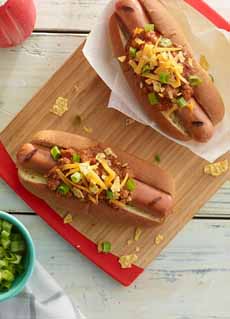
[1] High-calorie, high-fat cashews are de-fatted into less than one-third of the calories (photos © Murray’s).


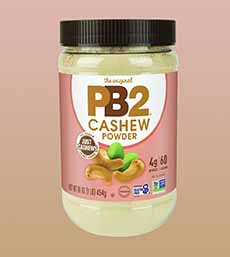
[2] A jar of PB2 Cashew Powder (photos #2 and #3 © PB2 Foods).


[3] Just add water and the powder becomes a spread.


[4] Cut the calories by using nut powder instead of nut butter in sauces and other dishes (photo © Charles Deluvio | Unsplash).


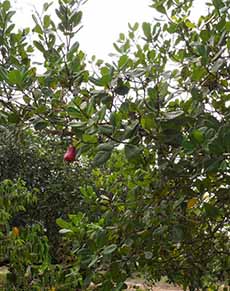
[5] A cashew tree. The nuts grow out of the red and yellow “apples” (photo © Nakupenda Garden).


Way back in 2008, we wrote about the introduction of PB2, an aromatic and tasty peanut powder made from ground roasted peanuts that have been almost 85% defatted. People who love peanut butter but not the fat had a new friend in PB2. It could be reconstituted with water to a homemade PB-like consistency; but has equal uses as powdered garnish/flavoring and a cooking/baking ingredient.

Our favorite uses are mixing with vanilla or plain yogurt, tossing into chocolate and vanilla milkshakes, adding to pancake batter, and mixing into softened vanilla ice cream to make peanut butter ice cream.

Reconstituted with water as a peanut butter substitute, you won’t mistake PB2 for the real thing, any more than fat-free milk can be mistaken for whole milk.

But it’s a nice peanut butter paste. And as a reconstituted spread, it was far superior in taste than other peanut butter substitutes we’d tried.

At 54 calories per 2 tablespoons and just 2.8g total fat, it saved calories and fat for those who can’t have one or both.

And, it’s a replacement for protein powder in a smoothie, due to the similarity in the powder consistency.
 
 
INTRODUCING NEW PB2 CASHEW POWDER

Now there’s an equivalent nut powder for cashew lovers: PB2’s powdered cashew butter. Like PB2 peanut butter, it’s a single-ingredient product: 100% all-natural cashews. Roasted cashews are pressed to remove most of the oil, and then blended into a fine powder.

The first powdered cashew product of its kind, it’s 60 calories per two tablespoons, compared to 198 calories for regular cashew butter.

With fewer calories and some 80% less fat, it’s protein packed, with 4 grams of plant-based protein per 13-gram serving, and only 2.5 grams of fat.

For a nut butter spread, just blend 2 tablespoons of PB2 Cashew Powder with 1 tablespoon of water and stir until smooth.

Next, bake with it, or mix it into foods and drinks.

All PB2 products are:

  • Without added sugar, added salt or added preservatives.
  • Certified gluten free.
  • Certified kosher by OU.
  • Non-GMO project verified.
  • Vegan.
  •  
    Check out these recipes.

    PB2 Cashew Powder is available on Amazon and other e-tailers, and at these retailers near you.

    DISCOVER MORE AT PB2FOODS.COM.
     
     
    THE HISTORY OF CASHEW NUTS

    Portuguese travelers came across cashew nuts in northeastern Brazil in 1558.

    The nuts are the fruit of the cashew tree (Anacardium occidentale, photo #4) a tropical evergreen. But there was a catch.

    The seed (the edible nut portion) is surrounded by a shell and skin that contain an allergenic oil that’s a potent skin irritant, similar to poison ivy.

    Because of the irritation, the Portuguese thought the nuts were inedible.

    But the indigenous Tupi people showed them that it was the shell and skin, and not the seeds, that were irritating. They shared how to roast the cashews to remove the irritants.

    The word cashew comes from the Tupi word acaju, their generic word for nut.

    The Tupi themselves learned to eat cashews from capuchin monkeys. The primates use primitive tools to break the shells and pick out the nuts [source].

    That’s why cashews are are the only nut sold solely unshelled!

    From Brazil, Portuguese merchants brought cashews to Goa on the southwestern coast of India, about 1560. It then spread through India.

    In the second half of the 16th century, cashews spread to Southeast Asia and Africa. Much later it reached the U.S., around 1905.

    Cashews reached the U.S. around 1905. The nuts didn’t become popular in the the western world until the mid-1920s, when the General Foods Corporation began shipping them in quantity to the U.S. and Europe.

    In 2019, four million tonnes* of cashew nuts were produced globally, with Ivory Coast and India as the leading producers. Brazil, Vietnam and regions of West Africa are also major producers.

     
    ________________

    *Both ton and tonne are units of weight, but are not the same. A ton is a British and American measure, while a tonne is a metric measure.

  • A tonne is equal to 1,000 kg. In the U.S. it may be referred to as a “metric ton”.

  • The North American ton—only used in the U.S. and Canada—is equal to 2,000 pounds, or 907.1847 kg [source].


  • Comments off

    Beautiful Cheese: Port Wine Derby Cheese From England

    There are a few cheeses that can turn a cheese plate into edible art.

    One of these is Port Wine Derby, a smooth, creamy Derby cheese marbled with an infusion of Port wine to create an exquisite deep purple pattern.

    The color and sweet blackcurrant undertones come from the Port wine, which is added to the vat to naturally blend with the maturing cheese (known as “vat made”).

    It’s made by Belton Farm in Whitchurch, a market town in the north of Shropshire, England in the Midlands region of Central England and two miles east of the Welsh border.

    The Beckett family has been making award-winning cheeses at Belton Farm since 1922. Port Wine Derby was a winner in the International Cheese Awards in 2019, the last pre-Pandemic year the show was held (the next one is in October 2021).

  • Serve it as the cheese course with a glass of Port, Zinfandel or other red wine*.
  • Enjoy as a snack with fruit and wine.
  • Serve cubes of it along with fruit (apples, grapes, pears e.g.) in a green salad.
  • Belton grates it into a cheese sauce for pasta.
  • The producer recommends a wheat beer pairing; or try a blonde/golden ale.
  • Pick a light-bodied white wine pairing, such as Pinot Gris, Sauvignon Blanc or Soave.
  •  
     
    WHAT IS DERBY CHEESE?

    Derby cheese is a mild, semi-firm cow’s milk cheese made in the rural county of Derbyshire, England since at least the 17th century.

    A traditional English-style cheese, it has a smooth texture with a mellow, buttery flavor.

    Derby is similar to its cousin cheeses Cheddar and Cheshire in taste and texture, but with a softer body and slightly higher moisture content.

    Like most of the traditional British hard cheeses, it was produced exclusively on farms and was typically sold at a younger age than its more famous cousins Cheddar and Cheshire. (Port Wine Darby is aged for four months before release; merchants can continue to age it.)

    When young, Derby is springy and mild. As it matures, subtle sweet flavors develop and the texture becomes firmer.

    BUY IT AT IGOURMET.COM
     
     
    MORE BEAUTIFUL CHEESES

  • Alp Blossom Cheese
  • Cahill’s Farm Cheddar
  •  
     
    > THE HISTORY OF CHEESE

    > THE DIFFERENT TYPES OF CHEESE

    ________________

    *Zinfandel substitutes include Cabernet Franc, Cabernet Sauvignon, Merlot, Pinot Noir, Sangiovese and Shiraz/Syrah.


    [1] Port Wine Derby, beautiful to look at, beautiful to eat (photos #1 and #4 © iGourmet).


    [2] One of the most beautiful wedges in the cheese world (photos #2 and #3 © Belton Farm).


    [3] Belton Farm also makes Sage Derby (photo © Belton Farm).


    [ ] Pair cheese with beautiful crackers, like these toasts in four flavors (shown, Apricot & Pistachio). Get them at iGourmet (photo © iGourmet).


    Comments off

    Peach Ice Cream Recipe For National Peach Ice Cream Day

    Peach Ice Cream In A Coupe Dish
    [1] Churn your own: luscious homemade peach ice cream. The recipe is below (photo © The Nibble).

    Peach Ice Cream & Granita
    [2] We combined peach ice cream with peach granita for a fancy presentation. While granita is homemade, you can substitute peach sorbet. Another elegant option: frosé—frozen rosé wine—instead of granita. Here’s the recipe (photo © The Nibble).

    Peach Ice Cream
    [3] No ice cream maker? Here’s a recipe for no-churn peach ice cream (photo © Bourbon And Honey).

    Whole & Sliced Peaches
    [4] The riper the peaches, the better. When peaches seem to be overripe, they may be just right to puree for ice cream (photo © Good Eggs).

    A Pint Of Graeter's Peach Ice Cream
    [5] Graeter’s makes a limited-edition peach ice cream each summer. Grab it while you can (photo © The Nibble).

    A Slice Of Peach Pie A La Mode
    [6] Doubly peachy: peach pie à la mode. (photo © The Nibble).

    Bols Peach Schnapps (Liqueur)
    [7] You can pour peach liqueur (schnapps) over your ice cream, serve it alongside the ice cream, or add it to a peach ice cream soda or float (photo © Bols).


    Updated July 2026

    July 17th is National Peach Ice Cream Day, and in some years it falls on National Ice Cream Day, the third Sunday in July.

    But peach ice cream is in crisis mode!

    Our favorite childhood flavor (along with pistachio), peach ice cream got nudged out of the Top 10 flavor lineup before the end of the 20th century. It was replaced by flavors such as Cookie Dough and Oreo.

    Even Talenti, which makes 51 flavors, ditched its Peach in favor of flavors like Banana Caramel Crunch, Chocolate Pretzel and Key Lime Pie.

    Ditto for Häagen-Dazs, currently selling 28 flavors in 14-ounce “scant pint†.” The company discontinued its peach ice cream as well as its peach sorbetto.

    McConnell’s likewise: 24 flavors include Cherry Cheesecake & Graham Cracker Crumble, Cinnamon & Oatmeal Raisin Cookies and Honey & Cornbread Cookies, but no more peach (take a last look at it in photo #3). Among nationally distributed brands, only Graeter’s Summer Peach, it seems, remains.

    Why? Like anything else, trends. Younger customers have never had peach ice cream. And caramel, cookies, and crunch sound better to them than fruit.

    Plus, fresh peaches are only available for four months at best (although frozen peaches work), so only smaller artisan producers tend to make it (look for Graeter’s—photo #2).

    Stymied by our inability to find peach ice cream as a summer special, we made a batch with fresh peaches. The recipe was so heavenly, we’ll be trying it with frozen peaches when the summer is over.

    Below:

    > Recipe: Peaches & Cream ice cream.

    > Toppings for a peach ice cream sundae.

    > Recipe: quick macerated fruit topping, with or without alcohol.

    > More peach ice cream recipes.

    > America’s favorite ice cream flavors.

    Elsewhere on The Nibble:

    > The history of peaches.

    > The history of ice cream.

    > The history of ice cream—longer version.

    > The history of the ice cream sundae.

    > The different types of frozen desserts: a photo glossary.

    > The year’s 50+ ice cream and frozen dessert holidays.

    >The year’s 8+ peach holidays.
     
     
    RECIPE: PEACHES & CREAM ICE CREAM

    This rich and creamy recipe delivers a “peaches and cream” flavor rather than pure peach intensity.

    It’s an extremely rich French custard recipe (or “French-style” ice cream), in the manner of Häagen-Daz, which includes eggs.

    The recipe can be used with any type of fruit, as long as you have 5 cups of purée. The proportions work for a 4-quart ice cream maker. You can cut it in half.

    When making ice cream, use very ripe fruit. Every time we see fresh peaches on sale because they’re so ripe that it’s their “last day,” we scoop them up and make ice cream.

    Tips:

  • To ripen the peaches or other fruits, place them in a brown paper bag and set them on the counter for a day or more.
  • Check them daily: They can over-ripen quickly.
  • You can peel stone fruit easily by blanching it in a pot of boiling water for 60 seconds. Transfer into a pot of cold water. The skins will slip off easily. (This technique also works with tomatoes.)
  • You can make the custard in advance and chill it for faster processing.
  •  
    Ingredients

  • 6 egg yolks, beaten
  • 3½ cups sugar
  • 10 ripe peaches, peeled and chopped plus 3 peaches peeled and diced for inclusions (see directions above for easy peeling)
  • 4 cups heavy cream
  • 2 cups whole milk
  • 2 teaspoons real vanilla extract
  • ½ teaspoon salt
  •  
    Preparation

    1. PURÉE the peaches in a food processor or blender, keeping the 3 cubed peaches aside. You need 5 cups of purée.

    2. MIX together in a large bowl the eggs and sugar until smooth. Stir in the 5 cups of purée; blend well.

    3. ADD the cream, milk, vanilla, and salt; blend well. Pour the mixture into your ice cream maker and freeze according to the manufacturer’s instructions (do not overfill your machine). Add the cubed peaches (the “inclusions”) according to the instructions for inclusions.

    4. PLACE the ice cream in the freezer to harden. But before you do, enjoy a dish as “soft serve.” The flavors are more delicious right out of the churn, rather than after the ice cream hardens.
     
    Peach Ice Cream Sundae
    [8] Fully loaded: peach sundae finished with peaches, brandied cherries, whipped cream, toasted pecans, gingersnap crumble, berries, and a honey-caramel drizzle.
     
     
    PEACH ICE CREAM SUNDAE TOPPINGS

    You can add more than one, of course. Or, place the options on a tray and let all partakers customize their own sundaes.

  • Classic: A dollop of lightly sweetened whipped cream and perhaps blended with a dash of cinnamon or freshly grated nutmeg, and an optional berry or slice of fresh peach.
  • Fruit: Macerated fresh peach slices (tossed in a little sugar and lemon—see recipe a href=”#description5″>below), fresh raspberries or blackberries for a tart contrast. See photo #8 below for how to macerate fruits in alcohol. We happened to have our brandied cherries on hand.
  • Syrups: A drizzle of warm honey or caramel sauce.
  • Crunch: Toasted/caramelized/spiced pecans or walnuts, crushed gingersnap cookies, or a sprinkle of granola for a take on “peach crisp.”
  • Bright Herbal Notes: A chiffonade of fresh mint or basil is a sophisticated counterpoint.
  • Kids: Peach gummies (regular, not sour)
  •  
    Alcoholic Options

    Often we simply pour a jigger of peach schnapps (liqueur) atop a dish of peach ice cream. But there are numerous options.

    Here’s a party dessert idea: Why not put out all the bottles and let people pour their spirit of choice?

    For base spirits: Bourbon, dark rum or spiced rum.

     
    For liqueurs/cordials:

    Beyond peach schnapps and orange liqueur (like Cointreau or Grand Marnier), consider:

  • Other fruit liqueurs: berry (including currant), stone fruit, tropical fruit (lychee, mango, passionfruit, pineapple).
  • Nut and spice liqueurs: amaretto (like Disaronno), ginger (like Canton), hazelnut (like Frangelico), pecan.
  • Plus: caramel (like Godiva), elderflower (like St-Germain).
  •  
    A Bowl Of Macerated Peaches
    [9] For a quick version of macerated fruit dessert topping or a condiment with grilled or roasted foods: With alcohol, (1) slice or dice the fruit to your desired size and sprinkle with 1-2 tablespoons of sugar per cup of fruit. (2) Toss with a splash of liquor like Grand Marnier or rum. Let it sit at room temperature for 15-30 minutes. The sugar draws out natural juices, creating a thick, boozy sauce. Without alcohol, gently toss 1.5 cups of chopped fruit with 2 to 3 tablespoons of sugar and 1 tablespoon of lemon or lime juice. Let it sit at room temperature for 30–60 minutes until the sugar dissolves into a glossy, thick syrup.)
     
     
    MORE PEACH ICE CREAM RECIPES

  • This recipe from Chef David Venable adds peach nectar and sweetened condensed milk.
  • This recipe from the National Honey Board substitutes honey for white sugar.
  • These recipes are no-churn: no ice cream machine is used.
  •  
     
    WHAT ARE AMERICA’S FAVORITE ICE CREAM FLAVORS?

    Why different surveys invariably return different answers, here’s the result of a 2023 survey conducted for the dairy industry. The survey asked, “What is your favorite flavor?” This is the survey where peach ice cream came in last, at 1% of responders calling it their favorite.

  • Vanilla: 38%
  • Chocolate: 32%
  • Strawberry: 25%
  • Butter Pecan: 21%
  • Cookie Dough: 21%
  • Cookies and Cream: 21%
  • Mint Chocolate Chip: 20%
  • Chocolate Chip: 18%
  • Rocky Road: 16%
  • Peanut Butter/PB Cup: 15%
  • Caramel/Salted Caramel 14%
  • Coffee 14%
  • Brownie: 12%
  • Moose Tracks: 11%
  • Birthday Cake/Cake Batter: 10%
  • Cherry/Black Cherry: 10%
  • Neapolitan: 10%
  • Pistachio: 10%
  • Banana/Banana Pudding: 8%
  • Fudge Swirl/Royal: 8%
  • Only 1% of Americans named peach as their favorite flavor.
  •  
     
    ________________
     
    *In the U.S., liqueur and cordial are essentially the same thing. However, in Europe, a cordial is non-alcoholic, whereas a liqueur is always alcoholic.

    Häagen-Dazs became infamous in 2009 when it reduced its container size from 16 to 14 ounces to offset rising ingredient costs. (We joked that within forthcoming decade of rising costs, a Häagen-Dazs “pint” would be the size of a dixie cup.) Because the packaging maintains the same height and profile as a standard pint, the term “scant” is used by industry analysts and consumer advocates to denote that it falls short of the measurement it appears to represent. While companies must list the weight or volume accurately on the label, they are not prohibited from using traditional packaging, in this case the “tapered” pint-style ice cream container.

    The term “retail pint is sometimes used by manufacturers to distinguish a commercial container size from the literal unit of measurement. Shrinkflation is the broader economic term for when a brand reduces the volume of a product while keeping the price and packaging footprint the same. While the term had appeared earlier in a different macroeconomic sense—referring to an economy that was shrinking while inflation rose—British economist Pippa Malmgren is generally credited with coining “shrinkflation” in its now-common consumer-products sense: reducing a package’s quantity or size while keeping its price the same. She became associated with the term around “S-Day” in 2009, a term we just coined representing D-Day for shrinkflation. Other shrinkflation examples:
     
    Brand Shrinkflation Chart
    [10] Shrinkflation chart by Abacus, July 2026.


    CHECK OUT WHAT’S HAPPENING ON OUR HOME PAGE, THENIBBLE.COM.


    Comments off


    © Copyright 2005-2026 Lifestyle Direct, Inc. All rights reserved. All images are copyrighted to their respective owners.