THE NIBBLE BLOG: Products, Recipes & Trends In Specialty Foods


Also visit our main website, TheNibble.com.

Biscuits With Appetizers For National Biscuit Day

May 29th is National Biscuit Day. How about biscuits with appetizers?

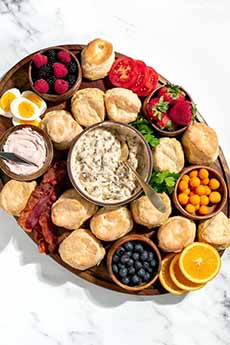
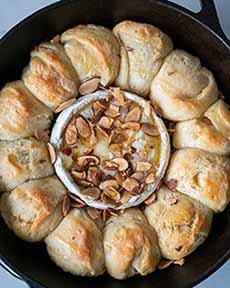
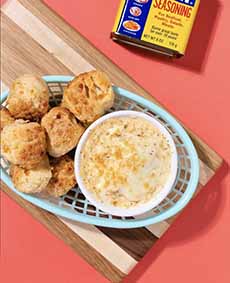
Serve biscuits instead of other breads or crackers with appetizer plates, cheese boards, dips, spreads, and specialties like Baked Brie (photos #1, #2, and #3).

Whether warm from the oven or room temperature, they’re that much more of a treat.

Below:

> What’s a biscuit?

> The different types of biscuits.

> Yummy biscuit recipes.

Elsewhere on The Nibble:

> The history of biscuits.

> The history of bread.

> The different types of bread.
 
 
WHAT IS A BISCUIT?

In the U.K., ask for a “biscuit” and you may be surprised.

  • In the U.K., a biscuit is a cookie or a cracker, not a bread product.
  • What Americans think of as a roll or biscuit is a scone in the U.K.
  • An American roll is a British cob.
  • An American English muffin is a British muffin (the history of the English muffin—invented by a British immigrant to the U.S.).
  • A bun in the U.K. may look like a kind of American roll, but it is sweet, what Americans call a sweet roll or sweet bun.
  • A burger bun is called a bap. And so on, and so forth.

> Here’s a longer discussion of the different American and British terms.
 
 
10 TYPES OF BISCUITS

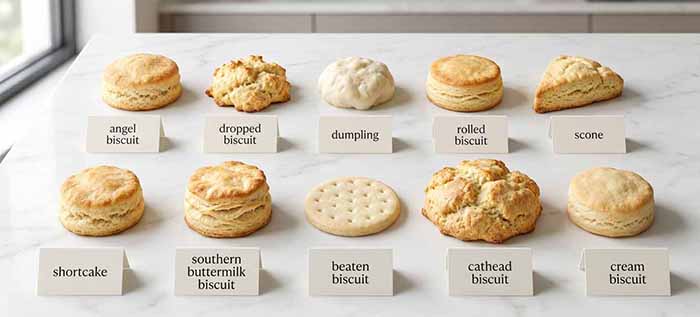
  • Angel Biscuits. These lighter, fluffier biscuits are made with yeast. They rise before being baked.
  • Beaten Biscuits. A historic Southern staple, these are “beaten” with a mallet or heavy handle until the dough blisters. The result is a dense, crisp, almost cracker-like texture.
  • Cathead Biscuits. Technically a variation of the drop or buttermilk biscuit, but deserving of their own mention because of their sheer scale: “as big as a cat’s head,” with lot of soft, fluffy interior under the crust crust.
  • Cream Biscuits. Instead of cutting in cold butter, heavy cream is both the fat and the liquid. More tender richer, and milkier flavor than standard buttermilk biscuits.
  • Drop Biscuits. A wet dough is dropped from a spoon onto a baking sheet. They’re not shapely like cut-out rounds, but just as delicious.
  • Dumplings. The dumplings in the chicken and dumplings recipe are actually smaller drop biscuits. The biscuits are steamed in a pot rather than baked, and are served atop a hearty chicken stew.
Biscuits & Appetizers For National Biscuit Day
[1] An appetizer board with biscuits instead of crackers and baguette slices (all photos © Mason Dixie Foods).

Baked Brie & Biscuits For National Biscuit Day
[2] Baked Brie with biscuits instead of crackers and party breads. Here’s a recipe.

Maryland Crab Dip & Biscuits For National Biscuit Day
[3] Scoop up Maryland crab dip with biscuits. Here’s the recipe.

  • Rolled Biscuits. Also called baking powder biscuits, the dough is rolled out, then cut into rounds, and baked.
  • Scones. Yes, scones are biscuits, even the versions that add cream and butter.
  • Shortcake. The same biscuits used for shortcake—sliced in half and topped with whipped cream and berries added—are also popular in the bread basket. Scones can be used as well.
  • Southern Buttermilk Biscuits. Loaded with butter and buttermilk, the result is rich and flaky. Baking soda is also often added to make the biscuit fluffier.
  •  
    There are numerous variations on the above. For example:

    • Self-rising biscuits are made with self-rising flour.
    • Sourdough biscuits are made with sourdough starter.

     
    7 Different Types Of Biscuits
    [4] The different biscuit categories (photo: The Nibble).
     
     
    MORE BISCUIT RECIPES

    Comments off

    Raised Gluten Free Pies & Quiche: Vegan & Nut-Free

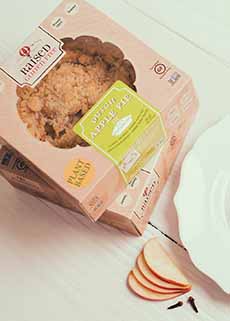
    Raised Gluten Free Dutch Apple Pie
    [1] Dutch Apple Pie, a year-round favorite. The pies are sold frozen (all photos © Raised Gluten Free).

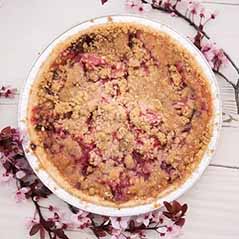
    Raised Gluten Free Strawberry Rhubarb Pie
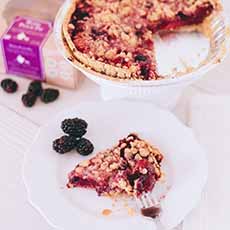
    [2] Strawberry Rhubarb Pie is a popular spring and summer choice.

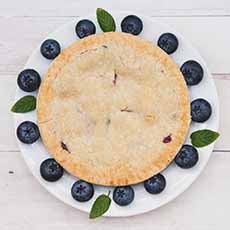
    Raised Gluten Free Blueberry Pie
    [3] Who doesn’t love Blueberry Bliss pie?

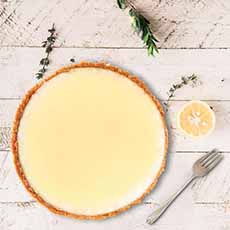
    Raised Gluten Free Lemon Tart
    [4] Lemon Tart.

    Raised Gluten Free Berry Peach Pie
    [5] Berry Peach Pie, along with Apple Pie, is sold at nearly all Whole Foods locations.

    Rise Gluten Free Pumpkin Pie
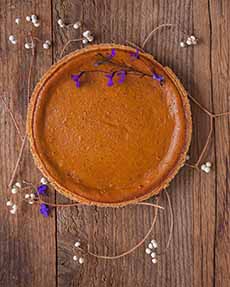
    [6] Seasonal pumpkin pie.

    Raise Gluten Free Chocolate Silk Pie
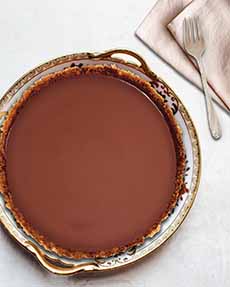
    [7] Tempting Chocolate Silk Pie.


    Raised Gluten Free serves the growing demand for quality gluten-free baked goods with both sweet and savory pies. Made in small batches at a dedicated, certified gluten-free bakery in Northern California, the pies are not just gluten-free; they’re also vegan, nut-free, kosher pareve, and Non-GMO Project Verified.

    The business was founded by two friends, Rosa Dixon and Milia Lando, in 2011. Both had food allergies and became passionate about creating delicious treats for families with food restrictions.

    While there are more options in stores these days, back then finding tasty, gluten-free, nut-free, dairy-free, and egg-free products was a struggle.

    But today, Raised Gluten Free has a delicious complement of:

  • Fruit pies: Apple, Berry Peach, Blueberry Bliss, Cranberry Apple, Dutch Apple, Pumpkin, Southern Peach, Strawberry Rhubarb
  • Chocolate Silk Pie
  • Lemon Tart
  • Savory Pies: Vegan Pot Pie, Vegan Quiche
  • Cookies: Chocolate Chip, Double Chocolate Chip
  • Cookie Dough: Chocolate Chip, Double Fudge Chocolate
  •  
    The team currently produces 2,000 pies a day. Using a simple pie press, skilled bakers make the dough, shape the crusts, and hand-mix fruit fillings.

    The seven-ounce pies are sold frozen—easy to keep on hand for when your sweet tooth (or company) calls.

    Raised Gluten Free’s Apple Pie and Berry Peach Pie are sold at nearly all Whole Foods Market locations, plus at Fresh Thyme, Gelson’s, Kroger Stores, Market of Choice, Mom’s Organic Market, Nugget Markets, Safeway/Vons, and independent natural food stores across the country—a total of 3,500 locations.

    > Here’s a store locator.

    > Check out the company website for more information.
     
     
    WE TASTE THE PIES!

    As the box states, Raised Gluten Free pies are gluten-free, peanut-free, vegan, yummy delights in a category that rarely transcends any one of these restrictions.

    I was very curious if they would approach the elusive holy-grail of gluten-free baking and produce a tender, flaky pie crust so I tested both their Dutch Apple Pie and Strawberry Rhubarb varieties.

    — Georgi Page-Smith
     
     
    Raised Gluten Free Dutch Apple Pie

    An apple pie is a perfect baseline with which to evaluate the competency of a baker and Raised’s Dutch Apple pie boded very well for the rest of their line.

    Bite after bite of this piquant pie delivered exceptional flavor, texture, and dimension.

    The apples were fresh and vibrant, their solidity and structure complementing the flakiness of the crust.

    Epic spices included a bold, rich cinnamon that tasted as if it had been ground the same morning, fresh off of a boat from Sri Lanka. The streusel provided variety, punctuating the apples at regular intervals with their playful crunch.

    My first small flake of the crust did not do it justice: It was delicious but fleeting. Small morsels of buttery flavored crust quickly intermingled with the filling, cobbler-style, eluding my grasp.

    It was a good substrate, but because there was not a lot of it, its star was somewhat dimmed by the hearty apples. While I certainly did scrape the sides of the tin for every last bit, I was left wanting more of this very good vegan crust.

    Crust aficionados: you may have to make do with a big scoop of ice cream to layer between delicious bites of apple.

    Food Trivia: The top layer is the main difference between a regular apple pie and a Dutch apple pie. Traditional apple pies have a top layer made from pie crust, while Dutch apple pies have a crumb topping.
     
     
    Raised Gluten Free Strawberry Rhubarb Pie

    My much-anticipated sampling of Raised’s seasonal Strawberry Rhubarb pie also did not disappoint! This was a tart, jammy confection complimented perfectly by a scoop of ice cream.

    This is the pie to buy if you are a rhubarb fan, a strawberry fan, and/or a streusel fan; the three together were an engrossing dessert experience that commanded my full attention with their assertive textures and flavors.

    This is not a mass-produced pie that has had all of the flavor engineered out of it; it is a home-style, handcrafted pie that commits to a definite point of view.
     
     
    Strawberry Rhubarb Pie

    If most desserts are a party in your mouth, Raised Gluten Free pies would be a square dance!

    All in all, Raised pies manage a very difficult feat: a gluten-free dessert pie with a rambunctious homemade flavor and texture—and a delicious crunchy crust!

    The pies heat well and pair magnificently with ice cream or your favorite dairy-free equivalent.

    Food Trivia: While rhubarb originated in China and wild strawberries originated in Europe and Asia, it took a while for them to get together.

    Rhubarb was first used medicinally, and it was not cultivated for food until 1750 in Germany. The strawberry was first cultivated in Europe in the 1300s and it, too, was used medicinally*. Strawberry rhubarb pie appeared in Germany and the U.K. in the 1700s.

     
    ________________

    * The ancient Romans were staunch believers in the curative powers of the strawberry. They believed it relieved melancholy and masked bad breath. According to the ancients, strawberries could cure inflammations, fevers, throat infections, kidney stones, gout, fainting spells, and diseases of the blood, liver, and spleen. By the time the strawberry was cultivated in France in the 13th century, medicine was also a key use. The roots, leaves, and fruits of the Alpine Strawberry, Fragaria vesca, were used as a digestive aid and skin tonic. The strawberry was also prescribed for diarrhea and digestive upset, while the leaves and roots were used to relieve gout [source].


    CHECK OUT WHAT’S HAPPENING ON OUR HOME PAGE, THENIBBLE.COM.


    Comments off

    It’s National Chardonnay Day, The Most Popular White Wine

    May 27th is National Chardonnay Day, and International Chardonnay Day is celebrated on the Thursday before the last Monday in May. That may sound complex, but it’s the Thursday before Memorial Day. So…time to open a bottle!

    Chardonnay is the world’s most popular white wine: a dry, medium- to full-bodied wine with moderate acidity and alcohol levels. It can be grown in a variety of climates.
     
     
    THE STYLES OF CHARDONNAY

    Between the terroir and the winemaker, Chardonnay can have different personalities.

  • Chardonnay can be crisp, clean, and minerally like Chablis, or rich and oaky like Mersault.
  • It can be light and elegant, or full-bodied and buttery.
  • It can have notes of apple and lemon or “tropical fruits” like papaya and pineapple.
  • In cool climates such as Chablis and the Carneros AVA of California, Chardonnay has more noticeable acidity and the flavors of green plum, apple, and pear.
  • In warmer areas of the New World, including Australia and the Marlborough region of New Zealand), the flavors become more citrus, peach, and melon.
  • In very warm locations, such as the Central Coast AVA of California, more fig and tropical fruit notes such as banana and mango appear.
  • If it’s aged in oak, it can have hints of vanilla or butterscotch.
  • Fat, rich, oaky styles with higher alcohol can handle heavier cream sauces and grilled meats with higher fat content. The key is to match the wine’s weight with the weight of the food.
  • Wines that the winemaker has put through malolactic fermentation tend to have softer acidity and fruit flavors, with a buttery mouthfeel and hazelnut notes. The malolactic is a secondary fermentation that transforms tart malic acid into softer lactic acid. Or, as one of our wine experts notes, “Think green apples to cream.”
  •  
    So there’s a perfect Chardonnay for every palate and every food pairing.

    > The history of Chardonnay is below.

     
    CHARDONNAY & FOOD PAIRING

    Due to the wide range of styles, Chardonnay can be paired with a diverse spectrum of food types.

    Thanks to La Crema, maker of great California Chardonnay, for these tips:

    DO Pair Chardonnay With:

  • Buttery, creamy, or mild dishes.
  • Meaty fish (halibut, cod) and shellfish (lobster, shrimp, crab, scallops).
  • Subtly flavored, simply seasoned poultry, pork, and veal dishes.
  • Dishes that have a silky texture, such as risottos and cream-enhanced soups, sauces and pastas.
  •  
    Pairings By Style

  • Oaky Chardonnay with foods that have toasty flavors, toasted nuts, savory pastry crusts, grilling or smoking.
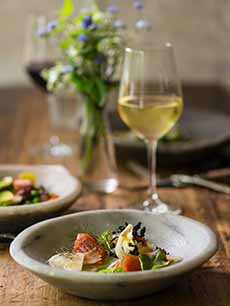
  • Crisp, delicate Chardonnay with simply flavored, simply prepared foods, such as raw bar shellfish, baked fish, or poultry with butter and herbs.
  • Crisp, higher-acid Chardonnay with tomato-based dishes and items featuring sweet onions.
  • Crisp, delicate Chardonnay with mild, semi-soft cheeses, including goat cheese.
  • Moderately oaked Chardonnay with buttery and creamy cheeses, Gouda, Gruyère, and Alpine-style varieties.
  • Heavily oaked Chardonnay with smoked fish, spicy southeast Asian cuisine, and garlic.
  • Heavily oaked Chardonnay with the big flavors of Asiago, Cheddar, Fontina, Havarti, Parmesan, and washed-rind cheeses.
  • Ripe Chardonnay—with sweetness from warmer clients—with ingredients such as corn, butternut squash, sweet potatoes, and foods that are caramelized from roasting or grilling, like crisp-skinned roast chicken.
  • Older, more mellow Chardonnay with more earthy dishes, like mushroom soup and aged cheese.
  •  
    DON’T Pair Chardonnay With:

  • Aggressively seasoned food. Avoid fresh or dried chilies and super spicy dishes, including much of Chinese, Indian, and Southeast Asian fare.
  • Bitter foods: bitter greens and vegetables, and spices like turmeric—they’ll make the wine taste sour.
  • Acidic foods, such as raw tomatoes, olives, capers, ceviche, and tangy vinaigrettes and sauces.
  • Pungent or high-acid cheeses. Avoid funky, washed-rind cheeses (taleggio, Époisse) and aged goat and sheep’s cheese.
  •  
    DO & DON’T Temperatures

  • Don’t serve Chardonnay too cold; the cold dulls its pairing powers.
  • The best temperature range is 50°–55°F, which can be achieved by two hours in the fridge or 30–40 minutes in an ice-water bath in an ice bucket.
  • Remove the bottle from the ice bucket or refrigerator 15 to 20 minutes before pouring.
  •  
    There’s enough to know about Chardonnay to fill several books—and quite a few have been written about it.
     
     
    CHARDONNAY HISTORY

    The Chardonnay grape, a green-skinned white wine grape, originated in the Burgundy region of France, and Chardonnay from Burgundy is the world’s most expensive. It is the grape that makes the great Burgundies Chablis, Meursault, Montrachet, and Pouilly-Fuissé.

    Chardonnay is also one of two primary base grapes for the sparkling wines of Champagne, along with Pinot Noir and the blending grape, Pinot Meunier.

    The grape takes its name from a commune (small town or village) in the Mâconnais region of southern Burgundy, which today makes relatively simple, inexpensive Chardonnays.

    The name of the town derives from cardonnacum, the “place full of thistles.” The commune recently celebrated its thousandth anniversary

    From there, Chardonnay most likely was then spread throughout France by Cistercian monks.

    The grape reached its apex when it moved north to Burgundy, where the cooler climate and the overall terroir were perfect to elevate the complexity of the grape.

    The earliest recorded reference to Chardonnay occurs in 1330. Cistercian monks built stonewalls around their Clos de Vougeot vineyard in Burgundy, exclusively planted with Chardonnay grapes [source].
     
    A Great Cross-Breeding

    Chardonnay is a crossbreed. Many centuries ago, growers in the Chardonnay area created the Chardonnay grape by crossing their local Pinot Noir grape with Gouais Blanc (Heunisch), a white grape thought to have brought by the Romans from Croatia.

    It was widely cultivated by peasants in eastern France [source], and the wine immediately became a local favorite.

    But it wasn’t until the 14th century when the Cistercian monks popularized it to make their wine in Burgundy [source].

    It has long been the second-most-planted white wine grape in France.*


    White Wine Burgundy
    [1] Puligny Montrachet, one of the great white Burgundies, is made from 100% Chardonnay grapes (photos © Christies).

    Chardonnay With Pasta Frutta di Mare
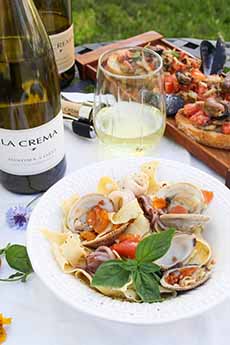
    [2] Chardonnay is the most-planted white wine grape in California (photo © La Crema Chardonnay).

    Marcassin Estate Chardonnay White Wine
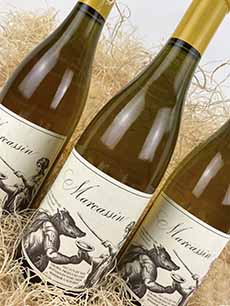
    [3] Marcassin is the most expensive California Chardonnay, made by a great winemaker, Helen Turley, in very small amounts, in the Burgundy style. It costs hundreds of dollars per bottle (photo © Cult Wine).

    Cheese Plate & White Wine
    [4] California Chardonnay with a cheese plate (photo © California Wine Institute).

    Sashimi & White Wine
    [5] Chardonnay pairs well with sushi and sashimi (photo © Pampano | NYC).

    Chardonnay King Crab Legs

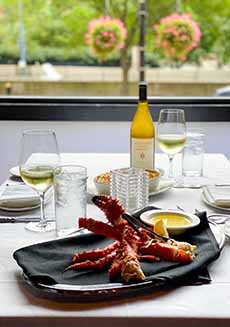
    [6] In fact, Chardonnay is a popular choice with all fish and shellfish—here with King Crab legs (photo © The Palm | NYC).

    Chardonnay Grapes
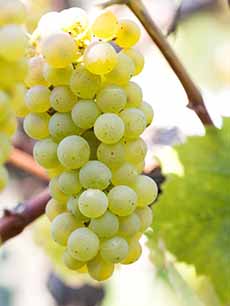
    [7] Chardonnay grapes (photo © Erin Malone | California Wine Institute).

     
    Chardonnay Today

    While there were several claims to Chardonnay’s “true” origins, modern DNA fingerprinting by Dr. Carole Meredith at the University of California, Davis, has finally identified Chardonnay as the cross between the Pinot Noir and Gouais Blanc grape varieties.

    If you’ve never heard of Gouais Blanc, it’s because it’s nearly extinct grape.

    Wine made from Gouais Blanc was not well liked even back in the day. It has been actively dug up over the centuries, its vineyards replanted with other varieties, leading to its now “nearly extinct” situation [source].

    But we are grateful that it was around when needed to create one of the great wine grapes of the world.

    Chardonnay, Gamay Noir, and many other classic varieties† can be traced back to this cross of Pinot and Gouais Blanc.

    Today Chardonnay is planted the world over. In the U.S., the grape is grown in Northern California, Washington State, and Oregon—the three largest plantings in the U.S.—New York State, Texas, and Virginia.

    Chardonnay is the most widely planted white variety in California, on a par with the plantings of Cabernet Sauvignon.

    Wine trivia: Ampelography is the field of botany concerned with the identification and classification of grapevines. Traditionally this was done by comparing the shape and color of the vine leaves and grapes; however, the field has been revolutionized by DNA fingerprinting.
     
    ________________

    *The most planted white wine grape in France is Ugni Blanc, an Italian grape from Tuscany, where it is known as Trebbiano. It largely used to make brandy in the Cognac and Armagnac regions of France.

    †Grape varieties that trace back to Gouais Blanc and Pinot include Aligoté, Aubin vert, Auxerrois, Bachet noir, Beaunoir, Dameron, Franc noir de la Haute, Saône, Gamay blanc Gloriod, Gamay noir, Knipperlé, Melon, Peurion, Romorantin, Roublot and Sacy. That’s a lot of relatives! [source]


    CHECK OUT WHAT’S HAPPENING ON OUR HOME PAGE, THENIBBLE.COM.


    Comments off


    © Copyright 2005-2026 Lifestyle Direct, Inc. All rights reserved. All images are copyrighted to their respective owners.