|

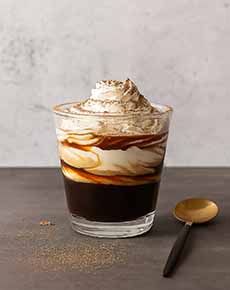
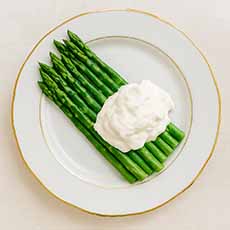
[1] Chantilly, a.k.a. whipped cream, is often a welcome garnish on beverages and desserts. There is also savory Chantilly—see photo #12 (photo © Taste Of Home).
[2] Clotted cream, also called Devon cream: a specialty of the U.K. and part of “cream tea” with scones and jam (photo © Cupcake Project).
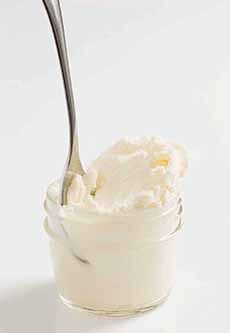
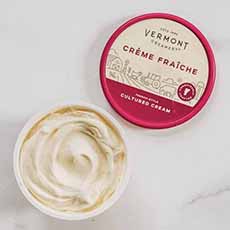
[ 3] Crème fraîche, a cultured cream that is a more piquant substitute for whipped cream (photo © Vermont Creamery).
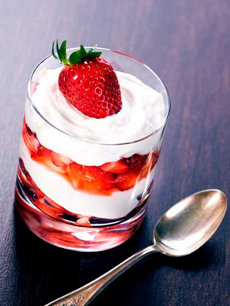
[4] A mascarpone and strawberry parfait (photo © Island Farms).
[5] Half-and-half, also called coffee cream because its main use is in coffee and tea (photo © Organic Valley).
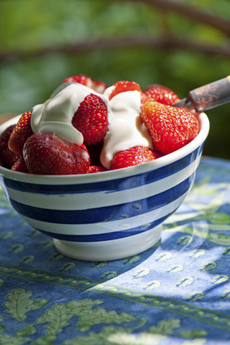
[6] Strawberries and cream is typically served with heavy cream, but clotted cream, whipped cream or many of the types of cream in this glossary work fine (photo © Jacek Kadaj | Fotolia).
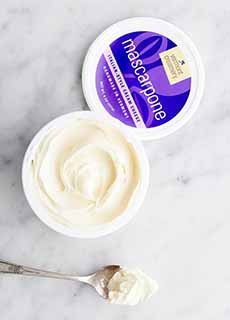
[7] A container of mascarpone (photo © Vermont Creamery).
[8] Sour cream (photo © Yelenay Echuk | Panther Media).
[9] Whipped cream. Only heavy cream and whipping cream can be whipped (photo © Kuhn Rikon | Facebook).
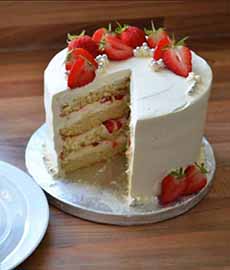
[10] This strawberry genoise (ZHEN-woz) is made with stabilized whipped cream, which does not deflate. Here’s the recipe (photo © Fun Cooking).
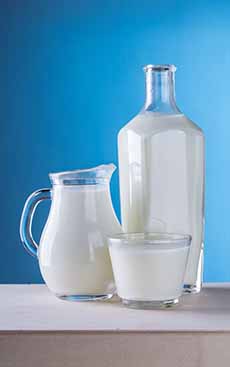
[11] All cream begins with whole milk. One gallon of milk will yield 1 to 1.5 pints of cream (photo © Pixabay | Pexels).
[11] Savory Chantilly (whipped cream) adds an elegant topping to asparagus, fish fillets, egg dishes, and much more. It can be unsweetened or seasoned with herbs or spices (ChatGPT Photo).
|
|
May 21st is National Strawberries and Cream Day. But what type of cream? Heavy, light, crème fraîche, sour cream, whipped cream..there are so many types of cream, and you can use any one of them.
We have our glossary of the different types of cream below, but first:
WHAT IS CREAM?
Cream is a form of milk in which the fat globules have become more concentrated than usual, whether by rising to the top in a bottle or spinning off from the heavier water phase in a centrifuge. There are several grades of cream marketed today, including heavy cream, light cream, and half-and-half—you’ll find them all in the glossary below.
The word cream first appeared in Middle English from Old French cresme, which was a blend of late Latin cramum (probably of Gaulish origin) and ecclesiastical Latin chrisma.
The Genesis Of Cream
You know what it is when you buy a carton, and you know that before it becomes cream, it is milk from the cow. Here’s a bit more about cream.
Milk is a suspension of whey proteins, casein proteins, and globules of fat in water. The fat is called milkfat or butterfat.
Cream is made when some of that fatty component of un-homogenized milk is separated out. Before the technology to homogenize milk arrived, the fat would rise to the service and the rich cream layer would be skimmed off.
Historically, dairy farmers skimmed the cream from shallow pans of milk, let it sit again, and did this repeatedly to get the richest cream. Modern dairies use massive centrifuges to perform the same task in seconds (and produce cream with a consistent percentage of milkfat).
The fat in cream is rich on the palate. The higher the percentage of milkfat, the richer the flavor and texture—but that’s not always the goal in every recipe.
Contrast Italian gelato, with milkfat of only 4% to 9%, with American ice cream, especially the “superpremium” brands like Häagen-Dazs, with 15% to 16% milkfat. Because there’s less butterfat coating your palate, gelato’s flavors taste more intense.
On to the glossary! But first, for your consideration:
> How to make heavy cream from milk.
> The year’s 16+ milk and cream holidays.
> The different milkfat contents for all dairy products are below.
THE DIFFERENT TYPES OF CREAM: A GLOSSARY
We include some cream-related terms (like the first entry), plus some terms that are more common in the U.K.
BUTTERCREAM or BUTTER CREAM
Not cream per se, but light, uncooked frosting made of butter, sugar and egg yolks, and sometimes milk or light cream, that is used to fill and frost cakes and pastries.
CHANTILLY CREAM
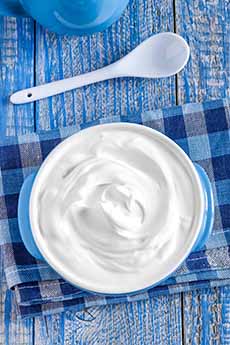
Chantilly is the French term for vanilla-flavored whipped cream. In Italy, “crema chantilly” is made by folding whipped cream into crema pasticcera (pastry cream) to make a wonderfully indulgent, extra-rich concoction (photo #1).
CLOTTED CREAM or DEVON or DEVONSHIRE CREAM or CLABBER CREAM
Clotted cream is the thickest and richest type of cream, with 55% to 63% milkfat, creating flavors that are both creamy and buttery. It has a spoonable consistency and does not need to be whipped before serving. It is traditionally made in Cornwall or Devon, counties at the far southwest tip of England, jutting out into the Atlantic ocean.
Heavy whipping cream is scalded or cooked over a bain-marie, so the fat globules float to the top and form a firm layer and the cream takes on a golden color. It is then left to cool for a day. Traditionally served as part of a cream tea with scones and jam, with fruit desserts, and as a cake filling. It is not used for cooking because it tends to separate when heated. “Clabber” is an archaic English word for a cupboard or pantry (photo #2).
COFFEE CREAM (see Half-And-Half)
CRÈME FRAÎCHE
Crème fraîche is heavy cream that is treated with a bacteria culture. The culture thickens the cream and gives it a slightly tart, elegant flavor—a thinner alternative to sour cream with a higher milkfat content—39%. To make it, cream is gently heated and then inoculated with bacterial cultures. The bacteria consume the cream’s natural sugars, producing lactic acid. The gentle acidity thickens the cream and imparts a mild, delicious tang.
Crème fraîche has less tang than sour cream because a far lower amount of bacterial cultures is used. It is stable when heated but cannot be whipped, despite the high milkfat content. Used as a dessert topping, it can also be used to make dips, salad dressings, sauces, and soups; it can be heated without curdling.
In France, it is unpasteurized. In the U.S., it is often made by adding buttermilk (cultured milk) or sour cream (also cultured) to the cream (photo #3). And, you can make it at home. Here’s a crème fraîche recipe; a quicker alternative is to blend equal amounts of heavy whipping cream and sour cream.
CULTURED CREAM
Cultured cream is made with the addition of bacteria or by boiling. The four principal types have a delightful, piquant edge. You may like them even better than the simple, often-too-sweet whipped cream, to garnish chocolate cakes and other sweet, rich desserts.
Clotted cream/Devon cream, which relies on boiling and resting time to thicken (double cream is similar to clotted cream but with a higher fat content).
Crème fraîche, cream cultured/thickened with Lactobacillus bacteria, a lighter, thinner alternative to sour cream†.
Mascarpone, the Italian version of crème fraîche, but thicker and sweeter, soured by a lactic culture or an acid like vinegar or cream of tartar (photo #4).
Sour cream, cream that gets its sharp, tart edge by adding Lactobacillus culture.
Yogurt is not cultured cream, but milk that is cultured with bacteria.
DEVON CREAM (see Clotted Cream)
DOUBLE CREAM
This is a U.K. term for heavy cream, also called “country style” cream. The U.K. standard is 48% milkfat, which is higher than heavy cream in the U.S. (40%).
EXTRA THICK SINGLE CREAM
Another U.K. term, this is for the U.K. equivalent of light cream. It has the same fat content as single cream (18%) but has been homogenized to produce a thick, spoonable consistency similar to double cream.
Like American light cream, it cannot be whipped, but is typically spooned onto desserts or poured into coffee and tea by people who prefer the added fat content over half-and-half.
FLAVORED CREAM
Made by some producers for the holiday season, these can be flavored with flavors such as brandy, chocolate, cinnamon, Irish cream, and peppermint.
GOAT’S MILK CREAM
You may come across a heavy cream that’s made from pasteurized goat’s milk. Very white in color, the flavor is smooth and mild. It can be whipped, poured into beverages, or simply spooned onto desserts.
HALF-AND-HALF or COFFEE CREAM
Half-and-half gets its name because it’s a mixture of half cream and half milk. The milkfat content is 10.5% to 12%, too low to be whipped. It is typically used for coffee and tea, and as a reduced-fat cream in many recipes (photo #5).
HEAVY CREAM
Heavy cream has the highest amount of milk fat of the basic creams (including half-and-half, light cream, and whipping cream). It usually has between 36% and 40% in the U.S., and as high as 48% elsewhere.
Heavy cream whips into a denser product than that which is simply called whipping cream. It doubles in volume when whipped. If you’re using it as frosting and want it to hold up, make stabilized whipped cream by adding gelatin. It’s sold pasteurized and ultrapasteurized, but pasteurized whips better (photo #6).
LIGHT CREAM or TABLE CREAM
Sometimes called coffee cream or table cream, can contain from 18% to 30% butterfat but most commonly contains 20% butterfat. It cannot be whipped.
LONG LIFE CREAM (see Ultrapasteurized Cream)
MANUFACTURING CREAM
Manufacturing cream is a commercial product generally used by bakeries and professional food service operations and is not available in retail stores. It has a fat content of more than 40%, while the highest-fat retail cream (heavy cream) has a fat content of only up to 40%.
MASCARPONE
Mascarpone spreads like cream cheese, and is often called “Italian cream cheese” although it is much softer. It has a slight natural sweetness, a delicate but oh-so-rich flavor, and a milkfat content from 60% to 75%.
Mascarpone is made by heating cream and acid. This actually creates a curd (as with ricotta), so mascarpone is considered a cheese rather than a type of cream (photo #7).
PRESSURE PACK WHIPPED CREAM
In the U.S. this is typically referred to as aerosol can whipped cream. A nitrous oxide gas propellant fills the portion of whipping cream when the can’s top valve is depressed.
Products like Reddi-Whip typically have a minimum milkfat of 25% milk fat. However, it infuses the whipped cream with much more air than hand-whipping or using a professional whipping unit like iSi whipped cream dispensers, which aerate the entire canister at once with a nitrous oxide charger.
SINGLE CREAM
Single cream is the U.K. version of American light cream, a thin cream traditionally used for pouring and for enriching cooked dishes including sauces and soups. It contains 18%-20% milkfat. It can’t be boiled, however, because it will curdle.
SOUR CREAM
This cultured cream is thick and tangy. To sour pasteurized cream, a culture is added and the cream is heated to about 68°F/20°C for 12–14 hours. The lactic acid produced in this process creates both the slightly sour taste and the thick consistency.
Sour cream has a milkfat content of 18% to 20%. It may also contain stabilizers, such as gelatin or rennin, which aid in the thickening (photo #8).
STABILIZED WHIPPED CREAM
Stabilized whipped cream added gelatin to regular heavy cream or whipping cream (photo #10). The gelatin stiffens the whipped cream and keeps it from collapsing—for days! Stabilized whipped cream is the go-to frosting for cakes, cupcakes (you may prefer it to buttercream), and layered desserts like trifles. Here’s a recipe to make it.
SWEET BUTTER
Butter is whipped from cream. Americans often use the term “sweet butter to refer to butter that has no salt, but this is a misnomer. Any butter made with sweet cream instead of sour cream is sweet butter. The appropriate terms to use are unsalted butter and sweet cream butter.
SWEET CREAM BUTTER
While in the U.S. both unsalted and salted butter can be labeled sweet cream butter, they will also be labeled unsalted, salted, or lightly salted.
TABLE CREAM or COFFEE CREAM
These are other terms for light cream, containing 18% to 30% milkfat.
ULTRAPASTEURIZED CREAM or LONG LIFE CREAM
Ultrapasteurized cream is heavy cream that has undergone ultra heat treatment (UHT): It is heated to above 280°F/138°C for at least two seconds to extend its shelf life.
While that may not sound like much processing, ultrapasteurized heavy cream does not whip into peaks or froth for a cappuccino. Otherwise, it will whip well if chilled, but regular pasteurized heavy cream whips up better (and for better results with both, whip the cream in a chilled copper bowl).
If you have a great palate, you’ll note that regular pasteurized heavy cream generates better flavor than ultrapasteurized. Ultrapasteurized cream has a similar level of milkfat as regular heavy cream (36% to 40%).
WHIPPING CREAM
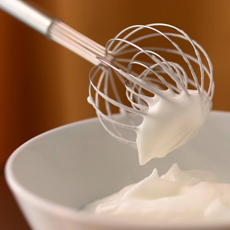
Whipping cream falls between light cream and heavy cream in milkfat content, between 30% and 36%. Like heavy cream, it will whip to double its original volume (photo #9). It contains 30% to 38% milkfat.
In two or three hours after it has been whipped, the air will dissipate and the volume will deflate. For whipped cream that holds its form for one or two days, see Stabilized Whipped Cream, above.
WHOLE MILK
Regular milk, i.e. not a reduced fat version (photo #11). Whole milk has close to 4% milkfat. See the milkfat for the milkfat in 1% and 2% reduced fat milk below. It takes 1 gallon of milk to yield 1 to 1.5 pints of cream.
|