THE NIBBLE BLOG: Products, Recipes & Trends In Specialty Foods


Also visit our main website, TheNibble.com.

FOOD FUN: Campbell’s Soup Candles, Tomato Soup & Chicken Noodle

If you’re feeling a winter chill, a can of Campbell’s soup might be just what you need to warm up. What if you could add to that some comforting ambiance, in this case candles scented like your favorite soups?

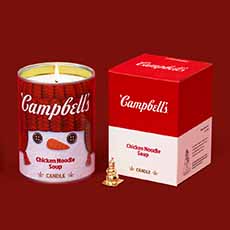
Campbell’s has partnered with CAMP, A Family Experience Company, to release two limited-edition scented candles: Tomato Soup & Grilled Cheese, and Chicken Noodle Soup.

  • Tomato Soup & Grilled Cheese features notes of roasted tomato, peppercorn, and grilled cheese.
  • Chicken Noodle Soup has notes of savory chicken, clove, and buttery crackers.
  •  
    They’re about 50% larger than a can of Campbell’s soup, and have the same pull-tab top.

    The candles-in-a-can tap into the familiar design of Campbell’s limited-time-only, stackable snowman soup cans, which made their debut in 2020 and were inspired by the brand’s snowman commercial, “Snowbuddy.”

    A miniature golden “Snowbuddy” keepsake is revealed as the candle burns (photo #2).

    Start by making your home smell M’m! M’m! Good!® Treat yourself to a candle, or the pair.
     
     
    GET YOUR CAMPBELL’S SOUP CANDLES

    The candles are available online at Camp.com/Campbells or in-person at CAMP stores in New York, New Jersey, Dallas, and Connecticut.

    The candles are $24.99 each while supplies last, with 10% of net proceeds from total candle sales going to Feeding America

    Even if you don’t buy a candle, you can download a free copy of The Winter Warmup Guide, 12 pages of crafts, games, and coloring to delight the Campbell Kids, and yours.
     
     
    > THE HISTORY OF SOUP
     
    > THE DIFFERENT TYPES OF SOUP


    [1] Limited-editional Campbell’s soup-scented candles, in Tomato Soup & Grilled Cheese, and Chicken Noodle © Campbell’s).


    [2] Each candle, beautifully boxed, has a hidden “Snowbuddy” that is revealed as the candle burns.


    CHECK OUT WHAT’S HAPPENING ON OUR HOME PAGE, THENIBBLE.COM.


    Comments off

    Shaker Vinaigrette Recipe: Easy To Make Salad Dressing


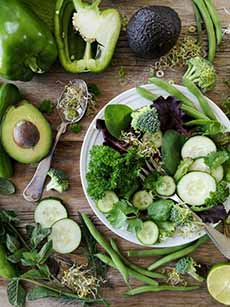
    [1] Whether the salad is plain or fancy, we prefer a vinaigrette dressing (photo © Nadine Primeau | Unsplash).

    Shaker Vinaigrette
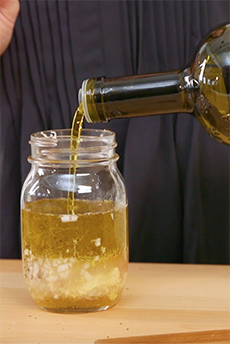
    [2] Just add the ingredients to a jar and shake your vinaigrette (photo © Colavita).


    It struck us that quite a few people we know don’t know how easy it is to make a shaker vinaigrette. There’s no whisking in a bowl, no blender or food processor to clean. All you need is the vinaigrette ingredients and a jar. And if your goal this January is to eat more healthy salads without the calorie-laden bottled dressing, this is a great tip.

    Thanks to Colavita Extra Virgin Olive Oil for reminding us!

    > Check out more recipes with Colavita Extra Virgin Olive Oil.

    > The history of salad.

    > The history of olive oil.

    > The history of vinegar.

    > May is National Salad Month.

    > National Vinegar Day is November 1st.
     
     
    RECIPE: SHAKER VINAIGRETTE

    This is a fancy vinaigrette, with layers of flavor. But there’s a much shorter version.

    For the quick version, just add oil and vinegar—we recommend balsamic or red wine vinegar—salt and pepper, and a shake or two of your favorite dried herbs.
     
    Ingredients

  • 2 small shallots, minced
  • 1 garlic clove, minced
  • 2 teaspoons Dijon mustard
  • 2 teaspoons honey
  • 5 tablespoons apple cider vinegar
  • 1 tablespoon water
  • Zest and juice of 1 small lemon
  • Pinch of dried oregano
  • Pinch of dried basil
  • Optional: dash of hot sauce
  • ¾ cup extra virgin olive oil
  • 1/4 teaspoon kosher or sea salt
  • ⅛ teaspoon freshly ground black pepper
  •  
    Preparation

    1. COMBINE the shallots, garlic, mustard, honey, vinegar, water, zest, oregano, basil, EVOO, and salt and pepper in a medium-sized jar. Screw the lid on tightly and shake until the dressing is emulsified. That’s it!

    2. STORE unused vinaigrette in the jar in the fridge, for up to 3 weeks. Once stored, the EVOO may solidify. To use, let it warm at room temperature or under warm water.


    CHECK OUT WHAT’S HAPPENING ON OUR HOME PAGE, THENIBBLE.COM.


    Comments off

    It’s Sumo Citrus Season: Gather A Supply Of Sumo Mandarins

    Sumo Citrus has hit the shelves at grocers near you. Available nationwide* annually from January to April. you can easily recognize them by their topknot—reminiscent of the hair of sumo wrestlers. Sumo Citrus is one of the world’s largest and sweetest mandarins, celebrated for its sweet taste and distinct looks. Originally from Japan, Sumo Citrus is now grown in the U.S.

    Compared to the navel and other oranges, Sumo Citrus is easy to peel. It’s seedless, super-sweet, and juicy: a no-mess snack.

    It’s a bit more expensive than other mandarins. According to SumoCitrus.com, Sumo Citrus is the most difficult citrus to grow. It takes four years of constant care before a Sumo Citrus tree produces any fruit.

    Despite its rugged appearance, it’s a delicate fruit that requires far more expertise and gentle handling than any other piece of citrus. Each Sumo Citrus tree is carefully groomed by hand every year and then hand-picked and hand-packed. Even the trailers used to transport Sumo Citrus are designed to give it a smooth (vs. bumpy) ride!

    Here’s more about Sumo Citrus.
     
     
    THE DIFFERENCE BETWEEN MANDARINS & ORANGES

    The term “mandarin orange” is incorrect. Mandarins and oranges are separate species, as you can see from the taxonomy below.

    From a visual perspective:

  • Oranges are medium to large round or ovoid shapes covered with a thick peel that can take time to remove. They are in the genus Citrus, with separate species (e.g. Citrus sinensis, the sweet orange group, includes the common sweet orange, blood orange, and navel orange).
  • Sometimes they’re sweet, and sometimes they aren’t; you don’t know until you buy and try.
  • Mandarins are small and roundish with flatness on the top and bottom, and a loose, easy-to-peel skin. They are in the genus/species Citrus reticulata.
  • The mandarin from California are reliably sweet and usually seedless. That’s why we prefer mandarins like clementines and Sumo Citrus to navel oranges, which are a spin on the sweetness roulette wheel.
  •  
    Are they close relatives?

    From a hybridization perspective, the mandarin is a progenitor of the orange. The orange is a cross between a mandarin and a pomelo, created long ago in China.

    Both are in the genus Citrus; the binomial classification of both mandarins and oranges branches at the species level (we’d call this “cousins”). For food geeks, here’s the entire taxonomy:

  • Kingdom Plantae
  • Clade† Tracheophytes
  • Clade Angiosperms
  • Clade Eudicots
  • Clade Rosids
  • Order Sapindales
  • Family Rutaceae
  • Subfamily Auranntioideae
  • Tribe Citreae
  • Subtribe Citrinae
  • Genus Citrus
  • Species: reticulata (mandarin), citrus X sinensis (orange)
  • Subspecies: there are individual subspecies for both mandarins (e.g. clementine, tangerine) and oranges (e.g. navel, Seville)
  •  
    Hats off to the botanists who painstakingly mapped this out!
     
     
    > THE HISTORY OF MANDARINS
     
     
    > THE HISTORY OF ORANGES


    [1] Sumo Citrus has a topknot, like the sumo wrestlers after which they were named (all photos © Sumo Citrus).


    [2] Sumo Citrus are mandarins, easy to peel.


    [3] Look for them in the produce section from January through April.


    [4] Add segments to green salads (here mesclun and fennel), chicken salads, and to a pan sauce (photo © Shaya Restaurant | New Orleans).

     
    ________________

    Retailers include Albertsons, H‑E‑B, Hy-Vee, Kroger, Osco, Pavilions, Publix, Ralphs, Safeway, Sams Club, Shaws, Sprouts, Target, Vons, Wegmans, and Whole Foods.

    †A clade is a branch that includes a single common ancestor; the group of its descendants is called a clade. A cladogram is an evolutionary tree that diagrams the ancestral relationships among organisms.


    CHECK OUT WHAT’S HAPPENING ON OUR HOME PAGE, THENIBBLE.COM.


    Comments off

    A Hot Tea Toddy Recipe For National Hot Toddy & Hot Tea Days


    [1] All of the toddies here are shown in clear glasses or mugs. Why? It makes the drink look better (photo © L’Adresse | NYC).

    Hot Toddy
    [2] In Colonial times a pat of butter was added to the toddy, creating Hot Buttered Rum. It clouded the drink, but in those days, everything was drunk from a ceramic or metal tankard (photo © Hella Cocktail Co.).

    Hot Toddy In Glass Cup With Handle
    [3] Black tea with cloves is a classic base for a toddy. The lemon can be squeezed into the drink or added as a floating garnish (photo © Ruth’s Chris Steak House).

    Cup Of Green Tea
    [4] If you prefer green tea, make your toddy with it (photo © Republic Of Tea).


    [5] Use a base of spiced tea or chai for a spicy toddy. Constant Comment makes spiced tea in both black and green—and decaf, too (photo © Bigelow Tea).

    Hot Toddy With Mount Gay Rum
    [6] Go ahead: Add your favorite spirit to the toddy (photo © Mount Gay Rum).


    The word “toddy” typically evokes thoughts of a hot drink with rum or another spirit. For most people, a toddy isn’t a toddy without spirits, but if you’re observing Dry January, the tea toddy recipes below are ideal. Hankering for a spirited toddy? Check out our toddy recipes. National Hot Toddy Day is January 11th, National Hot Tea Day is January 12th and National Hot Buttered Rum Day (a rum toddy with a pat of butter) is January 17th.

    These recipes, courtesy of Adagio Teas, are perfect for today, National Hot Tea Day (and it just happens to be freezing where we live.)

    Take your pick of a black tea or a green tea toddy, and you can also add alcohol for a classic toddy.

    Herbal teas work well too if they do not conflict with the spices. Consider chamomile or hibiscus, and use them in the same quantities as noted below.

    > Hot Toddy History

    > Hot Toddy Relatives (Glögg, Mulled Wine, etc.)

    > The year’s 23 tea holidays.

    > The history of tea.

    > The different types of tea: a photo glossary.
     
     
    RECIPE #1: BLACK TEA TODDY

    You can substitute a cinnamon stick instead of ground cinnamon. The stick can also serve as a stirrer.

    Or, take a shortcut and use a spiced tea or chai blend like Constant Comment (photo #5).
     
    Ingredients For 1 Drink

  • 1½ cups hot black tea (Keemun, Assam, or your favorite breakfast blend)
  • 1 tablespoon honey
  • 1 teaspoon lemon juice
  • ½ teaspoon ground cinnamon
  • ¼ teaspoon EACH, ground cloves and ground nutmeg
  • 1 lemon wedge for garnish of extra juice
  • Optional alcohol: ¼ cup of whisky, rum, vodka, rye, or bourbon
  •  
    Preparation

    1. BREW the tea. First, pour the honey, lemon juice, cinnamon, cloves, and nutmeg into a large mug. Then pour in the hot tea. Stir until both the honey and spices are completely dissolved.

    2. MAKE a horizontal slit through the bottom flesh of the lemon wedge so it sits on the rim of the mug. Drink up!
     
     
    RECIPE #2: GREEN TEA TODDY

    For a strong alcoholic toddy, use only 1/4 cup of brewed tea. Otherwise, use the full 1-1/4 cups.
     
    Ingredients For 1 Drink

  • 1½ cup hot brewed green tea (Gunpowder or Sencha)
  • 1 tablespoon honey
  • ¼ cup whisky (Irish, Scotch, or Japanese Scotch are particularly good here)
  • 1 lemon slice
  •  
    Preparation

    1. BREW the tea. Add 1/4 cup of tea into a mug. Stir in the honey until it completely dissolves. Then add the rest of the tea. For the alcoholic version, use 1/4 cup of tea and 1/4 cup of whiskey. First blend the tea and honey, then add the whiskey.

    2. GARNISH with a lemon slice or wedge.
     
     
    MORE HOT TODDY RECIPES

  • Apple Ginger Hot Toddy
  • Beer Hot Toddy
  • Caramel Hot Buttered Rum
  • Chocolate Hot Buttered Rum
  • Classic Hot Buttered Rum
  • Glögg
  • Hot Apple Toddy With Sherry & Calvados
  • Hot Gin Cider
  • Sake Hot Toddy
  • Scotch Toddy
  • Spiced Cider
  •  
     
    MORE HOT TODDY HISTORY

    Thanks to Adagio Teas for this bit of beverage history. There are three tales, all of which are a bit “blurry,” according to food historians.

    Story #1: The drink first appeared in the early 16th century in India. It was named tārī (a Hindi word pronounced taddy), which was made from fermented tree sap, and was a popular folk remedy for congestion. The mixture, originally served cold, included alcohol, sugar, water, and spices. Adding hot water, and later hot tea, turned it into a remedy for colds and respiratory congestion.

    Story #2: The toddy was created by Irish doctor Robert Bently Todd, who prescribed it to his patients as a cold remedy. The recipe blended hot brandy, canella (cinnamon), sugar syrup, and hot water.

    Story #3: The Scots developed the hot toddy to make raw Scotch whisky more palatable. They added sugar, dates, saffron, mace, nuts, and cinnamon. As whisky makers became more adept, there was less call for spices or sweeteners, yet the idea of a hot drink with spices and alcohol endured because it tastes good and, yes, it makes one feel better.

    Medical professionals agree that a hot toddy can be good for colds and mild respiratory congestion. Both the Common Cold Centre at Cardiff University in the U.K. and the Mayo Clinic in the U.S. have cited the spices, which stimulate saliva to help ease a sore throat, and the combination of lemon and honey stimulate mucus drainage.

    And, of course, warm liquids ease congestion and prevent dehydration. Neither institution suggests large doses of whiskey, but agrees that a small amount can ease the stress that comes with being ill from a cold.


    CHECK OUT WHAT’S HAPPENING ON OUR HOME PAGE, THENIBBLE.COM.


    Comments off

    Stash Tea Varieties, Specialty Tea For National Tea Month

    We were quite young when we first learned about Stash Tea. It was in the early 1970s, and in those days, in the Northeast, there were few natural food stores. Yogurt was still a cult food eaten by “health nuts” and people in Greek and Middle Eastern communities. In these days of the hippie, we thought that the name paid homage to one’s stash of illicit substances.

    The tea, which we ordered from a catalog back then, was great, and we just learned that we were wrong about the name.
     
     
    STASH TEA HISTORY

    Things were more progressive in Portland, Oregon, when The Stash Tea Company was founded in 1972. It started in the basement of a suburban Victorian house. There, surrounded by loose teas, herbs and spices, a trio of friends set out to provide better tea than the large brands offered.

    They started with quality loose tea, and named the company for the special reserve of precious teas that many sea captains kept “stashed” onboard for their personal use.

    The fledgling company quickly became a player in fine teas. One partner had a mail-order marketing background with Sears, one had worked with Frito-Lay, and the third had management experience at a natural foods store.

    Offering a better tea alternative to the category monster Lipton and its competitors, Stash made a profit in its first year, mostly by selling to natural foods stores.

    The customers there appreciated a brand that tasted better than the bagged tea brands then available.

    By 1975, the company began marketing tea bags and a complete line of traditional, specialty blend, and herbal teas to restaurants and through mail-order catalogs. Restaurants and other segments of the foodservice industry became the company’s bread and butter.

    Stash Tea launched a website in 1995 with the advent of e-commerce, making their teas available to customers nationwide.

    After 21 years, the founders sold the company to Yamamotoyama Co., Ltd., a 300-year-old tea company based in Tokyo.

    They then founded another startup, Tazo Tea, which they eventually sold to Starbucks for $9.1 million.
     
     
    STASH TEA TODAY

    Today, Stash Tea ranks among the top five specialty tea companies in the U.S. It sells a complete line of specialty teas: some 200 teas, tea accessories, and tea gifts.

  • There are black, green, flavored, herbal, organic, rare and exotic teas, and specialty iced teas.
  • The mail-order/online business is the largest in the U.S., with more than 200 blends of tea.
  • Stash Tea products are available worldwide, through foodservice, grocery stores, tea and coffee shops, club stores, mass merchandisers, natural foods stores, and the Internet [source].
  •  
    So head online to check out your favorite teas and discover new ones. Send someone a tea gift.

    Head to StashTea.com.

    The line is certified kosher by KOF-K.
     
     
    WHAT WE DISCOVERED

    We spent some time on the Stash Tea website—a wealth of options and opportunities for discovery.

    We first discovered their Double Bergamot Earl Grey black tea bags, which are so much more intensely bergamot than the brands we’d been using.

    Ditto with the Super Irish Breakfast Tea and the Moroccan Mint Green Tea.

    We also discovered a delightful selection of tea infusers for loose tea, including the cat in photo #4, plus a dog, a duck, a llama, a hedgehog, a narwhal, a sloth, and a unicorn. Check them out!

    So treat yourself. Make a cup of tea and relax on StashTea.com for your break.
     
     
    > THE HISTORY OF TEA
     
     
    > THE HISTORY OF TEA BAGS
     
     
    > THE DIFFERENT TYPES OF TEA


    [1] Time for a tea break. We’re heading to our “Stash” (all photos © Stash Tea).


    [2] Peach Black Tea and White Peach Oolong Tea are Stash staff picks.


    [3] There are 8 varieties of chai and dozens of flavored and herbal teas.


    [4] There are delightful loose tea infusers, including cats and dogs.


    ________________

    *Lipton remains the leading brand of bagged and loose leaf tea in the U.S., with sales of $218 million. Bigelow tea ranks second with $189 million. Twinings of London is third with $93 million, followed by Celestial Seasonings with $88 million. Private-label brands account for about $100 million [source].

    Tea is the second most widely consumed beverage worldwide, second to water. In 2018, global tea production amounted to about 5.8 million metric tons. China, India, Kenya, Sri Lanka, and Indonesia were among the main tea producers in 2019, based on volume. China was responsible for the majority of total tea production with 2.8 million metric tons. Pakistan was the leading tea importer, with about $590 million worth [source].


    CHECK OUT WHAT’S HAPPENING ON OUR HOME PAGE, THENIBBLE.COM.


    Comments off

    The Nibble Webzine Of Food Adventures
    RSS
    Follow by Email


    © Copyright 2005-2026 Lifestyle Direct, Inc. All rights reserved. All images are copyrighted to their respective owners.