|

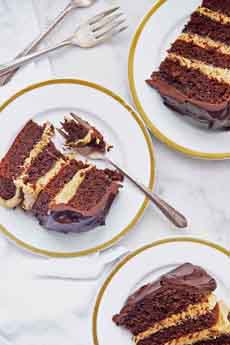
[1] German chocolate cake. The recipe link is at right (photo © Betty Crocker).
[2] Chocolate layer cake with peanut butter filling and frosting. The recipe link is at right (photo © King Arthur Baking).
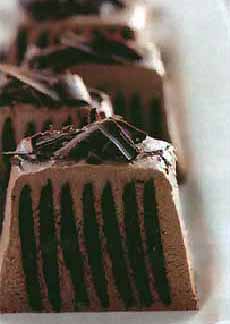
[3] Chocolate icebox cake. The recipe link is at right (photo © Kings Cupboard).
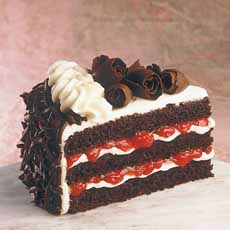
[4] Black Forest cake. The recipe link is at right (photo © Sweet Street Desserts).
[5] Molten chocolate cake, also called lava cake. The recipe link is at right (photo © Galaxy Desserts). |
|
What to bake on January 27th, National Chocolate Cake Day? Take a look at the chocolate cake recipes that follow.
> The history of cake and the different types of cake: a photo gloassary.
> The year’s 55 cake holidays.
> The history of chocolate.
> See the chocolate cake and wine pairings below.
MORE CHOCOLATE CAKE RECIPES
Black Forest Cake
Chocolate Birthday Cake (Layer Cake)
Chocolate Biscuit Cake: A Royal Favorite
Chocolate Cabernet Bundt Cake
Chocolate Cheesecake
Chocolate Cupcakes
Chocolate Flowerpot Cake (Dirt Cake)
Chocolate Icebox Cake
Chocolate Molten Lava Cake
Chocolate Peanut Butter Layer Cake
Chocolate Rum Cake
Chocolate Spider Cake For Halloween
Chocolate Stout Cake
Chocolate Truffle Torte
Chocolate Whiskey Cake
Devil’s Food Cake
German Chocolate Cake
Naked Chocolate Peanut Butter Cake
Rudolph The Reindeer Chocolate Cake
No-Bake Chocolate Cake
Pumpkin-Shape Chocolate Bundt For The Fall
Red Velvet Cake Original Recipe
Sacher Torte
White Chocolate Cake
CHOCOLATE CAKE & WINE PAIRINGS
Amarone. Amarone is very similar to Port, a classic dessert wine. This full-bodied red wine has a rich chocolate flavor, with spiced and coffee undertones. It’s an international favorite and a bit on the expensive side. If you’re on a budget, a Ripasso is a good substitute.
Beaujolais Nouveau. Beaujolais Nouveau is not specifically a dessert wine, but it is a young, simple, and fruity red wine made that pairs with desserts. It is made from Gamay grapes produced in the Beaujolais region of France.
Brachetto D’Acqui. Brachetto is a sweet sparkling red wine from the Piedmont region of Italy. It’s the perfect affordable dessert wine that goes naturally well with everything from fresh fruits to pastries and elaborate desserts.
Lambrusco. Lambrusco, from Italy, is made in dry (secco), semi-sweet (semisecco), and sweet (dolce) varieties. The dolce wines can be very sweet. Perhaps get a semisecco and a dolce to see which you prefer.
Late Harvest Zinfandel. A contribution from California, late-harvest wines are made from grapes that are left on the vine after they’ve reached their peak ripeness. This intensifies the sweetness and delivers lush, nectar-like flavors.
Madiera. Oxidized, fortified wines such as Madeira from Portugal have been exposed to heat to develop a complex muted, caramel-like saltiness—think toffee, dried fruit, and orange rind—which complements any chocolate cake with nuts, including flourless chocolate cakes.
Rosso Dolce. Rosso Dolce is a blush wine produced in the Moscato d’Asti style, with residual sugars giving it an off-dry finish. Instead of the Moscato (Muscat Blanc) grape, it is produced with red grapes from the Trentino-Alto Adige area of Italy.
Tawny or Ruby Port. Ports are well-loved dessert wines from Portugal and are a natural pairing with anything chocolate (including a box of chocolates). Tawny Port has primary notes are caramel and hazelnut, with secondary berry and mocha flavors. Ruby Port is less complex with fruity flavors. (Here are the different types of Port.)
Vin Santo. This full-bodied, sweet dessert wine from Tuscany has aromas of hazelnut, caramel, honey, tropical fruit, perfume and dried apricot. In Italy, it is customary to have a glass after dinner with biscotti to dip into the wine.
|