THE NIBBLE BLOG: Products, Recipes & Trends In Specialty Foods


Also visit our main website, TheNibble.com.

Delicious Sugar-Free Brownies & Bars From Silverland Bakery

You probably don’t have to go too far to find a good brownie. But if you need a sugar-free brownie, you may be stymied. That’s why our Top Pick Of The Week is the selection of sugar-free brownies and bars from Silverland Bakery.

Silverland Bakery was established 40 years ago in Chicago. Founder Athena Uslander was a structural engineer who needed a change.

She had been baking brownies for years and decided to open a bakery, creating a menu of old-fashioned bars, raw bars, cookies, crispy rice treats, and customized products.

She sold her delicious wares to wholesale customers as well as to consumers.

All these years later, her small-batch recipes continue to be hand-made with locally sourced, high-quality, all-natural ingredients and are preservative-free. “Crafted by heart and hand,” she says.

Silverland also makes conventual brownies and cookies, plus a Keto bars, gluten-free bars and vegan bars and cookies.

We encourage you to check out the full offering on the website as we focus her on the sugar-free line.

For friends and family who don’t eat sugar, you can keep them in the freezer to pop out for their visits. And we promise you that a gift of these sugar-free delights will be most appreciated.
 
 
SUGAR-FREE BROWNIES & BARS

This line is great for those with dietary restrictions who cannot consume sugar. Gifts, party favors. All are sweetened with maltitol except for the Keto brownie, which is made with erythritol*. All are made with butter.

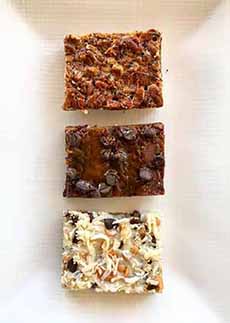
  • No Sugar Added Cocoa Cow Brownie, a marbled cheesecake brownie.
  • No Sugar Added Raspberry Crumble Bar isn’t yet on the website, but it was our favorite! Call or write to order.
  • Sugar-Free Chocolate Brownie With Nuts, topped with walnuts.
  • Sugar-Free Blondie, a chewy oatmeal batter with brown sugar, complemented with walnuts and chocolate morsels.
  • Sugar-Free Double Chocolate Brownie, chocolatey and moist, with mini chocolate morsels on top.
  • Sugar-Free Lemon Bar, tart and tangy lemon curd on a shortbread crust.
  •  
    There are also no-sugar-added and sugar-free cookies that we hope to try next:

  • Sugar-Free Chocolate Chip Cookie.
  • Sugar-Free Double Chocolate Cookie.
  • No Sugar Added Oatmeal Raisin Cookie.
  •  
    Sugar-Free Versus No Sugar Added

    According to the FDA:

  • Sugar-Free means that one serving† contains less than 0.5 grams of sugars, both natural (e.g., the natural sugar in raisins) and added. You may also see it labeled as free of sugar, sugarless, no sugar, zero sugar, or a trivial source of sugar.
  • No Added Sugar means that no sugar or any ingredient containing sugar was added during processing or packaging. You may also see it labeled as without added sugar or no sugar added.
  •  
    Here’s another term for your reference:

  • Reduced Sugar has at least 25% less sugar than the regular version of the product. You may also see it labeled as less sugar, low in sugar, or lower sugar.
  •  
     
    GET YOUR BROWNIES & BARS

    The bars arrive frozen. You can keep them in the freezer; alternately, they have a one-month refrigerated shelf life.

    Head to SilverlandBakery.com to make your selection.

    (Note that as a small family business, Silverland Bakery doesn’t always have time to update its website. Call or write if you don’t see what you want: info@silverlandbakery.com, 1.708.488.0800.)


    Chocolate and Pecan Brownies
    [1] A trio of delightful bars (all photos © Silverland Bakery).

    Three Brownies, Stacked
    [2] Premium, sugar-free dark chocolate gives the brownies great flavor.

    Sugar-Free Raspberry Crumble Bar
    [3] We’re in love with these no-sugar-added raspberry crumble bars.

    Brownies With Walnuts
    [4] If you prefer your brownies with walnuts.

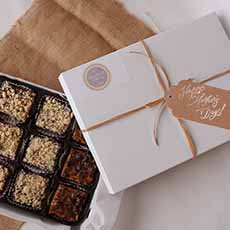
    Silverland Brownie Gift Box
    [5] Treat someone to a gift box.

     
    ________________

    *Erythritol is a sugar alcohol, a group of noncaloric sweeteners that includes isomalt, maltitol, sorbitol, and xylitol. It has a glycemic index of zero and doesn’t raise blood sugar or insulin significantly. It works well in both cooking and baking. Here’s more about sugar alcohols and Keto diets.

    †“One serving” refers to the labeled serving size and/or the reference amount customarily consumed.


    CHECK OUT WHAT’S HAPPENING ON OUR HOME PAGE, THENIBBLE.COM.


    Comments off

    For National Trail Mix Day, Make Your Own Trail Mix With These Ingredients

    August 31st is National Trail Mix Day, a snack we love to throw together with healthy ingredients like nuts, raisins, and other dried fruits—plus chocolate chips or toffee chips, of course!

    Originally called GORP (Good Old Raisins and Peanuts) and created as an energy snack for hikers, trail mix can suit the palates of everyone, combining salty, sweet, nutty, and fruity.

    > The history of trail mix.

    > 12 more uses for trail mix.
     
     
    WHAT AMERICA WANTS IN THEIR TRAIL MIX

    MyProtein, a leading sports nutrition brand, offers a range of products from healthy snack alternatives to protein powder, vitamins, and minerals.

    The team at MyProtein did some research in advance of National Trail Mix Day using a year of Google Trends search volume.

    They found every state’s ideal trail mix combination of favorite salty, sweet, nutty, and fruity ingredients in every state. Here are the results.

    The surprise is how often popcorn appears. Maybe, if you’re eating the trail mix that day, we think.

    Keep it in a mix with raisins and other dried fruits, and some moisture will leach into the popcorn and make it soggy the next day.

    Instead, go for caramel corn. The sugar coating will help keep it crispy.

    Regional Results

    The most searched ingredient in:

  • The Midwest is popcorn.
  • The Northeast is Cheerios.
  • The South is peanuts.
  • The West had no regional winner—it seems like they have the widest variety of tastes!
  •  
     
    The Most Popular Ingredients Overall

  • #1 Popcorn
  • #2 Peanuts
  • #3 Reese’s Pieces
  • #4 Marshmallows
  • #5 Wasabi peas
  •  
    What about trail mix does your state really find tasty? Find out here. Hint: Nobody thought it was the raisins!
     
     
    THE NIBBLE’S TRAIL MIX LIST

    We’re making a list and checking it twice because it’s hard to winnow down all of these great nibbles.

    While you can select as few as four ingredients, five or six give you a more rounded recipe.

    If you find that you want 10 or more ingredients, make two different batches and see which you prefer.

    Another way—and way fun—is to have a trail mix party, and let everyone make their own batch. There’s more about it below.

    Savory Ingredients

  • Cheerios
  • Cheese Puffs
  • Chex
  • Chickpeas (roasted)
  • Dried Herbs
  • Edamame (roasted)
  • Jerky
  • Nuts (Almond, Brazil, Cashew, Hazelnut, Macadamia, Peanut, Pecan, Pistachio, Walnut)
  • Popcorn
  • Pretzels
  • Pumpkin seeds
  • Sesame sticks
  • Wasabi peas
  •  
    Sweet Ingredients

  • Banana Chips
  • Berries: Blueberry, Cranberry, Strawberry (Dried)
  • Cacao/Cocoa Nibs
  • Caramel Corn
  • Chocolate-Covered Coffee Beans
  • Chocolate Chips/Chunks
  • Coconut Chips
  • Granola
  • M&Ms
  • Mini Marshmallows
  • Other Dried Fruit: Apple, Apricot, Cherry, Mango, Pineapple, Raisin, Sultana
  • Peanut Butter Candies/Cups
  • Peanut Butter Chips
  • Raisins
  • Reese’s Pieces
  • Toffee Bits
  • Yogurt Covered Raisins
  • White Chocolate Chips
  •  
     
    HOW TO MAKE YOUR OWN TRAIL MIX

    Mix and match:

  • Candy: carob chips, chocolate chips/chunks, crystallized ginger, mini marshmallows, M&M’s, Reese’s Pieces, toffee, yogurt clusters.
  • Cereal: Cheerios, Chex, Corn Flakes, graham cracker cereal, Grape Nuts, mini shredded wheat, rolled oats.
  • Dried fruits: apples, apricots, banana chips, blueberries, candied orange peel (gourmet!), coconut, dates, dried cherries, and cranberries (our favorites!), dried mango, figs, raisins.
  • Exotica: crystallized ginger, Japanese rice crackers, jerky bits, sesame sticks, wasabi peas.
  • Nuts almonds, cashews, pecans, pistachios, walnuts, or other favorite (chop large nuts into chunks).
  • Savory: freeze-dried edamame, peas or veggie chips; pretzels, mini crackers, roasted chickpeas, soybeans or soy nuts, wasabi peas.
  • Seeds: chia, pepitas (pumpkin seeds), sunflower seeds
  •  
     
    SET UP A TRAIL MIX PARTY BAR

    Let guests make their own party favors—i.e., their DIY signature trail mix. Set up a table with:

  • Different trail mix ingredients.
  • Plastic snack bags.
  • Wide Sharpies so people can keep track of whose is whose.
  • Scoops for filling the bags (we used our set of measuring cups).
  • A “dump bucket” for mistakes, e.g., someone added peanuts to his mix and then decided against them. He can just dump his whole mix into the bucket and start over. Afterward, you’ll find takers for the “bucket batch.”
     
     
    TRAIL MIX RECIPES

  • Trail Mix Recipe
  • Spicy Trail Mix Popcorn
  • Trail Mix Peanut Butter Sandwich
  •  

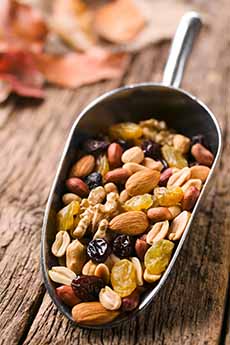
    Trail Mix In A Scoop
    [1] Why buy trail mix when you can make it exactly as you want it (photo © Ildi | Panther Media).

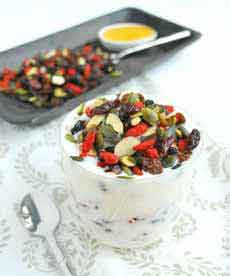
    Yogurt With Trail Mix
    [2] Top your yogurt or pudding with trail mix (photo © Back To The Book Nutrition).

    Trail Mix On Waffles
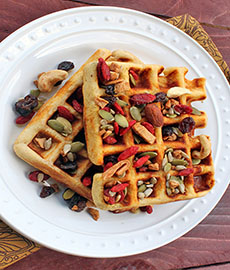
    [4] Trail mix on waffles and pancakes? Why not. Add a scoop of ice cream and call it dessert (photo © Sierra Trading Post).

    Trail Mix Topping On A Cupcake
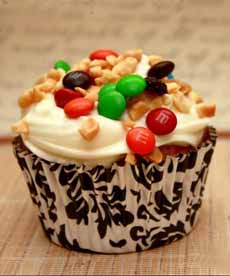
    [5] Garnish cupcakes or cakes with trail mix (photo © Mom’s Madhouse).

    Brownies With Trail Mix On Top
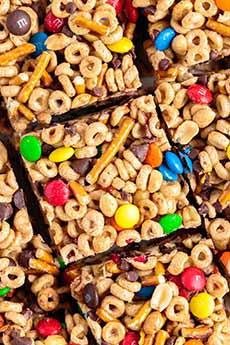
    [7] Press trail mix into brownies or cookies right out of the oven. Here’s the recipe for these bars (photo © Family Dinners).

    Trail Mix Muffins
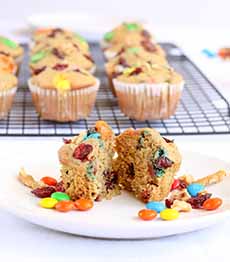
    [8] Trail mix muffins? Why not? Here’s the recipe (photo © Kiss In The Kitchen).

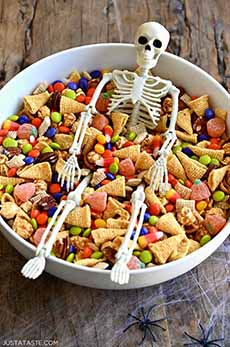
    Halloween Trail Mix In A Bowl With A Toy Skeleton
    [9] Make seasonal mixes, like this Halloween trail mix (the skeleton is fun but optional). Here’s the recipe (photo © Just A Taste).


    CHECK OUT WHAT’S HAPPENING ON OUR HOME PAGE, THENIBBLE.COM.


    Comments off

    A Checkerboard Melon Salad Recipe & The History Of Melon

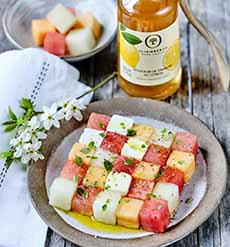
    Checkerboard Melon Salad With Cantaloupe, Honeydew, & Watermelon
    [1] A beautiful melon salad (photos #1, #2, and #3 © Oliviers & Co).

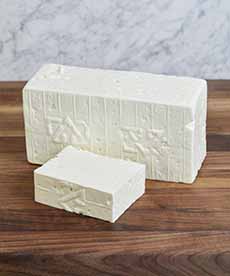
    Sheep's Milk Feta Cheese
    [2] Cut the cubes from a block of feta (photo © DeLaurenti).

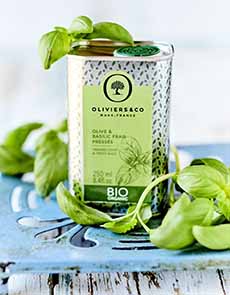
    Can Of Oliviers & Co Basil Olive Oil
    [3] Fresh basil is pressed with the olives to create this premium oil (more about it at Oliviers & Co).

    Bottle of Oliviers & Co Lemon Vinegar
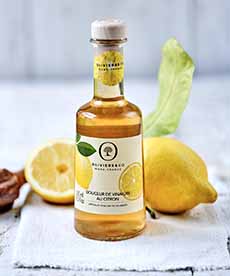
    [4] Lemon Specialty Vinegar, mild without bitterness (more about it at Oliviers & Co).

    2 Shallot Bulbs
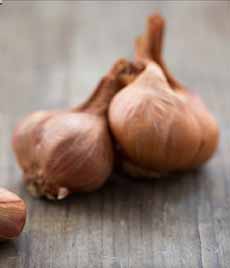
    [5] Shallots come in both yellow- and red-skinned varieties (photos #5, #6, #7, and #8 © Good Eggs).

    Cantaloupe Half & Slices
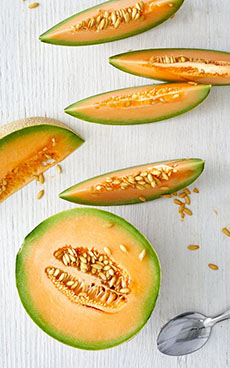
    [6] Cantaloupe, cultivated for thousands of years in Egypt, Rome, and beyond.

    Honeydew Melon Half & Slices
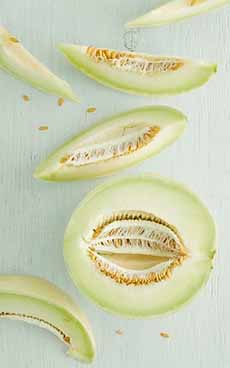
    [7] Honeydew, a pale green melon with pale green flesh.

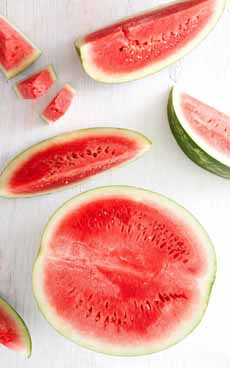
    Sliced Watermelon
    [8] Watermelon, here bred into a seedless variety.


    If your knife skills are good—or if you want an occasion to practice them—consider this checkerboard salad made with cubes of melon, cucumber, and feta cheese.

    The recipe, created by Oliviers & Co, uses a dazzling vinaigrette made with the brand’s basil olive oil and lemon vinegar.

    After you’ve made it the original way, you can play with the dressing flavors.

    (We had chili oil and pomegranate vinegar, among other flavors, in our cupboard. We liked how the chili oil spiced things up. You could also shake a garnish of red chili flakes over the salad.)

    You can serve the checkerboard as an appetizer/first course/starter (see the differences below) or as dessert. The feta and fruit combination makes it a nouvelle cheese course.

    > The history of watermelon.

    > The history of cantaloupe and honeydew melons is below.

    > The history of feta cheese.
     
     
    RECIPE: CHECKERBOARD SALAD WITH MELON & FETA CHEESE

    The original recipe called for cucumber instead of honeydew. We substituted honeydew because of the challenge of cutting cubes from a cucumber.

    If you choose to use a cucumber, get a seedless cucumber (also called an English cucumber or hot-house cucumber).
     
    Ingredients For 4 Servings

  • 1/4 watermelon
  • 1 cantaloupe melon
  • 1 small honeydew melon
  • 3.5 ounces feta cheese
  • Garnish: 3 sprigs of fresh basil, julienned or torn
  •  
    For The Vinaigrette

  • 3 tablespoons basil olive oil
  • 1 tablespoon lemon-infused vinegar
  • 1 shallot, minced
  • Salt and pepper to taste
  •  
    Preparation

    1. CUT the cantaloupe, honeydew, watermelon, and feta into as even cubes as possible and arrange them in a checkerboard pattern on 4 plates.

    2. MIX the basil olive oil, lemon vinegar, and minced shallot.

    3. DIVIDE and drizzle the dressing over the checkerboard, sprinkle with basil leaves, and serve chilled.
     
     
    APPETIZER, STARTER, FIRST COURSE: WHAT’S THE DIFFERENCE?

    While the three terms are sometimes used interchangeably depending on the restaurant, the difference between them centers on the size and complexity of the dish. All can be hot or cold.

  • A starter is the smallest and simplest, a light dish that could also be served as a snack. Examples include antipasto skewers, bruschetta or crostini (the difference), canapes/hors d’oeuvres (the difference is in the footnote below*), fried zucchini or mozzarella sticks, jalapeño poppers, stuffed mushrooms, etc. A starter is meant to whet the appetite for the main course (or for the first course, if there is one).
  • An appetizer is more substantial than a starter. It can be an artichoke, a crab cake, or other seafood (oysters, shrimp cocktail, smoked salmon), salad or soup, small meat dishes like riblets, and an extensive list of other choices depending on the cuisine.
  • A first course is the largest and most substantial. It can be smaller or the same size as the main course. Examples include pasta, risotto, or a fish or poultry course before a main course of red meat.
  •  
     
    THE HISTORY OF CANTALOUPE

    Cantaloupes are believed to have grown wild in areas from Turkey to China, including northwest India, Afghanistan, and Uzbekistan [source].

    They were first cultivated in the Near East, in the Nile River Valley of Egypt. The Romans likely found them growing there and brought them back to Rome to cultivate.

    Cantaloupe, a subspecies of muskmelon (Cucumis melo subspecies. melo in the Cucurbitaceae family†) that was introduced to Europe in the 15th century. It quickly became popular for its sweetness.

    In fact, it’s the most popular type of muskmelon (Cucumis melo), the genus that also includes the casaba, charentais, crenshaw, galia, honeydew, Persian, spanspek, and Santa Claus melons, among others.

    The melon had been grown in the Mediterranean for millennia, but the name cantaloupe emerged in the 18th century via the French cantaloup.

    The story goes that back in the 15th century, the papacy had a summer country residence in Cantalupo di Sabina, a town in the Sabine Hills outside of Rome. Cantalupo means “howling wolf.”

    The melons were brought by an envoy from Armenia as a gift for Pope Paul II, who served from 1464 to 1471. They so delighted the pope that they were cultivated in the area.

    However, we’re not sure when Italians started calling the melon “cantalupo,” or whether the name came from one of the seven other towns in Italy and one town in France with the same name [source].

    But, as we travel northward, the first known printed reference to “cantaloupe” appears in English in 1739 [source].
     
     
    Cantaloupe In The Americas

    Christopher Columbus brought cantaloupe to the New World. Several cantaloupe varieties were reportedly grown in the West Indies as early as 1494.

    Cantaloupes were also cultivated by Native Americans near the present city of Montreal in 1535. While they may have been grown before the 18th century in the continental U.S., cantaloupes were cultivated in the vicinity of Philadelphia before 1748.

    It took until around 1890 for cantaloupe to become a commercial crop in the U.S., and it was initially and was initially centered in Delaware, Maryland, and New Jersey.

    Today the principal growing areas are California (accounting for more than 65% of the cantaloupe produced in the U.S.), Arizona (26%), with the remaining 9% divided mostly among Georgia and Florida [source].

    The melons are available throughout the year but the harvesting season peaks in the summer.
     
     
    The History Of Honeydew

    The history of honeydew melons somewhat parallels the history of cantaloupe.

    Honeydews (Cucumis melo var. inodorous) have been cultivated for thousands of years. Paintings of the melons were discovered in Egyptian tombs dating back to 2400 B.C.E.

    Egyptians regarded honeydew as a sacred fruit. Tomb hieroglyphics illustrate the melon’s possible uses in the afterlife.

    The melon’s exact origins are unknown. Some sources point to the Middle East, Western Asia, or West Africa as the first to cultivate the fruit, more than 4,000 years ago [source].

    Honeydews were introduced to Europe in the 15th century, primarily to France and Algeria. They were cultivated in greenhouses.

    The melons were brought to the New World by Spanish and Portuguese explorers.

    Christopher Columbus brought seeds across the ocean, although indigenous peoples were already cultivating the fruit (or something similar) in temperate regions throughout North America.

    Spanish explorers began growing the melons in California,
     
     
    How Honeydew Got Its Name

    Honeydew melons acquired their name from an American plant breeder, John E. Gauger. The melons were initially known in France as melon d’Antibes blanc d’hiver or white Antibes winter melon.

     
    But as the melons were introduced to the U.S., many varieties were often unlabeled or given more commercial names.

    In 1911, the melon was served to guests at the restaurant of a high-end hotel in New York City. One guest enjoyed the unlabeled melon so much that he saved seeds from the fruit and mailed them to Gauger for further research (Gauger was famous for melon breeding).

    Gauger worked with the United States Department of Agriculture to identify the variety, and in 1915, the USDA concluded that the unknown seeds were from a white Antibes winter melon.

    Gauger renamed the melons as honeydew, a more appealing name for American consumers. Honeydew remains one of the primary names used for the variety worldwide.
     
     
    Honeydew Today

    Honeydew melons thrive in semiarid, sunny climates and are grown worldwide. China and Turkey are the leading producers, followed by the U.S. in California and Arizona.

    The melons are also cultivated in Costa Rica, Guatemala, Honduras, and Mexico. Exported to the North American and European markets, they are available year-round [source].
     
    ________________

    *Hors d’oeuvres (pronounced: or DERV) is the master category of which a canapé is a subset. The term hors d’oeuvres translates to “outside of work,” referencing the fact that hors d’oeuvres are meant to be eaten as a separate event, rather than part of the main meal. (This is what distinguishes them from appetizers.) Hors d’oeuvre can be served hot or cold and can consist of small portions of just about anything savory. A canapé (can-uh-PAY) is a smaller hors d’oeuvre served on a base of bread, cracker, pastry, or toast. It is a finger food, eaten in one or two bites, and served cold (room temperature). Canapé is the French word for sofa. The idea is that the toppings sit atop a “sofa” of bread or pastry.

    † The Cucurbitaceae family also includes summer and winter squash, pumpkins, cucumbers, watermelons, and gourds.


    CHECK OUT WHAT’S HAPPENING ON OUR HOME PAGE, THENIBBLE.COM.


    Comments off


    © Copyright 2005-2026 Lifestyle Direct, Inc. All rights reserved. All images are copyrighted to their respective owners.