THE NIBBLE BLOG: Products, Recipes & Trends In Specialty Foods


Also visit our main website, TheNibble.com.

VALENTINE GIFT: Heart-Shaped Cheesecake

It’s just a few weeks until Valentine’s Day. We’ll be posting some special gift ideas that catch our eye.

First up are these heart-shaped cheesecakes from Harry & David:

  • The New York-style cheesecake sits atop a chocolate cookie crust.
  • It’s topped with a layer of semisweet chocolate and a white chocolate drizzle.
  • A couple can split one of the two 12-ounce cheesecakes for dessert, and the second one for breakfast.
  • Or, freeze the second cheesecake for future nibbling.
  •  
    Buy the cheesecakes online at HarryAndDavid.com.
     
    Or…
     
    BAKE YOUR OWN HEART SHAPED CHEESECAKE

    You’ll need a heart-shaped springform in the right size for your recipe:

  • 9″ heart springform pan
  • 10″ heart shape springform pan
  • 11.5″ heart shape springform pan
  • Individual 4″ heart springform pans
  •  
    > Here are our favorite cheesecake recipes.


    Two 12-ounce cheesecakes make a doubly good Valentine’s treat. Photo courtesy Harry and David.


    SAVORY CHEESECAKE RECIPES

    If your Valentine isn’t partial to sweets, here are five savory cheesecake recipes, which can be enjoyed with Champagne or other aperitif, as an appetizer or as a cheese course/savory dessert. The tempting flavors:

  • Basil Cheesecake
  • Blue Cheese Cheesecake
  • Gruyère & Lobster Individual Cheesecakes
  • Provolone & Corn Cheesecake
  • Tuna Cheesecake
  •  
    These savory cheesecakes are one of our favorite cocktail party foods, set out with an assortment of crackers and toasts. So even if they won’t be on your menu for Valentine’s Day, keep them in mind for other festivities.


    CHECK OUT WHAT’S HAPPENING ON OUR HOME PAGE, THENIBBLE.COM.


    Comments off

    TIP OF THE DAY: Chirashi Sushi At Home


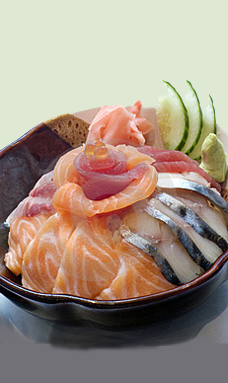
    Chirashi sushi: fish layered atop a bowl of
    rice. Photo | Dreamstime.
     

    Making sushi rolls or nigiri—the slices of fish atop a bed of rice—takes some training and dexterity.

    But you don’t need the skills of a sushi chef to serve chirashi sushi at home: sliced fish arranged atop a bowl of rice.

    Or, you can make our Japanese-American “fusion chirashi”: sliced fish atop a green salad.

    Chirashi is not pressed together like other forms of sushi (see our Sushi & Sashimi Glossary for the different types of sushi). The word “chirashi” means “to scatter.”

    Japanese cooks are too disciplined to scatter the ingredients willy-nilly, so an appealing placement of fish and vegetables is presented.

    You don’t have to use as much fish on top of your chirashi as shown in the photo (which is quite a deluxe portion), as long as you cover at least half of the rice with fish and vegetables.

    Look for whatever is fresh at the fish market—ask the fishmonger for recommendations.

    Cooked shrimp and salmon caviar are wonderful ingredients. We’re partial to raw scallops and oysters.


  • Sushi rice. Make this sushi rice recipe, slice some fish and enjoy chirashi sushi at home.
  • Add cooked fish. Since a variety of sushi/sashimi fish ingredients are precooked (octopus and squid, for example; mackerel is marinated), feel free to add canned tuna to your creation.
  • Condiments. Serve your chirashi with conventional soy sauce and wasabi, plus a wedge of lemon or lime. It isn’t authentic Japanese, but we love a hearty squeeze of citrus on our sushi and sashimi, and it cuts down the amount of soy sauce required. Even if you use low-sodium soy sauce, the sodium quotient is high, more than 500 mg of sodium per tablespoon.
  • Vegetables. Add sliced cucumber, chopped scallions, homemade pickled vegetables and anything else that appeals to you.
  • Pickled ginger. You may be able to find Japanese pickled ginger at your market. Or, pickle your own by marinating thin slices of ginger in rice vinegar and sugar. The pink color, if you want it, is a tiny amount of red food coloring.
  • Other ingredients. Be creative, go fusion. While olives, for example are not part of Japanese cuisine, they go nicely with raw fish. It’s the same with Chinese ingredients such as water chestnuts. And if you’ve had cans of baby corn, bamboo shoots or bean sprouts on the shelf for too long, it’s time to use them.
  •  
    You can serve chirashi sushi as an appetizer or a main course. You can serve individual portions, as at restaurants, or make one large bowl family-size bowl, which is typical in Japanese homes. If you don’t have chopsticks, forks are fine.

    Now, think about chirashi atop a green salad. Start by choosing your greens:


    “CHIRASHI” GREEN SALAD

    Ingredients

  • Mesclun
  • Frisée
  • Endive and/or radicchio
  • Shredded cabbage and carrots (cole slaw mix)
  • Green onion, red onion or sweet onion
  • Assorted fish and shellfish
  • Wasabi vinaigrette (recipe below)
  •  
    EASY WASABI VINAIGRETTE RECIPE
    Ingredients

  • 1 tablespoon rice vinegar
  • 1/2 teaspoon wasabi paste
  • 1 tablespoon soy sauce
  • Optional: 1 teaspoon toasted sesame seeds
  • Optional: 1/2 teasppon grated ginger
  • 3 tablespoons extra-virgin olive oil
  • Salt and pepper to taste
  •  
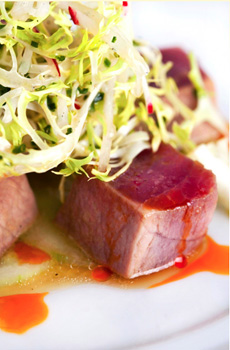
    Sashimi with a shredded cabbage-frisée salad. Here, the tuna is cut into chunks instead of sashimi-style slices. Photo courtesy Triomphe | NYC.
     

    Preparation

    1. COMBINE vinegar and soy sauce; whisk in wasabi.

    2. WHISK in oil and sesame seeds. Season as desired.
     
    Enjoy: It’s healthful and low in calories!


    Comments off

    TIP OF THE DAY: Pairing Coffee And Cheese

    Swiss Cheese and Coffee
    Pair a medium-strength cheese with a
    medium-roast coffee. Photo © Natalia
    Lisovskaya | Dreamstime.
      Often there is more than one food holiday on a particular day. Rarely do we see a trio of food holidays; and January 20th is the only day we know of with four food holidays: National Buttercrunch Day, National Cheese Lover’s Day, National Granola Bar Day and National Coffee Break Day.

    In theory, you could celebrate them all at once: A bagel and cream cheese with the morning coffee break and a granola bar and some buttercrunch at the afternoon coffee break.

    But we’ve decided to focus today’s tip on something more enlightening: pairing coffee and cheese.

    The coffee-cheese pairing is more common than it might seem. The Swiss, Scandinavians and other Europeans enjoy cheese with their morning coffee. Americans regularly breakfast on coffee plus cream cheese on the aforementioned bagels, cheese omelets, cheese danish, grilled cheese sandwiches and Egg McMuffins (grilled cheese, ham and a fried egg on a toasted English muffin).

    But let’s take a look at deliberate coffee and cheese pairings.


    PAIRING CHEESE WITH COFFEE

    As with wine and beer pairings, mild cheeses should typically be paired with a mild roast coffee, medium-strength cheeses with a medium roast and strong cheeses with a strong roast.

  • Try mild creamy cheeses like young chévre, mozzarella di bufala, piave, port salut and ricotta with mild coffee (Cinnamon or New England roast, for example). A mild cheese like Brie should be eaten with a mild coffee; but if the Brie has aged and is mushroomy and a bit ammoniated, then a medium roast pairs better. See the different types of coffee roasts.
  • Medium-strength cheeses like Cheddar, some blues and Swiss cheeses (Appenzeller and Emmentaler, for example) pair with a medium roast (American, Breakfast or City roast, for example).
  • Aged cheeses and washed-rind cheeses that are strong in flavor, such as Epoisses, Munster, Pont l’Eveque, Roquefort, Stilton and Taleggio, require dark roast (espresso, French and Italian, for example).
  • But with espresso, go back to mild, milky cheeses. It may seem a paradox, but light, lemony goat cheese and ricotta are delicious with espresso—whether for your coffee break or for dessert. Drizzle them with a bit of honey or maple syrup, and enjoy with biscotti instead of bread.
  •  

    COFFEE AND “CARAMEL” CHEESES

    Some cheeses beg to be paired with coffee. Two that are known for caramel notes:

  • Aged Gouda. While a mild young Gouda cheese pairs well with light and medium roasts, aged develops sweet, caramelized flavors that demand a dark roast—French, Italian or espresso.
  • Gjetost (YAY-toast), from Norway, is a caramelized cheese made from the whey of goat cheese; the name is Norwegian for goat cheese. The whey is slowly cooked down until the natural milk sugars caramelize and the color turns light brown. It looks and tastes like a caramel or fudge. While it’s most often served as a dessert cheese or dessert fondue, it i a delicious sweet for a coffee break. Look for it at a cheese specialty store or online.
  •  
    Barely Buzzed, one of our favorite cheeses, is a Cheddar rubbed with ground Turkish coffee. It’s equally delicious with coffee or beer. Photo courtesy Beehive Cheese..
     

    COFFEE-RUBBED CHEESE

    How about a cheese made with coffee? Utah-based Beehive Cheese Company coats some of their artisan Cheddar cheese in roasted Turkish coffee and lavender buds: an inspired combination that creates an edible rind and adds nutty flavor to the mild Cheddar. We like this unique cheese so much, it was a Top Pick Of The Week. Read our review of Barely Buzzed.
     
    As with anything, your own palate and desire to experiment will lead to favorite pairings. Let us know what you come up with.
      

    Comments off

    TIP OF THE DAY: Think Outside The Popcorn Box With These Alternative Popcorn Uses


    [1] Use popcorn as a soup garnish (all photos © National Popcorn Board).


    [2] Add a popcorn crust to fish or chicken Here’s the recipe.


    [3] Popcorn cereal, a popular breakfast in Colonial America. Here’s the recipe.

    Popcorn Meatloaf
    [4] Add popcorn to your meatloaf. Here’s the recipe.


    [5] Top your chili with popcorn.


    [6] Thai peanut- and popcorn-crusted chicken. Here’s the recipe.


    [7] Add popcorn to a salad. Here’s the recipe.


    [8] Add popcorn and cheese to cornbread Here’s the recipe.


    January 19th is National Popcorn Day. We asked chef Johnny Gnall to come up some alternative ways to enjoy it.

    He fired back with: POPCORN: IT’S NOT JUST FOR MOVIE NIGHT ANYMORE.

    Enjoy his recipe ideas, below.
     
     
    In honor of National Popcorn Day, I spent some time popping a heck of a lot of popcorn and finding stuff to do with it—besides eating my weight in popcorn while watching a John Hughes marathon.

    Popcorn is pretty cheap, so feel free to stock up and then try as many of these as you want.

    Each of the ideas below can be used with plain popcorn if you want to keep it neutral. But feel free to spice things up, so to speak:

    You can flavor your popcorn with anything from Tabasco to ginger to garlic to nori powder.

  • DRY IS BETTER: Do your best to keep added ingredients dry: Wet popcorn can be relatively unpleasant. This means you should be sparing with oils, vinegars and sauces, using just enough to get your flavors to stick, and adding them just before serving the popcorn.
  • WAIT UNTIL JUST BEFORE SERVING: Also hold off on adding popcorn to something wet (like salad or ceviche—Ecuadorians top their ceviche with popped corn) until the last minute, so it doesn’t sit there soaking.
  •  
     
    SOUP: MAKE YOUR SOUPS “POP”

    From a steaming bowl of chowder to cool, clean gazpacho; from creamy puréed cauliflower soup to tart cherry soup:

    Popcorn is the garnish that adds a pleasant, fluffy bite to any spoonful. It’s also a dazzling garnish when placed delicately upon the surface of a beautiful soup.
     
     
    FRIED CHICKEN OR FISH: BATTER UP

    Pop some popcorn, then crush it by placing plain or flavored popcorn in an unsealed plastic bag; gently roll over it a few times with a rolling pin or a wine bottle.

    Put it aside and prepare your mise en place for fried chicken or fish: egg wash, flour, oil, etc.

    After you dredge the chicken, roll it in the crushed popcorn as your last step before frying.

    You can press the crushed kernels gently into the chicken/fish to help them stick. Don’t try to entirely cover the protein in popcorn, or it may burn before the chicken cooks.
     
     
    PICNIC SALADS: POPPING UP

    Popcorn is a terrific addition to comforting food salads like chicken salad, potato salad, even pasta salad.

    As mentioned above, hold off on adding popcorn to the dish until just before serving, to keep the kernels from getting too soggy.

    You can use the popcorn as a foil to the richness of a salad by seasoning it with bright, clean flavors: Lemon zest and a little cayenne works like gangbusters.

     
     THE UN-CROUTON

    Croutons add a swell crunch to salads; but for those who can’t stomach gluten, croutons are obviously a no-go unless you make them from gluten-free bread.

    To get that crunch and add another layer of flavor to any salad with less effort, pop some popcorn (corn is gluten free) and toss it with olive oil, spices, salt and pepper.

    Then, sprinkle it over a bowl of salad. You may end up swearing off croutons altogether, opting for this healthier, whole grain, air-popped alternative.
     
     
    GOAT CHEESE: LAYER YOUR LOG

    You may be surprised at what a delight can come from a store-bought log of chèvre (goat cheese), some popcorn and a little imagination.

    Pop, season and gently crush the popcorn as described above, then set aside.

    Remove the log of chèvre from its packaging and bring it to room temperature; then drizzle it with a little olive oil and roll it in the plain or flavored popcorn to coat evenly.

    You can also mix the crushed popcorn with some chopped nuts or dried fruit to add a variety of flavors and textures. We love pistachios with dried cherries, or sliced almonds and orange zest.
     
     
    MOULES FRITES: HOLD THE FRITES

    When you’re having a big, steaming bowl of mussels or clams, one of the best parts is sopping up the hearty, sumptuous broth at the bottom.

    Crusty bread is perfect, and crispy shoestring fries are a close second. But for those who seek a healthier alternative, popcorn may be just the ticket.

    Yes, we have been avoiding getting our popcorn soggy up to this point; but when the stuff doing the sogging is rich, warming, white wine and shallot and butter perfection, we don’t mind a mouthful of popcorn soaked in it.

    You may even want to keep a bowl of the popcorn at your side to re-up throughout the meal.
     
     
    THE ICING ON THE CAKE

    Most people love popcorn, and most people love desserts. So it doesn’t take a genius to figure out that popcorn on or in dessert is a home run.

    You can look to the obvious, caramel corn, and all of its scrumptious forms and variations: popcorn balls, Fiddle Faddle, Moose Munch from Harry & David….

    The tried-and-true team up of popcorn, caramel and virtually anything else is likely to end up delicious.

    But a combination I find even more enticing (thought admittedly more naughty) is the pairing of lightly salted popcorn with cake frosting.

    I go crazy for a chocolate-frosted layer cake sprinkled with gently crushed, salted popcorn/

    A single, flavored (or even chocolate dipped) kernel of popcorn at the peak of cupcake is an easy, tasty garnish; and for kids, a fluffy popcorn rain that covers the whole cupcake can be even more fun, both to assemble and to eat!
     
     
    MOVE OVER, MICROWAVE

    Enjoy these simple, creative ways to get the most out of what most people know only as a snack food; and never be afraid to think outside the kernel (pun inevitably intended).

    Get popping (no pun intended), and remember that microwave popcorn should never be an option!

    Stove-top popping takes literally five minutes and is easy as can be.

    You’ll also avoid diacetyl, a chemical used in the production of microwave popcorn that has caused “popcorn lung”—a disease that’s not at all tasty.

     
    RECIPE: HOW TO POP CORN ON THE STOVE TOP

    Ingredients

  • 3 tablespoons grapeseed, peanut or safflower oil or other high smoke point oil
  • 1/2 cup popcorn kernels
  • Salt and other optional seasonings
  • A deep, heavy-bottomed pot with lid
  •  
    Preparation

    1. PLACE the oil in the pot and bring to temperature over a medium-high heat.

    2. ADD three “test kernels.” When one or more of them pop, add the remaining popcorn kernels. Stir to coat with oil and cover with the lid.

    4. SHAKE the pot gently to prevent the kernels from burning. Continue to shake until you can no longer hear kernels moving on the bottom of the pan. Err on the side of caution; popcorn burns easily.

    6. TURN OFF the heat and continue to shake the pot. When you hear no movement, cautiously open the lid: You can get hit by flying kernels.

    7. ADD optional seasonings immediately: Warm popcorn better absorbs butter, grated cheese, chile oil, spices, etc.
     
     
    > FIND MORE OF OUR FAVORITE POPCORN SNACKS AND POPCORN RECIPES.


    Comments off

    TIP OF THE DAY: Try Farro, An Ancient Grain

    A “leftovers” salad: farro with cooked
    carrots, peas and corn; diced tomatoes and
    ham; sliced olives and cooked yellow bell
    pepper. Photo © Denio Rigacci | Dreamstime.

      Farro is the original wheat, one of the first cereals domesticated in the Fertile Crescent. It nurtured the population of the Mediterranean and Middle East for thousands of years. It was cultivated by the ancient Egyptians; it became the staple ration of the Roman Legions; it was ground to create the original polenta.

    It has a nutty flavor; a firm, chewy texture; and is lighter in body than traditional grains such as rice and barley. Like arborio rice, farro releases a creamy liquid similar when cooked and can be used to make a [chewier] risotto.

    Because it was harder to grow and produced lower yields, farro, an unhybridized form of wheat, took a back seat to higher-yielding hybrids. By the beginning of the 20th century, there were a just a few hundred acres under cultivation in Italy and little was grown elsewhere, except in Ethiopia (where emmer constitutes about 7% of the wheat crop).

    Gourmet restaurants saved the farro crop—or rather, it was saved by the farmers of the French Haute Savoie who brought their product to them.

    Always seeking something new to please their clientele, chefs embraced farro in soups, stews and sides. Their foodie clients wanted more, and the health-conscious discovered the nutrition of this whole grain. Today, you can find it at the supermarket.


    FARRO IS NOT SPELT; IT IS EMMER WHEAT

    Farro looks rather like spelt, another early version of wheat; but they are not the same. Farro is emmer wheat, the original wheat. The botanical name for farro and emmer wheat is Triticum dicoccum; spelt is Triticum spelta; our modern wheat is Triticum aestivum.

  • Farro must be soaked, whereas spelt can be cooked directly from the package.
  • Cooked farro is firm and chewy; spelt is soft and becomes mushy when overcooked.
  • To be sure you’re getting whole grain farro, look for “whole” on the label. “Pearled” farro is not a whole grain.
     
    Whole grain farro is high in fiber plus magnesium and vitamins A, B, C and E. It has less gluten than other varieties of wheat, making it easier to digest. As with other grains, it can be ground into flour to make bread and pasta.
  •  

    Pick up a bag of farro on your next trip to the food store.

  • Breakfast: Use farro in place of your morning oatmeal. Top it with apples, maple syrup and cinnamon.
  • Leftovers: Add any type of leftovers to farro to create a new side or salad, as we did in the photo above.
  • Lunch Salad or Side: Combine cooked farro with olive oil, tomatoes, feta and olives for a Mediterranean-inspired salad. Or try this delicious farro and beet salad recipe.
  • Rice Substitute: Cook and serve as you would serve rice.
  • Soups & Stews: Use farro in soups and stews for a heartier, earthier flavor.
  • Soup Meal: Cook farro with vegetable or chicken stock and your favorite vegetables for a warming and delicious light meal.
  •  

    If you can’t find farro in your local market, check at natural foods stores. Photo courtesy Roland.

     
    What’s your favorite way to use farro? Let us know!


    Comments off

    The Nibble Webzine Of Food Adventures
    RSS
    Follow by Email


    © Copyright 2005-2026 Lifestyle Direct, Inc. All rights reserved. All images are copyrighted to their respective owners.