THE NIBBLE BLOG: Products, Recipes & Trends In Specialty Foods


Also visit our main website, TheNibble.com.

What Is Kefir & Why You Should Drink It (Delicious & Very Healthy)

Strawberry Kefir
[1] Kefir as a midday snack or even a better-for-you dessert (photo © Viktorija | Fotolia).

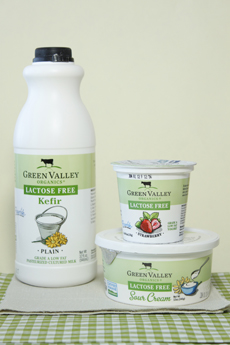
Green Valley Lactose Free Kefir
[2] Green Valley Organics makes lactose-free dairy products, including kefir, yogurt, sour cream and cream cheese. They’re a godsend to dairy lovers with lactose intolerance (photo by Elvira Kalviste | © THE NIBBLE).


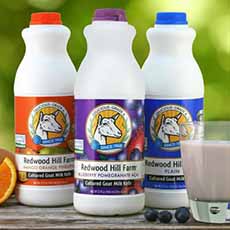
[3] If you’re sensitive to cow’s milk, or simply prefer goat’s milk, turn to Redwood Hill Farms kefir (photo © Redwood Hill Farm).

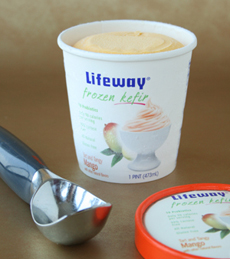
Lifeway Frozen Kefir
[4] Bottom: Frozen kefir is an alternative to frozen yogurt with a higher probiotic content (photo by River Soma | THE NIBBLE.


Media attention is so interesting. In terms of “healthier options,” we’re blanketed with pitches for kale and quinoa, hummus and Greek yogurt, even juice bars.

But we haven’t heard anything on probiotics in ages. In case you don’t remember: Probiotics are beneficial bacteria that help to promote digestive health and enhance the immune system. Five years ago, probiotics were the “it” food ingredient.

Today’s tip is to take a look at kefir, a highly probiotic beverage that is also highly delicious.
 
 
WHAT IS KEFIR

Kefir, pronounced kuh-FEAR, is a tart fermented milk beverage. It is often called “drinkable yogurt,” although the recipes for yogurt and kefir vary (see below).

In fact, kefir is even healthier than yogurt. It has been called “super yogurt,” since it is up to 36 times more probiotic than yogurt.

Kefir is believed to have originated some 2,000 years ago among the shepherds of the Caucasus Mountains region—today’s Russia, Georgia and Azerbaijan.

In more modern times, it has long been enjoyed instead of milk, tea or other beverages in northern and middle Europe and the countries of the former USSR.

As our “January Healthy Foods Month” winds down, we offer up kefir as a must-try.

You can drink it at breakfast, lunch and snack time—or enjoy frozen kefir for dessert.
 
 
MODERN KEFIR

Kefir drinkers have benefited from the the explosion of the yogurt category over the last few decades.

What was once only plain, rustic kefir is now a vibrant category of yummy, lowfat, probiotic smoothies—so satisfying that you can substitute them for milkshakes when you want a sweet treat.

  • You can find all the standard fruit flavors (banana, berry, peach and pomegranate, for example) as well as seasonal ones. Lifeway Kefir alone offers Cranberry, Eggnog, Pumpkin Spice and Watermelon flavors.
  • There are veggie flavors, too. Lifeway makes vegetable kefirs in Beet, Cucumber and Tomato.
  • There are conventional lines and organic brands.
  • For frozen yogurt lovers, there’s Lifeway Frozen Kefir.
  •  
     
    KEFIR AS A HEALTH FOOD

    Kefir is not only delicious, it’s therapeutic. It contains millions of live and active probiotic cultures that clean and strengthen the intestines and help the body with healing and maintenance functions.

    People have been touting the numerous healing effects of kefir since the early 18th century.

    It has been used to treat allergies, atherosclerosis, cancer, candidiasis, digestive disorders, heart disease, hypertension, HIV, metabolic disorders, nervous system disorders, osteoporosis and tuberculosis.

    While kefir isn’t the panacea many believed it to be, it is a very healthy food, chock full of beneficial bacteria and yeast.

  • It contains numerous vitamins, minerals, amino acids and enzymes, including healthy doses of calcium, magnesium, phosphorus and vitamins A, B2, B12, D and K.
  • Kefir contains a substantial amount of tryptophan, one of the essential amino acids that is known for its relaxing effect on the nervous system. Some people see it as a “calming” drink.
  •  
    But the reason most people seek out kefir is for digestive health: help from the millions of probiotic bacteria in each serving.

    Probiotic bacteria, which are live and active cultures, occur naturally in the digestive tract, where they help promote a healthy balance, good digestion and overall intestinal vitality.

    People with digestive problems need more of these cultures than their systems naturally contain.


    KEFIR FOR THE LACTOSE-INTOLERANT

    Raw kefir. Some mildly lactose-intolerant people can enjoy kefir, as long as it is is raw and not cooked (cooking destroys the lactase enzyme, which digests the milk sugar, lactose). Read the labels, and if you can’t find raw kefir in your regular market, check the nearest health food store.

    Lactose-free kefir. There’s lactose-free kefir for people with a higher degree of lactose intolerance. Green Valley Organics, a brand of lactose-free dairy products we can’t live without, makes not just kefir and yogurt, but cream cheese and sour cream.

    Goat’s milk kefir. For those who prefer goat’s milk, there’s Redwood Hill goat kefir. People who are mildly lactose intolerant can often tolerate goat’s milk products. Lovers of fresh goat cheese may like the affinity.
     
     
    THE DIFFERENCES BETWEEN KEFIR & DRINKABLE YOGURT

    There are several differences between yogurt and kefir, including how each is made, the types of bacteria present in each, and the flavor and consistency.

    Of greatest interest to those who seek probiotics for digestive health, is that kefir and yogurt contain different types of probiotic bacteria, which perform differently. And, as noted earlier, kefir has up to 36 times more beneficial bacteria. Net net, kefir is better for digestion.

  • Yogurt. The beneficial bacteria in yogurt help keep the digestive tract clean and provide food for the friendly bacteria found in a healthy gut. They pass through the digestive tract and are called transient bacteria.
  • Kefir. The bacteria in milk kefir can actually colonize the intestinal tract and team up with the beneficial bacteria that live there. Kefir also contains contains some yeasts.
  •  
    If you’d like to drill down into the details of the differences, a great source is CulturesForHealth.com. The website can also guide you to making your own kefit, yogurt, and other cultured products at home.
     
     
    MORE TO DISCOVER

  • All about probiotics in our Probiotics Glossary.
  • All the different types of yogurt and kefir products in our Yogurt Glossary.
  •   

    Comments off

    FOOD HOLIDAY: Corn Chips Vs. Tortilla Chips

    January 29th is National Corn Chip Day.

    Before THE NIBBLE, we thought that corn chips and tortilla chips were synonymous. They aren’t, as you’ll see below.

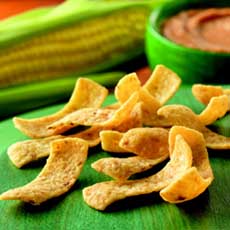
    The best-known corn chips in America are Fritos, which were created in 1932 by Charles Elmer Doolin of San Antonio.

    > The year’s 90 snack holidays.

    > The year’s 17 corn holidays.
     
     
    FRITOS HISTORY

    Dolan was the manager of the Highland Park Confectionery in San Antonio. As the story goes, he found a local man who sold deep-fried corn snacks and had 19 retail accounts. He purchased the recipe, the accounts and a handheld potato ricer for for $100, which he borrowed from his mother.

    Doolan and his mother perfected the recipe in their kitchen, and Doolan created the Frito Corporation. [Source]

    In 1948, Doolin invented Chee-tos. In 1961, a merger between The Frito Company and H.W. Lay & Company, makers of potato chips in 1961 to form Frito-Lay. In 1965 Frito-Lay became a subsidiary of The Pepsi-Cola Company.

    Here are more photos from the early years of Fritos, on FlashbackDallas.com.
     
     
    THE DIFFERENCE BETWEEN CORN CHIPS & TORTILLA CHIPS

    Corn chips and tortilla chips are made from the same basic ingredients, but in very different ways.

    The corn for both undergoes a process known as nixtamalization, in which the corn is soaked and cooked in an alkaline solution such as lime water.

    It is then hulled and ground into corn meal (masa). It is here that the two snacks diverge.
     
    Corn Chips

  • Corn chips are made from corn meal which has been mixed with salt and water.
  • The dough is then extruded (shaped by pushing it through a die, like pasta) and fried.
  •  
    Tortilla Chips, A.K.A. Taco Chips

  • Here, the corn meal is mixed with water and salt, but the dough is shaped into rounds that are then cooked on a cast-iron or other heavy skillet.
  • The tortillas are then sliced into triangular wedges and fried into crispy chips.
  • Tortilla chips were invented in the late 1940s in Los Angeles. Here’s the history of tortilla chips.
  • National Tortilla Chip Day is February 24th.
  •  
     
    CHECK OUT ALL THE AMERICAN FOOD HOLIDAYS.

      Fritos Corn Chips
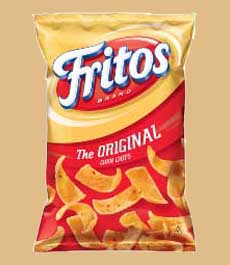
    [1] Celebrate National Corn Chip Day with a bowl of corn chips and a cold beverage of choice (photos #1 and #2 © Frito-Lay).

    Bag Of Fritos
    [2] Fritos, America’s original—and most famous—corn chips.

    old-fritos-bag-flashbackdallas-230
    [3] A vintage back of “truly krisp” Fritos (photo © Flashback Dallas).


    CHECK OUT WHAT’S HAPPENING ON OUR HOME PAGE, THENIBBLE.COM.


    Comments off

    TIP OF THE DAY: More Uses For Granola…& A Better For You Granola Recipe

    Yogurt Parfait

    Granola Salad Topping

    Spicy Thai Cole Slaw
    Granola Coated Chicken
    Granola Baked Apples
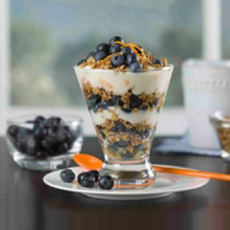
    Top: The original granola add-on: a yogurt parfait from Fruits From Chile. Second: Granola as a salad topping at Nuts About Granola. Third: Spicy Thai coleslaw with granola from Nuts About Granola (here’s the recipe). Fourth: Granola-coated chicken or fish, from SayWhatYouNeedBlog.com (here’s the recipe). Bottom: Baked apples stuffed with granola from Reynolds Kitchen (here’s the recipe).


    Granola was originally devised by a doctor in 1863, as a spartan breakfast food. It was packed with fiber, intended to help people with digestive problems.

    Granola was reborn in the second half of the 20th century as a sweet breakfast creal, packed with dried fruit, refined sugars and fats. Most commercial brands of granola don’t qualify as a “healthy alternative” (just read the nutrition labels).

    Even when natural sugars are used—honey or maple syrup, for example—the calorie and carb count is just as high. Although natural sweeteners are theoretically “better” than refined sugars, the body metabolizes them exactly the same way*.

    Thus, today’s tip is to look for a granola that is low in sugars; or to make your own with agave or brown rice syrup, natural sweeteners with low glycemic indices.

    Then, try new uses for your granola: as a crouton substitute on salads, as a coating for chicken or fish fillets, etc. You’ll find ways to use it in every meal of the day, beyond the already-mainstay granola snack bars, cookies, muffins and yogurt parfaits.

    Be sure to try it with vegetables, from sweet potatoes to roasted carrots and other sweet veggies (beets, squash, sugar snap peas, rutabaga) but not corn: It’s overkill.

    Here’s a recipe for homemade, sugar-free granola, plus a way to use it to make crispy chicken breasts or fish fillets.
    RECIPE: SUGAR-FREE GRANOLA RECIPE

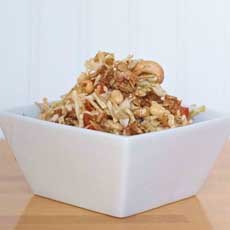
    Making your own granola lets you control the type and amount of sweetener and fat, while enabling you to add your favorite flavors: cinnamon, dark chocolate, nuts, peanut butter, vanilla, etc. You can make it organic, raw, whatever you like. Best of all, there is no “correct” recipe. Use whatever you like, in the proportions you like.

    Prep time is 10 minutes, bake time is 20 minutes.
     
    Ingredients

  • 2 cups whole rolled (“old fashioned”) oats
  • ½ cup nuts, chopped or sliced
  • ¼ cup seeds (sunflower or pumpkin seeds, plus chia or flaxseed if you like them)
  • 2 tablespoons agave nectar or brown rice syrup
  • 2 tablespoons virgin coconut oil, other healthy cooking oil or butter‡
  • ½ teaspoon vanilla extract or almond extract
  • 1 large pinch salt
  • Optional: ½ cup unsweetened dried blueberries, cranberries or other fruit†
  •  
    Preparation

    1. PREHEAT the oven to 300°F. Combine all ingredients in a mixing bowl, mix well and toss to thoroughly coat the ingredients with the sweetener and fat.

    2. SPREAD the granola in a thin layer on a rimmed baking sheet and bake for 10 minutes, until lightly toasted. That’s it!

    3. COOL, then store in an airtight container in a cool, dry place. Use it within 2 weeks.
     
    RECIPE: CRISP CHICKEN CUTLETS OR FISH FILLETS WITH GRANOLA

    Instead of Corn Flakes, coat your chicken or fish fillets with granola. This recipe from Viki’s Granola uses crisp panko bread crumbs to cut the sweetness; but if you’ve made your own lightly-sweetened granola, you can lessen or eliminate the panko. You may also want to use a granola without added fruit†, although chopped nuts add some nice crunch.
     
    Ingredients

  • 2 eggs, beaten
  • 1 cup panko
  • 1/2 cup granola (Viki’s uses its Honey Granola)
  • 1/2 cup flour
  • 1-1/4 pounds chicken cutlets (substitute fish fillets)
  • Canola or vegetable oil for frying
  • Preparation

    1. PLACE the beaten eggs in a shallow dish. Pulse the panko and granola in a food processor and place in a separate shallow dish. Place the flour in a third dish.

    2. SEASON the cutlets with salt and pepper. Place 1/8 inch of oil in a large frying pan over medium heat. While the oil heats…

    3. DIP the cutlets first in the flour, then in the egg, then in the panko, shaking off the excess with each addition. When the oil is hot, add the cutlets.

    4. COOK until the bottoms are golden brown, about 3 minutes; then flip and brown the other side. Transfer to a platter lined with a paper towel.
     
    _____________________________________
    *There are natural, low-glycemic sweeteners: agave, glycemic index (GI) is 32, half that of sugar; and brown rice syrup, GI of 20. Agave is 1.4 to 1.5 times sweeter than sugar and honey, so you don’t need to use as much. By comparison, the GI for honey is 58, pure maple syrup is 54 and refined sugar is 60-65.

    †You can keep your granola flexible by not adding dried fruit initially. It’s easy to mix it in when you want it.

    ‡Butter has recently been de-demonized as a bad fat. Margarine remains a demon.
      

    Comments off


    © Copyright 2005-2026 Lifestyle Direct, Inc. All rights reserved. All images are copyrighted to their respective owners.