THE NIBBLE BLOG: Products, Recipes & Trends In Specialty Foods


Also visit our main website, TheNibble.com.

TIP OF THE DAY: 12 Ingredients For Summer Tacos

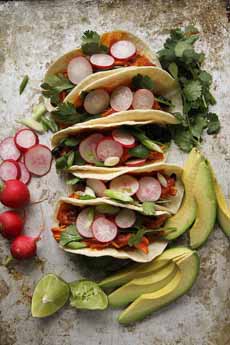
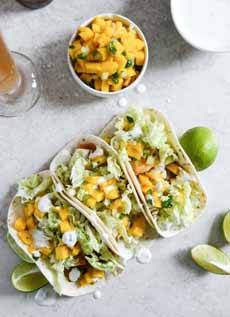
Summer Chicken Tacos
[1] Chicken tacos with radish and avocado. Here’s the recipe (photo © Heather Christo).

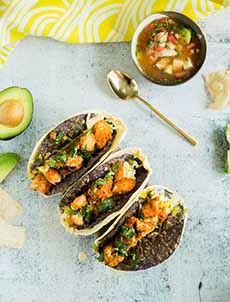
Fish Mango Tacos
[2] Fish tacos with mango. Here’s the recipe (photo © How Sweet It Is).

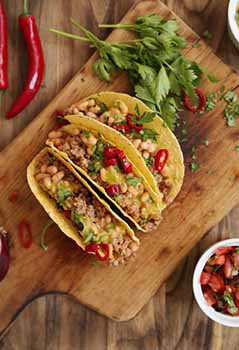
Tacos With Black Beans & Fried Chicken
[3] Tacos with black beans and fried chicken (photo © Karen Culp | Burst).

Bean & Chicken Tacos
[4] Bean and chicken tacos (photo © Racool | Free Range Stock).


The 2017 summer solstice falls on Wednesday, June 21st at 12:24 A.M. If you’re having a midnight dinner tonight, you can officially have summer tacos.

What are summer tacos? Tacos with lighter ingredients: chicken, fish, and vegetarian instead of beef; summer vegetables used as a garnish or in vegetarian tacos.

Bonus: These ingredients are more bountiful in the summer; hence, better priced.

Beyond summertime, check out these taco holidays:

  • January 25th is National Fish Taco Day.
  • March 21st is National Crunchy Taco Day.
  • In Mexico, Día del Taco (Day of the Taco) is celebrated on March 31st.
  • National Taco Day is October 4th.
     
    > Check out these 24 delicious taco recipes, both classic and creative.

    > The history of tacos.
     
     
    12 INGREDIENTS TO ADD TO YOUR SUMMER TACOS 

    1. Basil. While it’s available year-round, fresh basil in a Caprese salad is the aroma of summer. Add some shredded basil to the taco or mix chopped basil into the salsa. If you’re near a farmers market, pick up different varieties: lemon basil, opal (purple) basil, etc.

    2. Beans. Add beans and/or grilled tofu to a vegetarian taco. Use black beans, or think outside the conventional box of beans.

    3. Chives. For a subtle onion flavor, consider some chopped chives. We often add chopped red onion; but in the hot weather, chives are a lighter alternative.

    4. Corn. Use fresh corn kernels as a topping. You don’t need to cook them. Or, make corn salsa.

    5. Eggplant. While not the most obvious addition to a taco, it makes a delicious vegetarian taco and also pairs well with chicken and fish. Grill it and add it. For a vegetarian taco, combine it with summer squash and beans.

    6. Fish. Most Tex-Mex restaurants use frozen tilapia, a lower-cost fish (better restos use mahi-mahi). After you fry it and add the garnishes, who notices? We notice! During the summer, better fish are available in larger quantities; thus the price goes down. Treat yourself to black sea bass or striped bass, grouper, hake, mahi-mahi, or red snapper (if you like strong fish flavors, we recommend bluefish, usually a bargain). Enjoy the fresh fish flavor with grilled—not battered and fried—fish.

    7. Jalapeños. Pickle your own: Slice them and add to a jar with brining liquid to cover (one part white vinegar, one part water, and a big pinch each of salt and sugar). Add garlic or other spices or aromatics (e.g. diced onion). Then cap the jar, shake to blend, and keep in the fridge.

    8. Mango and pineapple. Dice and use them as a sweet contrast. We like mango as is, and the pineapple grilled.

    9. Radishes. This spicy veg adds crunch to the taco. Check farmers markets for heirloom varieties.

    10. Summer squash. Zucchini and yellow squash, also available year-round, are at their best in the summer. Chop them raw, add grilled zucchini to chicken and fish tacos, and make squash salsa.

    11. Tomatillos. These green orbs—not related to tomatoes—are the base of salsa verde. You can add them raw, sliced, to the taco, or make your own salsa verde. Simply husk the tomatillos, give them a light char on the grill or under the broiler, and toss them into a food processor with cilantro, sliced jalapeños, salt, and lime juice.

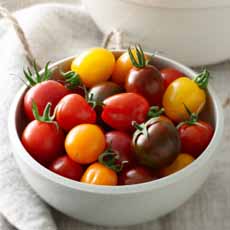
    12. Tomatoes. They’re at their best and least expensive in summer. Treat yourself to heirloom tomatoes. Diced or sliced, they make a big difference over the bland plum tomatoes used year-round.
     
     
    These ingredients will make better Taco Tuesdays, for sure!

    Tonight we’re having black bean, grilled zucchini and corn tacos. How about you?

  •  


    CHECK OUT WHAT’S HAPPENING ON OUR HOME PAGE, THENIBBLE.COM.


    Comments off

    PRODUCT: Grow Your Own Tea

    If you live in hardiness zones 8-10—the southern United States—and have a spot with full sun, you can grow your own tea with plants from Burpee.

    One individual commenting on the Burpee website had success in Zone 6.

    Here’s the USDA map of hardiness zones.

    Tea, Camellia sinensis, is a perennial plant. The same plant yields black, green and white tea. The difference is in the processing; basically, how much heat is applied to dry the leaves.

    At $16.95 per plant, it’s a fun opportunity to grow what you drink; and if you have younger children, a nifty project.

    You harvest and dry the tea leaves in a wok or pan.

    Buy the plants now and harvest them in the fall. Send some as gifts to tea-loving friends with green thumbs. Here’s where to order.

    Different states have particular shipping restrictions. For example, you can’t ship lemongrass plants to California or Colorado, or potato plants to Florida or Montana.

    Check here to see if tea plants can be shipped to your state.
     
     
    PREFER HERBAL TEA?

    Herbs can be grown anywhere! Read our article on growing herbal tea at home.
     
     
    TEA TIME: TIME TO LEARN MORE ABOUT TEA

    A Year Of Tea Party Ideas

    Black Vs. Green Vs. White Tea

    Brewing The Perfect Cup Of Tea

    Have An Iced Tea Party

    The History Of Tea

    Pairing Tea With Food

    Tea Glossary: All The Tea Terms You Need To Know

      Grow Your Own Tea
    Grow it.

    Cup Of Tea
    Drink it.

    Cup Of Green Tea
    Enjoy it! (Photo #1 courtesy Burpee, photo #2 courtesy Chateau Rouge Fine Foods, photo #3 courtesy Republic Of Tea._


    Comments off

    TIP OF THE DAY: Special Cake Fillings

    Naked Cake With Strawberry Filling

    Apricot Whipped Cream Cake Filling

    Red Velvet Cake Filling

    Cake Layers With Different Fillings
    [1] A pumpkin naked cake with a filling of whipped cream and fresh raspberries (photo courtesy Driscoll’s Berries. [2] A white chocolate cake filled with whipped cream and chopped dried apricots. Here’s the recipe from Epicurious. [3] Chocolate cake with red velvet cake filling, based on cream cheese. Here’s the recipe from Cook The Story. [4] Three different fillings: key lime, raspberry and blood orange. Here are more from Brides.

      If you bake layer cakes, even only now and then, from box or from scratch, here’s an easy tip to make yours more special:

    Add something fun and tasty to the filling between layers.

    FOR MORE CAKE FUN, CHECK OUT ARE CAKE GLOSSARY

    TYPES OF CAKE FILLINGS

    Common cake fillings include:

  • Buttercream*
  • Cream cheese*
  • Custard
  • Ganache*
  • Jam
  • Lemon or other curd
  • Whipped cream* with liqueur, nut-flavored buttercream or pure whipped cream
  •  
    The asterisked* cake fillings are easier to flavor, with anything, from fruit to Nutella to rum.

    Additionally, each filling can be made more complex complex with the addition of:

  • Citrus zest or peel
  • Dried fruits: berries, coconut, raisins, and others that complement the cake flavors
  • Crushed or sliced nuts
  • Extracts
  • Fresh fruits, diced or sliced
  • Fresh or dried fruits, soaked in liqueurs or spirits
  • Liqueurs or spirits (the difference is below)
  •  
    ADD SOME CANDY TO YOUR FILLING

    You don’t have to be a kid to appreciate a bit of candy in your cake.

  • Candy: M&Ms, Reese’s Pieces, Heath Bar or Skor Bits, Red Hots, etc.
  • Chocolate: chips, chunks, curls (dark, milk, white)
  • Cake decorations: confetti, sprinkles, sugar pearls,
  •  
    FILLING, FROSTING, ICING: THE DIFFERENCE

    Filling goes between the layers of a cake. Each layer can have a different filling; for example, one layer of ganache and one layer of custard. The frosting of a cake can be used as the filling as well.

    Frosting is used to cover the top and sides of a cake, and often as a filling between the layers. It is typically made from sugar plus a fat such as butter and/or milk or cream. Frosting is generally flavored with vanilla extract or other flavoring—cocoa powder, coffee, lemon, lime, orange, strawberry, etc. A vanilla frosting can be colored with food coloring, which adds gaiety without additional flavor.

    Icing is technically different from frosting. Icing is made with confectioner’s sugar, also called icing sugar. Most consumers aren’t aware of this technicality, and use the words interchangeably.
     
    LIQUOR & LIQUEUR: THE DIFFERENCE

    Liquors are distilled spirits; that’s why they’re also known as spirits.

    They are made of grains or other plants that are fermented and distilled into high-proof alcoholic beverages. Bourbon, gin, rum, scotch, tequila and vodka are examples.

    The distillation process separates the water from the alcohol, increasing the alcohol content to at least 20%/40 proof. Japanese shochu is an example of this. Western spirits are typically distilled to 40% alcohol/80 proof, although some rums are distilled to a higher proof.

    Liqueurs are sweetened spirits. with with various extracts, oils and other flavors added. Brandy, rum and whiskey are common base spirits for liqueurs.

     
    Liqueur flavors vary widely—from chocolate and coffee to fruit, herb and nut flavors.

  • Cream liqueurs have dairy cream added.
  • Créme liqueurs are different: They refer to a much sweeter likened to a potent syrup, as opposed to the original liquers, made from medicinal fruits, herbs and roots. Think Grand Marnier as opposed to Benedictine.

    The alcohol content of liqueurs ranges from a low of 15%/30 proof to 55%/110 proof.

    Here’s the difference between cordial, eau de vie, liqueur and schnapps.


  • Comments off


    © Copyright 2005-2026 Lifestyle Direct, Inc. All rights reserved. All images are copyrighted to their respective owners.