THE NIBBLE BLOG: Products, Recipes & Trends In Specialty Foods


Also visit our main website, TheNibble.com.

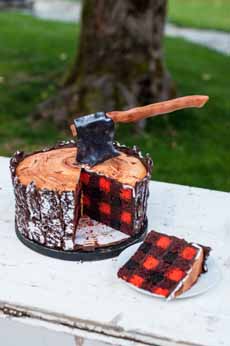
FOOD FUN: Lumberjack Cake

This impressive Lumberjack Cake was created by Elizabeth Marek of Artisan Cake Company of Portland, Oregon, and author of Visual Guide to Cake Decorating.

Another of her works of art is the Lumberjack Cake, inspired by her husband, who chopped down their Christmas tree in a lumberjack jacket.

Jenny Keller of Jenny Cookies Bakeshop in Lake Stevens, Washington took up the cause and created an entire lumberjack party.

Every part of the cake is edible: The bark is made from chocolate, the axe is made from fondant.

To both artists: Thank you for this most enjoyable bit of food fun.

If you want to try your hand at honoring your favorite lumberjack, you can buy the tutorial ($15). Also scroll down that page to see the lumberjack wedding cake.

For more cake pleasure, take a look at our Cake Glossary: the different types of cake, beginning with a brief history of cake.

You may also enjoy the history of cake pans.

And let’s not forget the history of the oven, and give thanks to all the bakers who labored under challenging conditions to create cakes that were attractive and delicious.

  Lumberjack Cake
We don’t know any lumberjacks, but we want this cake! Photo courtesy Jenny Keller | Jenny Cookies Bakeshop.
 
Now how did they keep the bottoms of the cakes from sticking and burning, in the many centuries before the invention of the cake pan and the temperature-controlled oven—and long before silicone oven gloves?
  

Comments off

TIP OF THE DAY: Circular Plating, Trending With Chefs

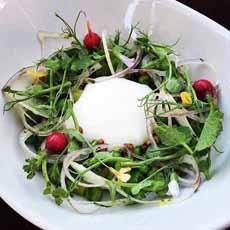
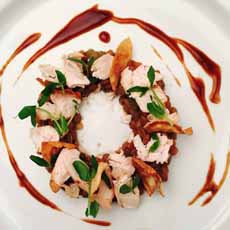
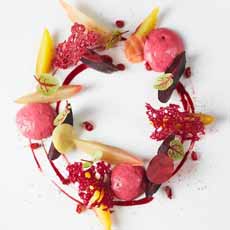
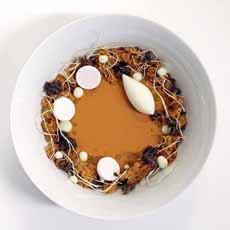
Often, what makes the familiar exciting again is presentation. We love this circular plating trend, exemplified by these three salads and a main course.

You can use the technique for any course that goes onto a plate.

For the past couple of years, we’ve noticed the trend creeping up among creative restaurant chefs. It’s not just salad, but seafood, vegetable plates, meats and desserts.

You, too can think outside the middle of the plate. It just takes a few minutes more to arrange food around the periphery, as opposed to putting it in the center.

So what’s in the center of the plate?

It could be cheese, croutons, dressing, sauce, spices, whipped cream…or nothing.

Start today with your dinner salad!
 
 
DESIGNING A CIRCULAR SALAD

For salad, there’s always a choice of greens; but look to contrasting shades and textures. Don’t be afraid to add fresh herbs.

Add at least two color elements, red (beets, berries, cherry tomatoes, grapes, radishes) and yellow or orange (beets, bell peppers, cherry tomatoes, egg quarters, mango).

Use an interesting vinaigrette, i.e., made with infused olive oil or vinegar.

Serve the salad with plain crostini or garlic bread (crostini with garlic butter).

If you want to serve a monotone salad, like Caesar salad, use a bright-colored plate.

Take the same approach with non-salad courses.
 
 
RECIPE #1: EAST MEETS WEST SALAD

This circle of flavor from Pakpao Thai in Dallas combines east (mint leaves and dressing) and west. It’s hard to see, but the white in the center is whipped mozzarella. We didn’t have time to practice froth it to perfection, so we used whipped ricotta.
 
Ingredients For The Salad

  • Asparagus
  • Baby radishes
  • Red onion
  • Mint leaves
  • Watercress
  • Wheat berries
  •  
    For The Mint Vinaigrette (6 Servings)

  • ¼ cup chopped fresh mint
  • 3 tablespoons lemon juice
  • 1/3 cup extra-virgin olive oil
  • 2 tablespoons red or white wine vinegar
  • 1/2 to 1 teaspoon honey
  • ½ teaspoon kosher salt
  •  
    For The Cheese

  • 1 ball buffalo mozzarella*
  • 1 cup of half-and-half or light cream*
  • 1 teaspoon lemon zest
  • Salt and pepper to taste
  •  
    For The Crostini

  • 1 baguette, cut into 1/4″ slices
  • 3/4 cup olive oil
  • Salt and pepper
  • Other seasonings as desired (garlic salt, dried herbs)
  • ________________

    *Substitute 1 pint ricotta for the mozzarella and cream.
    ________________
     
    Preparation

    1. MAKE the crostini. Preheat oven to 350°F. Arrange the baguette slices on two baking sheets; brush both sides with oil. Season with salt and pepper and other seasonings as desired. Bake until golden, 15 to 20 minutes, rotating the baking sheets halfway through until both sides are golden brown. Let cool on baking sheets.

    2. MAKE the vinaigrette. Combine the mint and lemon juice in a small saucepan. Bring to a boil and remove from the heat. Let steep for 10 minutes; then strain into a large bowl, pressing on the leaves to extract all the liquid. You should have about 3 tablespoons of liquid after straining. Add the oil, vinegar, honey and salt; whisk until well combined. Refrigerate it for up to 3 days in a container with a lid, so you can shake it prior to dressing the salad.

    3. PREPARE the salad ingredients: Wash and trim as desired. Arrange on individual plates. Place the whipped cheese in the center of the plate (we used ramekins).

    4. DICE the mozzarella and place it in the bowl of a blender or food processor; or use a deep mixing bowl with an immersion blender. Blend into a froth and mix in the zest. Add the lemon zest at this stage.

    5. SHAKE and drizzle the dressing over the salad. Serve with the crostini.
     
     
    RECIPE #2: SPRING TO SUMMER SALAD

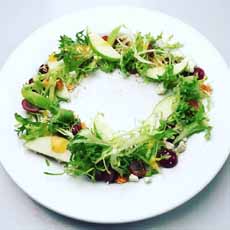
    This recipe comes from one of our favorite creative chefs, Eric B. LeVine. Here, the classic salad made with frisée, blue or goat cheese, apples or pears, and walnuts or lardons is plated in a circle.

      Circular Salad

    Circular Salad Plating

    Avocado Mango Circular Salad

    Plain Crostini

    Braised Chicken

    Strawberry Sorbet

    Pumpkin Custard

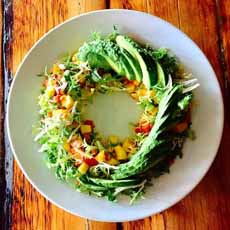
    [1] Recipe #1: a fusion salad from Pakpao Thai in Dallas. [2] Recipe #2: a frisée, apple and blue cheese salad from Chef Eric B. Levine. [3] An avocado-mango salad from Chef Eric B. Levine, with frisée, onion, tomato, yellow split peas (chana dal) and lemon oil dressing. [4] Crostini from Martha Stewart). [5] Braised chicken and eggplant with garlic chips, from Chef Eric B. Levine. [6] You could put sorbet, fresh fruit, fruit sauce and bits of tuille in a bowl, or you could plate it like this dessert from The Art Of Plating. [7] Pumpkin custard topped with a wreath of meringues, two types of cake crumbles, whipped cream and droplets of pumpkin seed oil, by Chris Ford| The Art Of Plating” target=”_blank”

     
    When stone fruits come into season, switch from apples and pears to nectarines, peaches or plums.

    We wanted some bitterness, so we added baby arugula.
    Ingredients

  • Apples or stone fruits, sliced
  • Red or purple grapes, cherries or strawberries
  • Blue or goat cheese
  • Frisée
  • Optional: baby arugula or watercress
  • Chile almonds (toast whole almonds with chili powder)
  • Apple vinaigrette
  •  
    For The Apple Vinaigrette

  • 1/2 cup flat leaf parsley, chopped
  • 1/4 cup apple cider vinegar
  • 1/4 cup extra virgin olive oil
  • 1/4 cup apple juice
  • 3 fresh basil leaves
  • 2 teaspoons honey
  • 3/4 teaspoon salt
  • Salt and black pepper to taste
  •  
    Preparation

    1. COMBINE the vinaigrette ingredients and set aside.

    2. PREPARE and arrange the salad ingredients. Drizzle with vinaigrette and serve.


    Comments off

    TIP OF THE DAY: Frosé, Frozen Rosé Wine Granita For Cocktails Or Dessert

    Frose Granita

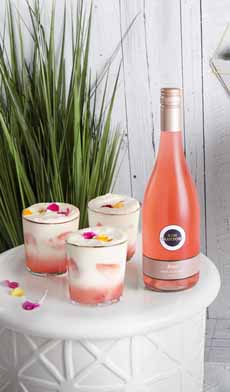
    Frose Dessert With Ice Cream
    [1] Frosé granita. [2] Frosé with ice cream (both photos courtesy Kim Crawford).

      Call it a cocktail or call it dessert: We have long enjoyed a frozen rosé cocktail by scooping some sherbet in a glass and topping it off with sparkling wine or still or sparkling rosé.

    A couple of years ago, some rosé marketer came up with a new term: frosé! Some winemakers even named bottles of sweet-style rose, frosé.

    Here are two frosé recipes courtesy of Kim Crawford Wines from New Zealand. He sent these for National Rosé Day, June 10th.

    (Mr. Crawford must have a sweet tooth: A few years ago, he proposed rosé ice pops. Just add the wine to ice pop molds, with optional berries.)

    For a cocktail, use a drier-style rosé. For dessert, top sorbet or ice cream with a sweeter rosé: a zinfandel rosé from California, or anything labeled frosé (a relatively new term taking advantage of the trend). Or ask the clerk for guidance.
     
     
    RECIPE #1: FROSÉ GRANITA

    This recipe is a rosé granita, a word that means granular in Italian (granité/granitée is the French word, meaning granite-like).

    Granita is a rustic version of sorbet, made without an ice cream machine. The ingredients are frozen in a pan. As the crystals on the top freeze, they are scraped into a grainy, coarse cousin of sorbet.

    Granita, made from sugar, water and flavorings, originated in Sicily. The preferred texture and flavor varies from town to town, where residents variously preferred (and still do) almond, black mulberry, chocolate, coffee, jasmine, lemon, mandarin orange, mint, pistachio and strawberry flavors.

    But the concept of water ices goes back to China in the fourth century B.C.E. The recipe, as it were, arrived in Persia via traders.

    Persians enjoyed what we might now call snow cones: snow flavored with syrups. Called sharbat (the origin of sherbet and sorbetto), it was made at least from the middle of the third century B.C.E.

    Alexander The Great brought the concept back to Greece after he conquered Persia in 330 B.C.E. Gelato, the first type of ice cream, took a while. It is believed to date to Florence, Italy in the late 16th century.

    Here’s the history of ice cream. And now, back to the frosé, in photo #1.

     
    Ingredients For 5 Servings

  • 1 bottle Kim Crawford Frosé or substitute
  • Garnish: lemon twists or berries
  •  
    Preparation

    1. POUR the wine into ice cube trays, a baking pan, or what-have-you and pop it into the freezer. As ice crystals begin to form, scrape them to the front of the pan until frozen solid. You can do this in advance. To serve…

    2. USE a hand blender or food processor to process the frozen wine until smooth. Serve directly or freeze again for up to 1 week, covered. Garnish and serve with a spoon and/or straw.

    Note: We weren’t at home so couldn’t occasionally stir and scrape. So we simply froze the rosé as ice cubes. We then placed the frozen cubes into the blender. The result was a crunchy granita. If we had continued to blend, we might have ended up with something finer, but we liked the crunchiness!
     
     
    RECIPE #2: DRINKABLE FROSÉ SUNDAE

    Ingredients For 5 Servings

  • 1 bottle Kim Crawford Frosé or substitute, well chilled
  • 3 cups sliced strawberries
  • 1/3 cup sugar*
  • Club soda
  • 1 carton vanilla ice cream
  • Garnish: edible flowers or more berries
  • ________________

    *Use less sugar or omit it entirely if the strawberries are very ripe.
     
    Preparation

    1. COMBINE the strawberries and sugar in a bowl, cover and let sit for 30 to 90 minutes, stirring occasionally.

    2. DIVIDE the strawberries and any juices among 5 rocks glasses. Add the wine and a splash of club soda. Top with a scoop of ice cream and garnish (photo #2).
     
     
    CHECK OUT THE OTHER TYPES OF FROZEN DESSERTS.


    Comments off


    © Copyright 2005-2026 Lifestyle Direct, Inc. All rights reserved. All images are copyrighted to their respective owners.