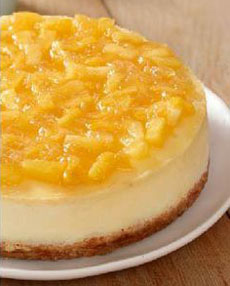
[1] A bottle of Pimm’s No. 1 Cup and an approximation of the original drink, with a Mason jar standing in for the tankard. Here are recipe variations from Brit.co.
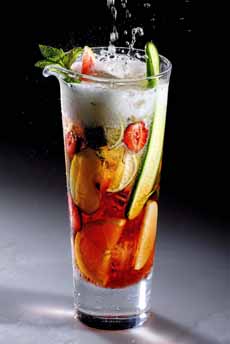
[2] A modern interpretation, with so much fruit that it rivals sangria. Here are more variations from Chilled Magazine.
[3] Here’s the recipe from Joy The Baker.
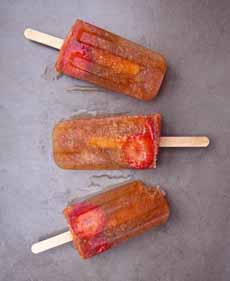
[4] Fans have turned Pimm’s Cups into ice pops and Jell-O shots. Here are recipes from Brit.co. |
|
Gin and tonic may be the British cocktail best known in the U.S., but we’d like to introduce you to Pimm’s Cup.
Pimm’s is a line of liqueurs, called fruit cups* in the U.K., first produced in 1823 by James Pimm (1798–1866).
A tenant farmer’s son from Kent, he studied theology in Edinburgh, but moved to London in his early 20s and became a shellfish monger. Not long after, he opened Pimm’s Oyster Bar in London, which grew to a chain of five restaurants.
He served oysters with a “house cup,” a gin sling with his proprietary mix of liqueurs and fruit extracts. (Slings were a category of drink that, at the time, combined a spirit with soda water or ginger ale).
The English gin of the time was not the smooth, botanical spirit we enjoy today, but a rough drink that had departed from its Dutch roots. It was often distilled into a crude, inferior but cheap spirit that was more likely to be flavored with turpentine than the juniper berries of the Dutch jenever from which it evolved.
So Pimm, ahead of the curve, doctored the rough gin with a “secret mixture” of liqueur, herbs, and fruits. He served it in a small tankard known as a No. 1 cup; hence, the name of the drink: Pimm’s No. 1 Cup.
Reddish-brown in color with subtle notes of spice and citrus fruit, the Cup was a big hit. He sold bottles to other establishments.
In 1851, he expanded the line† to include Pimm’s No. 2 Cup, made with a Scotch base; and Pimm’s No. 3 Cup, made with a brandy base. He initiated large-scale distillery production to supply his wholesale customers.
The history of Pimm’s Cup follows, as well as the original Pimm’s Cup recipe, how to set up a Pimm’s Cup Party Bar, and the different categories of cocktails.
________________
*A fruit cup, also known as a summer cup, is a traditional English long drink, most commonly based on gin, with the addition of a soft drink such as lemonade or ginger ale. The drink is a summer drink, garnished with fresh fruit (apple, cucumber, lemon, lime, orange, strawberry) and/or herbs (mint, borage). Other classic British drinks include Dubonnet Cocktail and Regent’s Punch.
†Over the years, under subsequent owners, Pimm’s created other cups, some using spirits other than gin. After World War II, Pimm’s No. 4 Cup, based on rum was invented; followed by Pimm’s No. 5 Cup, based on rye whiskey. Cups 2 and 5 were discontinued, and Pimm’s No. 6 Cup, based on vodka, debuted in the 1960s. There have been special editions, such as the Winter Cup and a Blackberry & Elderflower variant of No. 6 Cup. The first shot was the best: Pimm’s No. 1 cup remains the overwhelming favorite.
________________
PIMM’S CUP HISTORY: FROM FRUIT CUP TO DIGESTIF TO BRITISH STAPLE DRINK
In 1840, Pimm created what is today known as a Pimm’s Cocktail, as a digestif—a drink that purportedly helps with the digestion of food. It was conceived as a tonic to aid the digestion of customers who had eaten too much (which must have been a common problem among those who could afford it, given the proliferation of digestif liqueurs and wines).
He combined his No. 1 Cup with lemon juice and a topper of ginger ale or sparkling lemonade, served over ice with mint and fresh fruit—and thus an iconic British drink was born.
In 1865, the year before his death, Pimm sold the business and the right to use his name to a Frederick Sawyer, who sold it in 1880 to Horatio Davies, a future Lord Mayor of London. A chain of Pimm’s Oyster Houses was franchised in 1887. Today the brand is owned by spirits giant Diageo.
Sidebar: The Scoop On Digestifs
Taking a liqueur after a meal has long been thought to aid digestion due to its alcohol content. While it may seem to skeptics an opportunity for another drink, there’s some truth to the tradition (but note that heavy-alcohol drinks like brandy and whiskey have an adverse effect on digestion).
A smaller amount of alcohol stimulates the stomach’s production of the enzyme pepsin, the enzyme that helps digest proteins. It also increases secretions of the pancreas and gall bladder, which similarly break down food for use as energy.
In actuality, it’s the bitter herb- and spice-based digestifs that work best to help digestion. Ingredients such as caraway seed, fennel seed, and savory are thought to be especially beneficial to digestion. If you want an after-dinner drink with benefits, look to Chartreuse, Fernet Branca, Jägermeister, and Kümmel.
Fortified wines such as cream sherry, port, Madeira, and vermouth are traditional digestif wines; but these days, take a trip to the medicine cabinet for Alka-Seltzer, Pepto-Bismol, Tums, etc., the best cure(s) for what ails your digestive system.
In our opinion (since we’ve had the drink but don’t know the secret Pimm’s Cup formula), a Pimm’s Cocktail is more of a pleasant summer sipper than a digestif.
|
RECIPE #1: PIMM’S CUP COCKTAIL
There are actually two approaches to Pimm’s Cup Cocktail.
The first is the original English style, a long drink combining Pimm’s No. 1 Cup and carbonated lemonade or bitter lemon.
A Pimm’s Royal Cup uses champagne or other sparkling white wine instead of lemonade.
Pimm’s Winter Cup combines No. 1 Cup with warm apple cider (which is an alcoholic beverage in the U.K.).
Garnishes include as much sliced fruit as you like. The conventional fruits are apples, cucumber, oranges, lemons, and strawberries, plus herbs such as borage or mint (for a modern twist, try basil).
Ginger ale is a common substitute for carbonated lemonade or bitter lemon; but we very much like Sanpellegrino’s Limonata, which has less sugar than other carbonated lemon drinks.
The second approach was devised in New Orleans. It uses regular lemonade, a top-off of 7-Up or Sprite, and a cucumber garnish. If this sounds more appealing to you, here’s the recipe.
Ingredients For A Pitcher
1-1/2 cups Pimm’s No. 1 Cup
1 navel orange, cut crosswise into thin slices
1 lemon, cut crosswise into thin slices
3/4 cup firmly packed mint leaves and tender stems
1-1/2 cups carbonated lemonade, ginger ale or lemon-lime soda, chilled
1 cucumber, cut lengthwise into 8 wedges
3 cups ice
1 apple, quartered, cored, and cut into thin slices
1/2 pint strawberries, halved
Ice
Preparation
1. COMBINE the Pimm’s, the apple, orange, and lemon slices, and mint in a large pitcher. Chill until ready to serve.
2. ASSEMBLE: Add the soft drink and stir gently. Pour over ice in tall glasses. Garnish with cucumber, strawberries, or as you wish.
RECIPE #2: PIMM’S CUP PARTY BAR
Pimm’s Cup is one of the two staple drinks (along with Champagne) at the Wimbledon tennis tournament, the Chelsea Flower Show, the Henley Royal Regatta, and the Glyndebourne Festival Opera. It is the standard cocktail at British and American polo matches. It is also extremely popular at summer garden parties in the U.K…so why not enjoy one in your own garden?
You can make it by the pitcher, fully garnished. Or, just mix the liquid ingredients and the sliced apple, lemon, and orange, and let guests garnish their own with the other fruits and herbs.
You can find more Pimm’s cocktail recipes at AnyoneForPimms.com.
|
|
COCKTAIL CATEGORIES
If you like to understand what you consume, here’s a partial taxonomy of cocktails. The list of categories can be quite extensive—frozen drinks, mulled and other hot drinks, nogs and other egg- and dairy-based drinks, layered drinks, etc. But here are some basics, starting with this basic divider:
Short Drinks are served in short glasses, called lowball glasses or rocks glasses, even though they may not contain rocks (ice). A short drink can be on the rocks or straight up (no rocks/ice).
Tall Drinks are served in highball glasses, also called collins glasses after the Tom Collins, an early, popular tall drink. Tall drinks typically are served with rocks and contain more mixers, usually in a 1:3 or 1:4 proportion.
The differences between categories and sub-categories can be as minor as switching lemon juice for lime juice.
While this may seem like splitting hairs, remember that in the days before broadcast media, people had more time on their hands. One of our favorite examples of this is nouns of multitude.
1. Ancestral Cocktails. These are the original, early 19th century cocktails. These can sound generic, such as “whiskey cocktail” and “gin cocktail.”
The goal, back in the day, was to make spirits more palatable by sweetening them, with a teaspoon of sugar or a sweet liqueur. Often, aromatic bitters were included for complexity, and the drink was served either straight up or on the rocks. Two enduring examples are the Old Fashioned (without the muddled fruit and club soda found so often in today’s bars) and the Sazerac.
2. Champagne Cocktails. These are fizzy cocktails, made with champagne or sparkling wine. The champagne can be the principal ingredient, as in the Champagne Cocktail; or can be used to top off a sour or other drink, such as a French 75.
These drinks, originally served in coupes like champagne, are now largely served in flutes or other narrow glasses.
3. Highballs. Simple highballs combine a spirit and a carbonated mixer (club soda, cola, ginger ale) plus ice in a tall (highball or collins) glass. Pimm’s Cup and Rum and Coke are examples.
Replace the mixer with juice or liqueur to make a complex highball: a Dark and Stormy or Screwdriver, for example.
A Buck or Mule combines a basic spirit and citrus juice with ginger ale or ginger beer. The Moscow Mule is an example.
A Collins is a highball with added lemon juice and sugar, such as a Tom Collins (a.k.a. a gin sour with club soda).
A Fizz is a short drink straight up: a complex highball with a different preparation. The spirit and any other ingredients, except for the soda, are shaken with ice and strained into a rocks glass, then topped off with soda. Examples include the Ramos Fizz and Silver Fizz.
A Rickey retains the club soda, eliminates the sugar, and substitutes lime juice for lemon juice. The most popular is the Gin Rickey.
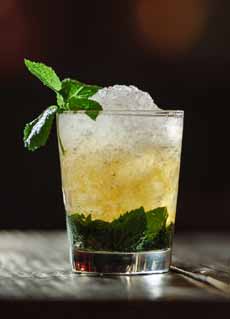
4. Juleps. A julep combines a base spirit with sugar, fresh mint, and ice. The Mint Julep, made with bourbon, is the best known today; but in earlier eras, juleps were also made with most other spirits.
A smash is a julep with muddled fruit, and optionally, mint or another herb. Whiskey Smash is an example.
A cobbler is a julep with wine or sherry as the base spirit.
5. Sours. Add lemon or lime juice (sometimes, grapefruit) and sugar to the spirit and you have a simple sour. They are usually shaken with ice and served straight up in a rocks glass.
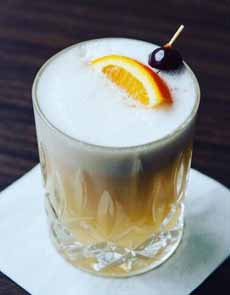
In some sours, an egg white is added for body and a foamy top, as in the Daiquiri and Whiskey Sour.
Add another sweet ingredient—liqueur, fortified wine, or syrup—and you have a complex sour. Examples include the Cosmopolitan and the Margarita.
If you love details like this, check out our…
WHISKEY GLOSSARY: The different types of whiskey and related terms.
|
|
[5] From the Ancestral group, an Old Fashioned (photo © Angus Club Steakhouse).
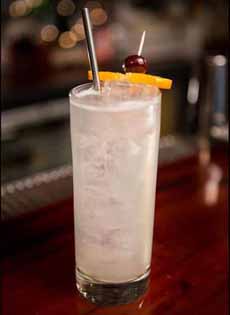
[6] From the Highball group, an Tom Collins (photo © Tanqueray).
[7] From the Sour group, a Whiskey Sour (photo © The Mercury | Atlanta).
[8] From the Julep group, a Mint Julep (photo © Distilled | NY).
|
CHECK OUT WHAT’S HAPPENING ON OUR HOME PAGE, THENIBBLE.COM.
|
|