THE NIBBLE BLOG: Products, Recipes & Trends In Specialty Foods


Also visit our main website, TheNibble.com.

Chocolate Pecan Pie Recipe & The History Of Pecans

Updated August 2026

August 20th is National Chocolate Pecan Pie Day (April is National Pecan Month, April 14th is National Pecan Day, July 12th is National Pecan Pie Day, and here are the year’s 38 nut holidays—and the year’s 31 pie holidays.

Our only question regarding this delicious pie:

Why eat heavy pecan pie during the summer—not to mention add rich chocolate to it—when there are so many seasonal, ephemeral berries and stone fruits to turn into pies?

We will not attempt to answer why people establish food holidays in questionable seasons.

So if you’re not in the mood for a slice today, keep this recipe from Melissa Clark of The New York Times for the fall, when a hearty, dense pie is just the thing to stick to the ribs.

Below:

> Chocolate pecan pie recipe.

> Baking tips.

> The history of pecan pie.

> The history of the pecan.

> Pecan trivia.

Elsewhere on The Nibble:

> The history of pie.

> The history of pie a la mode.

> The different types of pie: a photo glossary.

> The year’s 30+ pie and cobbler holidays.
 
 
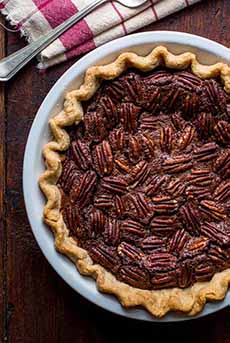
RECIPE: MELISSA CLARK’S CHOCOLATE PECAN PIE (Photo #1)

For The Crust

  • 1¼ cups all-purpose flour (150 grams), plus more for dusting
  • ¼ teaspoon fine sea salt
  • 10 tablespoons unsalted butter (preferably high-fat European style), chilled and cubed
  • 2 to 4 tablespoons ice water, as needed
  •  
    For The Filling

  • 1½ cups pecan halves (170 grams)
  • 6 tablespoons unsalted butter
  • 2 ounces 70% bittersweet chocolate, chopped (56 grams)
  • ¾ cup dark corn syrup
  • 4 large eggs
  • ½ cup packed light brown sugar (100 grams)
  • 1 tablespoon unsweetened cocoa powder (5 grams)
  • 2 tablespoons bourbon
  • ¼ teaspoon fine sea salt
  •  
    Preparation

    1. MAKE the crust: In a food processor, pulse together the flour and salt. Add the butter and pulse until the mixture forms chickpea-size pieces. Add the ice water 1 tablespoon at a time, and pulse until the dough just comes together. It should be moist but not wet.

    2. GATHER the dough into a ball on a lightly floured surface, and flatten it into a disk with the heel of your hand. Cover tightly with plastic wrap and refrigerate for at least 1 hour, and up to 2 days.

    3. REMOVE the plastic wrap and roll out the dough to a 12-inch circle, on a lightly floured surface. Transfer the crust to a 9-inch pie plate. Fold over any excess dough, then the crimp edges. Prick the crust all over with a fork. Chill the crust for 30 minutes. While the dough chills…

    4. HEAT the oven to 375°F. Line the chilled crust with aluminum foil and fill with pie weights or dried beans. Bake for 25 minutes; then remove the foil and bake until it’s a very pale golden color, 5 to 10 minutes longer.

    5. REDUCE the oven temperature to 350°F. Spread the pecans on a rimmed baking sheet and toast until fragrant, 8 to 10 minutes, shaking the pan occasionally. Cool.

    6. MAKE the filling: In a small saucepan over low heat, melt the butter and chocolate, stirring until smooth. Cool.

    7. WHISK together in a large bowl the cooled chocolate-butter mixture, corn syrup, eggs, sugar, cocoa powder, bourbon, and salt. Pour the mixture into the prepared crust. Arrange pecans over the filling.

    8. TRANSFER to a large rimmed baking sheet and bake until the filling is just set when the pan is jiggled, 30 to 40 minutes. Remove the pie from the oven and cool completely on a wire rack before serving.
     
     
    BAKING TIPS FOR THE RECIPE

    Don’t be tempted to substitute milk chocolate or semisweet chocolate chips. Pecan pie is sweet enough.

    The bittersweet chocolate specified here (70% cacao or higher) is just the thing: intense chocolate flavor without a lot of added sugar.

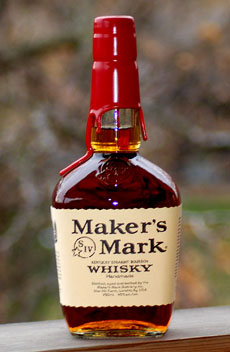
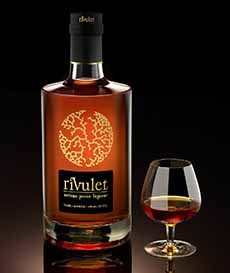
    Two tablespoons of bourbon add just a hint of flavor. Try it, and if you want to add more next time—or some pecan/praline liqueur—go for it (photo #4). It also is a delicious after-dinner drink to serve with the pie.

    Ms. Clark’s pie has a conventional pie crust. You can also use a chocolate wafer crumb crust.

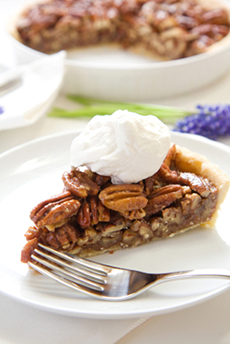
    Pecan pie is traditionally garnished with whipped cream. Given the sweetness of the pie, a dollop of of unsweetened whipped cream, crème fraîche or sour cream is just right.

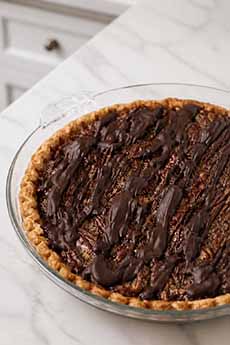
    On the other hand, if you have a serious sweet tooth and want to gild the lily: Drizzle chocolate or caramel (preferably salted caramel) sauce over the top of the pie.

    Don’t like to bake? The easy way out is this excellent chocolate pecan pie filling from San Saba Pecan, spooned into a store-bought crust.

     
    PECAN PIE HISTORY

    It seems difficult to believe given the long history of pecan trees in the Colonial South*; but the pecan pie recipe we know, pecans on a brown sugar base, is a 20th-century invention. No recipes have been found dating to earlier than 1925.

    According to FoodTimeline.com, The Fannie Farmer Cookbook and The Joy of Cooking did not include pecan pie recipes before 1940.

    While some sources claim that early French settlers in New Orleans invented pecan pie after encountering the nuts (which they called pacane, after the Native American paka·n), food historians have not been able to trace the dish’s origin prior to 1925.

    That doesn’t mean pecan pie didn’t exist, only that there is no record to prove it. Popular national cookbooks such as The Joy of Cooking and The Fannie Farmer Cookbook did not include the recipe prior to 1940.

    Yes, there were pies made with pecans; they just weren’t pecan pies as we know them or called “pecan pie.” References dating to 1886 and 1914 added the nuts to a milk-based custard.

    Continue below photo.


    Chocolate Pecan Pie
    [1] Celebrate National Chocolate Pecan Pie Day with this yummy recipe (photo Andrew Scrivani | The New York Times).

    Whole Pecans
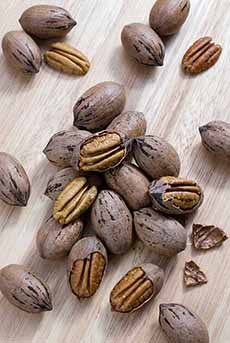
    [2] The Spanish explorers who encountered pecans called them “wrinkle nuts” (photo courtesy Texas Pecan Nursery).

    Pecan Tree
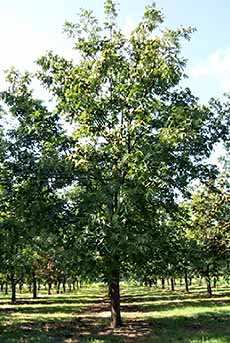
    [3] A pecan tree. If you live in warmer zones (6 through 9), you can grow your own. You can also grow the trees in zone 5, but they won’t bear nuts (photo courtesy Perfect Plants Nursery).

    A bottle of Rivulet pecan liqueur
    [4] Rivulet, a fine artisanal pecan liqueur. It is a lovely accompaniment to a slice of pecan pie—and a nice gift for anyone who likes to bake them (photo © Rivulet Liqueur).

    Chocolate Pecan Pie
    [5] Another way to make chocolate pecan pie: Drizzle chocolate on top, as in this recipe (photo © The Nibble).

    Slice Of Pecan Pie
    [6] Hold the chocolate if you want a standard pecan pie (photo © M. Sheldrake | iStock Photo).

     
    Salted Chocolate Pecan Pie
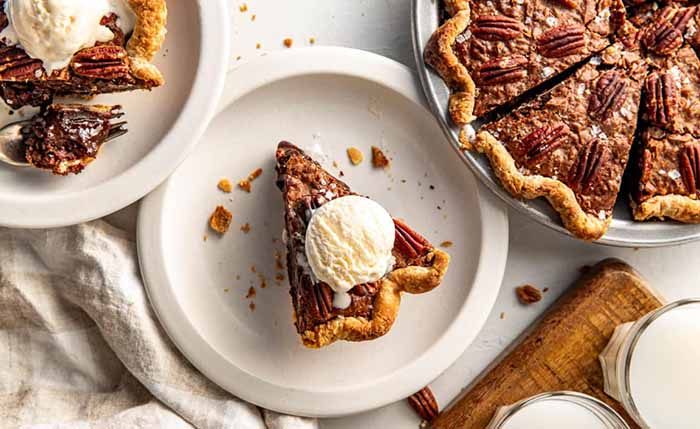
    [8] This recipe adds a bit of salt to counter the sweetness. Plus, it uses sweetened condensed milk instead of corn syrup to create a brownie x pecan pie cross. Here’s the recipe (photo © So Much Food Blog).
     
    Then came a breakthrough on the road to modern pecan pie. In 1913, Mrs. Vesta Harrison of Fort Worth, then an unmarried teenager taking a cooking course, won a national competition with her Texas Pecan Pie, made with a filling of sorghum.

    She said the recipe for this pecan pie came to her in a dream. When she told the teacher at her cooking school, a Mrs. Chitwood of Chicago, that she was going to make a pecan pie, the teacher exclaimed “There is no such thing!”

    The future Mrs. Harrison, interviewed later in life, said she responded, “By gollies, I don’t know how, but I’m going to mess up something making a pecan pie.”

    Mrs. Chitwood sent the recipe to the contest in Washington, where it won first prize. So even if there already was a syrup-based pecan pie somewhere in the U.S., it was unknown in Texas, Chicago or Washington [source].

    Following the introduction of the sorghum-based pecan pie, versions were made with molasses.

    Enter Karo Syrup & The Modern Pecan Pie

    The modern pecan pie was born with the introduction of Karo Syrup, in 1902.

    One of the earliest recipes to substitute the sorghum or molasses with Karo corn syrup was by Mrs. Frank Herring, published in the Sallislaw, Oklahoma Democrat American on February 19, 1931:

     
    3 eggs, 1 cup Karo (blue label), 4 tablespoons corn meal, 1/2 cup sugar, 1/2 cup chopped pecans or less if desired, pastry. Method: Beat whole eggs slightly, add Karo, corn meal, sugar and melted butter, then stir all thoroughly. Line pie tin with flaky pastry and fill generously with mixture. Sprinkle chopped pecans on top, bake in moderate oven until well set when slightly shaken [source].

    Printed on the bottle label, the makers of Karo Syrup popularized the recipe that many people use today. It has similar ingredients to Mrs. Herring’s recipe, minus the corn meal and adding vanilla extract. It doubles the amount of Karo syrup and sugar and triples the pecans. Here’s the recipe.

    The Karo website says that the recipe was created in the 1930s by the wife of a senior sales executive. When the pie appeared on the bottle label and in magazines, it was known as Karo Pecan Pie.

    This unnamed executive wife may well have seen, and adapted, Mrs. Herring’s 1931 recipe. The rest is sweet history; although as soon as we have time, we’re going back to make the Karo pie using the smaller amounts of sugars in the Herring recipe. When a scoop of vanilla ice cream is needed to cut the sweetness of a pie, you know it’s too sweet.
     
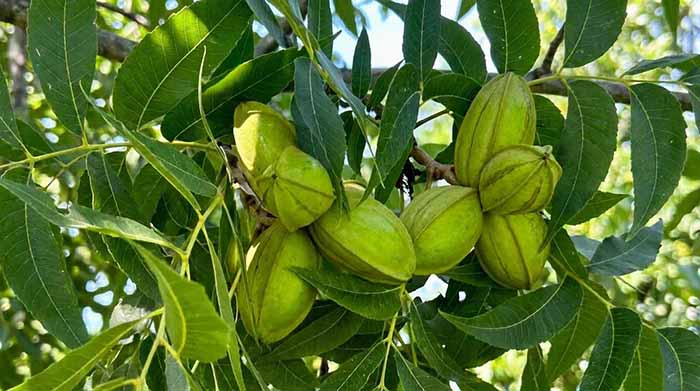
    Unripened Pecans On The Tree
    [9] Unripened pecans (photo © Shady Grove Pecans).
     
     
    THE HISTORY OF THE PECAN TREE & ITS NUTS

    The pecan, Carya illinoinensis (photo #3), is a member of the Juglandaceae family, known as the walnut family of trees. The trees are native to the Americas, Eurasia and Southeast Asia.

    The family also includes the hickory, about 16 species of which are native to the Americas.

    In America, the tree originated in central and eastern North America and in the river valleys of Mexico*. It evolved in North America millions of years ago.

    The name “pecan” is a word of Algonquin origin that describes “all nuts requiring a stone to crack” or “a nut too hard to crack by hand.”

    Long before Europeans arrived, pecans were widely consumed and traded by Native Americans. Nuts were an excellent food product for a pre-agricultural society, easy to harvest and store (and an excellent source of protein and other nutrients).

    The first Europeans to come into contact with pecans were 16th-century Spanish explorers in what is now Mexico, Texas, and Louisiana. They called the pecan, nuez de la arruga, which means “wrinkle nut,” due to the deep lines resembling wrinkles in the nutmeats (photo #2). The explorers brought the pecan to Europe, Asia, and Africa beginning in the 16th century.

    In the 17th century, both native Americans and settlers began seeing pecan trees as a potential source of income. Pecans could be traded and were integral dietary components, especially during times of difficult harvests. Some very influential people, including George Washington, were early proponents of pecan farming [source].

    Thomas Jefferson planted pecan trees, Carya illinoinensis (“Illinois nuts”) in his nut orchard at Monticello, in Virginia. George Washington wrote in his journal that Jefferson gave him “Illinois nuts” to grow at Mount Vernon.
     
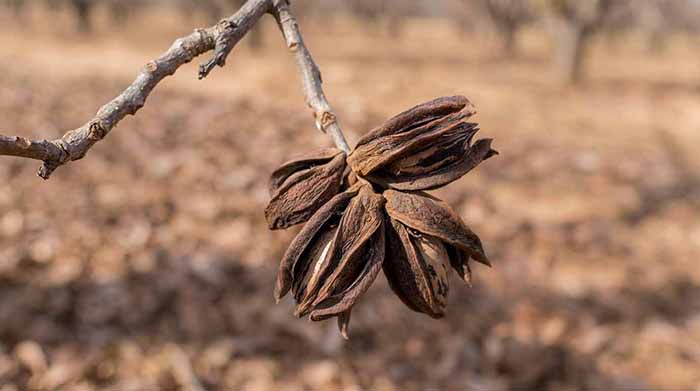
    Ripe Pecans On Branch
    [10] Ripe and ready to harvest (photo © Skapie 777 | Gardening Knowhow).
     
     
    PECAN TRIVIA

    Pecan pie is one of the sweetest traditional American pies, with a filling that contains a large amount of sugar or corn syrup to create a dense, candy-like sweetness. Chocolate pecan pie can be even sweeter. Other contenders for America’s Sweetest Pie include chess pie, shoofly pie, sugar pie, and treacle tart.

  • Pecan is an Algonquian word meaning “requiring a stone to crack.”
  • America produces over 80% of the global supply of pecans.
  • Naturally growing pecan trees are called a “grove” and planted trees are called an “orchard.”
  • More than 1,000 varieties of pecans exist, although the U.S. grows a few dozen varieties (a.k.a. cultivars), including Western, Desirable, Stuart, Burkett, Wichita, and native pecans.
  • Native or wild pecans make up about 30% of the U.S. pecan crop. They typically grow along riverbanks. The newer varieties or cultivars of pecans that have been developed are planted in orchards.
  • Most varieties are named after Native American Tribes, as a salute to the indigenous nut and Native Americans. Familiar names include Apache, Cheyenne, Choctaw, Kiowa, Mohawk, Osage, Pawnee, and Sioux.
  • The botanical name of the pecan tree, Carya illinoinensis, refers to the trees being brought to the far, unsettled frontier of present-day Illinois during the American Revolution.
  • One reason pecans have become a popular holiday nut is that they are harvested from October to December.
  •  
    The 15 pecan-producing states are Alabama, Arkansas, Arizona, California, Florida, Georgia, Kansas, Louisiana, Missouri, Mississippi, North Carolina, New Mexico, Oklahoma, South Carolina, and Texas.

    The U.S. produces more than 300 million pounds of pecans annually. In recent years pecan farmers have been planting thousands of additional acres of pecan orchards, so production is steadily increasing [source].

    Georgia is by far the largest producer, with New Mexico in second place and Texas a far third.

    In the 2025 crop, Georgia produced about 111.5 million pounds, New Mexico 76 million, Texas 41.6 million, Arizona 40.8 million, and Oklahoma 14.4 million.
     
    ________________

    *Currently, the largest pecan-producing states are, in order of tonnage: Georgia, Texas, New Mexico, Arizona, Louisiana, and Oklahoma. Pecans are grown coast to coast along the southern tier of the United States. The largest pecan orchard is Stahmann Farms in New Mexico.


    CHECK OUT WHAT’S HAPPENING ON OUR HOME PAGE, THENIBBLE.COM.


    Comments off

    TIP OF THE DAY: Glam Your Homemade Lemonade

    August 20th is National Lemonade Day (National Watermelon Day is August 3rd). If the only lemonade you drink comes from a bottle, you’ve never experienced real lemonade

    (We give a waiver to Mike’s Hard Lemonade, a line of carbonated, flavored malt liquor drinks in a dozen or so flavors. It’s not lemonade per se, but we’re fans.)

    Bottled lemonade drinks are not only pasteurized, which kills the fresh flavor; but typically use reconstituted lemon juice, which, of course, totally kills off the bright lemon flavor of fresh-squeezed juice.

    Lemonade “made from concentrate” and sold in cartons like orange juice is the far better choice, as are cans of frozen lemonade concentrate.

    But the best choice of all is to squeeze fresh lemons. It takes just five minutes to make a single glass, and you can adjust the sweetening to your own taste.

    While plain fresh-squeezed lemonade is wonderful in of itself, it’s even more wonderful when you add a bit of glamour.
     
     
    FOR A LEMONADE PARTY BAR

    We leave our pitchers of lemonade unsweetened to accommodate every preference.

    For a party, set up a bar where guests can add their own sweeteners—agave, honey, noncaloric sweetener, superfine sugar or simple syrup.

    You can buy or easily make the latter two, which, unlike table sugar, dissolve easily in cold drinks.

  • Make superfine sugar by pulsing table sugar in a food processor or blender.
  • Make simple syrup by heating sugar in water until it dissolves (recipe).
  • For adults, bottles of gin, tequila or vodka expand the options.
  • Provide some of the flavors and garnishes that follow.
  •  
     
    LEMONADE RECIPE TIPS & TRICKS

    1. Make Fancy Ice

  • Freeze lemonade into ice cubes: Melting lemonade “ice” won’t dilute the drink.
  • Add a garnish to each ice cube compartment: a piece of citrus peel, a mint leaf, a cherry (dried, fresh or maraschino).
  • Crack the ice cubes into smaller pieces with an ice crusher. Some people own ice crushers or blenders that crush ice; we use a manual tool like this.
     
    Hold the ice cube in your hand and hit it with the crusher end. (NOTE: Smaller pieces of ice melt faster than whole cubes, so if your lemonade is at room temperature, you’ll want to keep the ice cubes whole.)
  •  
    2. Other “Formats”

  • Float: Add scoops of sorbet to a tall glass of watermelon lemonade. We couldn’t find watermelon sorbet, so we tried lemon, orange and raspberry. They all work.
  • Slushie: The same ingredients as a float plus ice cubes/cracked ice, lightly pulsed in a blender.
  • Fruit Soup: For a refreshing dessert or snack, dice or slice any fresh fruits and place them in a mound in the center of a soup bowl. Pour the lemonade (plain or flavored)around the fruit. Garnish with optional chopped mint or basil.
  •  
    3. Flavored Lemonade

    You can flavor the lemonade or set out a “flavor bar” so guests can add their own:

  • Fruit Juice: blueberry juice, cherry juice, lime juice, pomegranate juice.
  • Fruit Purée: berry purée, mango purée, peach purée.
  • Flavored sweeteners: Infuse simple syrup with fruit juice (blueberry, raspberry, strawberry), sliced chiles. ginger, organic lavender, etc.
  • Flavored spirits: Spirits: flavored rum, Limoncello or other fruit liqueur, saké, tequila, vodka.
  •  
    4. Sweeteners

  • For a zero-calorie drink, use non-caloric sweetener.
  • For a low-glycemic drink, use agave nectar.
  • Varying the garnishes makes the recipe “new” each time.
  •  
    5. Garnishes

  • Berry picks
  • Fresh herbs: basil, mint, rosemary, e.g.
  • Wheels or wedges: cucumber, lemon, lime, orange
  •  
    6. One Glass Or One Pitcher

  • If you don’t want to squeeze lemons every time you feel like lemonade, you can do a “bulk squeeze” and freeze the lemon juice in ice cube trays.
  • Or, do what our busy mom did and stir a heaping spoon of frozen lemonade concentrate into ice water.
  • Here’s what you need for a 64-ounce pitcher.
  •  
     
    RECIPES: FLAVORED & SPECIALTY LEMONADE

  • Frozen Lemonade Recipe
  • Lavender Lemonade Recipe
  • Peach Lemonade Recipe
  • Raspberry Lemonade Smoothie Recipe
  • Red, White & Blueberry Lemonade Recipe
  • Sparkling Melon Lemonade
  • Spicy Lemonade Recipe
  • Strawberry Basil Lemonade Recipe
  • Watermelon Mint Lemonade Recipe
  •  
    ADULT LEMONADE RECIPES

  • Blueberry Lemonade Cocktail Recipe
  • Fizzy Sambuca Lemonade Recipe
  • Lemonade 485 Cocktail Recipe
  • Limoncello Lemonade Recipe
  • London Lemonade (Gin Cocktail)
  • Saké Lemonade Recipe
  • Tequila Lemonade Recipe
  •  

    Cucumber Lemonade
    [1] Add your favorite flavor counterpoints, from berries to cucumber. Muddle as desired (photo courtesy True Food Kitchen | Facebook).
    Jalapeno Lemonade
    [2] Some like it hot: They can add some jalapeño slices or other hot and spicy ingredients (photo courtesy Melissa’s).

    Lemonade With Zest Rim
    [3] Add a tart-and-sweet rim: lemon or lime zest, plain or mixed with sugar (photo courtesy Saint Marc Pub-Café).

    Rosemary Lemonade
    [4] Garnish with your favorite herbs. We like the counterpoint of basil, mint or rosemary (photo courtesy Fig & Olive).

    Strawberry Lemonade
    [5] Toss berries and herbs into the pitcher (photo courtesy Cocina De Color Lila).

    Blackberry Lemonade

    [6] Summer’s fresh blackberries or huckleberries are another great lemonade pairing (photo courtesy Izakaya Den | Denver).


    Watermelon Lemon Cockatil
    [7] Citron vodka substitutes for most of the lemon juice—but we’re not complaining (photo courtesy Haru Sushi).
     

    RECIPE: WATERMELON LEMONADE COCKTAIL

    This recipe from Haru uses more citron vodka than lemon juice, but the combination of ingredients is a winner.

    Ingredients Per Drink

  • 5 fresh watermelon cubes
  • 1½ oz. citron-infused vodka
  • ½ ounce St. Germain Elderflower Liqueur (also great in sparkling wines)
  • ¾ ounce lemon juice
  • ½ ounce thyme-infused simple syrup (recipe below)
  • Ice cubes
  • Garnish: thyme and lemon peel
  •  
    For The Thyme Simple Syrup

  • 2 cups water
  • 1 cup sugar
  • 2 fresh thyme sprigs
  •  
    Preparation

    1. MAKE the thyme simple syrup. Combine the water and sugar in a saucepan over low heat and stir until the sugar has dissolved. Remove from the heat and add the thyme sprigs. Let steep for 10 minutes; then cool to room temperature before using.

    2. MUDDLE the watermelon cubes in a mixing glass. Add the remaining ingredients ice and shake vigorously for 8-10 seconds.

    e. POUR into an ice-filled glass. Garnish and serve.
      

    Comments off

    Things To Do With Blueberries: Blueberry Recipes For Every Meal

    Got blueberries? There at an excellent price right now. When October brings half-pints of blueberries for $5 and more, you’ll be sorry you didn’t enjoy more of these during peak blueberry season.

    So enjoy all the blueberry and mixed fruit salads, cocktails, and pies. Here are some of our recipes to include blueberries in every meal.

    > July is National Blueberry Month.

    > The year’s 11 blueberry holidays.

    > The year’s 35+ berry holidays.

    > 7 substitutes for fresh blueberries.

    > The history of blueberries is below.
     
     
    MORE BLUEBERRY RECIPES

    BEVERAGES

  • Blueberry Lavender Water
  • Blueberry Lemonade
  • Blueberry Lemonade Cocktail
  • Blueberry Lime Smash
  • Blueberry Mango Chile Smoothie
  • Blueberry Mimosa Cocktail
  • Blueberry Pom Smoothie
  • Blueberry Smoothie With Almond Milk
  • Coffee Shake With Blueberries
  •  
    BREAKFAST

  • Baked Oatmeal With Blueberries & Almonds
  • Blueberry Breakfast Salad
  • Blueberry Popovers
  • Blueberry Yogurt Granola Parfait
  • Fresh Blueberry Muffins
  • On cottage cheese, French toast, oatmeal, waffles and on plain, blueberry, and vanilla yogurt
  • Overnight Lemon Blueberry Muffin Casserole
  • 7 Ways To Make Blueberry Pancakes
  •  
    MAINS, SAUCES & SIDES

  • Blueberry Gastrique For Grilled Meat, Poultry & Fish
  • Green Salad With Blueberries & Blue Cheese
  • Rack Of Lamb With Homemade Blueberry Jam
  • Scattered blueberries as a plate garnish
  •  
    DESSERTS

  • Blueberry Cheesecake Ice Cream Pops
  • Blueberry Cobbler
  • Blueberry Ice Cream
  • Blueberry Ice Pops
  • Blueberry Pound Cake
  • Blueberry Sorbet
  • Blueberry Topping for angel cake, cheesecake, pound cake
  • Lemon Blueberry Icebox Cake
  • Lemon Blueberry and White Chocolate Cream Cake
  • Mango Blueberry Cobbler
  • No Bake Blueberry Cheesecake
  •  
     
    THE HISTORY OF BLUEBERRIES

    Blueberries (Vaccinium corymbosum) are one of the few fruit species native* to North America and unknown in Europe: perennial flowering plants with indigo-colored berries. Also included in the Vaccinium genus are cranberries, bilberries, and grouseberries.

    Vaccinum is a member of the Ericaceae family, which also includes the huckleberry (the most common in the U.S. is the black huckleberry, Gaylussacia baccata) and popular non-edibles including azalea, rhododendron, and various common heaths and heathers.

    Blueberries are called by different names, including bilberry, cowberry, farkleberry, and sparkleberry.

    Wild blueberries were gathered by Native Americans to eat as fresh fruit during the season and used dried fruit thereafter.

  • The dried berries were used in soups and stews and as a rub for meats. They were mixed with dried meat and cornmeal into pemican, a nutritious, easily portable food carried by hunters and travelers.
  • Blueberry juice was used as a dye for cloth and baskets and to make cough syrup.
  • The leaves of the plant were made into tea to “fortify the blood.”
  • With the introduction of honeybees by Europeans, the berries were mixed with cornmeal, honey, and water to make a pudding called sautauthig.
  •  

    Blueberry Breakfast Salad
    [1] Blueberry breakfast salad: combine any fruits atop greens (photo © Blueberry Council).

    Blueberry Yogurt Parfait
    [2] Blueberry-yogurt-granola parfait (photo © Fruits From Chile).

    Blueberry Vinaigrette
    [3] Blueberry vinaigrette for salads and broiled proteins (photo © Wild Blueberries).

    Salad With Blueberries
    [4] Blueberries into a grilled chicken or salmon salad (photo © CFAA).

    Salmon With Blueberry Sauce
    [5] Salmon with blueberry sauce (photo © Munchery).

     
    The blueberry was considered a sacred food by Native Americans because the blossom-end of the berry is shaped like a five-pointed star. American Indians believed that the berries were sent by the Great Spirit during a great famine to relieve the hunger of their children [source].
     
     
    The Blueberries The Pilgrims Ate

    Dried blueberries also sustained the Pilgrims. When they arrived at Cape Cod in November 1620, blown off course from their Virginia† destination, it was far too late to plant crops.

    The settlers nearly starved to death until the Wampanoag people shared food and taught them to grow native plants such as corn and squash. The settlers of Plymouth learned which foods to gather and dry (blueberries, cranberries) to sustain them through the winter.

    The blueberries used by the Indians were the wild or low bush variety, the state fruit of Maine, where they are a major crop.

    Most blueberries that are cultivated today are the high bush variety, domesticated in the early 20th century. The plants have been improved over the years to increase the berry’s size and color and the bush’s yield. Cultivation of the high-bush blueberry has been so successful that America now grows over 90% of the blueberries in the world.

    However, while Maine’s low-bush blueberries are significantly smaller, they are more flavorful.

    Some 20 years ago, blueberries were anointed a “superfood” after studies of the benefits of antioxidants became part of healthy eating in the U.S. Blueberries are one of foods highest in antioxidants.

    Blueberries are easily preserved by freezing, canning, and drying. They can also be juiced or made into jam or preserves. The surge in the popularity of blueberries has caused home gardeners to plant these shrubs in nearly every growing area of America.
     
     
    ________________

    *Blueberries and cranberries, along with other indigenous fruits such as mayhaws and papwpaws, were unknown in the Old World. North America has its own native species such as cherries, grapes, plums, persimmons, raspberries, and other well-known species from the Old World. Here’s the list of fruits native to North America.

    Bilberries are smaller, wild European cousins of cultivated North American blueberries, distinguished by their intensely dark blue/purple flesh (vs. green/white inside blueberries), higher antioxidant levels (anthocyanins), and a tarter, more complex flavor, making them stain more. They are often preferred cooked in jams. Blueberries are larger, sweeter, milder, and have green flesh and a waxy, whitish outer bloom. Bilberries (Vaccinium myrtillus), which are native to Europe, are members of the same genus as North American blueberries. There are two main species of blueberry native to America: the Highbush blueberry, Vaccinium corymbosum, and the Lowbush blueberry, Vaccinium angustifolium.
     

    At the time, Virginia included the region as far north as the Hudson River in the modern State of New York. The Hudson River was their originally intended destination.


    CHECK OUT WHAT’S HAPPENING ON OUR HOME PAGE, THENIBBLE.COM.


    Comments off


    © Copyright 2005-2026 Lifestyle Direct, Inc. All rights reserved. All images are copyrighted to their respective owners.