THE NIBBLE BLOG: Products, Recipes & Trends In Specialty Foods


Also visit our main website, TheNibble.com.

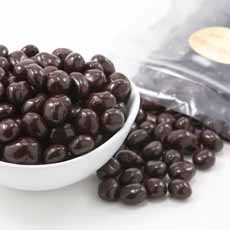
PRODUCT: Chocolate Covered Beer Berries

What the heck are beer berries, one might logically ask. Better yet, what are chocolate-covered beer berries?

Invented by Moonstruck Chocolate of Portland, Oregon, this innovative treat starts with German roasted malted wheat berries, which are typically used in the brewing process to make dark beers like Guinness and other stouts.

Moonstruck tumbles the wheat berries in delicious dark chocolate. You don’t have to be a beer lover to enjoy the crunchy texture and coffee (from the roasting) and chocolate flavors.

But, chocolate-covered beer berries are delightful surprise for those who do enjoy their brewskis. They’re a great gift or party favor; and at $5.00 per bag, very affordable.

There isn’t anything alcoholic in beer berries—just great flavor and fun. The concept was invented by Moonstruck’s master chocolatier after visiting a brewery and discovering the unique flavors of the beer berries.

And yes, you can nibble on them while enjoying a glass of stout or other beer.
 
Get yours at MoonstruckChocolate.com.

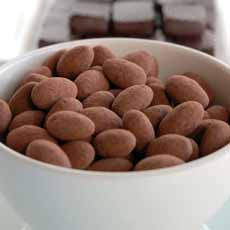
  beer-berries-230
Moonstruck’s delicious Beer Berries. Photo by Elvira Kalviste | THE NIBBLE.


Comments off

TIP OF THE DAY: Candy Cane Cocoa Rim

cocoa-cup-ziploc-230
Warm up your day with peppermint-accented
cocoa. Photo courtesy Ziploc.
 

For those living north of the Equator, today* is the the winter solstice, shortest day of the year.

Since antiquity, man has celebrated the winter solstice with feasting, gifts, visiting, drinking and more of the pleasures that counter the daily hardships of life.

So treat yourself to something special. We recommend a candy cane hot chocolate.

Start by making a seasonal cocoa cup rimmer with crushed candy canes or other peppermint candies.

Here’s a recipe for an easy batch of “peppermint dust” from Ziploc. Use it to turn goodies into festive treats all winter long.

To rim a cup of cocoa, dip the rim in water about 1/4 inch deep. Place the peppermint dust on a plate or in shallow bowl and twist the wet rim in it until it adheres.

 
HOW TO MAKE PEPPERMINT DUST

1. PLACE candy canes or other red and white peppermint candies in a Ziploc bag. Gently crush the candies with a rolling pin. Use less pressure for tiny chunks, and more pressure for a fine dust.

2. STORE the peppermint dust in a a Ziploc bag or other airtight container for easy access.

3. SPRINKLE on frosted, brownies, donuts, cupcakes. See these and other recipes at LifeLessons.Ziploc.com.


THE DIFFERENCE BETWEEN COCOA & HOT CHOCOLATE

Hot chocolate is made by mixing shaved, ground or other form of actual chocolate like beads or pellets (pistoles). The chocolate is mixed with water or milk, plus a sweetener. If you were to eat the chocolate, it would taste just like chocolate from a chocolate bar.

Cocoa is made with cocoa powder. Many products made from cocoa powder are called “hot chocolate,” but there is a difference. As chocolate contains far more cocoa butter than cocoa powder, hot chocolate will be smoother and richer than hot cocoa, all things being equal (if both products are made with the same type of liquid—milk, half and half, water, etc.) .

Check out the different types of cocoa and hot chocolate.
 
EASY PEPPERMINT BARK

For an over-the-top treat, have some peppermint bark with your candy cane cocoa.

Peppermint bark is super easy to make. Simply:

  with-rolling-pin-230
It’s easy to make peppermint dust. Photo courtesy Ziploc.
 
1. MELT white chocolate chips or a white chocolate bar in a microwave safe bowl. Spread on a baking sheet and sprinkle with peppermint dust.

2. CHILL in the refrigerator for an hour and break into chunks. Voilà: a special treat with little effort.
 
*Using the Gregorian calendar, the December solstice occurs between December 20th and December 23rd. Based on the rotation of Earth, the North Pole is tilted furthest away from the sun at the winter solstice (and closest to the sun at the vernal equinox in June). The Gregorian calendar is used in most western countries: 365 days in a year, 366 days in a leap year.
  

Comments off

RECIPE: Nutella Latte

nutella-latte-cherrystreetcoffeehouse-delonghi-230
The latte for Nutella fans. Photo courtesy
Cherry Street Coffeehouse | DeLonghi.
  To all those who enjoyed our recipe for Nutella French Toast, here’s the drink to go with it:

It was created by Laila Ghambari, U.S. 2014 Barista Champion, director of coffee at Cherry Street Coffee House, a Seattle mini-chain, and a spokesperson for De’Longhi premium coffee machines.

She recently developed this easy-to-make Nutella Latte recipe, and De’Longhi shared it with us.

RECIPE: NUTELLA LATTE

Ingredients For One 8-10-Ounce Drink

  • 1 teaspoon Nutella
  • Prepared espresso
  • 2% or whole milk, foamed
  • Garnish: whipped cream, chocolate powder (sweetened hot chocolate mix), chopped toasted hazelnuts
  •  
    Preparation

    1. ADD 1 tablespoon of Nutella to the bottom of the cup. Combine with prepared espresso and stir, then top with foamed milk.

    2. TOP with whipped cream and garnish with chocolate powder or chopped toasted nuts.


    If you’re one of those people who doesn’t like Nutella, here’s another recipe Laila created. There are no chestnuts or pecans (the typical nut for praline) in this drink, but she created it to evoke those flavors.

    RECIPE: MOCK CHESTNUT PRALINE LATTE

    Ingredients For One 8-10-Ounce Drink

  • 1 tablespoon creamy peanut butter
  • 1 teaspoon honey or caramel syrup or hazelnut syrup
  • Prepared espresso
  • 2% or whole milk, foamed
  • Garnish: whipped cream, shaved chocolate or mini chips, chopped toasted hazelnuts
  •  
    Preparation

    1. WARM up the peanut butter and sweetener. Combine with the prepared espresso then top with foamed milk.
    2. TOP with whipped cream and garnish with chocolate or chopped toasted nuts.


    chestnut-praline-latte-cherrystreetcoffeehouse-delonghi-230
    Mock Chestnut Praline Latte. Photo courtesy Cherry Street Coffeehouse | DeLonghi.


    Comments off

    PRODUCT: Freakin’ Awesome Snack Mix

    freakin-awesome-bag-bowl-230
    The fun name made this product a hit. Photo courtesy The Festive kitchen.
      Recently, we were asked if we’d like to try a snack mix called It’s Freakin’ Awesome. How could we resist?

    It was developed by a Dallas-area caterer, and became a big hit locally.

    A bag arrived: a mix of sweet and salty flavors with a bit of heat. A blend of caramelized tortilla chips (a fun idea!), Chex cereal pieces, dried cranberries, almonds and peanuts, it’s a variation on a Chex Mix.

    It’s tasty, to be sure, but no more awesome than some other Chex Mixes we’ve made. We will acknowledge, though, that compared to the boxed Chex Mixes on the market, the ingredients are more pure (you can taste the higher quality).

    So why are we writing about it?

    First, you might need something freakin’ awesome as a stocking stuffer or party favor. The name is sure to delight. “It’s Freakin’ Awesome” may be hyperbolic, but it is fun.

    Second, a portion of every purchase goes to Carry The Load, a charity started by a former Navy Seal to support the families of fallen heroes from the military, law enforcement, firefighters and rescue personnel.

    We love food with a mission!

     
    You can purchase It’s Freakin’ Awesome online at FestiveKitchen.com, and at Festive Kitchen stores in the Dallas area. A 9-ounce bag is $8.65.
      

    Comments off

    The History Of Sangria & 15 Sangria Recipes For National Sangria Day

    December 20th is National Sangria Day. The word derives from the Spanish word for bloodletting, and refers to the red wine that was used as a base for the punch.

    While many of us think of sangria as a summer cooler, red sangria is the perfect color to celebrate the holidays.

    > The year’s 25+ red wine holidays.

    > The year’s 22+ white wine holidays.
     
     
    THE HISTORY OF SANGRIA

    Sangria’s ancestor is a Roman drink called “hippocras” (wine, sugar, spices and other ingredients).

    Around 200 B.C.E., the conquering Romans arrived in Spain and planted vineyards.

    They soon discovered that red grape varietals produced the best wine in the local soils.

    The locals created fruit punches from the wines, and called these drinks sangria after the color.

    While sangria was drunk in Spain for more than 1,000 years, it didn’t arrive in the U.S. until the 1964 World’s Fair in New York City.

    It was served at the Spanish Pavilion, and quickly made its way into American homes and restaurants.

    Sangria is available in bottles, ready to drink. Since January 2014, the use of the word “sangria” on bottle labels is restricted by the European Union. Only sangria made in Spain and Portugal can be sold under that name.

    Here’s more about sangria
     
     
    HOW TO MAKE SANGRIA

    Sangria is made with wine, a spirit or liqueur, club soda, ginger ale, or another sparkling element (including sparkling wine), fruit, and sometimes, a sweetener.

    In Spain, sangria is typically made with Rioja or another local red wine.

  • There are white wine versions, called sangria blanco (white sangria) and sparkling versions using cava, Spain’s sparkling white wine.
  • In countries where rosé is popular, it, too, is used as a base for sangria; is saké, Japan’s rice wine.
  •  
    The wine is typically blended in a pitcher or a punch bowl with chopped fruit, fruit juices, or a sweetener (honey, sugar, syrup, lemon-lime soda instead of the club soda), soda water, and sometimes brandy.

    While some people feel that the cheapest wine will suffice because the flavor gets blended with these other ingredients, we recommend using a good (not great) quality wine. Let “quality” refer to anything you’d be happy to drink straight from the glass.

    Ideally, the sangria—without the soda water—should be allowed to chill overnight for the flavors to meld. The chilled soda water or other sparkling beverage should be added right before serving.

    To serve, pour the sangria into a pitcher filled with ice cubes and garnish with more fresh fruit.

  • Traditional sangria pitchers have a pinched lip so that the fruit and other solids do not splash into the glass.
  • But if you’re going to purchase a pitcher, we particularly like a pitcher with a central well to hold the ice. This keeps the drink cold without diluting it.
  •  
     
    SANGRIA TRIVIA

  • Since January 2014, the use of the word “sangria” on bottle labels is restricted by the European Union. Only sangria made in Spain and Portugal can be sold under that name.
  • Based on its ingredients, sangria is both a cocktail and a punch.
  • Sangaree, a fruit and wine punch from the West Indies, is the same drink. The name is an archaic English term for sangria.
  •  
     
    15 SANGRIA RECIPES

  • Apple Sangria
  • Cranberry Sangria Recipe
  • Halloween Sangria
  • Jubilee Sangria
  • Peach Sangria #1
  • Peach Sangria #2
  • Pomegranate Sangria Recipe
  • Rainbow Sangria
  • Red, White & Blue Sangria
  • Rosé Sangria
  • Ruby Port Sangria
  • Saké Sangria
  • Stone Fruit Sangria
  • Summer Sangria (White Sangria)
  • Winter Sangria
  •  

    port-sangria-sandemans-230
    [1] This version adds Port to the red wine (photo © Sandemans).

    Rose Sangria
    [2] You can also make sangria with red or white wine (photo © La Marina | NYC [now closed]).

    apple-sangria-230
    [3] While traditionally made with red wine, white wine sangrias are also popular. You can make them with sparkling wine, too (photo © U.S. Apple Association).


    [4] Rosé Sangria With Peaches (photo © Sun Basket).


    [5] Unless you’re expecting a punchbowl-sized crowd, it’s easier to make sangria in a pitcher (photo © Anna Tukhfatullina | Pexels).


    CHECK OUT WHAT’S HAPPENING ON OUR HOME PAGE, THENIBBLE.COM.


    Comments off

    The Nibble Webzine Of Food Adventures


    © Copyright 2005-2026 Lifestyle Direct, Inc. All rights reserved. All images are copyrighted to their respective owners.