THE NIBBLE BLOG: Products, Recipes & Trends In Specialty Foods


Also visit our main website, TheNibble.com.

NEW YEAR: Consider Better-For-You Resolutions

Before making New Year’s resolutions, plan ahead. Start by reminding yourself that the stats are bleak. Some surveys indicate that only 8% of people who set New Year’s resolutions stick to them.

In a recent poll conducted by ORC International for the U.S. Highbush Blueberry Council, Americans said that some of the more challenging resolutions to keep include:

  • Losing a significant amount of weight, or approximately 30+ pounds (86% of responders)
  • Going to the gym regularly, or approximately 3+ times per week (68%)
  • Giving up dessert completely (66%)
  •  
    Rather than going all-in with high-demand resolutions, set smaller, more realistic goals for yourself, say the experts. Poll respondents indicated that the following resolutions are easier to stick to:

  • Spending more time with family (79%)
  • Eating more healthy foods (72%)
  • Paying off credit cards (52%)
  •    
    skim-plus-half-gallon-230

    A “super” skim milk tastes like 2%, but still has 0A% fat. Photo courtesy Farmland Dairy.

     
    Case in point: We’d resolved to lose weight every year for decades. Like most inveterate dieters, sometimes we did, sometimes we didn’t; but it always found its way back.

    Twelve years ago, we switched our strategy to healthier eating. Each year, we resolved to make one better-for-you switch. And it’s easy!

    Our switches to date follow, with the disclaimer: We’d never hold ourself up as a paragon of good eating. Our job is to taste lots of food, including the sugar laden and the fat laden. But we do feel good that we’ve made one of these swaps every year, and have never once felt deprived.


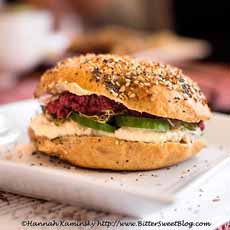
    whole-wheat-everything-bagel-230
    Whole wheat instead of refined white flour is another easy switch. We love a Whole Wheat Everything bagel. Photo courtesy Brooklyn Bagel & Coffee Company.
     
  • Bloody Marys, Martinis or on the rocks drinks for sweet cocktails. After we realized the sugar levels in most cocktails, we’d rather have ice cream and drink alcohol with no sugar added.
  • Brown rice for white rice. We’re big sushi eaters, and try to patronize restaurants that offer the brown rice option.
  • Cheese for cheese less often. We had a daily craving for fine cheese, and we could eat half a pound at a sitting, eight times the recommended portion, eight times the calories and cholesterol. We had no interest in reduced-fat cheeses. Instead, we opted for a “eat all the cheese you want” day once a month.
  • Club soda for diet soda. After reading scientific studies on the impact of artificial sweeteners on the endocrine system, we bought a SodaStream and drink lots of club soda with wedges of citrus.
  • Fish and tofu for red meat. We made this choice not because of cholesterol, but to do our small part to save the environment from the ravages of raising meat.
  • Fresh fruit every day. It really helps cut down on the yen for cookies and other processed sugar. In the winter months, there are plenty of apples, bananas, grapefruit, oranges and strawberries. In the summer months, we revel in the explosion of choices.
  •  

  • Nonfat Greek yogurt for sour cream. We had a bad sour cream habit—we could eat it from the container with a big spoon. Now, we eat plain Greek yogurt and use it instead of sour cream—with cottage cheese and other foods. It’s so thick that we even use it as a bread spread, instead of cream cheese.
  • Oatmeal and other whole grain cereals. So long, Corn Flakes and Snap, Crackle and Pop. Our breakfast cereals now focus on whole grain oatmeal and Cheerios. (We discovered that, while corn is a whole grain, the manufacturing process used to make Corn Flakes over-processes the corn to the point where little fiber is left.) A trick for enjoying our favorite oatmeal, steel cut oats, daily: Instead of spending 30 minutes stirring every day, cook a large batch on Sunday and reheat a portion each morning.
  • Olive oil instead of butter. From sautéeing to bread dipper, heart-healthy olive oil is our go-to fat. We did compromise on baking, however. We love the buttery taste of olive oil in brownies, cookies and cakes. On the other hand, an Italian-style olive oil cake works.
  • Salad every day, no matter what. We love a big salad, but some days our food journey doesn’t lead us to one. We now have a Plan B: Snacks of crudités (raw vegetables). It’s easy to carry baby carrots around, and we pay extra for ready-to-eat broccoli and cauliflower florets so we have no excuse.
  • “Super skim milk” for regular skim, 1%, 2% or whole milk. We can drink two glasses of milk a day. We got rid of the whole milk and the half and half for “super” skim milk, a premium variety that removes more of the water so that the 0% fat milk actually resembles 2% (and has more protein as a result). Our local Farmland Dairy makes Skim Plus brand, which became so popular that it is now also made in variations with added Omega 3 or added fiber.
  • Whole wheat for white flour. Whether in bread, bagels or pasta, this was a surprisingly easy switch. We only miss the taste of white flour in pizza crusts, and pizza isn’t something we eat often.
  •   

    Comments off

    RECIPE: Tiramisu Cocktail

    The popular Italian dessert tiramisu is typically composed of layers of sponge or ladyfingers, soaked in espresso liqueur; then layered with a mascarpone cheese and custard mixture; then dusted with cocoa or grated chocolate (here’s the history of tiramisu).

    Those jonesing for a rich and creamy tiramisu dessert can now quickly mix up an easy Tiramisu Cocktail, with this recipe adapted from one from Frangelico. It seems especially festive for New Year’s Eve.
     
     
    RECIPE: TIRAMISU COCKTAIL

    Ingredients

  • Vanilla liqueur (substitute Godiva White Chocolate Liqueur)
  • Vodka
  • Irish cream liqueur
  • Cold espresso or espresso liqueur
  • Ice
  • Garnish: grated chocolate*
  • Optional: Serve with a ladyfinger
  •  

    Drink your tiramisu (photo © Frangelico).
     
    Preparation

    1. Mix equal parts of vanilla liqueur, vodka and Irish cream liqueur in a shaker with ice. Strain into a chilled Martini glass.

    2. TOP with espresso and garnish with chocolate. Alternatively, before pouring the drink, set the grated chocolate in a saucer to make a glass rimmer. Wet the rim 1/4 deep by dipping in a shallow bowl of water; then twist the glass in the grated chocolate.

    3. SERVE. Be prepared for refill requests.
     
     
    Find more of our favorite cocktail recipes.
     
    ____________________
    *We grate a chocolate bar with a Microplane grater. You can use whatever grater you have.


    Comments off

    RECIPE: Sriracha Palmiers


    [1] Crusty, cheesy, spicy (Both photos © Pepperidge Farm).

    Box Of Pepperige Farm Puff Pastry
    [2] The palmiers are easy to make with purchased puff pastry.


    A palmier (palm-YAY) is a sweet or savory cookie made from puff pastry; the pastry is folded to resemble palm leaves (palmiers) or elephant ears, depending on your perspective.

    The sweet versions are rolled in sugar; the savory versions are made with cheese—a variation of cheese straws.

    For something spicy and warm from the oven on New Year’s Eve, we like this recipe from Pepperidge Farm. Parmesan palmiers with a kick of hot sriracha sauce are a smashing pairing with Bloody Marys, and you can serve them with sparkling wines, too.

    In this version, sriracha, the hot sauce that originated in Thailand, adds a kick.

    > The difference between Sriracha and Tabasco sauce is below.

    > The history of Sriracha sauce.

    > The different types of chiles.

    > The Scoville Scale, which ranks the heat levels of different chiles.
     
     
    RECIPE: SRIRACHA PALMIERS

    Ingredients

  • 1/2 cup whipped cream cheese spread, at room temperature
  • 4 teaspoons sriracha hot sauce
  • 1/3 cup minced green onions
  • 3/4 cup grated Parmesan cheese
  • All-purpose flour
  • 1/2 of a 17.3-ounce package of Pepperidge Farm Puff Pastry Sheets (i.e., 1 sheet), thawed
  •  

    Preparation

    1. HEAT the oven to 400°F. Line 2 baking sheets with parchment paper. Stir the cream cheese, sriracha, onions and cheese in a medium bowl.

    2. SPRINKLE the work surface with the flour. Unfold the pastry sheet on the work surface. Roll the pastry lightly to remove the fold marks.

    3. SPREAD the cream cheese mixture on the pastry to within 1/2 inch of the edge. Starting at both short sides, roll the pastry toward the center, leaving a 1/4 inch space in the center. Fold one side over another, making a layered roll. Cut the roll into 20 (1/2-inch slices). Place the slices, cut-side down, on the baking sheets.

    4. BAKE for 20 minutes or until the pastries are golden brown. Remove the pastries from the baking sheets and let cool on wire racks for 10 minutes.
     
     
    SRIRACHA VS. TABASCO: THE DIFFERENCE

    How do the two red chile-based sauces compare?

  • Sriracha is a thicker sauce that pairs red jalapeños with garlic and vinegar, along with a bit of sugar for balance. The result is a more rounded, balanced sauce than original Tabasco. While the original sriracha sauce hails from the Thai seaport of Sri Racha (also spelled Si Racha), the popular Huy Fong brand is made in California.
  • Tabasco, the classic American hot sauce, is a thin condiment (as opposed to the thicker sriracha, which is sauce-like). It is a less complex flavor profile than sriracha, made with Tabasco chiles and vinegar. In recent years, McIlhenny, the Louisiana-based producer, has expanded the line to seven varieties of Tabasco, including Garlic and Sweet & Spicy.
  •  
     

    CHECK OUT WHAT’S HAPPENING ON OUR HOME PAGE, THENIBBLE.COM.


    Comments off

    TIP OF THE DAY: Appetizers With Champagne

    As you’re getting ready to pop the cork on New Year’s Eve, what nibbles should you serve with the Champagne or other sparkling wine?

    Here are seven favorite pairings with Champagne.

    CAVIAR

    You don’t need the deep pockets for sturgeon caviar. Salmon caviar, trout caviar or whitefish caviar are just dandy.

    We enjoy serving them in dabs on slices of boiled fingerling potatoes, with a bit of crème fraîche or sour cream between the potato and the caviar. Check out the different types of caviar.
     
    CHEESE

    Double- and triple-creme cheeses are sumptuous with Champagne. Brie and Camembert are typically* double-crèmes (here’s the difference between Brie and Camembert); triple-crèmes like Brillat-Savarin, Explorateur and St. André are even richer and creamier.

    But if you’re not into the creaminess, mild Cheddars and nutty Goudas pair wonderfully with toasty Champagnes and older, nuttier Champagnes. (Note that among sparkling wines, Champagne is unique in its toasty, nutty qualities.)

    Serve slices of fresh baguette or specialty crackers with the cheese. Much as we love Triscuits, for example, New Year’s Eve merits something more glamorous.

       
    champagne_and_cheese-230

    Brillat-Savarin cheese with Champagne. Photo courtesy Whole Foods Market.

     
    PÂTÉ

    Pâte or mousse† de foie gras, made from duck or goose liver, is a classic pairing with Champagne. But chicken mousse pâte is less expensive and equally delicious. You can make it or buy it.

    We actually prefer mousse to pâte with Champagne because it’s so soft and spreadable. The velvety smooth texture is luxurious against the gentle bubbles. Serve it with toast points or baguette slices.


    oysters-champagne-230
    Oysters and other raw shellfish are delicious with Champagne. Photo courtesy Champagne
    Bureau.
      SEAFOOD PLATTER

    Some of the classic items of the classic plat de fruits de mer—clams, mussels, oysters and shrimp—are delicious with Champagne. You can serve oysters or shrimp only, or a seafood assortment.

    Seafood tends to be pricey; an alternative is to make a crab or shrimp dip or spread.

     
    SMOKED SALMON

    Smoked salmon is another time-honored marriage with Champagne. Serve it any way you like: canapés, spread (check out these smoked salmon rillettes), even Philadelphia rolls, sushi-style with cream cheese.

     
    STUFFED MUSHROOMS

    Champagne can have mushroomy flavors, especially as it ages Stuffed mushrooms go nicely—even if the flavor is citrussy or toasty instead of mushroomy.

     
    SUSHI

    For something a bit different, consider a platter of sushi—nigiri and/or cut rolls. Like the raw bar, raw fish with rice is delicious with Champagne.

    For color and flavor, you need only tuna and salmon; but you can get as elaborate as you like.

    What’s your favorite appetizer to serve with Champagne? Let us know!

     
    *Some Bries and Camemberts are triple-crèmes.

    Pâte is more solid than mousse. Here is Emeril Lagasse’s recipe. For a mousse, the liver is whipped with butter and cream and is soft and spreadable. Here’s a recipe from Alton Brown.


    Comments off

    TIP OF THE DAY: Rainbow Shots For Pride Month

    Here’s a fun way to welcome the New Year. These Rainbow Shots were the winner of this year’s DeKuyper Bartender Challenge.

    The winning recipe was submitted by mixologist Carolyn Connelly of Noblesville, Indiana.

    Carolyn took inspiration from the Pousse-Café (pronounced POOSE-caff-fay), an after-dinner drink composed of several layers of different colored liqueurs that sit on top of each other in a clear glass. The name means “pushes coffee,” or coffee chaser, in French. The term first appeared in 1880. (If you’d rather make a Pousse-Café, here’s a video showing how.)

    Because different liqueurs (and other liquids) have different densities, they can be made to sit atop each other in discrete layers, when poured in order of the densest to lightest. The result is a fun drink that delights the eye, rather than a strategic layering of flavors.

    But instead of layering the different liquids in a single drinking glass, Carolyn made the drink in a mixing glass and then poured the different colors out layer by layer (almost like a magic show). The densities of the liquids allow the different colors to pour out one at a time. Try it!
     
     
    RECIPE: DeKUYPER RAINBOW SHOTS

    Ingredients Per Set Of Shots

  • 1 part Blue Curaçao liqueur
  • 1-1/4 parts fruit-flavored vodka (Carolyn used Pinnacle Tropical Punch)
  • 5 parts fresh orange juice
  • 1 part grenadine syrup
  • 6 shot glasses
  • Mixing glass and ice
  •    
    DeKuyper_RainbowShots-leah-230

    These separate shots were made in one mixing glass. The colors form separate layers. Photo courtesy DeKuyper.

     
    Preparation

    1. POUR the grenadine syrup into a mixing glass over ice.

    2. ADD additional ice and layer in the orange juice by pouring it gently over a bar spoon into the mixing glass.

    3. LAYER in the vodka and add more ice.

    4. TOP with Blue Curaçao and pour into six shot glasses arranged in a single row.


    DeKuyper_RainbowShots_bottles_230
    The ingredients used to make Rainbow Shots. Photo courtesy DeKuyper.
      ABOUT DE KUYPER

    DeKuyper is the top-selling line of domestic cordials, with nearly 60 mixable and versatile flavors of cordials, liqueurs, crèmes, brandies, and schnapps.

    Some DeKuyper flavors have inspired the creation of what are now famous cocktails. For example, in the mid-1980s DeKuyper Peachtree Schnapps inspired the creation of the Fuzzy Navel. In the mid-1990s, DeKuyper Pucker Sour Apple Schnapps inspired the creation of the Appletini.

    DeKuyper was founded in Holland in 1695 by Johannes DeKuyper & Son. Today the company is a subsidiary of Beam Suntory Inc.

    For recipes and more information on the DeKuyper Cordials and Liqueurs, visit DeKuyperUSA.com.

     
    CORDIALS, LIQUEURS, SCHNAPPS: THE DIFFERENCE

  • Cordial, in the U.S., refers to a sweet, syrupy, fruit-flavored alcoholic beverage. It is often used as a synonym for “liqueur.” In the U.K., however, cordial is a non-alcoholic, sweet, syrupy drink. An example: Rose’s Lime Cordial, which originated in the U.K., is called Rose’s Lime Juice in the U.S. because American consumers think of “cordial” as alcoholic.
  • Eau de vie is a French term for an unsweetened fruit brandy, similar to Schnapps. It has come to be used to mean an unsweetened liqueur as well, probably because of the similarity of taste and texture.
  • Liqueur is fruit steeped in an alcohol that has already been fermented and distilled.
  • Schnapps is a generic German term for all white (clear) brandies distilled from fermented fruits. True Schnapps has no sugar added. However, the major American commercial brands are all heavily sweetened to cater to American palates. [Source]
  •  
    Plus:

  • Cream liqueur is a liqueur that includes dairy cream. The high amount of alcohol enables the cream to be shelf stable (i.e., no refrigeration is required). An example is Baileys Irish Cream liqueur.
  • Crème liqueur does not have any dairy product, but has a creamy texture. Examples include crème de cacao (chocolate liqueur), crème de cassis (black currant liqueur), crème de menthe (mint liqueur) and crème de mûre (blackberry liqueur).
  •  
     

    CHECK OUT WHAT’S HAPPENING ON OUR HOME PAGE, THENIBBLE.COM.


    Comments off

    The Nibble Webzine Of Food Adventures


    © Copyright 2005-2026 Lifestyle Direct, Inc. All rights reserved. All images are copyrighted to their respective owners.