|
Pimento cheese is known as a Southern specialty, along with barbecue, catfish and hush puppies, grits, red velvet cake, and sweet tea. Yet, according to a Southern culinary historian, the soft cheese and red bell pepper spread is a Northern invention.
The recipe to make your own pimento cheese is below, following the history of pimento cheese.
October 11th is Southern Food Heritage Day. April 9th is National Pimento Cheese Day.
> Pimento cheese recipes are below.
> The history of cheese.
> The different types of cheese: a glossary.
THE HISTORY OF PIMENTO CHEESE
Today’s combination of grated Cheddar cheese, mayonnaise, seasonings and finely diced red pimento (the Americanized spelling of the Spanish pimiento, red bell pepper) started in the North as a cream cheese-based spread.
It blended the newly-introduced blocks of cream cheese with canned pimentos, newly imported from Spain.
The two ingredients may have been first combined by home economists, women who developed new recipes, and other tips for homemakers that were eagerly read in books, magazines, newspapers, and on product labels.
In the 1870s, New York State farmers began to make a soft, unripened cheese modeled after the French Neufchâtel cheese.
Within a few decades, a recipe for cream cheese appeared, made by mixing cream into the Neufchâtel curd. The new soft cheese was molded into small wood block forms.
Because the city of Philadelphia had a reputation for fine food, a New York-based manufacturer, Phenix Cheese Company, named its product Philadelphia Brand Cream Cheese.
It was the leading brand then as now (J.L. Kraft and Bros., established in 1909, acquired Phenix Cheese Company in 1930; the company is now called Kraft Foods Group).
Philadelphia Brand actually sold two kinds of flavored cream cheese in addition to the original plain: Chive and Pimento.
All three were staples in our home.
Alas, Philadelphia Pimento Cream Cheese was discontinued a few years ago in favor of a dozen more modern flavors, including Blueberry and Spicy Jalapeño.
It seems that today’s consumers would rather have Garden Vegetable Cream Cheese than Pimento. Chive has survived as Chive & Onion.
April 9th is National Pimento Cheese Day (as declared by The Fresh Market in 2016).
THE PIMENTO CHEESE SANDWICH TAKES HOLD
The cream cheese/pimento spread became a standard on tea sandwiches, and spread (no pun intended) from the tea party set to the working class.
It found its way onto lunch carts, along with the egg salad and ham and cheese sandwiches; and into sandwich shops and diners.
The first printed recipe unearthed so far is in Good Housekeeping magazine in 1908, for a sandwich filled that blended softened cream cheese, minced pimentos, mustard, and chives.
The following year, the Up-to-Date Sandwich Book published a simpler version: Neufchâtel cheese with chopped pimentos and a bit of salt on lightly buttered white bread.
Before World War I, dozens of similar recipes appeared in magazines and cookbooks.
Soon after World War I, southern farmers began growing pimentos. Locals mixed the canned domestic pimentos with grated Cheddar instead of cream cheese, which was then less available in the southern states.
In the South, pimento cheese remains a choice on tea room menus, sliced into triangles; and as a finger sandwich with cocktails.
Commercial brands of pimento cheese can be found in most supermarkets, to be spread on crackers at home. Every home cook has his or her favorite recipe.
HOW TO SERVE IT ALL DAY
#1: PIMENTO CHEESE FOR BREAKFAST
If you want a taste of the original pimento cheese, you’ll have to blend your own diced pimentos into cream cheese.
But if you want to embrace Southern-style pimento cream cheese, here’s how to do it, along with a recipe to make your own Cheddar-based pimento cheese:
Breakfast tortilla: Warm a corn tortilla in a skillet or the microwave. Spread with pimiento cheese and top with two fried eggs and salsa. Optional garnishes: chopped green onions, sliced black olives, chopped fresh herbs.
Cheese omelet
Toast spread (bacon optional)
Poached eggs on pimento cheese toast
#2: PIMENTO CHEESE FOR LUNCH & DINNER
Baked potato/stuffed potato or sweet potato
Macaroni and cheese
Potatoes gratin
Quick fondue
#3: PIMENTO CHEESE FOR HORS D’OEUVRE & SNACKS
Crudité dip (add more milk, cream, or mayo to thin to the desired consistency)
Cracker/toast/crostini spread
Deviled eggs (mix with the yolks)
Stuffed celery
Stuffed cherry tomatoes or baby potatoes
RECIPE: PIMENTO CHEESE SPREAD
You can find recipes made with Cheddar, Cheddar-cream cheese blends, and other cheeses. This one sticks with classic Cheddar.
Ingredients
1-1/2 cups mayonnaise
1 jar (4 ounces) diced pimiento, drained
1 teaspoon Worcestershire sauce
1 teaspoon finely grated onion
1/4 teaspoon cayenne (ground red pepper)
1 block (8 ounces) extra-sharp Cheddar cheese, finely shredded
1 block (8 ounces) sharp Cheddar cheese, shredded
Preparation
1. COMBINE the mayonnaise, pimiento, Worcestershire sauce, onion, and cayenne in a large bowl. Stir in the cheese.
2. CHILL in the refrigerator to let the flavors meld. Serve at room temperature. The spread can be stored in the fridge for up to 1 week.
Variations
CAROLINA STYLE: Add 1/4 cup diced olives and jalapeños.
CREAMY: Make the spread creamier by blending in 4 ounces of cream cheese.
HOLIDAY: Add 1/4 cup cranberry sauce (preferably whole cranberry sauce).
MEXICAN: Add 1 tablespoon chipotle in adobo sauce, drained; or 1 teaspoon dried chipotle. Adjust quantity to taste.
ONION: Add finely-diced red onion and fresh parsley to taste.
SMOKY: Add 1/4 cup cooked bacon, drained and crumbled.
SWEET & TANGY: Add some pickle relish. Start with a heaping tablespoon, drained.
> THE DIFFERENT TYPES OF CHEESE
> THE HISTORY OF CHEESE
|
|

[1] The pimento cheeseburger served at Gardenia restaurant in New York City’s Greenwich Village (photo © Gardenia).

[2] Don’t forget the hot dog, here topped with pimento cheese and some fresh jalapenos (photos #2 and #3 © Birdie’s Pimento Cheese).

[3] A pimento cheese and bacon sandwich on a biscuit.

[4] A pimento cheese quiche (photo © Callie’s Hot Little Biscuits | Facebook).
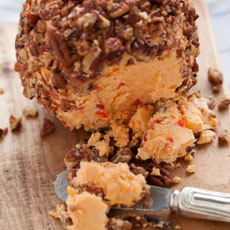
[5] Party perfect: a pimento cheese ball Here’s the recipe. (photos #4 and #8 © Wisconsin Cheese).

[6] With wine, beer or cocktails: pimento cheese and crackers, toasts or sliced baguette. Here, we used artisan nut bread (photo by Katharine Pollak | © THE NIBBLE).

[7] Pimento cheese with crudites (photo © 33 Greenwich | NYC [now closed])

[8] For entertaining or snacking: a crock of pimento cheese and sliced baguette or toasts.
|