THE NIBBLE BLOG: Products, Recipes & Trends In Specialty Foods


Also visit our main website, TheNibble.com.

TIP OF THE DAY: Go Rustic, Make A Crostata Or A Galette

Before there were pie pans, there were crostatas and galettes. But let’s start with a brief history of pie, to provide some perspective before we get to a delicious crostata/galette recipe.
 
THE HISTORY OF PIE

Culinary historians trace the origin of pie to ancient Egypt, where savory fillings were baked in woven reeds as the vessel. A form of flat, free-form pastry, now called a crostata (Italian) or galette (French), evolved, consisting of a crust of ground grain (barley, oats, rye, wheat) and filled with honey.

The concept was brought to Greece, and then to Rome. Ancient Greeks are believed to have created pie pastry, and the trade of pastry cook was distinguished from that of baker.

In the millennia before modern bakeware was created, the Romans made an inedible pastry of flour, oil and water to hold meat and poultry as they baked (its main purpose was to keeping in the juices). The Roman Legions brought the technique with them as they forged through Europe.

It was the use of lard and butter, in northern Europe, that led to a dough that could be rolled out and molded into what became a tasty modern pie crust.

   
/home/content/p3pnexwpnas01_data02/07/2891007/html/wp content/uploads/pear apple galette waitrose recipe 230

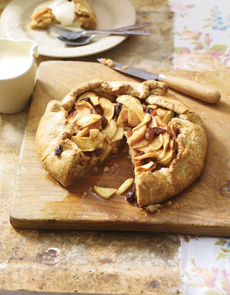
A galette is sometimes called a rustic tart. Photo of a pear and apple galette courtesy Waitrose.

 
According to the American Pie Council, “pye” first appears in the written record in England in the 12th century. The crust of the pie was referred to as a “coffyn,” rectangular like its namesake. The walls were thick to hold the shape, and there was more crust than filling. Often, the legs of a fowl were placed to hang outside of the coffyn and used as handles!

The predecessor of modern cake and pie pans was a metal hoop that was placed on a baking sheet. Ultimately, bakeware was made from tin or pottery. It is believed that the rounded shape rather than square or rectangular, as well as the shallowness of the pan, were devised to create a smaller space in which to stretch limited ingredients.
 
WHAT IS A CROSTATA OR GALETTE?

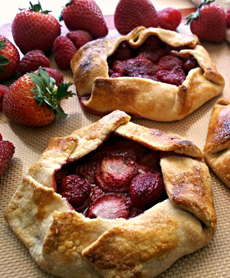
A crostata or galette was an early way to form a pie crust in the absence of pie pans—and before anyone even realized a pie pan was desirable! The dough was rolled flat, the filling placed in the middle, and the edges turned up and folded (see the photos) to contain the filling. It was used for savory and sweet pies, and could be made free-form or in a rectangle, round or square.

And, even after the emergence of tin and ceramic pie pans, for poor folk as well as the itinerant, no purchase of a pie pan was needed. This is a pie made without bakeware (well…a baking sheet helps the modern baker, instead of the older practice of using the floor of the oven or fireplace).

Even today, it is simple to make; and we find it a fun undertaking, uniting us with all of those ancestors who baked without pans. No technique to create an even, fluted crust is necessary. There’s no worry about tearing the dough as you lift it into the pie pan. No one cares if the final result isn’t perfectly round or rectangular: The rusticity is the charm.

And, the ease of creating a crostata/galette may get you to make pie more often—not just a fruit pie, but savory pies of vegetables, meat, even fish and seafood. Tip: It’s fun to make “leftovers pie,” tossing in everything from pasta, rice or grains to cooked meats and vegetables, cheese, whatever (go on a scavenger hunt through the fridge and pantry).


/home/content/p3pnexwpnas01_data02/07/2891007/html/wp content/uploads/galette crostada californiastrawberries 230
Galettes can also be made in individual sizes. Photo courtesy California Strawberry Commission.
 

RECIPE: FRUIT GALETTE (CROSTATA)

This recipe below works for any fruit, but for a classic apple galette, this recipe adds cinnamon.

You can make the dough up to three days in advance.

Ingredients For The Dough

  • 1-1/3 cups all-purpose flour
  • 1 tablespoon/15 grams sugar
  • ½ teaspoon salt
  • 1 large egg
  • Heavy cream, as needed
  • 1 stick cold unsalted butter, cut into pieces
  • 2 teaspoons lemon juice
  • Optional: ½ teaspoon grated lemon zest
  • Optional: jam in a matching or complementary flavor*
  •  
    *Spreading jam on the bottom of an unbaked crust is a tip that adds a more fruit flavor and some extra sweetness to the pie.

    For The Filling

  • 3 cups fruit of choice, sliced or cubed (berries can be left whole)
  • ½ cup to 3/4 cup sugar, based on the sweetness of the fruit, with 1 tablespoon reserved
  • Pinch of salt
  • Optional: juice and grated zest of 1/2 lemon
  • 3 to 4 tablespoons cornstarch
  •  
    Preparation

    1. MAKE the crust: In a food processor fitted with a steel blade, or in a large bowl, pulse or mix together the flour, sugar and salt. Lightly beat the egg in a measuring cup; then add just enough cream to get to 1/3 cup. Lightly whisk the egg and cream together.

    2. ADD the butter to the flour mixture and pulse, or use a pastry cutter or your fingers to break up the butter into chickpea-size pieces. If using a food processor, do not over-process the dough or it gets tough.

    3. DRIZZLE up to 1/4 cup of the egg mixture over the dough and pulse or stir until it just starts to come together (but is still mostly large crumbs). Mix in the lemon zest.

    4. PLACE the dough on a lightly floured surface and pat it into one uniform piece. Flatten it into a disk, wrap in plastic and chill for 2 hours and up to 3 days. When ready to bake…

    5. PREHEAT the oven to 400°F. Roll the dough into a 12-inch round—or as close to round as is easy for you. Transfer the dough to a rimmed baking sheet lined with parchment paper and chill while preparing the filling.

    6. PREPARE the filling: Toss together the fruit, all but 1 tablespoon of the sugar, the salt, the lemon juice and zest, and the cornstarch. Use more cornstarch for juicy fruits like apples, berries and peaches, and less for drier fruits like figs.

    7. SPREAD the optional jam over the center of the dough circle, then place the fruit in the middle, leaving a border of 1½ to 2 inches (some people like the look of an even higher crust). Gently fold the pastry over the fruit, pleating to hold it in. Brush the pastry with the leftover egg and cream mixture. Sprinkle the reserved tablespoon of sugar on the crust.

    8. BAKE for 35 to 45 minutes, until the filling bubbles up vigorously and the crust is golden. Cool for at least 20 minutes on a wire rack. Serve warm or at room temperature.

    This recipe was adapted from one in the New York Times.


    Comments off

    Sponge Cake History & Types For National Sponge Cake Day

    August 23rd is National Sponge Cake Day. It celebrates an airy cake that’s just right for summer, garnished with fresh berries and whipped cream.

    Below:

    The different types of sponge cakes.

    Sponge cake variations.
     
     
    THE HISTORY OF SPONGE CAKE

    The modern sponge cake dates to Europe in the early 19th century. Precursors were cookie-sized treats called biscuit bread and sponge fingers (a.k.a. boudoir biscuits, ladyfingers, Savoy biscuits [English] and savoiardi [Italian]); as well as sweet “slices of bread” from Italy, Portugal, and Spain.

    These earlier forms date back to the Renaissance (15th century) and were used in numerous desserts including trifles and fools. Early 17th century English cookbook writers note that recipes for fine bread, bisquite du roy [roi, i.e. king] and common biscuits were similar to sponge cake.

    Savoiardi, ladyfingers, originated in the late 15th century at the court of Catherine of Medici, created to mark the occasion of a visit by the King of France to the Duchy of Savoy.

    The recipe found its way to England in the early 18th century.

    The sponge cake is thought to be one of the first of the non-yeasted cakes; the rise comes from well-beaten eggs.

    The earliest recipe in English is found in a 1615 book by Gervase Markham*. The term “sponge cake,” describing the sponge-like openness of the crumb, probably came into use during the 17th century.

    The earliest reference cited in the Oxford English Dictionary is in an 1808 letter written by Jane Austen, who apparently was fond of them. [Source: Food Timeline]
     
     
    THE MODERN SPONGE CAKE

    The modern American sponge cake is a light-textured cake made of eggs, sugar, and flour†; there is no fat or leavening. The rise comes from the beaten egg whites. The French sponge, génoise, is used for thinner cake layers, so the egg whites and yolks are beaten together.

    Sponges can be baked in cake pans, tube pans, or sheet pans. They can be used to make layer cakes, tube cakes, roulades (rolled cakes), and cupcakes. They can be variously flavored and filled.

    The basic sponge cake recipe is also used to make ladyfingers and madeleines; slices can be used instead of biscuits to make a shortcake.
     
     
    _________________

    *“The English Huswife, Containing the Inward and Outward Virtues Which Ought to Be in a Complete Woman.”

    †Since sponge cakes are not leavened with yeast, they can be eaten during Passover, made with matzo meal instead of wheat flour.
    _________________


    Victoria Sponge Cake
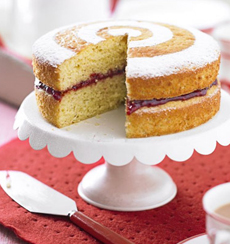
    [1] A Victoria Sandwich is a sponge. Queen Victoria’s favorite filling was raspberry jam, but you can use any jam you like (photo © Stylenest; here’s the recipe).
    A Sponge Cake Topped With Powdered Sugar
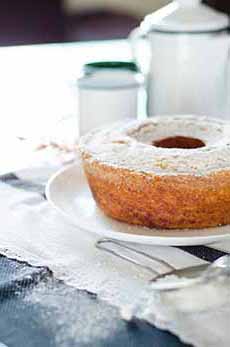
    [2] A sponge cake made in a tube pan, garnished with powdered sugar (photo © Isabella Mendes | Pexels).
    /home/content/p3pnexwpnas01_data02/07/2891007/html/wp content/uploads/sponge cake tube pan chicagometallic 230
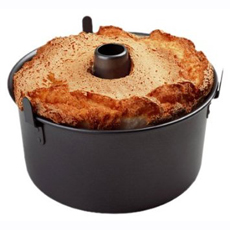
    [3] A simple American sponge cake, made in a tube pan (photo © Chicago Metallic Bakeware). Use a tube pan with feet, since sponge cake (as well as angel cake) must be inverted to cool, without touching the counter.


    TYPES OF SPONGE CAKES

    American Sponge Cake

    The American Sponge is a high-rising cake, gaining volume from the air whipped into the egg whites and yolks. The dry ingredients (flour, baking powder, salt are folded in. Then the egg whites and more sugar are beaten until stiff and folded into the yolk mixture. It is often baked in an ungreased tube pan, which maximizes the volume of the cake, and emerges the springiest and spongiest of the sponge cakes.
     
    British Sponge Cake

    The classic British sponge of modern times is the Victoria Sponge Cake (see below).

    Génoise Sponge Cakes & Cookies

    The French sponge cake, génoise (jen-WOZ), is named for the Italian port city of Genoa, where a precursor of it, Genoa Cake, originated in the early 19th century.

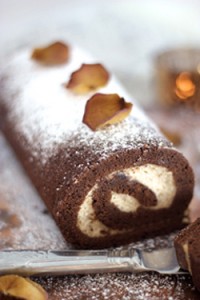
    Génoise sponge differs from American sponge cakes in that the eggs are beaten whole, rather than beating the yolks and whites specialty for more rise. In fact, the rise is not the goal; flatter cake layers are sought. Sheets of genoise are used to make Swiss rolls and other roulades, such as Buche de Noel. Genoise is also used to make ladyfingers and madeleines.

    Génoise sponge is the basis of many French layer cakes and roulades. Baked in pans or thinner sheets, it can be filled with fruit purée, jam, or whipped cream. It can be iced and decorated simply, elaborately, or not at all.


    /home/content/p3pnexwpnas01_data02/07/2891007/html/wp content/uploads/chocolate chestnut cream dirtykitchensecrets 250
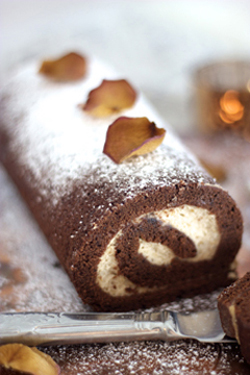
    [4] Chocolate génoise roulade (roll) filled with chestnut cream (photo © Dirty Kitchen Secrets).
    /home/content/p3pnexwpnas01_data02/07/2891007/html/wp content/uploads/genoise baba lacigaledoree.com 230
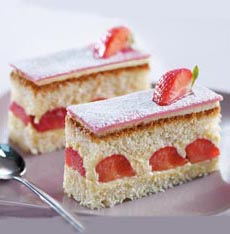
    [5] Thin layers of génoise used to assemble cakes (photo © La Cigale Doree).

      Genoa Cake (Not A Génoise Sponge)

    By the middle of the 18th century, cake bakers began to use well-beaten eggs instead of yeast as a leavening agent. The cake would be baked in a mold or in layers made by pouring the batter into two hoops, set on parchment paper and a cookie sheet (hoops atop baking sheets were the precursor of the modern cake pan).

    Genoa Cake originated in the port city of Genoa, Italy in the early 19th century. Some ingredients that came into the busy port from the East and the Middle East—almonds, candied fruit and peel, citrus zest, currants, raisins, vanilla, cinnamon and other spices—often found their way into Genoa Cake, a light fruitcake that is different from the airier genoise. Liqueur could be incorporated into the batter.

    Like the French génoise sponge, it could be served plain, filled with jam and/or cream, iced, or simply dusted with powdered sugar.

    There is also Italian génoise, called pan di Spagna (“Spanish bread”) in Italy.
     

    Sponge Roll (Roulade)

    A sponge roll is a thin layer of génoise, no more than an inch deep, baked in a sheet pan. It has the flexibility to be filled with jam and/or cream and rolled into a Bûche de Noël (Yule Log), Jelly Roll, Swiss Roll† or another type of roulade.
     
    ‡A Swiss roll is also called a cream roll when filled with whipped cream or other cream variation, and is often used as another term for jelly roll.
     
    Victoria Sponge Cake

    England’s Queen Victoria enjoyed a slice of sponge cake with her afternoon tea, garnished with raspberry jam and whipped heavy cream (called double cream in the U.K.) or vanilla cream (vanilla-flavored whipped cream, called chantilly in French).

     
    Her preferences led to the creation of the Victoria Sponge. Jam and cream are sandwiched between two sponge layers; the top of the cake is served plain or with a dusting of powdered sugar. It also came to be known as the Victoria Sandwich, and sometimes the Victorian Cake. (See the photo at the top of the page.)
     
     
    SPONGE CAKE VARIATIONS

  • Angel Cake or Angel Food Cake, a sponge cake that uses only the egg whites. This produces a white cake instead of a conventional sponge colored yellow by the egg yolks.
  • Castella, a Japanese sponge cake that’s a specialty of Nagasaki. It was introduced there by Portuguese merchants in the 16th century (see Pão de Castela, below), and is typically made in long loaves.
  • Cantonese Steamed Sponge Cake, steamed in a water bath and called Ma Lai Gao in Cantonese. You may find it in the U.S. at restaurants that serve dim sum
  • Chiffon Cake, invented in 1927 in Los Angeles. It is based on the sponge cake recipe plus some added fat. Here’s more about Chiffon Cake.
  • Eve’s Pudding, a Victoria Sponge made with sliced apples that cook at the bottom of the cake pan or baking dish, underneath the cake batter. Think of it as a cousin to Tarte Tatin.
  • Italian Génoise—see Pan di Spagna, below.
  • Ma Lai Gao—See Cantonese Steamed Sponge Cake, above.
  • Malay Steamed Cake, a steamed sponge, based on the Cantonese Steamed Sponge Cake.
  • Pandan Cake or Pandan Chiffon, a fluffy sponge cake of Indonesian and Malaysian origins, flavored with the light green juice of pandan leaves (which has notes of coconut, citrus and grass). It sometimes made a deeper green with food color.
  • Pan di Spagna, also called Italian Génoise or Torta Genovese. An Italian recipe that evolved in Sicily during the Spanish rule (1559–1714), it is flavored with vanilla and/or citrus zest. It is the cake base for Sicilian Cassata, Tiramisu, Zuccoto and Zuppa Inglese. [Source]
  • Pão de Castela, “bread from Castil,” is a Portuguese variation of Pan di Spagna.
  • Pão de Ló is an unsweetened bread sponge “cake,” created by a Genovese cook, Glovan Battista Cabona, in the mid-1700s‡‡. It was cooked in a water bath, which was more reliable than early ovens.
  • Passover Sponge Cake or Plava, is made with Kosher for Passover ingredients, with matzo meal, matzo flour, or potato flour, replacing the wheat flour. It is sometimes flavored with almonds or pecans, apples or apple juice, dark chocolate, lemon, orange juice, or poppy seeds.
  • Tres Leches Cake, a sponge soaked in evaporated milk, sweetened condensed milk, and whole milk. The recipe originated in Latin America.
  • Twinkies are described by Hostess as “golden sponge cake with a creamy filling.” However, unlike a home- or bakery sponge cake made with 4 ingredients (eggs, sugar, flour, baking powder), Hostess Twinkies are made with 37 ingredients, most of them chemicals.
  •  
    _________________

    ‡‡According to About.com, the cook’s name was Giobatta Cabona, and was in the service of Marchese Domenico Pallavicini, Genova’s (Genoa in English) Ambassador to Spain in the mid-1700s. The Marchese asked for a new cake for a banquet, and Cabona created a light and airy confection he called Pâte Génoise, or Pasta Genovese in Italian. A slightly simplified version was called Pan di Spagna, to honor the Spanish Court.


    CHECK OUT WHAT’S HAPPENING ON OUR HOME PAGE, THENIBBLE.COM.


    Comments off

    TIP OF THE DAY: Serve Food In A Rocks Glass

    One way to make food more interesting is to serve it in (or on) an unusual vessel. Chefs at better restaurants are always looking for more interesting presentations, serving food on everything from bricks of Himalayan Pink Salt to slate tiles and cutting boards.

    Consumer magazines contribute their own ideas, styling food in hollowed-out oranges or butternut squash shells, mini flower pots and re-purposed oyster shells.

    For today, consider something much simpler: your tumblers or rocks glasses. In addition to a fun factor, they’re also good for controlling portion sizes of macaroni and cheese and other fattening food, and to constrain runny foods from running into neighbors on the plate.
     
    A rocks glass, also called an Old Fashioned glass, is a form of tumbler. With a capacity of nine to twelve ounces, it is used for a simple cocktail or plain spirit served over ice cubes—i.e., “on the rocks.”

       
    /home/content/p3pnexwpnas01_data02/07/2891007/html/wp content/uploads/steak tartare tumbler boskitchenandbar 230

    Tartare in a tumbler. Photo courtesy Bo’s Kitchen and Bar Room | NYC.

     
    While you don’t have a cocktail with every meal, you do serve food that can be presented in those idle rocks glasses. Some ideas:
     
    Breakfast In A Rocks Glass

  • Cereal, cold or hot
  • Fruit salad
  • Scrambled eggs
  • Yogurt or cottage cheese
  •  
    Lunch & Dinner In A Rocks Glass

  • Beans and legumes
  • Ceviche
  • Condiments (e.g. pickles and olives)
  • Garnishes (e.g. croutons, grated cheese, gremolata, salsa)
  • Layered parfaits (e.g., guacamole, salsa, sour cream)
  • Pasta
  • Rice or other grains
  • Salad or slaw
  • Shrimp cocktail
  • Sides, from thick (like mashed potatoes) to runny (like sauerkraut)
  • Soup (no spoon required!)
  • Steak, salmon or tuna tartare
  •  

    /home/content/p3pnexwpnas01_data02/07/2891007/html/wp content/uploads/salad martini glass elegantaffairsFB 230sq
    Serve a side salad in a tumbler. Photo courtesy Elegant Affairs Catering.


    Desserts In A Rocks Glass

  • Berries
  • Compote
  • Dirt cake
  • Fruit soup
  • Garnishes (e.g. chocolate chips, shredded coconut)
  • Ice cream or sorbet
  • Mini meringues or other small cookies
  • Parfaits
  • Pudding or mousse
  •  
    Snacks In A Rocks Glass

  • Candies (we love a glass of gummies)
  • Cheese spread or cubes
  • Chips or pretzels with dip
  • Cookies
  • Crackers or Goldfish
  • Crudités with hummus or other dip
  • Popcorn
  • Nuts
  • Trail mix
  •  
    Our list is far from exhaustive. So the next time you open the cabinet door to select plates or bowls for serving food, think: Would this food be more fun in a rocks glass?

    If you don’t have enough tumblers, use wine goblets or Champagne coupes, also called sherbet Champagne glasses.

    The latter are so-called because, contrary to Marie Antoinette’s preferences, we now know that they shouldn’t be used for sparkling wines (the bubbles dissipate too quickly). But they work just great for sorbet, ice cream, pudding and mousse.


    Comments off

    TIP OF THE DAY: Is Sambal Oelek The Next Sriracha?

    The taste buds of the nation have changed since the 1960s, when immigration laws were relaxed and more Asians moved to the U.S., bringing their culinary traditions with them. Their bolder flavors began to attract Americans who had only known a blander European-based diet.

    There were American hot sauces, but they were popular largely in the South and Southwest. Hot sauce manufacturing in the U.S. began in Louisiana with Tabasco brand pepper sauce in 1868. While it was distributed in other regions, most people didn’t know about it. Much later, in 1947, Dave Pace combined tomatoes, jalapeños and onions into “picante sauce,” refining the recipe over the next decade.

    With the national expansion of Tex-Mex restaurants beginning in the 1960s, more people were introduced to hot sauce, and the demand began to expand. Around the same time, the expanding popularity of the Bloody Mary meant that a bottle of Tabasco could be found in many households.

    The most recent hot sauce to take hold in the category is Sriracha, a recipe from Thai port of Sri Racha that is produced in California by the Huy Fong company. “Rooster bottles” of the hot chili pureé (the logo is a red rooster), with its ketchup-like sweetness and notes of garlic and spice, have found their way into restaurants and homes alike.

       
    /home/content/p3pnexwpnas01_data02/07/2891007/html/wp content/uploads/sambal oelek spoon ryanspilken 230r

    A spoonful of sambal olek, an Indonesian chile paste. Photo courtesy Ryan Spilken.

     
    Sriracha has gone from an Asian condiment few people had heard of, to the go-to hot sauce for millennials. Sriracha sauce has found its way onto burgers, breakfast eggs, fries, noodles, salads, sandwiches, stir-frys and wings. Chefs have added it to everything from rémoulade sauce to brownies, ice cream and other desserts.

    There are even Sriracha-specific cookbooks, including:

  • The Sriracha Cookbook: 50 “Rooster Sauce” Recipes that Pack a Punch (including Peach-Sriracha Sorbet) and its companion book…
  • The Veggie-Lover’s Sriracha Cookbook: 50 Vegan “Rooster Sauce” Recipes that Pack a Punch (including Maple-Sriracha Doughnuts and Watermelon Sriracha Sangria)
  • Sriracha Sauce Cookbook: Top 50 Easy Sriracha Recipes to Satisfy Your Spicy Food Addiction! (including Baked Sriracha Spaghetti Squash and Strawberry Sriracha Margaritas)
  •  
    Here’s the history of Sriracha sauce and the popular Huy Fong Sriracha Hot Chili Sauce that gave the product its nickname, “rooster sauce.”

    O.K., we know that Sriracha is mainstream, appearing in everything from hummus to potato chips. But in the words of fickle foodies and millennials everywhere, what’s next?

    It could be sambal oelek!


    /home/content/p3pnexwpnas01_data02/07/2891007/html/wp content/uploads/sambal oekek huyfong 230
    A thick paste, sambal oelik has vinegar tartness and fruity sweetness (like ketchup). Top photo courtesy RyanSpilken.com, bottom photo courtesy Huy Fong.


    WHAT’S SAMBAL OELEK?

    Vinegar-based sambal oelek is a staple in Indonesian, Malaysian and Thai cooking. The first packaged brand was Indonesian; and the name, Javanese in origin, means “ground by stone mortar.”

    Sambal is sauce typically made from a hot chiles and other ingredients, which can include fish sauce or shrimp paste, garlic, ginger, lime juice, rice vinegar or other vinegar, scallion, shallot and sugar.

    Tart and vinegary, with fruity notes, it is a paste rather than a thin liquid. And it’s definitel for heat lovers: The vinegar makes the heat even more intense.

    The folks at Huy Fong are at the ready, with jars of sambal oelek also bearing their familiar rooster logo.

    You can find it at Asian markets or online.

    And here’s a trick from Paul McMillan, executive chef at Wyoming Seminary, a prep school where the students love Sriracha:

  • Spread Sriracha over parchment or wax paper on a sheet pan and dry it in the oven at 180 degrees for at least an hour.
  • Remove from the oven, cool, and then break it up into crunchy crumbles that you can sprinkle on soups, salads, baked potatoes, rice and…anything.
  •  

    Industry experts predict that next on the hot sauce horizon is gochujang sauce (pronounced ko-choo-CHONG), a pungent, hot red chili paste from Korea. It’s made from fermented soybeans, glutinous rice, red chiles, garlic, honey and salt.

    The gochujang chili paste is also is made in a sauce version, for easy sprinkling.

    But for the rest of the details: That’s another story.


    Comments off

    RECIPE: Fried Eggs On Rice

    Who needs toast? Serve this brunch idea from Gardenia restaurant in New York City.

    A fried or poached egg is served atop a bed of rice with roasted vegetables. It’s a yummy way to use up leftovers.

  • Use brown rice or other whole grain for more nutrition.
  • You can also use polenta or mashed potatoes for the bed.
  • If you don’t have any roasted vegetables—Gardenia used a mélange of beets, butternut squash, carrots and onions—do a quick microwave cook to soften, then sauté, what you do have.
  • A garnish of microgreens finishes the dish at Gardenia, but you can use chives, basil…or perhaps a crumbled bacon garnish?
  •   /home/content/p3pnexwpnas01_data02/07/2891007/html/wp content/uploads/fried egg on rice gardeniaNYC 230
    A new way to enjoy fried eggs! Photo courtesy Gardenia Restaurant | NYC.


    Comments off

    The Nibble Webzine Of Food Adventures
    RSS
    Follow by Email


    © Copyright 2005-2026 Lifestyle Direct, Inc. All rights reserved. All images are copyrighted to their respective owners.