THE NIBBLE BLOG: Products, Recipes & Trends In Specialty Foods


Also visit our main website, TheNibble.com.

TIP OF THE DAY: Make Farmer Cheese At Home

Farmer Cheese
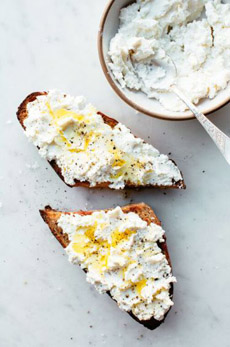
[1] Make it today, enjoy it tomorrow. Photo courtesy Good Eggs | San Francisco.


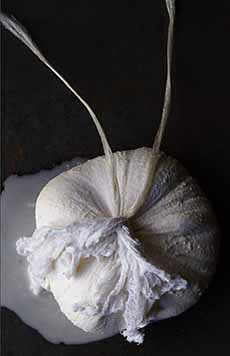
[2] Homemade cheese draining in cheesecloth (photo © The Pines | Brooklyn).

  What are you doing this weekend? How about making some farmer cheese? Do it today and enjoy it for Sunday brunch. All you need is buttermilk, cheesecloth and a sieve (strainer).

This recipe, from Alice Waters via Good Eggs in San Francisco, illustrates how much fun making fresh cheese can be. It’s much easier than mozzarella, so it’s a good “first cheese.”

Prep time is just 25 minutes, but the curds need to drain for 12 to 24 hours, depending on how soft or crumbly you like your farmer’s cheese. Alice Waters drains hers for 16 hours, at which point the cheese is still soft enough to spread, but dry enough to crumble onto salads.

The cheese should be flavored with a bit of salt, but can be made salt-free. Go gourmet with added chives, black pepper or other favorite seasonings. It can also be sweetened, for something like cannoli cream or ricotta cheesecake.
 
 
RECIPE: HOMEMADE FARMER CHEESE

Ingredients For 1-1/2 Cups Cheese

  • 3 cups buttermilk
  • Salt
  • Optional: olive oil
  • Optional savory seasonings: herbs, spices
  • Optional sweet seasonings: agave, honey, maple syrup, noncaloric sweetener, table sugar
  •  
    Preparation

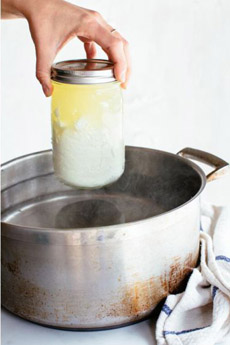
    1. POUR the buttermilk into a 1-quart canning jar and put the lid on tightly. Place the jar in a pot and cover with enough water to keep it submerged. Heat over medium-high heat until little bubbles appear on the jar and in the water, but before the water reaches a boil.

    2. TURN off the heat and let the buttermilk cool in the pot until the water reaches room temperature. Meanwhile…

    3. LINE a nonreactive* sieve with a few layers of cheesecloth, or a single layer of butter muslin, and set it in a nonreactive bowl deep enough that there is an inch or two between the sieve and the bowl. Once the water has cooled, remove the jar of buttermilk and pour the contents into the sieve. You should have firm white curds. You can add a pinch of salt or salt substitute to the curds at this point.

     
    4. COVER the curds with the tails of the muslin and refrigerate the sieve over the bowl for 12 to 24 hours, depending on how soft or crumbly you like your farmer’s cheese.

    5. SPREAD and enjoy, or top it with yogurt.

     
    _________________________________
    *Reactive vs. Non-Reactive Cookware: Aluminum, cast iron and copper are popular for cookware because of their superior heat-conducting properties. However, these metals can react with acids in a recipe (citrus, tomato, vinegar, etc.), imparting a metallic taste and discoloration of light-colored foods. This is also true with mixing bowls and utensils. Non-reactive materials include enameled metal, glass, plastic and stainless steel.
    _________________________________


    WHAT IS FARMER CHEESE OR FARMER’S CHEESE

    Farmer cheese or farmer’s cheese is a fresh (unaged), simple, cow’s milk cheese that’s the “child” of cottage cheese (see below), and a relative of paneer, queso blanco (more solid, like feta) and queso campesino (Spanish for farmer’s cheese, more like cottage cheese with curds). The texture is much dryer and the curd is tiny, such that it is molded into loaves and sliced.

    It is so versatile, we could eat it twice a day!

    Farmer cheese is made by pressing most of the moisture from cottage cheese. It can be flavored with herbs or puréed fruits. In fact, mixed with purée and baked, it is similar to ricotta cheesecake. Another variety is paneer, or Indian farmer cheese, which is easily made at home. It should be consumed fresh, as it goes stale if kept too long, and becomes brittle and useless with refrigeration. In Canada, the term “farmer’s cheese” refers to a different type of white cheese that does not have a rind and is firm but springy in texture. It is mild, milky and buttery in flavor. Canadian “farmer’s cheese” may be used in a similar fashion to Colby or Cheddar.

    Once a staple of Middle European cuisine, farmer cheese was made in the U.S. by Ashkenazi Jewish immigrants; but any cheese maker can make it; but not many do. It can be hard to find outside of strongholds of Jewish cuisine.

      /home/content/p3pnexwpnas01_data02/07/2891007/html/wp content/uploads/farmer cheese goodeggs 2 230
    Here’s what the final product looks like (photo © Good Eggs).
     
     
    WAYS TO USE FARMER CHEESE

  • Blintzes: first and foremost, the filling for blintzes, flavored with cinnamon, sugar and vanilla (or other flavor profile)
  • Cheesecake
  • Cheese pierogies
  • Dip, mixed with mayonnaise or sour cream
  • Green salad or roast vegetables: a crumbled garnish
  • Noodle kugel (noodle pudding): another Jewish delight that incorporates cottage cheese or farmer cheese
  • Spread on bagels, crusty sourdough bread or toast, with or without jam
  • Substitute for cotija, paneer or ricotta
  • Sandwich: in pita or on toast with lettuce, tomatoes, cucumbers, olives and plain or pickled sliced onions
  •  
     
    SIMILAR BUT DIFFERENT FRESH CHEESES

  • Cottage cheese: The fresh, drained curds of slightly soured, pasteurized milk. The whey is drained from the curds, and the remaining curds are known as cottage cheese.
  • Pot cheese: Drained longer, cottage cheese becomes a drier-curd product known as pot cheese.
  • Farmer cheese: When the remaining moisture is pressed out of cottage cheese, causing it to become dry and crumbly, it is called farmer cheese.
  •  
     
    WHAT IS CHEESECLOTH?

    Cheesecloth is a loosely woven cloth used for lining colanders and other purposes in home cheesemaking (photo #1). It is used for draining, bandaging cheeses and covering air-drying cheeses.

    Butter muslin is a more tightly woven cloth used for draining, pressing, and bandaging both hard and soft cheeses. It is better for holding in small, soft curds and for making fresh cheeses and soft cheeses, because the tighter weave keeps some of the necessary moisture in.

    Here are more tips for using cheesecloth and butter muslin.
      

    Comments off

    TIP OF THE DAY: A Pre-Holiday Diet Of Low-Calorie Comfort Food

    Why do we only get pitches for slimmer versions of food in spring, before “bathing suit weather?”

    After an especially tasty month visiting restaurants, for everything from fried skate sandwiches to duck confit mac and cheese, we noticed that clothes were getting snug.

    As if on cue, we got this list of tips from Warren Honeycutt’s new book, Comfort Food without the Calories: Seven Delicious, Healthy Substitutes for Cold-Weather Favorites. The author of Get Lean for Life: 7 Keys to Lasting Weight Loss shared these tips with us.

    Given the upcoming calorie fests of Halloween, Thanksgiving and Christmas, we can’t think of bathing suit weather, but we can think of fitting into something for New Year’s Eve.

    Our tip today is: Plan ahead for all the great holiday fare ahead. Here’s advice from Honeycutt, who starts off by reminding us that “flavorful” and “nutritious” aren’t always mutually exclusive. Here are seven guilt-free substitutes for some classic comfort foods:


    hot-cocoa-cinnamon-cissetradingco-opensky-230r

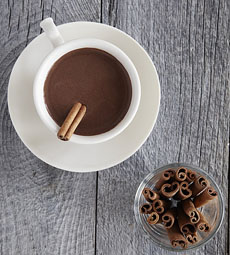
    To save calories, make your own hot chocolate recipe instead of a mix. Photo courtesy OpenSky.com.

     
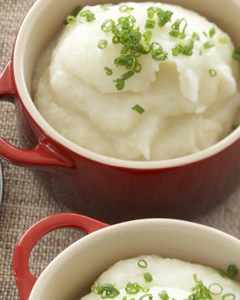
    Cauliflower instead of mashed potatoes. Substituting cauliflower for potatoes is a healthy alternative that’s gaining more and more popularity—and for good reason. When prepared correctly, cauliflower mimics the texture and taste of mashed ‘taters, with fewer calories and carbs. Boil or steam the cauliflower until tender, pour off the water and beat the cauliflower with a mixer to the consistency you like. Top it with fat-free sour cream or plain Greek yogurt, fat-free cheese, Butter Buds, and/or Molly McButter. Reheat each serving in the microwave for two minutes until piping hot. Add chives, bacon bits, salt, and pepper as desired.

    Spaghetti squash instead of spaghetti noodles. Spaghetti squash isn’t nearly as carb-heavy as noodles, and it contains nutrients like vitamins A, B-6, and C, as well as omega-3 essential fatty acids. When baked or microwaved, this veggie can be shredded into spaghetti-like strands with a fork and enjoyed with any tasty sauce of your choosing. Top with lean chicken breast or seafood for a healthy and delicious boost. Alternative #2: zucchini noodles. Alternative #3: a half-and-half mix of spaghetti and zucchini noodles.

    Sweet potatoes instead of white potatoes. Sweet potatoes are filling and delicious, rich in vitamin A, and contain more vitamin C and fiber than white potatoes—with fewer carbs and calories. But that’s not a license to eat sweet potato fries. Enjoy them baked.


    mashed-caulifllower-fage-230ps
    Here’s our recipe for cauliflower mashed potatoes. Also look at our cauliflower mac & cheese. Photo courtesy FAGE Greek yogurt.
     

    Tea instead of hot chocolate. Tea is full of antioxidants and may, according to several studies, help lower the risk of diseases ranging from Parkinson’s to many different kinds of cancer. It’s also great for weight loss, especially when sweetened naturally with stevia or xylitol (we admit to using Splenda). What, you say: How is tea a substitute for hot chocolate? We agree with you, not with Mr. Honeycutt. If you just have to have a cup of hot chocolate, make your own a healthy recipe (unsweetened cocoa powder, nonfat milk, noncaloric sweetener, peppermint extract) without the sugar and corn syrup of commercial hot chocolate mixes.

    Thinly sliced zucchini or eggplant for pasta-free lasagna. Layer all that delicious low-fat ricotta cheese and tomato sauce between zucchini or eggplant slices to cut down on the carbs in this classic comfort food. Both zucchini and eggplant are low in calories and full of nutrients and antioxidants, making them healthy replacements for pasta.

     
    Baked vegetables instead of potato chips or French fries. Delicious, nutritious chips and fries can be made by slicing squash, radishes, beets, sweet potatoes, zucchini, apples, or any other fruit or vegetable, then seasoning the slices and baking them in the oven for a delicious, crispy treat. If you’re craving fries, cut carrots, zucchini, asparagus and/or eggplant into sticks. Brush them with olive oil if you like, then season them with Parmesan cheese, flaxseed, ground nuts, oats, or sea salt before baking.

    A NIBBLE favorite is a microwave chip maker. These chips go fast, so buy several (they stack in the microwave).

    Health-conscious homemade soups instead of salty store-bought brands. There’s nothing that says comfort like a warm bowl of soup, but the condensed canned soups you buy at the supermarket are often loaded with cream and sodium. When making soup at home, use low-sodium stock, plenty of herbs and spices for flavor, and cauliflower puréee in place of cream. Add nutritious, low-calorie veggies like spinach, kale and carrots, as well as beans and chunks of lean meat for protein. You may never buy a can of soup again!
      

    Comments off

    FOOD FUN: Spaghetti & Meatball Sundae

    For National Pasta Month try this “spaghetti sundae” inspired by a dish from VP3 Restaurant in Jersey City, New Jersey.

    RECIPE: SPAGHETT & MEATBALL SUNDAE

    Ingredients

  • Spaghetti or linguine
  • Pasta sauce
  • Optional: meatballs or sausage
  • Grated Parmesan cheese
  • Minced fresh basil “sprinkles”
  •  
    Preparation

    1. COOK the spaghetti according to package directions and drain, reserving a few tablespoons of the pasta water. While the pasta cooks, heat the sauce and the meatballs.

       
    /home/content/p3pnexwpnas01_data02/07/2891007/html/wp content/uploads/spaghetti meatballs burrata VB3 ps 230

    Spaghetti and meatball “sundae.” Photo courtesy VB3 Restaurant | Jersey City.

     
    2. RETURN the drained pasta to the pot and add the sauce. Mix to coat all the pasta with sauce. If the sauce is too thick, add the reserved pasta water, tablespoon by tablespoon, to reach the desired consistency.

    3. MOLD the spaghetti into a tower. You can do this freehand with tongs and a large fork, or use whatever mold you have. We used a chinois (SHEEN-wah—French for “Chinese,” referring to the Chinese-style strainer). You can also try a large funnel, jumbo martini glass or a sundae dish.

    4. ADD the meatballs, sprinkle with the grated cheese and top with the mozzarella ball. For a final touch, add the basil “sprinkles.”


    /home/content/p3pnexwpnas01_data02/07/2891007/html/wp content/uploads/chinois foxrunAMZ 230
    We used a chinois to create the pasta tower. It’s actually a great kitchen tool for straining. Photo courtesy Fox Run.
      SPAGHETTI & LINGUINE: THE DIFFERENCE

    The easiest way to differentiate them: Spaghetti is round, linguine (the proper Italian spelling–linguini is an incorrect Americanization) is flat. It is sometimes referred to as flat spaghetti.

    All pasta evolved regionally into different shapes and sizes.

  • Spaghetti and linguine are “long cuts.”
  • Round long cuts like spaghetti are called strand pasta; flat long cuts are called ribbon pasta.
  • Short cuts are shapes like elbows, shells, wagon wheels, etc.
  • The better-known round pasta ribbons, from thinnest to thickest, include: angel hair, capellini, vermicelli, spaghettini, spaghetti and bucatini.
  • The better-known flat/ribbon long cuts are, from thinnest to thickest: linguine, fettuccine, tagliatelle, pappardelle, mafalda and lasagna.
  •  DIFFERENT MOZZARELLA SIZES

    For the “cherry on the sundae,” you want a mozzarella ball, not a slice. Fortunately, mozzarella balls are made in several sizes, from perlini, the size of pearls, to bocconcini, large bites. They are sold fresh in water by Bel Gioso, Lioni and other companies.

    You can use any size with this recipe. We prefer the largest, bocconcini, because it will sit on the top of a mound of pasta, as in the photo at the top of the page. But even the smallest size, perlini, can be scattered around the base of the plate.

    mozzarella-balls-sizes-lionimozzarella-600

    From left to right: perlini, perle, nocciolini, ciliegini, bocconcini, ovoline, half pound, one pound. Image courtesy Lioni Mozzarella. Visit their website for a greater description of the different sizes of mozzarella.


    Comments off

    Roasted Balsamic Brussels Sprouts & Use The Leaves As Dishes

    What’s the beautiful dish in the photo? Balsamic Brussels Sprouts, nested in a leaf from the stalk on which they grow. In French this presentation is called “en feuille” (pronounced “on FUY”–think of a very shortened “phooey”). The English translation is “in the leaf” or “in its leaf.”

    The Brussels sprouts in this photo were grown at The Chef’s Garden in Huron, Ohio. But you can look for stalks with leaves at your local farmers market. If the leaves have already been removed, ask the farmer to bring stalks with the leaves intact next time.

    In our house, buying a handsome stalk of Brussels sprouts from the farmers market is a rite of fall. But even if you buy the sprouts already trimmed from the supermarket, you can make the delicious Balsamic Brussels Sprouts recipe below.

    Using the leaves of cruciferous vegetables for presentation is a free way to add interest to food. Beyond serving as a bowl or plate, the leaves can be torn into a salad not dissimilar to the now-ubiquitous kale (which is also cruciferous), julienned and stir-fried, and otherwise cooked.

    And of course, you can use the leaves to hold other foods.

    Even the stalk of the plant has culinary uses. Use Brussels sprouts stalks as you would use broccoli stalks.
     

      brussels-sprouts-in-jumbo-leaf-thechefsgarden-ps-230
    Balsamic Brussels sprouts in a Brussels sprouts leaf. (You should put a plate under yours.) Photo courtesy The Chef’s Garden.
     
    Some people get it into their heads that they should only eat the florets, but the stalks are just as delicious. If you feed those who won’t eat the stalks, slice them into rounds and steam them or sauté them with garlic.
     
     
    RECIPE: ROASTED BALSAMIC BRUSSELS SPROUTS

    Ingredients

  • 2 pounds Brussels sprouts
  • 1/2 cup extra virgin olive oil
  • 1/2 cup balsamic vinegar
  • 2 teaspoons garlic powder
  • 2 teaspoons salt
  • 1 teaspoon ground black pepper
  • 4 ounces pancetta, 1/4-inch-diced (substitute turkey bacon)
  • Sea salt/kosher salt and freshly ground black pepper
  • Optional: 1/4 cup pine nuts, chopped pecans, dried cranberries, raisins; 1/2 cup grated Parmesan
  •  
    Preparation

    1. PREHEAT the oven to 425°F. Trim the cores of the Brussels sprouts and cut them in half vertically. Save any loose leaves that fall off and cook them as well.

    2. TOSS the Brussels sprouts in a large bowl with the pancetta, olive oil, balsamic, garlic, salt, and pepper. Spread in an even layer on a rimmed baking sheet, place in the oven and roast until deep golden brown (30 to 35 minutes), tossing once during roasting.

    3. REMOVE from the oven and toss with the optional ingredients. Transfer to a serving plate and serve hot.


    brussels-sprouts-on-stalk-caroletopalian-ediblemadison-230
    Brussels sprouts on the stalk. Photo © Carole Topalian | Edible Madison. All rights reserved.
      ABOUT BRUSSELS SPROUTS

    The Brussels sprouts plant (Brassica oleracea) is a beauty: A stalk that grows to about four feet tall, crowned with large, wide graceful leaves. The sprouts, edible buds which resemble tiny heads of cabbage, grow from the bottom of the stalk to the top, in a charming progression from smallest to largest.

    If Brussels sprouts look like tiny cabbages, it’s because both are members of the cruciferous family of vegetables. Other members include arugula, bok choy, broccoli and broccoli rabe, cabbage, cauliflower, cress, daikon/radish, horseradish/wasabi, kale, kohlrabi, mizuna, mustard greens, rutabaga, tatsoi and turnips.

    While they are thought of as a cool-weather crop, Brussels sprouts can be found in markets year-round. The peak season is September through February.

    Few foods are more unpleasant than overcooked Brussels sprouts. The same is true with other cruciferous members: Excessive heat releases an unpleasant-smelling and -tasting chemical compound. But cook them lightly, and they are bites of pleasure.

     
    Similarly: Don’t store raw Brussels sprouts for more than a few days. The flavor gets stronger.
     
    BRUSSELS SPROUTS NUTRITION

    Brussels sprouts are exceptionally rich in protein, dietary fiber, vitamins, minerals and antioxidants, including glucosinolate, a phytochemical and an important cancer-fighting phytonutrient. All cruciferous vegetables contain glucosinolates, but Brussels sprouts are especially loaded.

    They are also cholesterol-fighters. Steamed Brussels sprouts actually have a have better cholesterol-lowering effect than raw brussels sprouts. The plant fibers do a better job of binding when they’ve been steamed.

    Brussels sprouts are an excellent source of vitamin C; one cup provides more than your daily requirement. Vitamin C, along with vitamins A and E, also found in the sprouts, protect the body by trapping harmful free radicals. Brussels sprouts are one of the best vegetable sources for vitamin K, which strengthens bones and helps to prevent, or at least, delay the onset of Alzheimer’s disease.

    Is there a better reason to eat them often?
     
     
    MORE BRUSSELS SPROUTS RECIPES

    As strange as “Brussels sprouts pizza” sounds, it is delicious. Other cruciferous members, like broccoli and arugula, often find themselves topping a pizza. Consider adding some fresh goat cheese in addition to the mozzarella and tomato sauce.

    Or, try these:

  • Brussels Sprouts Caesar Salad
  • Brussels Sprouts Potato Salad
  • Buffalo Brussels Sprouts Grilled Cheese Sandwich
  • Roasted Beets & Brussels Sprouts
  • Roasted Fingerling Potatoes & Brussels Sprouts
  •  
    TIPS

  • Bigger is not better. The most tender sprouts, with the sweetest flavor, are 1 to 1-1/2 inches in diameter.
  • Choose sprouts of similar size so they’ll cook evenly.
  • When cooking whole sprouts, make a shallow “X” on the bottom. This allows the heat to penetrate more effectively and cook them evenly.
  •  
     

    CHECK OUT WHAT’S HAPPENING ON OUR HOME PAGE, THENIBBLE.COM.


    Comments off

    FOOD 101: Lionfish & Lionfish Ceviche Recipe

    What are lionfish? You’re about to find out (and with a lionfish ceviche recipe, too). With the demand for Chilean seabass, halibut, swordfish, wild salmon, and other popular fish, retail prices for premium fish are so high that you might as well go to a restaurant for it.

  • Fresh Direct is currently listing these per-pound prices: wild Alaskan black cod fillet, $24.99; wild Chilean seabass, $29.99 (and it’s been previously frozen!); wild grey sole, $26.99; wild halibut, $23.99; wild snapper fillet, $24.99.
  • Even Ora King farm-raised king salmon (not the superior wild variety) lists at $24.99.
  • Elsewhere, yellowfin tuna is $23.99 a pound. Dean & DeLuca is selling a 2-pound combo, 1 pound of sashimi-grade yellowfin tuna, and 1 pound California halibut, for $75.00. Whew!
  •  
    We recently wrote about how trash fish, once discarded when netted along with more popular varieties, are becoming popular with restaurateurs and home cooks who want more affordable options. A fish restaurant in New York City, Seamore’s, recently opened with exactly that type of menu.

    Now there’s nuisance fish: invaders that are upsetting the local ecology. The “poster fish” is lionfish.

    Though beautiful to look at, they are the bane of the Caribbean.

    A recipe for lionfish ceviche is below, but you can substitute any fish.
     
     
    WHAT ARE LIONFISH?

    Voracious predators native to the Pacific and Indian Oceans, lionfish were brought (or tagged along) to the Caribbean, where they happily hang out among the coral reefs.

  • They have been observed consuming fish up to two-thirds their size.
  • They use their long fins to herd smaller fish and then attack them.
  • They eat crustaceans like crabs, shrimps, even juvenile lobsters.
  • The population of groupers has declined drastically because they are a preferred meal for lionfish.
  • The invaders are able to reach sizes that are twice the typical size they reach in their home waters. Females release 30,000-40,000 eggs at a time, as frequently as twice a week.
  • Unfortunately, lionfish have no natural prey. None of the large reef predators, such as snappers, groupers, and sharks, appear to want to eat them.
  • In many parts of the Caribbean, divers are encouraged to spear them. “Lionfish rodeos,” with the purpose of population control, are becoming as popular sport fishing event in resort areas. (Source)
  • Should you want to join the rodeo, be advised: Many of their long, spiny fins are venomous.
  •  
     
    TAKE A BITE

    The only good news is that, once the lionfish is cleaned and the venomous spines are removed, the meat is lovely. It is a delicate, white flaky fish, firmer in texture than halibut, with a flavor profile somewhere between grouper and mahi-mahi. It readily accepts any flavor and technique a cook wishes to use.

    With a new name, lionfish could become as popular as the Patagonian toothfish (renamed Chilean seabass for marketing purposes) and mahi-mahi/dorado (dolphinfish).
     
    Any suggestions?  
     
    RECIPE: LIONFISH CEVICHE

    Ingredients

  • 1 pound lionfish fillets
  • 1/3 cup lime juice
  • 1/3 cup rice wine vinegar
  • 1/3 red bell pepper, cubed
  • 1/3 green bell pepper, cubed
  • 1/3 red onion, diced
  • 1/3 avocado, diced
  • Small bunch cilantro, chopped
  • 2 scallions, chopped
  • 1/3 teaspoon Tabasco or other hot sauce
  • 1/3 teaspoon sesame oil
  • Salt and pepper to taste
  • Optional: fresh cilantro or parsley
  •    
    Lionfish
    [1] Beautiful but venomous: You may have seen a lionfish in a home aquarium, but they grow quite large and burdensome in the wild (photo © Christian Mehlfuhrer | Wikipedia.


    [2] Lionfish have 18 venomous spines: 2 pelvic spines, 3 anal spines, and 13 dorsal spines (photo © Jayhem | photos #1, #2 and #3 via Wikipedia).


    [3] A red lionish. Lionfish are also called firefish, turkeyfish, tastyfish, or butterfly cod (photo © Alexander Vasenin | Wikipedia).

    Lionfish Ceviche

    [4] Lionfish tastes like a cross between grouper and mahi-mahi. You can cook it or use it raw, in ceviche or sushi (photo courtesy Euro USA).


    Preparation

    1. CUT the lionfish, peppers, onion, avocado, and scallions into small cubes. Mix all ingredients together and marinate for at least two hours before serving.

    2. GARNISH with fresh herbs and serve.
     
     
    SEEK OUT THE UNFAMILIAR

    When you see an unfamiliar fish at the market, don’t hesitate to try it, especially if it’s well priced. Retailers wouldn’t sell it if it didn’t taste good—and the fresher, the better.


    CHECK OUT WHAT’S HAPPENING ON OUR HOME PAGE, THENIBBLE.COM.


    Comments off

    The Nibble Webzine Of Food Adventures
    RSS
    Follow by Email


    © Copyright 2005-2026 Lifestyle Direct, Inc. All rights reserved. All images are copyrighted to their respective owners.