Preparation
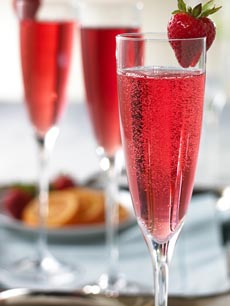
1. COMBINE the cranberry juice/liqueur and the sparkling wine in a Champagne flute or wine glass. Add the juice first. If you need to stir, do so gently, once, so as not to collapse the bubbles.
2. GARNISH as desired and serve.
________________
*Well-priced sparkling wines include Asti Spumante and Prosecco from Italy, Cava from Spain, Crémant from France and our Top Pick Of The Week, Yellow Tail Bubbly.
________________
THE HISTORY OF THE MIMOSA COCKTAIL
The Mimosa is named after the yellow-flowered mimosa plant, Acacia dealbata.
While we have a definite date for the creation of the modern Mimosa, the combination of sparkling wine and orange juice has been consumed for centuries in Spain, where oranges and sparkling Cava are plentiful (especially in Alicante, Castellón, Catalonia and Valencia).
The Mimosa is a cocktail composed of equal parts of orange juice and Champagne or other dry, white sparkling wine. It was invented circa 1925 at the Hôtel Ritz in Paris, by bartender Frank Meier—purportedly all the OJ gave imbibers an excuse to begin drinking at breakfast.
The optional addition of a small amount of orange liqueur like Grand Marnier complements the juice and gives the drink more complexity.
Because of the juice component, the Mimosa is often served at brunch.
A Grapefruit Mimosa with grapefruit juice is a popular variation.
A related drink, the Buck’s Fizz†, has two parts Champagne to one part juice—and sometimes a splash of grenadine. Created at London’s Buck’s Club by bartender Pat McGarryhe, the Buck’s Fizz predates the Mimosa by about four years.
Other juices, while not Mimosas, provide variations on the drink:
A Cranberry Mimosa, sometimes called a Poinsettia is cranberry juice with champagne.
A Lemon or Lime Mimosa is made with lemonade or limeade.
Pineapple Mimosa is made with pineapple juice.
An Apple Crisp Mimosa is apple cider with champagne.
Other juices have been substituted, from mango nectar to pomegranate.
If you’re making Mimosas, fresh-squeezed orange juice makes a huge difference.
One expert recommends trying different types of orange juice: The sweeter Navel juice vs. the more acidic Valencia, for example. Blood oranges, with their rosy color and raspberry notes, will provide a different experience entirely (and a wonderful one!) [Source]
________________
†Buck and mule are old names for mixed drinks made with ginger ale or ginger beer, plus citrus juice. They can be made with any base liquor. Why buck? Why mule? That answer is lost to history, but here’s a detailed discussion.
________________
|