THE NIBBLE BLOG: Products, Recipes & Trends In Specialty Foods


Also visit our main website, TheNibble.com.

TIP OF THE DAY: Cold-Pressed Juice

“What is cold-pressed juice,” our aunt asked us recently, “and should I be drinking it instead of Tropicana?”

While we don’t focus on health foods, we’ll give the topic a bit of attention.

Cold-pressed juicing has existed for decades among health-food devotées, and generated attention in the 1990s as more sophisticated home juicers came onto the market.

But it has become much more visible over the last few years as some celebrities (Gwyneth, Kim et al) have publicized their juice fasts for dieting and/or health.

This engendered the current juicing fad, made more visible by the proliferation of shops and delivery services selling pricey cold-pressed juice. (By the same token, buying produce at retail for pressing juice at home is not inexpensive.)
 
SHOULD YOU SWITCH TO COLD-PRESSED JUICE?

If you’re a juice drinker, or are thinking about it, know that there is little scientific evidence to support the claim that cold-pressed juice contains more nutrients than pasteurized juices, or those you could hand-squeeze at home. However, when the juice is unfiltered and cloudy, it indicates a higher level of fiber.

What is known is that any juice begins to lose nutrients immediately after squeezing, and should consumed quickly if you want to capture every iota of nutrition. Those juices made commercially under high pressure processing (HPP) hold their nutrients longer. Hard-core juicers argue that cold-pressed is better than HPP. Here’s the argument.
 
PRESSING JUICE AT HOME

There are two main categories of home juicers:

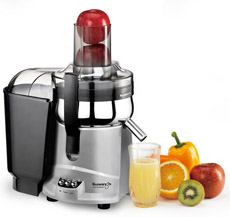
  • Centrifugal juicers (top photo) have an upright design; the produce food is pushed into a rapidly spinning mesh chamber with sharp teeth on the bottom (like a blender). The teeth shred the produce into a pulp, and the centrifugal motion pulls the juice out of the pulp and through the mesh filter.
  • Masticating juicers (second photo) are horizontal in design and higher in price. Produce is pushed into the top of the tube, where it is crushed and squeezed. Because of the slower crushing and squeezing action, these juicers are better at processing leafy greens and wheatgrass, a limitation of centrifugal juicers. The process extracts more juice in general.
  • Commercially cold-pressed juice (HPP) uses a hydraulic press, crushing the produce under extremely high pressure with cold water to counter the heat generated by the process (heat destroys nutrients; the water does not mix with the juice). This gives the juice a refrigerated shelf life of 30 days or so, compared to only 2 to 4 days for those extracted without high pressure.
  •  
    OUR AFFORDABLE SOLUTION

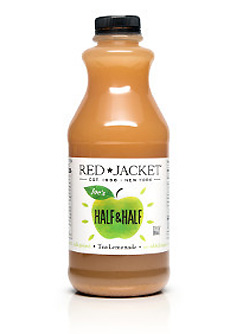
    Before we had ever heard the term “cold-pressed juice,” we were hooked on a Red Jacket Orchards, a family juice brand produced in New York’s Finger Lakes region that’s delicious, nutritious, unfiltered and affordable.

    They’ve been selling cold-pressed apple juices and blends for 50 years. We’re not a committed juicer; we just love the refreshing flavor as a glass of juice or a cocktail mixer.

    We like every flavor, but are hooked on Joe’s Half & Half.

    The company sells it online; use the store locator to find a retailer near you. Online, three 32-ounce bottles are $31, including shipping.


    Centrifugal Juicer

    Masticating Juicer

    Cold Pressed Juice

    Red Jacket Joe's Half & Half
    Top: The Kuvings NJ-9500U Centrifugal Juice Extractor, $149 on Amazon.com. Second: A masticating juicer from Omega, $299.99 at Amazon.com. Third: Cold-pressed juice at Trader Joe’s. Bottom: Red Jacket, a brand that’s been quietly selling cold-pressed juice for 50 years.

     
    That’s a lot more affordable than the 16-ounce bottle of cold-pressed juice at the juice shop on the corner!


    Comments off

    RECIPE: Korean Spaghetti & Meatballs (Made With Rice Noodles

    Korean Meatballs
    [1] Spicy Korean meatballs. The recipe is below (photo © Noodles & Company).

    /home/content/p3pnexwpnas01 data02/07/2891007/html/wp content/uploads/rice noodles indochine kitchen 230r
    [2] Cooked rice noodles (photo © Indochine Kitchen).

    Peacock Rice Spaghetti
    [3] Peacock Brand rice noodles, one of our favorites (photo © Peacock Pasta).


    March 9th is National Meatball Day. Suggestion: Try something different, instead of the very familiar Italian-American pork blend meatballs with tomato sauce and Parmesan cheese.

    How about a Korean interpretation of Meatballs & Spaghetti? The meatballs are flavored with spicy gochujang sauce (pronounced Go-CHOO-jang); the spaghetti is made from gluten-free rice noodles.

    The meatball and sauce recipes are from Executive Chef Nick Graff of Noodles & Company. THE NIBBLE put them together rice noodles to create the Meatballs & Spaghetti. The substitutions are:

  • Korean BBQ sauce instead of tomato sauce
  • Rice noodles instead of wheat noodles
  • Shredded basil or chopped cilantro instead of grated cheese
  •  
    Don’t want spicy Korean meatballs? Try this Italian-influenced veal meatball recipe.

    > Here are 15 more meatball recipes.

    > The history of noodles.
     
     
    RECIPE: KOREAN MEATBALLS & SPAGHETTI

    Ingredients For 32 One-Ounce Meatballs

  • Korean BBQ sauce (recipe below)
  • Meatballs (recipe below, or use your favorite recipe)
  • Rice noodles (spaghetti or vermicelli—Peacock Brand rice noodles are available at Amazon, Walmart, Wegmans and retailers nationwide)
  • Garnish: black and white sesame seeds, fresh basil chiffonade or cilantro
  •  
    Ingredients For The Meatballs

  • 1 pound ground chicken
  • 1 pound ground beef
  • 2 eggs
  • 2 teaspoons salt
  • 1 teaspoon white pepper
  •  
    Ingredients For The Korean BBQ Sauce

  • 1 teaspoon fresh ginger, peeled & minced
  • 4 cloves fresh garlic, minced
  • 1 cup soy sauce
  • ¾ cup brown sugar
  • 1 tablespoon rice wine vinegar
  • 1 teaspoon sesame oil
  • 1 tablespoon gochujang sauce/paste (or more to taste)
  • 1 teaspoon red chili flakes
  • 1 tablespoon cornstarch
  • 1 tablespoon water
  •  
    Preparation

    1. MAKE the meatballs: Preheat the oven to 350°F. Mix the ground chicken and beef with the eggs, salt, and white pepper. Portion and roll into 1 ounce-size balls (the size of golf balls) and place on an oiled sheet pan. Bake for about 20 minutes.

    2. MAKE the BBQ sauce. Place the ginger, garlic, soy sauce, brown sugar, rice wine vinegar, sesame oil, gochujang paste, and red chili flakes in a pan and bring to a boil. Meanwhile…

    3. WHISK the cornstarch and water together in a small bowl and add to boiling sauce. Stir until thickened. Reduce heat to medium and simmer for 5 minutes. Add the heated meatballs and toss to coat completely with the sauce.

    4. COOK the rice noodles according to package directions, while the BBQ sauce is coming to a boil.

    5 COMBINE the spaghetti, meatballs and sauce, garnish and serve.


    CHECK OUT WHAT’S HAPPENING ON OUR HOME PAGE, THENIBBLE.COM.


    Comments off

    Slow Cooker Corned Beef & Cabbage Recipe

    Growing up, we had plenty of corned beef and cabbage. It was one of Mom’s favorites; she made it once a month or so in a big iron Dutch oven. (There were no slow cookers then, so no Slow Cooker Corned Beef & Cabbage).

    These days we only get homemade corned beef and cabbage when we make it ourselves. Unlike Mom, we couldn’t hang around the kitchen and watch the pot. But we finally got a slow cooker!

    Fortunately, McCormick sent us a slow cooker recipe. We toss the ingredients into the cooker, turn it on and come back in eight hours. Slow cooking lacks the glamour of aroma wafting from the big iron pot, but it does the job.

    The recipe for Slow Cooker Corned Beef & Cabbage is below.
     
     
    WHAT IS CORNED BEEF?

    Corning refers to curing or pickling the meat in a seasoned brine. The word refers to the “corns” or grains of rock salt (today, kosher salt) that is mixed with water to make the brine.

    Typically, brisket is used to make corned beef; the dish has many regional variations and seasonings. Smoking corned beef, and adding extra spices, produce pastrami.

    Corned beef was a staple in middle-European Jewish cuisine. Irish immigrants learned about corned beef on New York’s Lower East Side from their Jewish neighbors, and adopted it as a cheaper alternative to Irish bacon. Bacon and cabbage is a popular Irish dish. (Irish bacon is a lean, smoked pork loin similar to Canadian bacon. Here are the different types of bacon.)

    Cattle in Ireland were not used for meat but for dairy products. Pork, an inexpensive meat in Ireland, was a dinner table staple.

    But in the U.S., pork was much more expensive than the American staple meat, beef; and brisket, which required several hours of cooking to tenderize, was an affordable cut. Irish-Americans substituted corned beef for the bacon, and Corned Beef & Cabbage was born.

    Trivia: The first St. Patrick’s Day parade originated in New York City, in 1762.
     
     
    RECIPE #1: SLOW COOKER CORNED BEEF & CABBAGE

    Conventional Corned Beef & Cabbage simmers for about three hours on the stove top. Here’s a classic recipe with a twist: a touch of Guinness.

    But toss the ingredients into a slow cooker and come back in eight hours to dish out perfectly cooked corned beef and cabbage. Prep time is 10 minutes, cook time is 8 hours.
     
    Slow Cooker Trivia: The original slow cooker was the Crock-Pot, introduced in 1971 by the Rival Company. It was developed as an electric bean cooker, and was originally called the Beanery. Earlier, the Rival Company had introduced the electric can opener. Thanks, Rival!

    Ingredients For 12 Servings

  • 8 small red potatoes
  • 2 cups baby carrots
  • 1 small onion, quartered
  • 1 pre-brined corned beef brisket (4 pounds), rinsed and trimmed
  • 2 tablespoons pickling spice (recipe below)
  • 1 teaspoon minced garlic or 1-2 cloves fresh garlic
  • 1/2 head cabbage, cored and cut into wedges
  •  
    Preparation

    1. PLACE the potatoes, carrots, and onion in a 6-quart slow cooker; place the brisket on top of the vegetables. Sprinkle with pickling spice and minced garlic. Add enough water (about 8 cups) to just cover the meat. Add the lid. For best results, do not remove the cover during cooking, except to add the cabbage in Step 2.

    2. COOK for 7 hours on HIGH, then add the cabbage and cook for 1 to 2 hours on HIGH or until cabbage is tender but still crisp (not soggy).

    3. REMOVE the corned beef to a serving platter and slice thinly across the grain. Serve with the vegetables.
     
     
    RECIPE #2: PICKLING SPICE

    If you don’t have pickling spice, you can make your own with this recipe from Taste of Home:

  • 2 tablespoons mustard seed
  • 1 tablespoon whole allspice
  • 2 teaspoons coriander seeds
  • 2 whole cloves
  • 1 teaspoon ground ginger
  • 1 teaspoon crushed red pepper flakes
  • 1 bay leaf, crumbled
  • 1 cinnamon stick (2 inches)
  •  
    Preparation
     
    1. COMBINE all ingredients. Store in an airtight jar in a cool dark place (i.e., not next to the stove or oven).


    Corned Beef & Cabbage
    [1] Slow cooker Corned Beef & Cabbage (photo © McCormick).

    Uncooked Brisket
    [2] Uncooked brisket from Double R Ranch (photo © Williams Sonoma).

    Pickling Spice Recipe
    [3] If you don’t have a pickling spice mixture, you can make your own from spices you do have. A recipe is below (photo © Taste Of Home).

    Crock Pot Slow Cooker
    [4] Toss everything into the slow cooker and come back at dinner time (photo © Rival Products).

    Corned Beef
    [5] A succulent corned beef emerges.

    [6] Leftovers make a delicious “Irish Reuben” sandwich (photo © DiBruno Bros).


    CHECK OUT WHAT’S HAPPENING ON OUR HOME PAGE, THENIBBLE.COM.


    Comments off

    ST. PATRICK’S DAY: Caraway Cheese Spread With A Caraway Stout Cocktail

    Caraway seed, from a member of the carrot family*, is a popular seasoning in Irish cuisine. Here’s a great way to start St. Patrick’s Day dinner: with Caraway Cheese Spread and a Caraway Stout Cocktail.

    RECIPE: CARAWAY CHEESE SPREAD

    This cheese spread from McCormick is so easy to prepare—it takes just five minutes when you start with a prepared Cheddar cheese spread. Make it ahead of time, refrigerate, and let it warm up on the counter for a few minutes prior to serving.
     
    Ingredients For 1-1/4 Cups (10 Servings)

  • 1 container (12 ounces) Cheddar cheese spread, at room temperature
  • 2 teaspoons minced onions
  • 1-1/2 teaspoons caraway seed
  • 1/2 teaspoon Lawry’s® Seasoned Salt (or substitute†)
  •  
    For Serving

  • Crudités
  • Crackers
  • Baguette slices
  •    
    Cheese Spread

    Caraway Cheese Spread from McCormick. You can make it in 5 minutes.

     
    ____________________
    *Apiaceae, commonly known as the carrot, celery or parsley family, is a family of mostly aromatic plants with hollow stems.

    †Here’s how to blend your own seasoned salt.

     
    Preparation

    1. MIX the cheese spread and seasonings in medium bowl. Cover.

    2. REFRIGERATE at least 2 hours to blend flavors.


    Stout Cocktail
    Caraway Stout Cocktail from McCormick: stout plus Irish whiskey!
      RECIPE: CARAWAY STOUT COCKTAIL

    Celebrate St. Patrick’s Day with this cocktail that features Irish whiskey, Guinness Extra Stout and licorice flavor notes from caraway seeds. It uses homemade caraway simple syrup—easy to make in 10 minutes.
     
    Ingredients Per Drink

     
    For The Caraway Simple Syrup (Enough For 6 Cocktails)

  • 1/2 cup sugar
  • 1/2 cup water
  • 1 teaspoon caraway seed, coarsely crushed‡
  •  
    For The Caraway Stout Cocktail

  • 2 tablespoons caraway simple syrup (recipe below)
  • 1 ounce Irish whiskey
  • 1 bottle (12 ounces) Guinness Extra Stout or substitute, chilled
  •  
    Preparation

    1. MAKE the simple syrup: Coarsely crush the caraway seeds (see footnote†). Bring the sugar, water and caraway seeds to boil in small saucepan over medium heat, stirring to dissolve the sugar. Remove from the heat and let stand 1 hour. Strain the caraway seeds and refrigerate the syrup until ready to serve.

    2. MIX the cocktails: Combine the caraway simple syrup and the whiskey in tall glass. Pour the beer into glass. Serve immediately.

     
    ____________________
    ‡How to crush caraway seeds: Coarsely crush seeds with a mortar and pestle. Or, place seeds in a small resealable plastic bag. Close tightly. Pound with a rolling pin, mallet or heavy skillet until coarsely crushed.


    Comments off

    TIP OF THE DAY: Irish Soda Bread, Sweet Or Savory

    Irish Soda Bread is irresistible any time. But St. Patrick’s Day provides an extra excuse to bake up a batch and treat family and friends.

    Soda bread is a chemically-leavened quick bread made with baking soda* (the compound sodium bicarbonate, also called bicarbonate of soda) instead of yeast. Baking soda produces a lighter, airy crumb. The term “quick bread” means fast rising. Read more about the different types of bread in our Bread Glossary.

    Irish Soda Bread History: Irish Soda Bread dates back to around 1840, when bicarbonate of soda was introduced to Ireland. It reacted better with the soft wheat grown in Ireland’s climate, and replaced yeast as the leavening agent.

    When should you serve Irish soda bread? Anytime! As a slightly sweet bread, it’s a breakfast and tea time favorite; but it also disappears quickly in the bread basket at lunch and dinner.

    > A recipe for Irish Soda Bread With Cheddar is below.

    > The history of bread.

    > The different types of bread: a photo glossary.
     
     
    RECIPE #1: IRISH SODA BREAD WITH RAISINS

    Irish Soda Bread is one of the easiest breads to make. This recipe from McCormick requires just 10 minutes of prep time. Cook time is 50 minutes. The loaf yields 12 slices.

    Muffin variation: Divide the dough among 12 greased muffin cups. Bake 20 to 25 minutes or until a toothpick inserted in center comes out clean.

    Ingredients

  • 2 1/2 cups flour
  • 1/2 cup sugar
  • 2 teaspoons caraway seed
  • 1-1/2 teaspoons baking powder*
  • 1/2 teaspoon baking soda*
  • 1 teaspoon ground cinnamon
  • 1/2 teaspoon salt
  • 1/2 cup raisins or currants
  • 1-1/4 cups buttermilk (see substitute†)
  • 2 eggs
  • 1/2 teaspoon pure vanilla extract
  • For serving: butter and jam
  •    
    Irish Soda Bread Recipe
    [1] Classic Irish soda bread is made with currants or raisins (photo © Hot Bread Kitchen).

    Dried Zante Currants
    [2] Dried Zante currants are also dried grapes, but a much smaller variety than those used for raisins (photo © Broke And Beautiful: Check out her grandma’s Irish Soda Bread Recipe).

     
    Preparation

    1. PREHEAT the oven to 350°F. Lightly grease a 9-inch round cake pan.

    2. MIX the flour, sugar, caraway seed, baking powder, baking soda, cinnamon and salt in large bowl. Stir in the raisins. Mix the buttermilk, eggs and vanilla in medium bowl; stir into the dry ingredients. Spread the dough in prepared pan.

    3. BAKE 45 to 50 minutes or until a toothpick inserted in the center comes out clean. Cool in the pan on a wire rack for 10 minutes. Remove from pan. Cool completely on wire rack.

    _______________________________

    *The difference between baking soda and baking powder.

    †Substitutes for buttermilk: (a) 1 tablespoon of white vinegar or lemon juice plus enough milk to measure 1 cup. Stir, then let stand for 5 minutes. (b) 1 cup of plain yogurt or 1-3/4 teaspoons cream of tartar, plus 1 cup of milk.
     
    ________________________________


    Savory Irish Soda Bread Recipe With Cheddar
    [3] Savory Irish Soda Bread is typically made with Irish Cheddar (photo © Hot Bread Kitchen).

    Cayenne Pepper
    [4] Cayenne, ground red pepper (photo courtesy Silk Road Spices).


    RECIPE #2: SAVORY IRISH SODA BREAD WITH CHEDDAR

    This savory version of Irish Soda Bread from McCormick adds Irish Cheddar cheese and garlic powder instead of raisins and cinnamon. It yields 12 slices.

    Prep time is 10 minutes, cook time is 40 minutes.

    Muffin variation: Divide the dough among 12 greased muffin cups. Bake for 20 to 25 minutes or until toothpick inserted in the center comes out clean.
     
    Ingredients

  • 2-1/2 cups flour
  • 1/2 cup sugar (we used 2 tablespoons—this is a savory bread)
  • 1-1/2 teaspoons baking powder
  • 1/2 teaspoon baking soda
  • 1/2 teaspoon salt
  • 2 teaspoons caraway seed
  • 1 teaspoon garlic powder
  • Optional: 1 tablespoon herbs de Provence, rosemary or other herb
  • 1/4 teaspoon ground red pepper (cayenne‡)
  • 1/2-1 cup shredded Irish Cheddar (use more for cheesier bread—substitute sharp Cheddar)
  • 2 eggs
  • 1-1/4 cups buttermilk
  •  
    Preparation

    1. PREHEAT the oven to 350°F. Lightly grease a 9-inch round cake pan.

    2. MIX the flour, sugar, baking powder, baking soda, salt and seasonings in large bowl. Stir in the cheese and set aside.

    3. MIX the eggs and buttermilk in a medium bowl. Add to the dry ingredients; stir until well blended. Spread the dough in the prepared cake pan.

    4. BAKE for 30 to 40 minutes or until a toothpick inserted in center comes out clean. Cool the bread in the pan on wire rack for 10 minutes. Remove from the pan. Cool completely on a wire rack.
     
    _______________________________

    ‡Cayenne, ground red pepper, is the ripened, dried pod of the Capsicum frutescens, one of the two main species of chile peppers (the other is Capsicum annuum). It is the same chile that is made into crushed chile flakes. Members of the species include piri piri (African Bird’s Eye, Malagueta, Tabasco and less-known (in the U.S.) chiles.


    CHECK OUT WHAT’S HAPPENING ON OUR HOME PAGE, THENIBBLE.COM.


    Comments off

    The Nibble Webzine Of Food Adventures
    RSS
    Follow by Email


    © Copyright 2005-2026 Lifestyle Direct, Inc. All rights reserved. All images are copyrighted to their respective owners.