THE NIBBLE BLOG: Products, Recipes & Trends In Specialty Foods


Also visit our main website, TheNibble.com.

TIP OF THE DAY: The Dirty Dozen, 2019

Fresh Strawberries
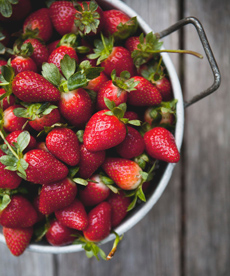
[1] Top on the list of pesticide-laden produce: strawberries (photo courtesy In Harvest).

Spinach
[2] Popeye beware: Spinach is #2 (photo Stephen Ausmus | USDA Agricultural Research Service).

Kale
[3] In addition to nutrition, kale is laden with pesticides (photo courtesy National Kale Day).


Your fresh produce may not be as innocently good for you as you think. The annual Dirty Dozen list is out, naming the fruits and veggies most likely to be tainted with pesticides—even after you wash them.

The Shopper’s Guide to Pesticides in Produce is published annually by The Environmental Working Group, a nonprofit whose mission is to empower people to live healthier lives in a healthier environment.

  • The Dirty Dozen is the produce with the highest levels of chemical pesticides.
  • The Clean Fifteen has the least amount of pesticides.
  •  
    The findings are always eye-opening. Take kale, a vegetable embraced in recent years as a nutritional powerhouse.

    A single sample of kale—#3 on this year’s Dirty Dozen list—had up to 18 different pesticide residues.

    Strawberries top the list for the 4th year in a row, being the most likely to retain pesticides even after washing.

    The antidote? Eat more organic produce. The challenge: Organic produce is more costly and not every market carries the organic options you are looking for.
     
     
    THE DIRTY DOZEN
    1. Strawberries
    2. Spinach
    3. Kale
    4. Nectarines
    5. Apples
    6. Grapes
    7. Peaches
    8. Cherries
    9. Pears
    10. Tomatoes
    11. Celery
    12. Potatoes
     
    Here are more on the “dirty” list. Take a look: It may influence your shopping decisions.
     
     
    THE CLEAN FIFTEEN

    Produce with the least amount of pesticides include:

    1. Avocados
    2. Sweet Corn*
    3. Pineapple
    4. Sweet Peas
    5. Onions
    6. Papayas*
    7. Eggplants
    8. Asparagus
    9. Kiwis
    10. Cabbages
    11. Cauliflower
    12. Cantaloupes
    13. Broccoli
    14. Mushrooms
    15. Honeydew
     
     
    ________________

    *A small amount of sweet corn, papaya and summer squash sold in the United States is produced from genetically modified seeds. If you want to avoid genetically modified produce, buy organic varieties of these foods.


    Comments off

    TIP OF THE DAY: Spring Salad With Warm Bagna Cauda Dressing

    It’s the first day of spring. For a sprightly lunch or dinner dish, how about a spring salad with bagna càuda dressing?

    Bagna càuda is a classic sauce from the Piedmont region of Italy. It’s made from olive oil, anchovies and garlic. The name means “hot bath,” since it’s served warm.

    Bagna cauda is served with crudités, especially in fall and winter. It’s often part of a Christmas Eve buffet.

    In our own version, we add slices of toasted plain and/or baguette to the crudités plate—because bagna càuda is a zesty bread dipper, too.

    Bonus: Serve it as a piquant sauce with chicken and fish, poached or grilled.
     
     
    THE HISTORY OF BAGNA CÀUDA

    Bagna càuda dates to the Middle Ages, during the expansion of commerce between France and Italy. Among other items, Italian merchants began to import salted anchovies.

    A dip from Provence, anchoiade, is made with olive oil, garlic, white wine vinegar and anchovies. It likely crossed the border with the imported anchovies.

    The Piemontese adjusted the recipe to their taste, warmed it up, and created bagna càuda.

    For some time, bagna càuda was a food for ordinary people. It was not included in official Piedmontese cookbooks until 1875 [source].

    Today, it is one of the most popular recipes to hail from the Piedmont region.
     
     
    SALAD WITH BAGNA CÀUDA

    Last year, we came across an extension of the bagna càuda dip: as a warm dressing for a spring salad. We’ve enjoyed it several times since then

    Some simple recipes require simply that the anchovy fillets be mashed with the garlic cloves. They are then simmered in olive oil for a few minutes to take the edge off the garlic.

  • The French had it right: The dip tastes better with a bit of lemon juice or vinegar.
  • Some versions add butter or cream.
  • You can give it a different flavor profile with walnut oil.
  • If you have truffle pieces (lucky you!), toss them in.
  •  
    Here’s our version. Play with it as you wish.

    Ingredients For 1 Cup Of Dressing (4 Servings)

  • 4-6 large garlic cloves, chopped*
  • 3/4 cup extra virgin olive oil
  • 6 tablespoons (3/4 stick) unsalted butter, at room temperature
  • 6-12 best quality anchovy fillets, well drained
  • Zest of one lemon
  • 3 tablespoons lemon juice
  • Optional: pinch of chile flakes
  • Salt and pepper to taste
  • 1 tablespoon minced parsley leaves
  •  
    Ingredients For The Salad

    Use whatever looks nice and springy in the produce aisle. We didn’t include carrot curls in the ingredients list, for example; but any salad vegetable fits right in.

  • 2 cups baby spinach
  • 2 endive or radicchio, leaves separated
  • 4 radishes (ideally watermelon radishes), very thinly sliced
  • 1 small fennel bulb, very thinly sliced
  • 1 cup sugar snap peas
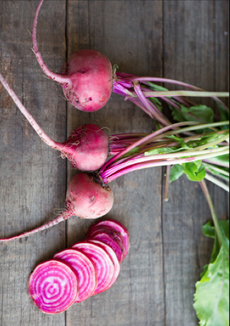
  • 1 medium beet, ideally chioggia or yellow†, peeled and thinly sliced
  • 4 scallions, trimmed
  • 12 small asparagus spears, blanched or raw
  • Salt and pepper
  • ________________

    *If the dressing is too garlicky for you, whisk in some crème fraîche, sour cream, or plain yogurt.

    †Red beets bleed.
    ________________

     
    Optional

  • 1 burrata or 6 ounces goat cheese —or—
  • 4 eggs, boiled 8 minutes and cooled, then halved or quartered
  • Prosciutto “roses” (roll up the slices)
  •  
    Plus

  • 1 crusty baguette, sliced into 1″ widths
  •  
    Preparation

    1. MAKE the dressing: Pound the anchovies and garlic into a rough paste, using a mortar and pestle. Place in a small saucepan, add the olive oil and butter and simmer over medium heat for 2 minutes, until the anchovies have dissolved. Add the optional chile flakes before removing them from the flame.

  • Alternatively, blend the oil, butter, anchovies, and garlic in a food processor until smooth.
  • To take the edge off the garlic, sauté the garlic cloves in some olive oil for 3-5 minutes.
  •  

    Spring Salad

    [1] Spring salad with chioggia beets, from Foster’s Market Cookbook.

    Spring Salad With Burrata

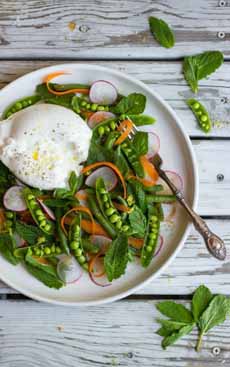
    [2] Spring salad with burrata, from The Gourmet RD. Here are more recipes for a spring burrata salad.

    Spring Salad With Watermelon Radish
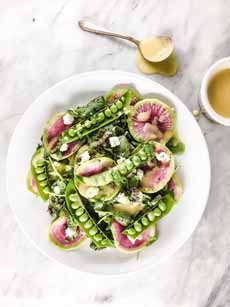
    [3] Spring salad with watermelon radishes, from Sid Wainer.

    Anchovy Fillets
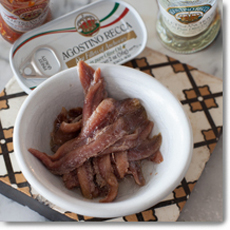
    [4] Buy the best anchovies you can find, for the best flavor in your bagna càuda. These are from Vital Choice.

    Chioggia Beets
    [5] Chioggia beets are a specialty product. Like watermelon radishes, they add fun and fancy to a salad. Here’s a recipe for a chioggia beet salad (photo © Good Eggs).

     
    2. TRANSFER Transfer to a small bowl and whisk in the lemon zest and juice. Set aside to cool.

    3. ARRANGE the salad on individual plates or on a large platter, as you prefer. Set a scallion across the plate. Garnish with the eggs or cheese. Season lightly with salt and pepper.

    4. WARM the dressing for 15 seconds in the microwave (or serve it at room temperature, if you prefer). Stir in the parsley right before serving.

    5. DRIZZLE 1 tablespoon of dressing over each plate of salad and put the remainder in a small pitcher for passing. Serve immediately.


    CHECK OUT WHAT’S HAPPENING ON OUR HOME PAGE, THENIBBLE.COM.


    Comments off

    TIP OF THE DAY: Easy Fancy Dessert

    Banana Bread A La Mode
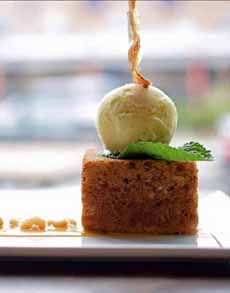
    [1] This fancy-looking dessert is quickly assembled from easily-available ingredients (photo courtesy Good Food On Montford).

    Pepperidge Farm Pirouettes
    [2] Pepperidge Farm Pirouettes, rolled wafer cookies, are an easy dessert garnish (photo courtesy Pepperidge Farm).


    It doesn’t take much effort to turn ordinary ingredients into a great-looking dish.

    This example (photo #1), from Good Food On Montford in Charlotte, North Carolina, shows how easy it is to turn basic ingredients into an ogle-worthy dessert.

    If you purchase all the ingredients, there’s no cooking required!

    The snappy look of this dessert is created by the square of cake. A traditional slice of loaf cake, or wedge from a round cake, doesn’t have the same appeal.

    The denser the cake, by the way, the better. You can also use a brownie or other bar.
     
    MAKE IT AT HOME

    All you need are:

  • Loaf cake (banana, carrot, chocolate, pound, etc.)
  • Ice cream of choice
  • Dessert sauce (butterscotch, chocolate, fruit purée, etc.)
  • Sauce garnish (cookie crumbs, pie crust crumbs, chopped nuts, etc.)
  • Ice cream garnish
  • Color garnish: mint leaf, raspberries
  •  
    While the pastry chef appears to have dehydrated thin slices of banana to make the vertical top garnish, you can use these options, inserting them vertically on top of the ice cream:

  • Chocolate orange peel, coin or straw
  • Piece of bark, brittle or toffee
  • Pocky stick
  • Tuile or Pirouette cookie (photo #2)
  • Slice of kiwi or starfruit
  •  
    Other options:

  • Chocolate curls
  • Strawberry
  • Or, no garnish at all
  •  
    Ready, set, assemble!


    Comments off


    © Copyright 2005-2026 Lifestyle Direct, Inc. All rights reserved. All images are copyrighted to their respective owners.