THE NIBBLE BLOG: Products, Recipes & Trends In Specialty Foods


Also visit our main website, TheNibble.com.

Recipe For Brown Butter Cinnamon Rolls, A Favorite Weekend Treat

On Mother’s Day we called our aunt to send our best wishes, and ended up chatting about our family’s favorite topic: food. We ended up reminiscing about the Pecan Logs from Fanny Farmer and the Pecan Honey Buns from Horn & Hardart, both chains long gone.

After the call ended, we couldn’t wait to make these delicious, 90-minute Brown Butter Cinnamon Rolls from one of our favorite bakers, Audra, The Baker Chick.

If you’d like to bake something this weekend, we recommend these yummy breakfast and tea-time pastries. They’re at best warm from the oven (or warmed up in the microwave), but “best” is relative: They’re always delicious! Any extras can be frozen.

October 4th is National Cinnamon Roll Day, and February 21st is National Sticky Bun Day.

> The year’s 15+ pastry holidays.

> The history of cinnamon.

Below:

> The year’s 5 cinnamon holidays are below.

> The history of cinnamon rolls.

> Different types of cinnamon rolls around the world.

The recipe follows, but first, some definitions:

  • Cinnamon rolls refer to the spiral-shaped pastries made from rolled dough with cinnamon-sugar filling. They’re often topped with icing (especially cream cheese frosting) and tend to be flatter and wider, with distinct spiral layers visible from the top.
  • Cinnamon buns can refer to the same thing, but the term is sometimes used for versions that are topped with a sticky glaze or caramel rather than icing, and baked closer together so they pull apart like sticky buns.
  • Honey buns are glazed sweet rolls with a similar spiral shape to cinnamon rolls, but glazed with honey or honey-flavored icing rather than cream cheese frosting. They may or may not have cinnamon inside.
  • Sticky buns are related but distinctly different, baked with caramel and pecans on the bottom and flipped over.
  •  
    > The difference between rolls and buns.
     
     
    RECIPE: BROWN BUTTER CINNAMON ROLLS

    Ingredients For 12 Rolls

  • ¾ cup milk
  • ¼ cup unsalted butter, softened
  • 3¼ cups all-purpose flour
  • 1 package (.25 ounce/2¼ teaspoons) instant yeast
  • ¼ cup white sugar
  • ½ teaspoon salt
  • ¼ cup water
  • 1 egg
  •  
    For The Filling

  • 1 cup brown sugar, packed
  • 1 tablespoon ground cinnamon
  • ¼ cup plus 1 tablespoon butter, softened
  • Optional: 1/4 cup raisins/currants or chopped pecans
  •  
    For The Frosting

  • 2 tablespoons butter, softened
  • 4 ounces cream cheese, softened
  • 1 teaspoon vanilla extract or paste
  • 2-3 cups powdered sugar (we found 2 cups to be sweet enough)
  •  
    Preparation

    1. HEAT the milk in a small saucepan until it bubbles, then remove from the heat. Whisk in the butter and stir until melted. Let the mixture cool until lukewarm.

    2. COMBINE in a large mixing bowl 2¼ cups of the flour, the yeast, sugar and salt; whisk together. Add the water, the egg and the milk mixture; beat well with an electric mixer. Add the remaining flour, ½ cup at a time, using a wooden spoon to stir well after each addition (the dough will be too thick and sticky at this point to use the a mixer.) When the dough has just pulled together…

      Cinnamon Rolls Recipe
    [1] The Baker Chick’s Brown Butter Cinnamon Buns. The recipe is at the left (photo © The Baker Chick).

    Cinnamon Roll On A Plate
    [2] A yummy cinnamon roll with a sugar glaze. Here’s the recipe (photo © Wilton Cake Decorating | Facebook).

    Pecan Sticky Bun
    [3] A recipe for sticky buns from Ezra Pound Cake. They’re a version of the Horn & Hardart pecan honey buns of our youth, also called sticky buns (photo © Ezra Pound Cake).

    A Plate Of Sticky Buns
    [4] No time to bake? Get these sticky buns from Mackenzie Ltd. (photo © Mackenzie Ltd.).

     
    3. TURN it out onto a lightly floured surface and knead until smooth, about 5 minutes. Alternatively, use the dough hook in a stand mixer. When ready, the dough will spring back when lightly pressed. Cover the dough with a damp cloth and let it rest on the counter for 10 minutes. Meanwhile…

    4. BROWN the butter by placing it in a small microwave-safe container. Cover it with a microwavable saucer or other tight lid (including microwavable plastic wrap with a vent cut in) and microwave for 3-5 minutes. The butter will melt, pop and then turn brown. If you don’t have a microwave, you can do this on the stove top. While the butter cools slightly, mix together the filling—butter, brown sugar and cinnamon—in a small bowl.

    5. ROLL out the dough into a 9×12 inch rectangle on a lightly floured surface (use a 9×13 baking dish as a guide.) Using a pastry brush, slather the dough with the brown butter. Sprinkle the dough with the cinnamon-sugar mixture and the optional raisins/nuts, and press in lightly so they does’t fall out when you roll the pastry. The brown sugar mix should cover the dough all the way to the edges.

    6. ROLL up the dough and pinch the seam to seal. Using a serrated knife, cut into 12 equal size rolls and place in a 9×13 baking dish. Cover and let the rolls rise in a warm place* until doubled, about 30 minutes.

    7. PREHEAT the oven to 375°F. Bake for 17-20 minutes, or until golden. While the rolls bake…

    8. MAKE the frosting: Whip together the softened butter and cream cheese with an electric mixer until smooth and creamy. Add the vanilla and the powdered sugar, ½ cup at a time. Beat until creamy and spreadable. Let the rolls cool for 10 minutes and then spread the rolls with frosting. Serve warm.
     
    Kanelbullar, Swedish cinnamon rolls
    [5] Kanelbullar, Swedish cinnamon rolls. Here’s the recipe (photo © Merry Boosters).


    THE 5 YEAR’S CINNAMON HOLIDAYS

    There are many foods that have cinnamon as a key ingredient, from chai to gingersnaps to rice pudding. Here, we confine ourselves to those with “cinnamon” in their name.

  • April 10: National Cinnamon Crescent Day
  • September 15: Butterscotch Cinnamon Pie Day
  • September 16: National Cinnamon Raisin Bread Day
  • October 4: National Cinnamon Roll Day
  • November 1: National Cinnamon Day
  •  
     
    THE HISTORY OF CINNAMON ROLLS

    Originating in Sri Lanka, cinnamon has been prized since ancient times, used throughout Asia, ancient Egypt, and ancient Rome. However, it was extremely expensive and rare in Europe until trade routes expanded.

    By the 18th century, when Sweden was a major European power with global trade connections, kanelbullar, Sweden’s version of cinnamon buns, were first created (photo #5, above)—often flavored with cardamom, another favorite spice in Swedish baking. The dough was twisted to expose the filling. And it was Sweden that created Cinnamon Bun Day (Kanelbullens dag) on October 4th.

    Germans created their own version of cinnamon-flavored rolled pastries called schnecken (meaning “snails” for their spiral shape). It spread to other parts of Europe and eventually came to the U.S. with German immigration in the late 19th and early 20th centuries.
     
     
    Cinnamon Rolls In America

    The cinnamon roll evolved significantly on American shores. In the 1950s, when they hit mass market production and could be found neatly boxed in supermarkets, the American cinnamon roll was heavily frosted, fluffier, and sweeter than European versions.

    Not surprisingly, Americans loved this sweeter version, and the rolls became so popular that they led to cinnamon roll bakeries, like T.J. Cinnamons in Kansas City, Missouri†.

    This led to the launch (in December 1985) of the Cinnabon chain, which turned the cinnamon roll into supersized, cream-cheese-frosted indulgence tempting visitors to food courts, malls, and airports.
     
     
    CINNAMON ROLLS AROUND THE WORLD

    Regional differences abound.

  • Australia/New Zealand: Cinnamon scrolls, similar to American rolls but often without heavy frosting. Sometimes made with puff pastry for a crispier texture.
  • China: Cinnamon buns are a hybrid version in modern bakeries, using milk bread dough (soft, stretchy, very fluffy).
  • Colombia: Rollos de canela, similar to U.S. versions but lighter and less sweet.
  • Czech Republic: Šneky or strúdlíky, cinnamon rolls made with a lighter yeast dough, sometimes including nuts or raisins.
  • Denmark: Kanelsnegle (“cinnamon snails”), made with a soft, sweet laminated yeast dough featuring a hint of cardamom, and filled with a very buttery swirl of sugar and cinnamon. Similar to Swedish kanelbullar, but often larger, with more butter and sugar. Can be flaky or enriched-bread style depending on recipe. Sometimes topped with icing instead of kanelbullar’s pearl sugar.
  • England: Chelsea buns, filled with currants, brown sugar, and spices (not always just cinnamon), glazed with sugar syrup after baking; closer to a sticky/glazed roll than the American iced style.
  • Finland: Korvapuusti (“slapped ears”), strong cardamom flavor in the dough, flattened and pinched in the middle which gives it a distinctive ear-like shape. Uses the same cardamom-scented “pulla” dough as other Nordic buns, and is less gooey/sweet than U.S. versions.
  • Germany: Schnecken (“snails”), a coiled spiral shape traditionally made with a sweet yeast dough enriched with butter, eggs, and sometimes quark (fresh cheese). Cinnamon-sugar is a common filling, but raisins, nuts, or poppy seeds are also used. The tops are often brushed with syrup or topped with streusel. These pastries were brought to the U.S. by German immigrants, especially the Pennsylvania Dutch, and evolved into the American sticky bun.
  • India: Cinnamon buns, often spiced with cardamom, cloves, or nutmeg in addition to cinnamon, usually less frosted.
  • Japan: Shinamon rooru, made with milk bread (shokupan), often softer, fluffier, and less sweet than the American version, sometimes topped with whipped cream or custard, sometimes made in a loaf-style cinnamon-swirl bread.
  • Korea: Cinnamon rolls, typically smaller and more delicate than American versions, made with milk bread often with creative toppings (matcha glaze, cream cheese swirls).
  • Mexico: Pan de canela, sweet cinnamon rolls, sometimes less gooey than the American style.
  • Middle East: Exchanges Western ingredients for local flavors like cardamom, dates, honey, pistachios, and tahini.
  • Norway: Kanelsnurrer, similar to Danish kanelsnegl.
  • Poland: Drożdżówki, sweet yeast buns, sometimes cinnamon-filled, often topped with fruit or cheese as well.
  • Sweden: Kanelbullar, small-to-medium knots or twists, less sweet than American versions, cardamom-spiced, with a pearl sugar topping (photo #5).
  • Turkey/Cyprus: Cinnamon pastries, often made with yufka or phyllo-like dough, sometimes closer to a cinnamon-flavored baklava spiral.
  • U.S. American Cinnamon Roll: Large, sweet and fluffy, very soft and yeasty, drenched with cream cheese frosting or vanilla glaze.
  • U.S. Sticky Buns/Pecan Sticky Buns:, Similar to cinnamon rolls but baked in a pan with butter, brown sugar or honey, and pecans at the bottom, inverted after baking so the sticky caramelized topping coats the rolls.
  •  
    _____________________

    *Proofing is the final rise of shaped dough before baking—a specific rest period during the fermentation process. Cold air will retard the rise, so if it’s cold in your kitchen, preheat the oven to 200°F and proof the dough in the oven.

    After serveral acquisitions, the T.J. Cinnamons brand is now owned by GoTo Foods (formerly Focus Brands) that also currently owns Auntie Anne’s, Carvel, Cinnabon, Jamba, McAlister’s Deli, Moe’s Southwest Grill, and Schlotzsky’s brands.

    Sticky Buns
    [6] Miniature sticky buns (photo ACH Foodservice).


    CHECK OUT WHAT’S HAPPENING ON OUR HOME PAGE, THENIBBLE.COM.


    Comments off

    Make Avocado Toast: Deluxe Avocado Toast Recipes

    Avocado Toast
    [1] Fully Loaded Avocado Toast (photos #1, #2, #3 © Sunset Produce).

    Cherry & Grape Tomatoes
    [2] A medley of cherry and grape tomatoes.

    Mini Cucumbers
    [3] Mini cucumbers.

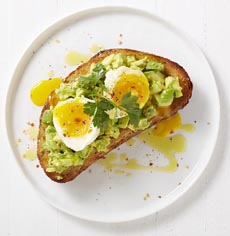
      Over the last few years, Avocado Toast has spread from casual dining spots to coffee bars. The concept started as part of the trend to eat more nutritiously (avocado nutrition). It falls in the “nutritious and delicious” category.

    We first saw Avocado Toast in the form of seasoned, chunky mashed avocado on whole grain toast—perhaps garnished with sprouts or halved cherry tomatoes. As its popularity grew, so did creativity.

    Today’s tip is: Design your ideal Avocado Toast recipe. Ours includes capers, fresh basil, pimento, sweet onion, tomato or sundried tomato, and a balsamic drizzle on crusty country loaf toast. Sometimes we add slices of hard-boiled egg.

    Avocado toast can be served for breakfast or snacks, or as smaller hors d’oeuvre (crostini).

    Here are two more takes on Avocado Toast:
     
     
    RECIPE #1: LOADED AVOCADO TOAST OR CROSTINI

    This recipe, from Chef Roger Mooking for Sunset Produce, uses the brand’s mini cucumbers and Wild Wonders mix of cherry and grape tomatoes in red and orange. Prep time is 15 minutes.
     
    Ingredients For 4 Servings

  • 1/2 cup loosely packed, thinly sliced shallots (substitute sweet onion)
  • 2 mini cucumbers, thinly sliced
  • 2 cup halved cherry and/or grape tomatoes
  • 4 slices bread
  • 1 avocado, mashed
  • 1/2 teaspoon smoked paprika
  • 1/2 teaspoon coarse-cracked black peppercorns
  • 1/2 teaspoon lemon zest
  • 1/2 teaspoon coarse or flake sea salt (the different types of sea salt)
  • 1/2 teaspoon ground fennel seeds (we ground whole seeds in a mortar with a pestle)
  • 1/2 cup quality extra virgin olive oil (we used basil-infused olive oil)
  • Preparation

    1. SEPARATE the shallot slices into individual rings. Submerge them in a bowl of cold water and let them stand for 10 minutes. Drain and discard the water.

    2. TOAST the bread lightly, place a slice on each plate, and spread 2 tablespoons of avocado on each slice. Top the avocado with a pinch of smoked paprika.

    3. DIVIDE the tomatoes, then the cucumbers, on top of the avocado. Sprinkle with a pinch each of cracked black pepper (you can crush peppercorns in the mortar, too), lemon zest, sea salt, and ground fennel seed. Place the shallot slices on top or to the side.

    4. DRIZZLE 1 teaspoon of olive oil on top of each slice to finish. Serve immediately.


    RECIPE #2: AVOCADO-MISO TOAST

    Miso may seem an unusual pairing with avocado, but the flavors are very complementary. This recipe from Quinciple features an unusual ingredient: hozon, a proprietary miso-style spread made by David Chang’s Kaizen Trading Company.

    Hozon isn’t yet available to consumers outside of Quinciple’s meal delivery service, but you can substitute regular miso. The difference is that traditional miso is made from fermented soybeans, and hozon is made from fermented legumes, nuts, and seeds.

    You can easily whip up miso compound butter or hozon compound butter (recipe below). It gives umami flavor and savory contrast to the avocado toast.

    Ingredients For 2 Slices

  • 2 slices rustic bread
  • 1 tablespoon butter, softened
  • 1 tablespoon sunflower hozon or traditional (recipe below)
  • 1 ripe avocado, halved, pitted, and peeled
  • 2 scallions, thinly sliced on the bias
  • 1 teaspoon black sesame seeds
  • Flake sea salt
  •  
    Preparation

    1. TOAST the bread until golden and crisp. If using hozon…

    2. WHISK together the butter and hozon in a small bowl, until combined. Otherwise, coat each piece of toast generously with miso compound butter (recipe below).

    3. SLICE each avocado half as shown in the photo, and press down gently to fan out the slices.

    4. ARRANGE each fanned avocado half atop a piece of toast. Garnish with scallions, sesame seeds and salt.
     

      Avocado Toast
    [3] Avocado Toast with hozon butter, an alternative to soybean miso paste (photo © Quinciple).

    Miso Butter
    [4] Miso butter, a compound butter (photo © MomofukuFor2.com.

     
    RECIPE: MISO BUTTER, A COMPOUND BUTTER

    Compound butter is a classic French ingredient: a blend of unsalted butter with another flavor ingredient that complements the particular recipe. It can be anything from blue cheese to nuts, herbs, spices, and citrus. Here’s more about compound butter.

    Ingredients

  • 1/2 stick unsalted butter, room temperature
  • 2 tablespoons miso paste (any type—see the different types of miso)
  • Freshly ground pepper
  • Optional minced seasonings: chives or green onions, garlic, ginger; citrus zest; red pepper flakes.
     
    Preparation

    1. BLEND the butter, miso, and pepper with a small whisk or a fork.

    2. BUTTER the bread; roll the remainder into a log shape in plastic wrap and refrigerate or freeze. You can cut off slices to garnish chicken, fish or steak (lots of umami); vegetables; potatoes, or rice.
     
    AVOCADO FUN FACTS

  • The avocado is a tree that is native to south-central Mexico. Botanically, the fruit is a large berry containing a single seed (the pit).
  • Avocados have been cultivated in Central America for some 7,000 years, although they didn’t arrive in the U.S. until in 1833 in Florida. They were planted in California in 1856. Today California is the largest producer of avocados in the U.S., followed by Florida and Hawaii.
  • Although we only see a handful in supermarkets, there are more than 80 varieties of avocado. The most popular is the Hass avocado.
  • Americans eat an average of 4.5 pounds of avocado per year. About 50 million pounds of avocados are consumed in the U.S. on Super Bowl Sunday.
  •  
     

    CHECK OUT WHAT’S HAPPENING ON OUR HOME PAGE, THENIBBLE.COM.


    Comments off

    TIP OF THE DAY: Stovetop Kabobs In A Cast Iron Pan

    Who needs a grill to make kabobs?

    With the recipe below from Good Eggs, you can make delicious and healthful kabobs on the stovetop, using a cast iron pan to char the meat. A hot cast iron pan yields all of the smoky flavor of a grill—and a lot more.

    THE HISTORY OF CAST IRON COOKWARE

    Cast iron vessels have been used for two thousand years. The first known use was during the Han Dynasty in China, 206– 220 C.E.

    Cast iron cookware was prized for its durability and ability to retain heat—a challenge when cooking in a hearth or an even iffier open fire (the kitchen stove was not created until the mid-19th century).

    The original cast-iron vessels were cauldrons and pots. The flat cast iron skillet as we know it appeared in the late 19th century.

    While cast iron cookware was popular among home cooks during the first half of the 20th century—along with affordable aluminum and expensive copper—the second half led to stainless steel, less durable and flexible but more attractive.

    Even more attractive and less durable was the pricier enamel-coated cast iron, like Le Creuset (the enamel coating will chip if dropped and can’t be repaired).

    Nonstick, easy to clean Teflon-coated cookware became the choice of housewives beginning in the late 1960s, although cast iron, copper and stainless continued to be used in professional kitchens.

    Here’s a longer history of cookware, which began with animal hides in prehistoric times.

    And they’ll endure forever. Ours was purchased by our grandmother in the 1920s! Today, a 15-inch cast iron skillet, large enough for steaks and chops, is $40.
     
    READY FOR A CAST IRON SKILLET?

    Cast iron skillets are available from the petite (6 inches in diameter) to the jumbo (17 inches). Lodge, a top producer of cast-iron cookware, sells them in one-inch increments (6, 7, 8, 9, etc). Lodge-brand pans, our favorites, are pre-seasoned and ready-to-use, eliminating the main objection to buying cast iron.

    In addition to a lifetime of service for an affordable buy-in, cast iron:

       
    Skillet Cookbook

    Lodge Cast Iron Skillet
    Top: A cast iron skillet is the beginning of a cooking odyssey. Three cookbooks from Lodge are also a good start. Bottom: A 15-inch cast iron skillet from Lodge Manufacturing in Tennessee. A line with beautiful craftsmanship, it is the only cast iron cookware manufacturer still in the U.S.

  • Delivers the best heat distribution, which is why it’s the choice of professional chefs. The ability of cast iron to withstand and maintain very high cooking temperatures makes it best for searing or frying. Using cast iron ensures that there’s no “hot spot” on the pan, when some of the food cooks faster, overcooking or burning it before the rest of the contents are ready.
  • Versatility: Excellent heat retention makes cast iron preferable for braises, stews and other long-cooking, as well as quick-cooking dishes like eggs and grilled cheese sandwiches. Before there was bakeware, cast iron skillets were used to make breads, cakes, cobblers, pies, and so forth.
  • Is a “grill” for apartment dwellers, providing char, smoky flavor and a perfect crust on fish and meat.
  • Is nonstick after seasoning. Seasoning must be done before first using the cookware, to create a nonstick surface and prevent rust. It is the process of covering the cooking surface with vegetable oil and baking it at 250°F for 90 minutes. When the pan cools down, the oil is wiped off. After each use, the pan is not washed, but wiped. While this is very easy to do, the concept is foreign to many modern cooks, who therefore avoid cast iron.
  • Can be heated beyond 500°F, the limit of stainless steel. Campfire temperatures average 1,571°F.
  • Provides great performance at a low price for a long time. You can cook anything in it, and it goes from stovetop to oven. If a minuscule amount of iron leaches into your food, that’s a good thing—like taking an iron supplement.
  •  

    Chicken Yogurt Kabobs Recipe

    Spring Red Onions
    Top: Healthful and delicious: yogurt-marinated chicken kabobs with charred vegetables. Bottom: Spring red onions. Spring onions are immature onions, harvested early. If left in the ground, these would grow into conventional red onions. You are more likely to find white spring onions, but Good Eggs specializes in fine produce. Photos courtesy GoodEggs.

      RECIPE: YOGURT-MARINATED CHICKEN KABOBS WITH INDIAN SEASONINGS

    Feast on tender chicken and charred vegetables. Prep time is just 20 minutes, and you can marinate the chicken overnight. This dish pairs well with a side of grains—ideally whole grains (barley, brown rice, bulgur, quinoa, etc.), but is fine with good old, less nutritious white rice.
     
    Ingredients For 3-4 Servings

    For The Chicken & Marinade

  • 1 pound boneless, skinless chicken thighs, cut into 2” cubes
  • 3 tablespoons whole milk yogurt
  • 1 tablespoon ground coriander
  • 1 teaspoon chili powder
  • 1 teaspoon turmeric
  • 1 tablespoon ground cumin
  • Optional: pinch cayenne or other heat
  • Zest of 1 lemon
  • 1 tablespoon olive oil
  • Bamboo skewers*
  •  
    For The Charred Vegetables

    Three of the four vegetables here are spring vegetables. You can substitute any veggies you like.

  • 1 bunch spring onions†, roots and outer layer pared away
  • 1 bunch carrots, peeled and (if larger) halved
  • 1 pound whole fava beans, rinsed
  • ¼ pounds ramps (wild leeks), greens intact but roots pared away
  •  
    _____________________
    *If you don’t have skewers, you can cook the chicken pieces without them.

    †Spring onions are not the same as green onions (a.k.a. scallions). Spring onions are immature onions, harvested early in the season. They are milder than regular onions. You can substitute sweet onions or shallots.(


    Preparation

    1. PREHEAT the oven to 400°F. Place the bamboo skewers in a large bowl of water and soak for 5 minutes. (Or cook the chicken without skewers. It will taste the same, but skewers are a more special presentation.) Mix the marinade ingredients in a large bowl, add the chicken and toss to combine.

    2. THREAD five cubes onto each skewer. You can do this in advance and store the prepped kebabs in the fridge for up to 24 hours.

    3. HEAT a large cast-iron skillet, then add enough two tablespoons of olive oil, or as much as you need browning. Brown the chicken on all sides, about 2 minutes per side; then place the entire pan into the oven. Bake for 5 minutes or until the internal temperature of the chicken is 165°F. Remove the kebabs from the skillet and set aside.

    4. HEAT a second large pan (or wipe the first pan clean), adding the olive oil when the pan is very hot. Add the vegetables in one layer without crowding (cook in two batches if necessary). Cook for 2-3 minutes, then flip and cook for another 2-3 minutes. When the vegetables are a bit tender, very browned and (hopefully) a bit charred, remove them from the pan. Dress with a squeeze of lemon and a pinch of salt, and serve alongside the kabobs.


    Comments off

    TIP OF THE DAY: Delicious Ways To Eat More Grains & Legumes

    Grilled Vegetables On Bean Puree

    Poached Egg On A Bed Of Beans

    /home/content/p3pnexwpnas01 data02/07/2891007/html/wp content/uploads/black eyed peas collards goodeggs 230rsq
    Top: Bean purée topped with grilled vegetables and aged balsamic, as a starter or vegetarian main (photo courtesy Chef Eric LeVine). Center: Try poached or fried eggs on a bed of beans or lentils; here, kidney beans and diced sweet potato (photo courtesy U.S. Dry Bean Council). Bottom: Ham with black-eyed peas and collards (photo courtesy Good Eggs | SF).

      Head to any fine-casual dining spot and the menu is sure to include quinoa, other whole grains (barley, buckwheat, bulgur, farrow) and often, bean and lentil dishes.

    While consumers increasingly respond to these healthful alternatives when dining out, many of us still aren’t in the groove of serving them at home. Some people do their best to put nutritious meals on the table, while others have to default to convenience.

    But with some easy planning, you can have both deliciousness and healthfulness: Just about every grain and legume can be prepared in an hour or two on the weekend, and heated up as needed.

    Grains and legumes have also been turned into convenience. You can buy them frozen or in boil bags, and boil or microwave them. As with the frozen vegetables, enjoy the same nutrition.

    And all of us should now know how to season better with herbs and spices, instead of the salt and pepper shakers of yore.
     
    WHY DON’T WE EAT MORE OF THEM?

    Since the dawn of personal wealth, meat has been a sign of prosperity. Diets of mostly grains, beans and vegetables were fare for the less prosperous.

    Whereas in other cultures meat—especially beef—remains a luxury, the U.S. has always had enough grazing land to produce large quantities of it. Quantity drove down prices, and a result, people ate more meat. In fact, many families could eat it at every meal, starting with breakfast meats.

    As a result, the grains and legumes that still comprise a major part of other cuisines were passed over in favor of meat-and-starch diet: bacon or sausage at breakfast, a ham or roast beef sandwich for lunch, beef, chicken or pork for dinner.

    Our eating habits grew out of balance. Case in point:

    Spaghetti and [large] meatballs that are a signature “Italian” dish are actually Italian-American. It doesn’t exist in classic Italian cuisine. Few people in the old country could afford large amounts of meat on a regular basis—but working-class immigrants to the U.S. could.
     
    HOW TO GET WITH THE PROGRAM

    Americans eat too much processed food (and too much meat) and not nearly enough whole food. This is one reason why we have growing rates of stroke, type 2 diabetes, heart disease, certain cancers, obesity, and gastrointestinal disorders like constipation.

    While selling the general public on whole grains and legumes as “healthful” isn’t the best marketing approach for many consumers, “delicious” usually works. And truth to tell, it is easy to make these foods taste delicious.

    There’s an easy solution below. But first…

     
    WHAT ARE WHOLE GRAINS?

    Whole grain are cereals with that have their germ, endosperm and bran intact, in contrast to refined grains which retain only the endosperm, and thus tend to retain little nutritional value after being processed.
     
    Whole grains contain far more fiber than heavily-processed grains. They also provide protein, iron and other minerals, even some trace minerals (chromium, copper, molybdenum, selenium, etc). Their valuable phytonutrients (antioxidants) are removed in the refining process.

    There’s overwhelming evidence that a diet including a sufficient quantity of whole grains can result in a healthier, and therefore better, life. The USDA recommends 48 grams of whole grains per day. It doesn’t matter if the grains are cooked ass is or ground into flour: Corn on the cob is a whole grain food, as are cornbread and polenta, made from cornmeal (corn flour).

    The choice boils down to this: Eat refined white flour and white rice, or switch to better-for-you whole grains from the chart below. You can snack on potato chips, or switch to whole grain snacks like popcorn and whole-grain pretzels. (Note: “multigrain” is not “whole grain”: It can indicate a combination of two or more refined grains.)

    Here’s more about whole grains.

    List Of Whole Grains


    WHAT ARE LEGUMES?

    Legumes are plants that contain their fruits in pods. They are generally low in fat, high in protein and full of fiber and other nutrients (calcium, folic acid, iron, magnesium, zinc, etc.).

    Examples include all forms of dried seeds, beans and peas, such as chickpeas, navy beans, soybeans, black beans, lentils, and black-eyed peas.

    Among other things, legumes can help prevent blood sugar spikes. They help to lower cholesterol and contribute to gastrointestinal well-being. The USDA recommends that individuals consume three servings of whole grains each day—about half of your total grain intake—and about half a cup of legumes daily.

    They can be easily substituted for pasta, white rice and potatoes.

    14 WAYS TO EAT MORE WHOLE GRAINS & LEGUMES, AND LOVE THEM!

    In our youth, one of the women’s magazines our mother bought had a meal calendar for the month: literally, a monthly calendar page with a suggested dinner menu for every day.

    The meals were very varied—beyond the meat and potatoes that were popular at the time—and the dishes easy to make. As kids, we delighted in selecting which Birdseye frozen vegetables would be served at dinner.

    But the point is the planning. If you take one of the wall calendars you picked up at the bank, you can write in a whole grain and/or legume for every day of the month. Then, implementing is easy.

    Here are just a few ideas that can be incorporated into your everyday meals:

  • Burgers: There are delicious veggie burgers made with beans. Don’t knock them until you’ve tried them—and serve them on whole grain buns.
  • Bread: Buy whole wheat bread or oatmeal bread, including bagels.
  • Eggs: Add beans to an omelet or a scramble, or serve a side of well-seasoned beans with the eggs.
  • Hummus: In addition to dipping and snacking, use hummus or bean purée as a bread spread instead of butter, and as a sandwich spread instead of mayonnaise.
  • Meat loaf: Make your meat loaf with a 3:1 ratio of ground meat to cooked whole grains or legumes. (We love Lentil Meat Loaf.)
  • Mexican/Tex-Mex: Use corn tortillas instead of white flour tortillas. The same goes for wrap sandwiches. Serve brown rice and puréed beans as rice-and-beans sides with non-Mexican mains.
  •   Barley Side

    Bean Tostada

    Red Rice Thai Croquettes
    Top: A side of barley, sugar snap peas and sundries tomatoes (All-Clad pot from Williams-Sonoma). Center: Make bean tostadas for lunch or snacks (photo courtesy U.S. Dry Bean Council). Bottom: Red Rice Thai Croquettes (photo courtesy Blogspot.PhilosophersSpoon.com).

  • Oats beyond porridge: Add rolled oats to muffins, pie crusts and cookies. Instead of conventional chocolate chip cookies, make oatmeal chocolate chip cookies. Pan-fry leftover oatmeal and serve it plain like polenta (with maple syrup or grated cheese), or with eggs. You can also whip up a large batch of oatmeal on the weekend and heat up your daily breakfast.
  • Pasta: Use whole wheat pasta instead of refined white flour pasta. If you don’t like the more pronounced flavor, combine half whole wheat pasta and half white flour pasta.
  • Pizza: Use chickpea flour (gluten free) or whole wheat flour instead of white flour—or buy whole grain pizza dough—for homemade pizza crusts. Purée white beans—cannellini, great northern or navy beans—as a pizza topping instead of tomato sauce, and top with roasted vegetables and mozzarella cheese.
  • Potatoes: Instead of potatoes on most nights, cut back to four nights a week and serve whole grains or legumes on the other nights. You may find yourself happily planning more nights of the better-for-you options.
  • Rice: Beyond brown rice, there are other good-for-you whole ready-to-heat-and-eat grains on the store shelves and in the freezer case. If you’ve never had wild rice, what a treat-well worth the extra time (and higher cost) to prepare it.
  • Salads: Add barley, beans (including edamame) or wheatberries to green salad, tuna salad, etc.
  • Snacks: Substitute popcorn or roasted chickpeas for potato chips and other “empty calorie” snack foods. Buy bags of frozen edamame in the pods, microwave them and serve as them with a sprinkle of coarse salt for a yummy snack (it’s fun to squeeze the beans from the pods). And for a sophisticated snack, make bruschetta or crostini with cooked beans and/or bean purée and a garnish of fresh herbs.
  • Soups: Enjoy more bean or lentil soup, and add beans, lentils or whole grains to other soups.
  •  
    We know you’ll have even more ideas!
     
    This article was inspired by one in the Sysco.com health newsletter.


    Comments off

    RECIPE: Shrimp In Adobo Sauce

    Shrimp With Adobo Sauce Recipe

    Raw Shrimp

    Poblano Chiles

    Top: Put some camarónes on the barbacoa: That’s Spanish for put some shrimp on the barbie (photo courtesy Eat Wisconsin Cheese). Center: Fresh-caught shrimp from I Love Blue Sea/Vital Choice. Bottom: Poblano chiles (photo courtesy Burpee).


    May 10th is National Shrimp Day, celebrating America’s favorite seafood. Here’s a Mexican-style recipe, courtesy of EatWisconsinCheese.com.

    You can serve this dish warm or chilled—perhaps with a warm grain or a room temperature or chilled grain salad, plus dressed greens.
     
    RECIPE: SHRIMP WITH SOUR CREAM CHILI ADOBO SAUCE

    Ingredients For 4 Servings

  • 1 tablespoon olive oil
  • 1/4 cup plus 1 tablespoon adobo sauce (from a can* of chipotles in adobo)
  • 1 pound jumbo shrimp (10 to 12 count)
  • 1/2 cup sour cream
  • 1 teaspoon fresh lime juice
  • 2 tablespoons poblano chiles, finely diced
  •  
    _______________________
    *Available in the Latin American foods aisle of most supermarkets.

     
    Preparation

    1. HEAT the oil and 1/4 cup adobo sauce in a large nonstick skillet over medium heat. Add the shrimp and cook until pink and no longer translucent. But don’t overcook them: Cooked shrimp should have a slight curl. When they curl tightly inwards, the flesh will be rubbery. While the shrimp cooks…

    2. MIX the sour cream, lime juice and 1 tablespoon of adobo sauce in a small bowl. Pour into a small serving dish. Sprinkle the poblanos over shrimp to garnish.
     
    TIPS FOR USING FROZEN SHRIMP

    1. THAW the shrimp slowly in the refrigerator beginning 24 hours before you plan to cook them. Place the container in the refrigerator on a low shelf—if not in a sealed bag, then covered lightly with plastic wrap. Then remove any liquid that has collected in the container and use the thawed shrimp within one day.

    NOTE: Keep all raw foods on the lowest shelf and cooked foods on higher shelves to prevent any contamination from raw juices dripping onto cooked food.

    3. QUICK THAWING TECHNIQUE: If you can closely monitor the shrimp, place them in a leak-proof plastic bag (if it is not in one already.) Submerge the shrimp in cold tap water and change the water every 30 minutes until the shrimp has defrosted. Do not try to hasten the process with warm water or hot water because the shrimp will begin to cook. Cook immediately after thawing.

     
    WHAT IS ADOBO SAUCE?

    Adobo is a Mexican spice blend: spicy and rich in flavor, but not too hot. As with chili powder, Chinese Five Spice, curry powder, jerk spice and other spice blends, the ingredients and proportions will vary somewhat among manufacturers and home cooks.

    Traditional adobo blends contain black pepper, cayenne, cumin, garlic, onion and oregano. They have no added salt (but check the label). You can buy the dry spice mix, or ready-made, canned chipotles in adobo sauce.

    Traditional uses are as a rub, along with lime juice and a bit of salt, on grilled chicken, fish or pork. It is added to chili recipes and taco fixings, and used to season guacamole.

    You can buy adobo ready-mixed, or can blend your own. For the latter, try 2 tablespoons granulated garlic, 1 tablespoon salt (optional), 4 teaspoons dried oregano, 1 teaspoon black pepper, 2 teaspoons cumin, 2 teaspoons onion powder and 2 teaspoons cayenne, ground chipotle or other chile powder.
      

    Comments off

    The Nibble Webzine Of Food Adventures
    RSS
    Follow by Email


    © Copyright 2005-2026 Lifestyle Direct, Inc. All rights reserved. All images are copyrighted to their respective owners.