THE NIBBLE BLOG: Products, Recipes & Trends In Specialty Foods


Also visit our main website, TheNibble.com.

PRODUCTS: Ice Cream Favorites For National Ice Cream Month

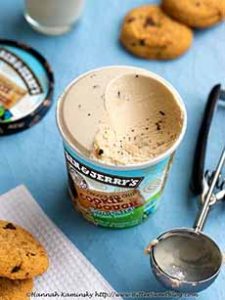
Ben & Jerry's Non Dairy Chocolate Chip Cookie Dough
[1] Non-dairy Chocolate Chip Cookie Dough ice cream from Ben & Jerry’s (photo © Hannah Kaminsky | Bittersweet Blog).

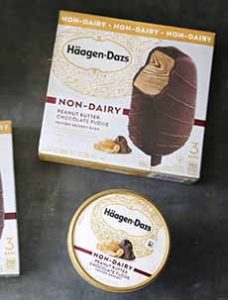
Haagen-Dazs Non Dairy
[2] Häagen-Dazs makes non-dairy frozen treats in both cartons and bars (photo © Häagen-Dazs | Facebook),

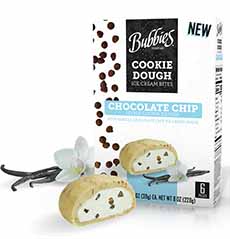
Bubbies Ice Cream Bites
[3] Bubbie’s uses conventional dairy ice cream in its Ice Cream Bites (photos #3 and #4 © Bubbies’s Ice Cream.

Bubbies Ice Cream Bites
[4] Bubbies ice cream bites; from top left, clockwise, Birthday Cake, Strawberry, Chocolate Chip, Peanut Butter.


There’s always something new to present for National Ice Cream Month. Here, three recommendations for both dairy and non-dairy ice cream.
 
 
NON-DAIRY ICE CREAM FROM THE ICE CREAM KINGS

Lactose intolerant? Vegan? Green? Kosher?

Two big-name ice cream producers have created non-dairy lines, and have recently added new flavors to them.

Aside from tasting like the brands’ dairy lines, there’s more to love about these non-dairy treats: They’re environmentally friendly (green).

  • Cows (plus beef cattle and other animals) contribute a significant amount of the greenhouse gases that contribute to climate change.
  • By creating ice cream in non-dairy versions, people who prefer to eat plant-based foods can indulge without guilt.
  • The corporate goal is for Ben & Jerry’s to reduce its carbon emissions by a whopping 80% by the year 2050, despite continuing to grow the business and put even greater demands on their factories.
  • One way to help accomplish this is with dairy-free desserts.
  •  
    So try them, even if you’re not in one of the groups of people who must eat non-dairy.

    You may decide to switch, to make your own contribution to reducing climate change.

    A technicality: While we may call these products “non-dairy ice cream,” per the USDA standards they are “non-dairy frozen desserts.”

    To be called “ice cream,” a product has to contain cream.
     
     
    Ben & Jerry’s now has 12 non-dairy ice cream flavors in pints (photo #1).

    Instead of dairy milk, the frozen treats are made with almond milk and are certified 100% vegan.

    Four of Ben & Jerry’s Top 10 flavors are recreated for the non-dairy line.

    And surprise: No one will know they’re eating non-dairy ice cream unless they see the pint.

    Ben & Jerry’s recipe developers have done a great job in creating a line that both dairy-free eaters and omnivores can embrace.

    For more information visit BenAndJerrys.com.
     
     
    Häagen-Dazs now has seven non-dairy flavors in cartons (not pints, because they’re only 14 ounces), and three types of chocolate-coated bars on a stick (photo #2).

    The products—which, like Ben & Jerry’s, are as delicious as the convention line—use no dairy milks. They are made from a blend of corn syrup, coconut oil and sunflower oil, plus sugar, flavorings and inclusions (cherries, chocolate chips, etc.; the coconut flavors also have coconut cream).

    The line is certified kosher-dairy* by OU.

    Learn more about the line at HaagenDazsUS.com.
     
    BUBBIES

    Last year we wrote about Bubbies Mochi, ice cream bites wrapped in Japanese rice dough.

    Bubbies has ported the idea to cookie-dough-covered ice cream bites, which are equally delightful (photo #3).

    The four flavors include:

  • Peanut Butter Brownie Batter, brownie batter dough covering peanut butter ice cream
  • Strawberry Sugar Cookie Dough, sugar cookie dough covering strawberry ice cream
  • Vanilla Birthday Cake Cookie Dough, birthday cake cookie dough covering vanilla ice cream
  • Vanilla Chocolate Chip Cookie Dough, chocolate chip cookie dough covering chocolate chip ice cream
  •  
    The line is gluten free, kosher (KSA Dairy), Non GMO and rBST-free.

    Visit BubbiesIceCream.com to learn more.
     
     
    THE HISTORY OF ICE CREAM

    ________________

    *It’s made with equipment that also processes dairy products.


    Comments off

    TIP OF THE DAY: Chowder Topped With Fish Or Seafood

    If you’ve had clam chowder or fish chowder, you know that the seafood is mixed into the soup with the other ingredients.

    In this recipe, created by recipe developer and blogger Sylvia Fountaine for the Idaho Potato Commission, the seafood is placed atop the chowder for a delicious dinner.

    As you can see in the photos, the chowder here is more dense than soupy. It’s like having potatoes and vegetables with your fish, scallops or shrimp, rather than a bowl of soup.
     
     
    THE HISTORY OF CHOWDER

    Chowder was brought to New England in the 17th century by Breton* fishermen, fishing the waters of Newfoundland, a large island off the east coast of what is now Canada.

    They tossed some of the day’s catch into a large pot or cauldron, called a chaudière, from the Latin caldaria. The word is pronounced show-D’YAIR, which became chowder in English.

    Chowders were a staple in fishing villages along the coast of France and in the Cornwall region of southwestern England.

    On the ships that came to the New World, that soup was originally thickened with crushed ship’s biscuits. Now flour is used, but there’s a tradition of serving oyster crackers or saltines on the side.

    While we now make corn chowder, chicken-corn chowder and variations, the first chowders in New England were the Breton fish chowders.

    In addition to fish, there was a large supply of clams along the northern Atlantic coast. Thus, the now-iconic New England clam chowder was born (or merely clam chowder, as the residents then called it—here’s a recipe).
     
     
    RECIPE: CORN & IDAHO® POTATO CHOWDER WITH WHITEFISH & BASIL

    This recipe was created for with whitefish (cod, haddock, halibut, sea bass), which is used in a traditional New England fish chowder.

    But you can go upscale and substitute salmon, scallops, shrimp, even lobster. You can also top the chowder with an assortment.

    Ingredients For 2 Servings

  • 3 tablespoons olive oil, divided
  • ½ cup white or yellow onion, diced (or 1 large shallot)
  •  

    Corn Chowder With Fish

    [1] Topping this chowder with fish turns it into a hearty meal (both photos © Idaho Potato Commission).

    Corn Chowder With Fish
    [2] A close-up in the pan.

  • 8 ounces Idaho® potatoes (red, yellow, yukon or any variety with thin skin), diced no bigger than ½ inch thick†
  • 1 ear of fresh corn, kernels sliced off
  • 1 cup stock: chicken, corn, fish, vegetable; water
  • ½ teaspoon kosher salt
  • Pepper to taste
  • 8 ounces halibut or other seafood
  • Optional: 2-3 tablespoons half-and-half or soy milk
  •  
    Preparation

    1. HEAT the oil in a large skillet over medium heat. Add the onion and sauté until fragrant, about 3 minutes.

    2. ADD the potatoes and corn. Sauté 2-3 minutes, then add the water or stock, salt and pepper and bring to a simmer. Cover, turn the heat down to low and simmer for 10 minutes or until the potatoes are fork tender. While the potatoes are simmering…

    3. HEAT the remaining 1 tablespoon of oil in another skillet. Season the fish with salt and pepper and sear each side over medium high heat. Lower the heat and cook to your desired doneness. Set aside. When the potatoes are fork tender…

    4. UNCOVER and cook off a little of the liquid. If desired, add a few tablespoons half and half or soy milk for a bit of extra creaminess; cook for a minute or two to thicken.

    5. STIR in half of the basil. Taste and adjust the seasonings. Right before serving…

    6. STIR in the remaining basil, saving a bit for garnish (editor’s note: julienne it for the garnish). Dish up the sweet corn chowder and top with the seared fish and basil.

    ________________

    *The smaller the dice, the faster the potatoes will cook.

    †Breton refers to residents of Brittany, a region in northwest France.


    Comments off

    TIP OF THE DAY: Summer Salads

    Summer Salad With Nasturtium Leaves
    [1] A salad of farmers market ingredients, from mache to nasturtium leaves (both photos © Good Eggs).

    Summer Salad Yogurt Dressing
    [2] Even if you think you don’t like tomatoes, try a lush, ripe heirloom tomato. They’re practically a different species from regular supermarket fare.


    For salad lovers, summer is the season to revel.

    Many traditionally summer fruits and vegetables are available year-round. They may be imported from far away, picked before their time.

    For the best-tasting selections of the year, head to your farmers market and load up on heirloom cucumbers and tomatoes, and every other tempting veggie.

    For fruit salads, load up on juicy stone fruits: apricots, cherries, nectarines, peaches, plums and hybrids like a and pluots. You can also add some sliced fruit and berries to a green salad.

    Every week, pick something that you haven’t had before. Nasturtium leaves, for example, are a popular salad ingredient and garnish among fine chefs.
     
     
    SIMPLER IS BETTER

    When the produce has so much flavor, it doesn’t need a heavy dressing to add flavor.

    In fact, they may not even need dressing: a bit of salt and pepper, maybe a dash of balsamic or a squeeze of lemon or lime, or a vinaigrette, if you want something more substantial.

  • Classic Dijon Vinaigrette Recipe
  • Asian Vinaigrette Recipe
  •  
    Save the romaine for fall or mix it with summer lettuces, like Little Gem, bibb and butter lettuces (the latter two are varieties of Boston lettuce, and also make the best lettuce cups [the different types of lettuce]).

    Create a mix of flavors and textures: crunchy, salty, tangy, even sweet (berries, small dice of melon).

  • Snip in herbs, as many as you like. Basil, chives, dill, mint and parsley can be used singly, doubly, triply, or all together.
  • Summer squash is ready to slice or julienne raw, and toss in. Add yellow squash with the green, for more color.
  • Add corn to your salad. Sweet, raw corn is great, but if you have cooked corn, use it.
  • Like heat? Add arugula, radishes watercress, chiles.
  • Slice or chop? If you typically slice salad ingredients, try chopping your salad—and vice versa. You may already have the tools you need to easily chop a salad. Here’s a video using a mezzaluna. Or check Amazon for a “chopped salad chopper.”
  • Make a dinner salad by adding cheese, meats and/or seafood.
  • Keep garnishes light. Our favorite summer salad garnish is sunflower seeds.
  •  
     
    CHECK THE CHART FOR RECIPE IDEAS

    Good Eggs created the infographic below to help you blend ingredients from six different categories into a creative luncheon salad.

    We recommend that you add additional vegetables beyond what’s in the chart, and try new ingredients. For example, if your go-to lettuce year-round is romaine or iceberg for most of the year, branch out to its less common relatives.
     
     
    Summer Salad Ingredients

    [3] For a “fully packed” summer luncheon salad, choose an ingredient from each of these six sections (infographic © Good Eggs).


    Comments off


    © Copyright 2005-2026 Lifestyle Direct, Inc. All rights reserved. All images are copyrighted to their respective owners.