THE NIBBLE BLOG: Products, Recipes & Trends In Specialty Foods


Also visit our main website, TheNibble.com.

RECIPE: Red, White & Blue Frozen Drink Cocktail

Red White & Blue Cocktail
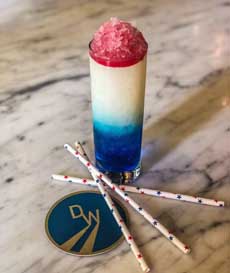
[1] It’s red, white, blue and crunchy, for lovers of crushed ice drinks (photo © Due West | NYC).

Worthy Park Estate Overproof Rum
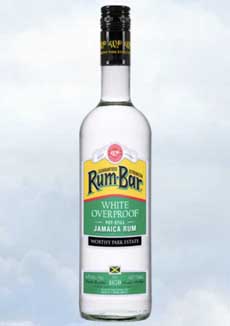
[2] Due West used this rum in the drink. It’s 126 proof! We stuck with the 80 proof (photo © Worthy Park Estate).


When Due West, a popular gastropub in the West Village neighborhood of Manhattan, sent us this photo (#1), we had to have one ASAP.

We couldn’t get downtown to Due West, so ran to the corner supermarket and bought pomegranate juice (we had all the other ingredients on hand). We dragged our ice crusher from the back of the cupboard and set to work.

All of the crushed ice turns this red, white and blue charmer into a frozen drink: perfect for a hot summer day.

Try it yourself, for a festive Fourth. After the weekend, you can play with the recipe. We’re thinking Aperol on the bottom and blood orange juice on top.
 
 
COCKTAIL RECIPE: RED, WHITE & BLUE FROZEN DRINK

Ingredients Per Drink

  • 1.5 ounces rum*
  • .5 ounce banana liqueur
  • .25 ounce blue Curaçao
  • .5 ounce lime juice
  • .25 ounce pomegranate or hibiscus juice
  • Crushed ice
  •  
    Preparation

    1. ADD the blue Curaçao to a collins glass. Then fill with crushed ice.

    2. SHAKE the rum, banana liqueur and lime juice together. Carefully strain over the ice.

    3. PACK the glass with more crushed ice and slowly pour the pomegranate/hibiscus juice on top.

    4. CELEBRATE responsibly.

    ________________

    *Due used Worthy Park Rum Bar Overproof Rum (photo #2). That’s 63% A.B.V., or 126 proof. Whew. Overproof rum is used to raise the alcohol content in a drink. We’ll stick with conventional rum, 40% A.B.V., 80 proof, thank you very much.


    Comments off

    Anisette Vs. Sambuca Difference (Plus Pastis & More)

    July 2nd is National Anisette Day, celebrating a clear, anise-flavored liqueur that became popular in Italy in the 1800s.

    It is usually made from aniseed, although it can also be made from fennel, licorice, star anise, or a blend.

    Before commercial production, people made their own liqueurs (and made their own wine, brewed their own beer, etc.).

    The first commercial anisette was introduced by Marie Brizard in 1755.
     
     
    IT’S EASY TO CONFUSE

    Many people confuse anisette with sambuca, another clear liqueur that is made with both green anise and star anise.

    Other sweet anise-based liquors from France include Pernod and Ricard Pastis. Pastis is sometimes confused with anisette, but it is made with both aniseed and licorice root.

    Confused yet?

    While all licorice-like liqueurs are popularly served with after-dinner coffee:

  • Anisette is a French liqueur flavored with anise seeds. Because of its strong flavor, it is often mixed with a splash of water, which turns it from clear to milky white.
  • Sambuca is an Italian liqueur made from star anise or green anise, along with elderflower berries and licorice. It is traditionally served with three coffee beans, which represent health, wealth and fortune.
  • Pastis is a French apéritif that is amber in color. As with anisette, some people like to dilute the flavor slightly with water, which turns the color to a milky greenish-yellow.
  •  
    Similar-tasting spirits, which can be sweet or dry, include:

  • Absinthe (originating in Switzerland)
  • Anis (Spain)
  • Arak (the Levant)
  • Kasra (Libya)
  • Mistra and Ouzo (Greece)
  • Ojen (Spain)
  • Pernod (France)
  • Raki (Turkey)
  •  
     
    USES FOR ANISETTE

    Beyond cocktails, anisette is used in conventional foods, including:

  • Baking, particularly biscotti and cookies (make anisette biscotti with this recipe from Mario Batali)
  • Flan (custard), sweet and savory
  • Meatloaf
  • Tomato sauce
  •  
    > Check out these savory recipes for anise.
     
    And by all means, try it in your coffee or espresso, hot or iced.

    Lemonade with anisette is also a treat. Try it!


    [1] A glass of anisette, garnished with star anise—which is used in some distillations (photo © Belchonock | Panther Media).

    Floranis Anisette
    [2] Floranis, also known as Anis Gras, was created in 1872 in Algiers, Algeria, by the Gras brothers, using the anisette recipe that had been in their family for generations (photo © La Martiniquaise).

    Marie Brizard Vintage Anisette Bottle
    [3] Marie Brizard sold its first bottle of anisette in 1755. Two hundred years later they released this bottle, from the 1950s. You can buy it from The Whisky Exchange.


    Comments off

    TOP PICK OF THE WEEK: Miyoko’s Vegan Cheese & Butter

    Miyoko's Vegan Butter
    [1] Melt Miyoko’s vegan cultured butter and toss it with popcorn (all photos © Miyoko’s Creamery).

    Miyoko's Vegan Cream Cheese
    [2] Spread Miyoko’s vegan cream cheese on a bagel.

    Miyoko's Vegan Cheese Wheel
    [3] Serve a Loire-style soft cheese wheel with crackers and wine.

    Miyoko's Cheese Spread
    [4] Spread Miyoko’s roadhouse cheeses on bread, crackers or pretzels. Shown here: Biergarten Garlic & Chive.

    Miyoko's Sundried Tomato Vegan Cheese
    [5] Create a beautiful vegan cheese board. Shown here: Sundried Tomato Garlic cheese wheel.

    Miyoko's Vegan Loire Cheese
    [6] Serve Fresh Loire Valley cheese with figs and membrillo (quince paste).

    Miyoko's Vegan Cheese
    [7] Toss vegan cheese with hot pasta to create a creamy sauce.


    Our colleague Hannah Kaminsky, a vegan food writer and photographer who lives in Northern California, told us several years ago: You must try Miyoko’s vegan cheese and butter.

    While not a vegan, we were on top of the sweeping trend. We also are a proponent of sustainability† and try to watch our cholesterol (vegan foods help both).

    At that time Miyoko’s Creamery had no e-commerce, and distribution only in California. These days, you can find the products on Amazon, at other e-tailers, and at 10 stores in my Manhattan zip code alone!

    Miyoko’s has gone mainstream, and that’s a good thing. Here’s a store locator.
     
     
    ABOUT MIYOKO

    The increase in veganism—full or partial†—continues to rise. It was the number one food trend of 2018 [source].

    Miyoko Schinner became a name in the Bay Area in the late 1980s, as a vegan restaurateur, host of cooking classes and author of cookbooks.

    In the last decade, she has focused on creating the finest vegan cheeses and butter.

    A lover of conventional cheeses—“The ‘good life’ isn’t complete without a glass of wine and some fine cheese,” she has said—she discovered that she had lactose intolerance [source].

    That, along with her compassion for animals, led her to create “plant based cheeses that retained all the complexity and sharpness of their dairy counterparts.”

    Miyoko’s uses traditional artisan creamery methods to create plant-based vegan cheeses from cashews and other “real food” ingredients. The result: creamy vegan cheeses that can easily substitute for dairy products, and even melt like dairy cheese.

    We can attest, as a lifelong lover of fine dairy cheeses, that what she has created from cashews and coconut oil, among other ingredients*, is remarkable.

    Her line is certified USDA Organic. The products are free of cholesterol, dairy, gluten, lactose and soy, and the ingredients are non-GMO.

    As with their dairy counterparts, the cheeses and butter are cultured and aged (depending on product). The cheeses range from soft and spreadable to hard and sliceable.
     
     
    PRODUCTS FROM MIYOKO’S CREAMERY

    These vegan products are more tart than their dairy counterparts, in the way that yogurt is more tart than sour cream.

    They are blessed options for vegans and the lactose intolerant.
     
    Butter

    Mikoyo has crafted a cultured vegan butter in the style of European cultured butters. We use it on toast, baked potatoes and vegetables.

    Melt it and toss it with popcorn (photo #1), slide it over an ear of corn.

    It also browns when cooking. It is a most welcome alternative to dairy butter.
     
    Cream Cheese

    A bagel no longer needs to be parted from cream cheese. Miyako’s makes three vegan varieties:

  • Classic Double Cream Chive (photo #2)
  • Sensational Scallion
  • Unlox Your Dreams
  •  
    They will melt into creamy sauce; for example, if you toss them with hot pasta (photo #7).
     
    Loire-Style Cheese Wheels

    In the style of goat cheese wheels from the Loire, these vegan wheels are ready to enjoy with a glass of wine and a baguette or crackers (photo #3):

  • Black Ash
  • Classic Double Cream Chive
  • Garlic Herb
  • Fresh Loire Valley (wrapped in a grape leaf—photo #6)
  • Herbes de Provence (photo #3)
  • Sundried Tomato Garlic
  • Garlic Herb
  • Winter Truffle (seasonal)
  •  
    More Cheese Styles

    Mozzarella, fresh or smoked: for a vegan Caprese salad, panini or pizza.

    Rustic Alpine is made in the semi-hard style of Alpine cheeses: nutty flavor with sweet overtones. You can melt it into fondue or grate it into risotto.
     
    Farmhouse cheeses are sliceable and uses beyond crackers and bread:

  • Sharp Farmhouse: a hard, aged, sharp round with complex flavors that continues to age in your fridge. Use it in a sandwich, or melt it with nondairy milk for a luscious sauce.
  • Smoked Farmhouse: a semi-hard wheel with rich, sharp, smoky tones. Add it to sandwiches or sauces.
  •  
    Roadhouse cheeses, the type served in European beer gardens, are spreadable, a perfect pairing with beer or wine, bread, crackers, and soft pretzels (photo #4).

  • Biergarten Garlic Chive
  • Cheers To Cheddah
  • Spicy Revolution
  •  
    You can create a beautiful cheese board with any one of these cheeses (photo #5).

    Or, put a few cheeses together for a memorable experience. (National Vegan Day is November 1st.)
     
     
    VEGAN DAIRY SUBSTITUTES YOU CAN MAKE

    Miyoko’s cookbook, Artisan Vegan Cheese, has recipes for the above products as well as vegan creme fraiche, ricotta, sliceable cheeses, sour cream and yogurt.

    The book has recipes to incorporate the products into appetizers, entrees, and desserts; for example, vegan Caprese salad, eggplant parmesan, mac and cheesecake.

    You can find it on Amazon.

    Discover more at Miyokos.com.

    ________________

    *Other organic ingredients include, for the Loire-style cheeses: chickpea miso, cultures, herbs, nutritional yeast, rice miso, vegetables, sea salt and spices. For the European-style vegan butter: cultures, sunflower oil, sunflower lecithin and sea salt.

    †While we are an omnivore, we are a “partial vegan.” Concerned about the planet and greenhouse gasses, we make vegan choices where we can. A vegan dish is just as delicious as one with animal protein.


    Comments off


    © Copyright 2005-2026 Lifestyle Direct, Inc. All rights reserved. All images are copyrighted to their respective owners.