THE NIBBLE BLOG: Products, Recipes & Trends In Specialty Foods


Also visit our main website, TheNibble.com.

FOOD FUN: You Can Sponsor A Beehive


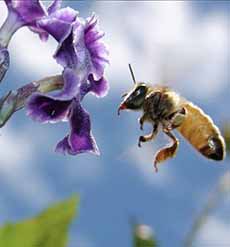
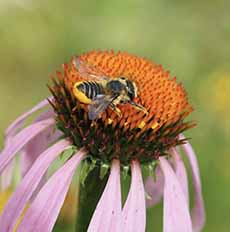
Honeybees gathering nectar. Their bodies pick up pollen, which they rubs off on the next flower they visit (photos © The Honeybee Conservancy).


Last week, The Honeybee Conservancy launched a new initiative: Bee The Solution.

It’s a nationwide call-to-action and educational tour to raise awareness around bee conservation and the important role bees play in our society and local communities.

Bees are essential to grow hundreds of basic crops helping with food production and sustainability.

These little pollinators travel from plant to plant collecting nectar to make honey.

In the process, the plant’s pollen adheres to their bodies, and in a vital interaction, they inadvertently transfer the pollen from flower to flower, which pollinates the plants.

This process:

  • Enables pollination of countless fruits, vegetables, and nuts: one-third of the foods we eat.
  • Some crops, such as blueberries and cherries, are 90% dependent on honey bee pollination. One crop, almonds, depends 100% on the honey bee for pollination. Here are more bee-dependent crops.
  • Enables pollination that creates half of the world’s oils, fibers and raw materials.
  • Prevents soil erosion.
  • Increases carbon sequestration. [source]
  •  
    For the launch event, The Honeybee Conservancy created a six-foot-tall beehive with some 70,000 bees in the heart of midtown Manhattan. Oh yes: It was in the shape of the Empire State Building.

    As part of the program, the Conservancy wants you to sponsor a beehive.

     
    HOW DO YOU SPONSOR A BEEHIVE?

    Sponsor-A-Hive is an annual program targeting two major issues in the U.S.: declining bee populations and limited access to food in low-income communities.

    Each year, Sponsor-A-Hive selects partner organizations to which they deliver native bees or honey bees along with their hives, beekeeping equipment, and continuous training and support.

    Sponsor-a-Hive recipients also participate in the Conservancy’s Bee Ambassadors program, with discussions that advance science and environmental education.

    Equipped with materials such as lesson plans and presentations,Bee Ambassadors deliver hands-on, motivating programs about bees.

    In their new homes, the bees thrive, pollinate, and help boost the crop yield of community gardens.

    Your organization—school, community garden, etc.—can help to create a more sustainable America by caring for a beehive that pollinates and educates.

    Help to build a movement dedicated to reclaiming habitat and protecting the bees that are so necessary to our local ecosystems and food systems.

    Over the last ten years, the national Sponsor-A-Hive program has deployed 10 million bees into underserved communities in 44 states, producing half a million pounds of food and helping many thousands of people gain access to organic, sustainable food.

    DISCOVER MORE HERE.


    Comments off

    FOOD FUN: Bloody Mary With Mexican Garnishes

    Multi-Garnish Bloody Mary
    [1] A Bloody Mary with three Mexican restaurant garnishes (photo © J-Remy | Blue Moon Café).

    Hanako San Bloody Mary
    [2] Japanese accents: ingredients in the mix, an octopus tentacle and a skewer of raw tuna and beet cubes. Here’s the recipe (photo © Bamboo Sushi | Portland, Oregon).

    Garnished Bloody Mary
    [3] The Wayfarer in New York City calls this its Fully Loaded Bloody Mary, but we think of it as “Surf And Turf.” Here’s the recipe (photo © The Wayfarer | NYC).

    Philly Cheesesteak Bloody Mary
    [4] It’s called a Philly Cheesesteak Mary with grilled garnishes, but there’s no cheese cube because it would melt over the grill. Here’s the recipe from Campbell’s Kitchen. You can adjust the recipe with pearl onions, add cheese cubs when the skewer comes off the grill, or use halloumi cheese, which doesn’t melt. You can find the circular kabob skewers on Amazon.


    You may have seen online photos of Bloody Mary’s so extensively garnished, that you wonder how anyone can get through the garnishes to enjoy the drink.

    While this one is not quite so packed, it is fun. We like that an entire celery stalk more than doubles the height of the glass.

    At the most basic level, anyone can use a 14″ stalk of celery to make an impression.

    But Blue Moon Mexican Café, in Englewood and Wycoff, New Jersey, adds much more.

    The restaurant has introduced a new Sunday brunch menu with different Bloody Mary garnishes.

    We don’t know the recipe, but we do know the garnishes (see our Chipotle Maria Recipe below).

    Here, the garnishes from Blue Moon Café (photo #1):

  • Mini empanada
  • Marinated jalapeño
  • Mini quesadilla
  •  
    Visitors to the restaurant can order a 68-ounce pitcher of Bloody Marys, served with fixings that include:

  • Beef jerky
  • Blue cheese-stuffed olives
  • Celery stalks
  • Cocktail onions
  • Gherkins
  • Marinated jalapeño
  •  
    Plus, the familiar wedges of lemon and lime.

    An upgrade at the restaurant includes a tray of bacon, plantains, mini cheese quesadillas and shrimp.

    But these additions are tame, when you look at these 10 outrageous Bloody Mary garnishes.

    What’s on your Bloody Mary?

    Here are some recipes we’ve published previously:
     
     
    MORE BLOODY MARY GARNISHES

  • All-In-One Bloody Mary & Shrimp Cocktail
  • Bloody Mary With Oyster Shooters
  • Eleven Bloody Mary Garnishes
  • Green Bloody Mary (with tomatillos and pickled vegetables)
  • Japanese Bloody Mary With Octopus (photo #2)
  • Mutant Mary For Halloween (with olive eyeballs)
  • New Bloody Mary Garnishes
  • Surf & Turf Bloody Mary (photo #3)
  •  
     
    RECIPE: CHIPOTLE MARIA

    You can use the conventional vodka, or substitute tequila.

    Ingredients Per Drink

  • 1-1/2 ounces tequila
  • 3 ounces top-quality tomato juice
  • 1 squeeze lemon juice
  • 1/2 teaspoon Worcestershire sauce
  • 2-3 drops Tabasco Chipotle Pepper Sauce
  • Garnishes: celery, cornichons, cocktail onions, blue cheese
  •  
    Preparation

    1. SHAKE all ingredients with ice and strain into an old-fashioned glass over ice cubes. Add salt and pepper to taste.

    2. GARNISH with celery and skewered cornichons, cocktail onions and a cube of blue cheese.
     
     
    BLOODY MARY HISTORY
     
     
    BLOODY MARY RECIPES WITH INTERNATIONAL ACCENTS


    Comments off

    RECIPE: Pasta For Breakfast & Brunch

    Gnocchi for breakfast? It’s a pasta lover’s delight.

    Eggs, tomatoes, pesto and cheese create an Italian breakfast bake‚—so good and versatile that you can serve it for lunch and dinner, too (photo #1).

    Thanks to DeLallo for the recipe. You can purchase authentic Italian ingredients on the DeLallo website, including a kit to make your own gnocchi from scratch.

    We bought ours ready-to-cook, but here’s a gnocchi recipe to make without the kit.

    Whatever meal you choose, serve the gnocchi bake with a side salad, lightly dressed in vinaigrette.
     
     
    RECIPE: BAKED EGGS WITH GNOCCHI & PESTO

    Ingredients For 4-6 Servings

  • 1 package (16 ounces) potato gnocchi or potato & cheese gnocchi
  • 4 eggs
  • 1½ cup whole milk
  • 1 teaspoon salt
  • ¼ cup basil pesto
  • 1 cup whole-milk ricotta
  • 15 cherry tomatoes
  • 2 tablespoons shredded parmesan cheese
  •  
    Preparation

    1. PREHEAT the oven to 375°F and grease a 9-by-9-inch square pan.

    2. BRING a large pot of salted water to a boil. Cook the gnocchi according to package directions. Drain and set aside.

    3. WHISK together the eggs, milk, salt, and pesto. Place the gnocchi in the prepared pan and cover with the egg mixture. Drop heaping spoonsful of ricotta onto the mixture, placing them as evenly as possible throughout the pan.

    4. PLACE the tomatoes between dollops of ricotta. Sprinkle with the parmesan and bake until the eggs are completely set and starting to brown, about 30 minutes.

    5. REMOVE from the oven and let cool for 10 minutes before serving.

     
    THE HISTORY OF GNOCCHI

    A classic Italian pasta, these pillowy potato dumplings (photo #3) delight many pasta lovers.

    The word “gnocchi” (pronounced N’YAW-kee) has an unknown origin, but it may have derived from the Italian word nocca, meaning knuckle.

    Another possibility is the Italian word nocchio, meaning a knot in wood.

    Gnocchi has been a traditional type of Italian pasta—the shape is probably of Middle Eastern origin—since Roman times. It was introduced by the Roman legions during the expansion of the empire into the countries of the European continent.

    In Roman times, gnocchi were made from a semolina porridge-like dough mixed with eggs [source].

    Gnocchi were the perfect peasant food, both filling and inexpensive. Before the potato version was created, gnocchi were made with ingredients such as breadcrumbs and squash.

    The use of potato is a relatively recent innovation, occurring after the introduction of the potato to Europe in the 16th century (it was one of the food discoveries in the New World).


    Gnocchi Breakfast Bake
    [1] Gnocchi and eggs for breakfast (photos #1 and #2 © DeLallo).

    DeLallo Potato Gnocchi
    [2] You can purchase ready-to-cook gnocchi, or make your own from scratch with this kit from DeLallo.

    Raw Gnocchi
    [3] Pillowy gnocchi, ready to cook (photo © Neco Garnicia | SXC).

     
    Potato gnocchi originated in Northern Italy, where the colder climate was better for growing potatoes than grain. (In fact, a lot of heartier Italian cuisine, including polenta and risotto, originated in Northern Italy.) [source]

    While gnocchi are dumplings, we like to include them in the group called pillow pasta, stuffed with a pillowy filling. (Ravioli is a pillow pasta. What other varieties can you name? Click the link.)

    Introduced to different regions of Italy, gnocchi became made variously of semolina, potato or sweet potato; with optional cheese or eggs added to the dough; and optionally flavored with basil, saffron, spinach or tomato. Today, pumpkin is an option.

    The most common way to prepare gnocchi today is to combine mashed potatoes with flour, although modern variations add different cheeses—goat, gorgonzola, ricotta, Parmigiano-Reggiano. In addition to the flavors noted above, creative chefs make gnocchi in beet, butternut squash, carrot, sweet potato and other flavors.

    They can be served mixed with vegetables (asparagus, broccoli rabe, cherry tomatoes mushrooms, peas, spinach, etc.) and proteins (chicken, clams, ham, pancetta, sausage).

    Depending on their flavor, gnocchi pair with many sauces, from simple butter and parmesan or tomato to oxtail or pork ragù. One of our favorites is brown butter with crispy fried sage.

    Is it time to expand your gnocchi horizons?
     
     
    CHECK OUT THE DIFFERENT TYPES OF PASTA IN OUR PASTA GLOSSARY
     
     
    WHAT ARE GNUDI, & HOW ARE THEY RELATED TO GNOCCHI & PILLOW PASTA?


    Comments off


    © Copyright 2005-2026 Lifestyle Direct, Inc. All rights reserved. All images are copyrighted to their respective owners.