THE NIBBLE BLOG: Products, Recipes & Trends In Specialty Foods


Also visit our main website, TheNibble.com.

ITALIAN HERITAGE MONTH: Favorite Italian Recipes That Aren’t Authentic Italian

October is Italian Heritage Month, previously called Italian-American Heritage Month.

It’s time to celebrate the accomplishments of Italian Americans, which in our case means the food.

Beginning some 200 years ago, Italian immigrants in the U.S. with wonderful Mediterranean flavors and their home cuisine.

Some of those recipes got enhanced with American ingredients, including lots of meat, not affordable in the Old Country). Here are some favorite dishes that are not authentic Italian.

Whether from Italy or Italian American, we love Italian food!

1. Caesar Salad

This salad was invented in by Caesar Cardini of San Diego. He started a restaurant just over the border in Tijuana, Mexico during Prohibition, in order to serve alcohol. Here’s the history of Caesar Salad.

2. Cioppino

There are numerous seafood stews made along Italy’s coast line, but this version was invented by Italian-American fishermen in San Francisco.

3. Chicken, Meatball Or Veal Parmigiana

Eggplant parm originated in Sicily, but Italian-Americans adapted it to different meats, which were easily affordable to them in the U.S. (photo #1: Chicken Parmigiana).

4. Garlic Bread

A loaf of bread, sliced mostly through and then spread spread with butter or oil and minced garlic is then toasted in the oven. But it’s definitely an American creation. In Italy is bruschetta, individual slices of bread, brushed with olive oil, with garlic and herbs, is its parent.

5. Italian Dressing

In Italy, salad is served with oil and vinegar. Adding garlic, herbs and an emulsifier is American (photo #2).

6. Fettuccine Alfredo

This rich dish, tossed the pasta, butter, cream and parmesan, was invented at a restaurant in Rome as Fettuccine all’Alfredo. However, it didn’t migrate much beyond Rome: You won’t find it at a restaurant elsewhere. Thanks to Italian-American cookes for spreading the recipe. Here’s the history of Fettuccine Alfredo.

7. Marinara Sauce

In the U.S., marinara sauce is made from crushed canned tomatoes, olive oil, onions, garlic and herbs. It is the American version of sugo di pomodoro (tomato sauce), which is made from the same ingredients plus basil.

In Italy, sugo alla marinara, which originated in Naples, means “made in the style of the sailor,” or “mariner’s sauce.” It indicates a sauce used with a shellfish dish. It’s a similar sauce that adds oregano and sometimes anchovies, capers and olives.

Neapolitan marinara sauce is believed to have originated in the mid-16th century, when Neapolitan ships returned from the the Americas with tomatoes. A possibly apocryphal story references how sailors’ wives would start a quick sauce when they saw their husbands’ boats returning [source].

8. Muffuletta

This hero-type sandwich was invented in New Orleans by Sicilian immigrants.

9. Neapolitan Ice Cream

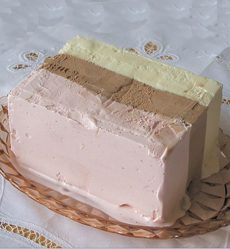
While layered ice cream exists in Italy (think spumoni), bricks of chocolate, vanilla and strawberry together was popularized in America and named after the Neapolitan-immigrant-run ice cream shops that sold it (photo #5).

8. Pepperoni Pizza

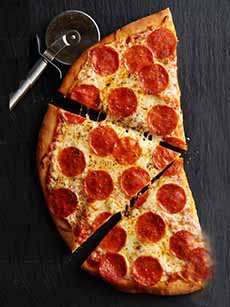
Italian-style pizza is different from the American variety. In Italy, less is more: less cheese and just one or two ingredients. Common Italian toppings include anchovies, corn, olives, prosciutto and sausage. Pepperoni, while an Italian sausage, is an American addition (photo #3). Pizza pockets: definitely all-American.

10. Rainbow Cookies
Those three-layered cookies in Italian pastry shops were invented in the U.S. in the early 1900s.

11. Shrimp Scampi

This is splitting hairs, but scampi is the Italian name for a small member of the shrimp family, langoustines. In the U.S., large shrimp were available, and were used in a dish called Shrimp Scampi—or, Shrimp Shrimp. In Italy, langoustines sautéed in butter/olive and garlic is simply called Scampi.

12. Spaghetti and Meatballs

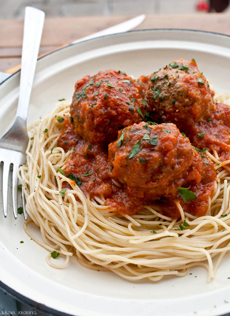
This Italian classic is actually “faux” Italian. Few people in Italy had the money to serve large meatballs. Little meatballs were used in some dishes, but not pasta. This dish was invented in the U.S., where beef was plentiful (photo #4).

If you find any of these dishes in Italy, it’s because they were brought back to Italy from the U.S.!

There are more Italian-American dishes, of course. Sausage, peppers and onions on a roll. Sunday Sauce. Perhaps Baked Ziti, and Penne Alla Vodka.

We love them all.


Chicken Parmigiana
[1] While Eggplant Parmigiana came from Sicily, the use of meat-based parm occurred in the New World, where even low-income people could afford to add chicken, meatballs and veal (photo © MackenzieLtd).

Wishbone Italian Dressing
[2] Born in the U.S.A.: Italian dressing (photo © Wish-Bone).


[3] Pepperoni pizza is an Italian-American favorite. (photo © Tablespoon).

A Plate Of Spaghetti & Meatballs
[4] Those luscious, large meatballs? Strictly American (photo © Delicious Shots | Blogspot).


[5] Neapolitan ice cream was created in the U.S. by Neapolitan immigrants (photo © P. Schemp | Wikipedia).


Comments off

RECIPE: Pierogies Primavera & More From Mrs. T’s

Baked Pierogies
[1] One-sheet Pierogies Primavera. The recipe is below.

Mrs. T's Mini Classic Cheddar Pierogies
[2] Mini Classic Cheddar Pierogies.

Pierogi Skewers
[3] Mini Pierogi Skewers. Here’s the recipe.


[4] Classic pierogies with butter and onions—and a bowl of sour cream. Here’s the recipe (photos 1-4 © Mrs. T’s).


[5] Pierogi “Shepherd’s Pie.” Here’s the recipe from Cleverly Simple (photo © Cleverly Simple)..


October 8th is National Pierogi Day.

Today we have an easy comfort food idea: Pasta Primavera—but not the standard you expect.

It’s made with pierogi, the filled dumplings of Central and Eastern European origin.

There, the pierogi are made by filling made filling pieces of noodle [pasta] dough with a savory or sweet filling, and pinching the edges together like ravioli.

They are then boiling like ravioli, or pan-fried. Unlike Italian filled pasta, the toppings reflect Eastern European cuisine: butter and/or sour cream.

Pasta Primavera got its name from the colorful vegetables combined with the pasta.

In addition to the colorful additions, it gave us pasta lovers a guilt waiver because of the vegetables.
 
 
THE HISTORY OF PASTA PRIMAVERA

The origin of Pasta Primavera has a touch of glamour.

In 1975, New York chef Sirio Maccioni of Le Cirque was hired to cook for an Italian baron and his guests, on a 700-acre Shangri-La Ranch on Robert’s Island, Nova Scotia.

Along with two of his chefs, he began to prepare local game and fish, but eventually the baron and his guests asked for something different.

Maccioni then made pasta and added vegetables, with a sauce of butter, cream and parmesan cheese.

The dish was a success, and Maccioni began to serve it at Le Cirque in New York City where it was a “special” until publicity made it the next hot thing.

A 1977 article in the New York Times, by the power duo Craig Claiborne and Pierre Franey, included a recipe for the dish.

Other chefs subsequently put in their own claims for inventing the dish, but the end of the story is that Pasta Primavera became a staple in homes and restaurants, and remains so to this day.
 
 
RECIPE: PIEROGIES PRIMAVERA

What’s more fun than Pasta Primavera? Pierogies Primavera, an easy sheet pan dinner with veggies and mini pierogies.

This recipe, from Mrs. T’s, is a welcome pasta dish for veggie eaters and a temptation for those who resist their veggies.

Feel free to load up on even more vegetables for an greater balance of veggie to pierogy/pierogi.

Prep time is 10 minutes, cook time is 20 minutes.
 
 
MRS. T’S PIEROGIES

Try Mrs. T’s Pierogies can be baked, boiled, fried, sautéed or grilled

The minis (bite size) are made in Mini Classic Cheddar, Mini Cheddar Seasoned With Bacon, Mini Classic Onion and Mini Four Cheese Medley.

The full-size pierogies are available in 10 additional flavors (don’t hesitate to try the sauerkraut pierogies).
 
 
RECIPE: PIEROGIES PRIMAVERA

This recipe uses the cheddar variety: sharp cheddar cheese blended into seasoned whipped potatoes. You can switch flavors at your discretion

Ingredients For 4 Servings

  • 1 box of Mini Classic Cheddar or your favorite variety Mrs. T’s Pierogies
  • 3 cloves garlic, smashed
  • 1 medium red onion, cut into 1-1/2-inch pieces
  • 1 large apple (such as Honeycrisp), cored and cut into 1-1/2-inch pieces
  • 1 medium orange bell pepper, cut into 1-inch pieces
  • 8 ounces broccoli florets
  •  
    For The Dressing

  • 2 tablespoons olive oil
  • 1 tablespoons whole-grain Dijon mustard
  • 1 teaspoon white wine vinegar
  • 1 teaspoon kosher salt
  • ¼ teaspoon freshly ground black pepper, plus more for serving
  •  
    Preparation

    1. ARRANGE a rack in the middle of the oven and preheat to 400°F. Line a rimmed baking sheet with parchment paper.

     
    2. PLACE the pierogies, garlic and vegetables on the baking sheet.

    3. WHISK the dressing ingredients together in a small bowl and pour over the pierogies and vegetables. Toss gently to combine, then spread into an even layer.

    4. ROAST, stirring halfway through until the pierogies are golden-brown and the vegetables are tender, 16 to 18 minutes total. Serve with a peppermill for those who like more heat.
     
     
    MORE PASTA PRIMAVERA RECIPES

  • Classic Pasta Primavera
  • Pasta Primavera With Shaved Vegetables
  •  
     
    MORE WAYS TO SERVE PIEROGI

    These easy-to-prepare dumplings can be boiled, baked, fried, grilled or sautéd.

    You can serve them classic-style with sour cream (add fresh herbs garnish), with an optional side of sauerkraut.

    We like them as a snack, warm or room temperature, with beer.

    We like to top them with melted cheese, an homage to mac-and-cheese. But there’s so much more:

    But check it out: Our 50 different ways to serve pierogi!

    LOOK FOR MORE RECIPES AND PRODUCT NEWS AT MRSTSPIEROGIES.COM.


    Comments off

    TIP OF THE DAY: Apple Cider Sangria Recipe

    Fall means apple cider, a drink that’s refreshing served cold or hot (mulled cider).

    Here’s a festive drink that adds wine, to make it a sangria.

    Here’s how to set up an apple cider bar for a party.

    If you need a pitcher, take a look at Pampered Chef’s Quick-Stir Pitcher. It has a plunger feature, to make it easy to mix powdered drinks, and can be used to serve hot or cold drinks. Bonus: The sleek design fits into your refrigerator door. Here’s more about it.

    You can also serve the sangria from a punch bowl.

    This drink is made with what Americans call apple cider, but in Europe, apple cider is an alcoholic drink.

  • Hard cider is a fermented alcoholic beverage made from the unfiltered juice of apples. The alcohol content varies from a low 1.2% ABV* to 8.5% or higher—some imported ciders can be up to 12% ABV, an average level for table wines.
  • Fresh apple cider is raw apple juice, typically unfiltered. Thus, it is cloudy from the remnants of apple pulp. It is also typically more flavorful than apple juice—although of course, the particular blend of apples used in either has a big impact on the taste. It is pasteurized in order to be sold off the shelf.
  • Apple juice has been filtered to remove pulp solids, then pasteurized for longer shelf life.
  •  
     
    RECIPE: APPLE CIDER SANGRIA

    Thanks to Pampered Chef for the recipe.

    For a non-alcoholic version, substitute 3 cups (750 mL) lemon or orange sparkling water for the wine.

    Ingredients For 8 Servings

  • 4 cinnamon sticks
  • 3 cups (750 mL) chilled fresh apple cider, divided
  • 1 tbsp (15 mL) honey
  • 1 medium green or red apple, cored
  • 1 large navel orange
  • 1/4 cup (50 mL) fresh pomegranate seeds
  • 1 bottle (750 mL) chilled white wine, such as Pinot Grigio
  •  
    Preparation

    1. PLACE the cinnamon sticks, 1 cup of the apple cider and the honey in 2-cup prep bowl. Microwave, uncovered, on HIGH 2 minutes. Carefully remove the bowl from the microwave.

    2. POUR the cinnamon sticks and cider into a pitcher. Place in the refrigerator until ready to combine.

    3. CUT the apple and orange in half lengthwise, and then into slices. Add all of the fruit, the remaining apple cider and and wine into the pitcher; stir.

    4. PLACE the lid on the pitcher, or cover with plastic wrap. Chill for several hours or overnight.

    5. TO SERVE: Pour the sangria into glasses with ice. Top with some of the fruit, if desired.

    Nutrients per 8-ounce serving: Calories 140, Total Fat 0 g, Saturated Fat 0 g, Cholesterol 0 mg, Sodium 0 mg, Carbohydrate 21 g, Fiber 1 g, Sugars 6 g, Protein 0 g.
     
     
    SANGRIA HISTORY
     
     
    APPLE HISTORY
     
     
    APPLE CIDER HISTORY


    [1] Apple cider sangria combines seasonal flavors with wine.


    [2] (both photos © Pampered Chef).


    [3] Apple cider, mixed with ginger beer and infused with vanilla bean and fresh mint. Here’s the recipe.

    Apple Juice Sangria Recipe
    [4] Apple juice sangria, made with clear apple juice instead of unfiltered apple cider (photos #3 and #4 © USA Apples).

     
    Wild apple trees originated in the mountains of Central Asia. The center of diversity of the genus became eastern [present-day] Turkey.

    The apple tree may have been the earliest tree that humans cultivated. Over the millennia, through selective breeding, farmers improved the fruits [source].

    When the Romans invaded England around 55 B.C.E., they found the locals cultivating apple orchards and drinking apple cider.

    The original apple varieties weren’t for eating. They were bitter, so were pressed for their juice and left to ferment into alcohol.

    The Romans immediately embraced the drink, and cider quickly spread through the Roman Empire and across Europe: from the Germanic tribes to the east, to the Normans in the south (northern France).

    When the Normans invaded England in the 9th century, they returned to Normandy with the rootstock to grow their own apple orchards and left behind the word “cider” for the English language [source].

    Everyone drank cider or beer: adults and children alike. Due to unhealthy water sources, it was the safer choice.

    Fast forward: Colonists brought apples to North America in the 17th century—the bitter cider apples. Apples were being grown in Massachusetts as early as 1630. At the end of the 18th century, Johnny Appleseed traveled west to spread apple trees for cider.

    As in Europe, cider or beer was drunk instead of water.

    Mutation was continually creating new breeds of apples. The McIntosh mutation was discovered in 1796, by a farmer named John McIntosh. It was sweeter, and was best for eating rather than fermenting.

    More sweet mutations followed, and today, we have as many varieties of sweet apples as cider apples.


    CHECK OUT WHAT’S HAPPENING ON OUR HOME PAGE, THENIBBLE.COM.


    Comments off


    © Copyright 2005-2026 Lifestyle Direct, Inc. All rights reserved. All images are copyrighted to their respective owners.