THE NIBBLE BLOG: Products, Recipes & Trends In Specialty Foods


Also visit our main website, TheNibble.com.

Mix & Match Fall Salad Recipes

What’s in your salad?

If it’s the same group of ingredients that you’ve used throughout the spring and summer, it’s time to expand your choices to cool weather ingredients.

Good Eggs, purveyor of premium produce in the San Francisco Bay area, created the chart below to make it easy for you to mix and match.

Just go down the rows and pick what salad appeals to you today.

Depending on where you live, you may find many other choices in specialty produce stores or farmers markets.

Check out this list of fall fruits and vegetables and you’ll find something new.

There’s so much choice, you can create different versions until spring veggies crop up.
 
 
FALL SALAD RECIPES

  • Ambrosia Salad
  • Apples, Lardons & Watercress Salad
  • Autumn Panzanella
  • Bread Salad with Butternut Squash
  • Chopped Fennel & Apple Salad
  • Citrus Salads
  • Endive Salad With Figs
  • Five fall salad recipes, including a Fall Chicken Caesar
  • Pear Salad
  • More Apple Salad Recipes
  •  

  • MIX & MATCH from the chart below
  •  

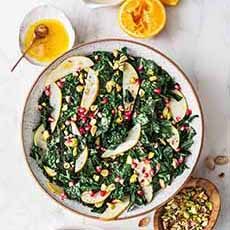
    [1] A fall-ingredients salad of lacinato kale, Asian pear, pistachios and pomegranate arils (all photos © Good Eggs).


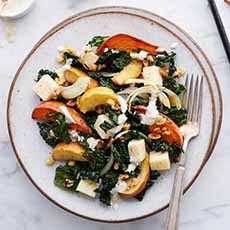
    [2] Toss kale or spinach with two types of squash, grilled onions and a large dice of root vegetables.


    [3] Mix and match: Select ingredients from as many rows as you like.


    Comments off

    RECIPE: Andouille Sausage Pizza For National Pizza Day


    [1] Andouille sausage pizza on a handmade rectangular crust. The recipe is below (photo © Wisconsin Cheese).


    [2] Sliced andouille sausage. This andouille went atop a pizza with red bell pepper and scallions. Here’s the recipe from Bell Of The Kitchen (photo © Belle Of The Kitchen).


    [3] Onion confit (photo © The Vanilla Queen).


    [4] Shredded mozzarella: the favorite pizza garnish (photo © Webrestaurant Store).


    October 11th National Sausage Pizza Day. You could buy one, but why not make one at home?

    October is also National Pizza Month. Do you need more impetus?
     
     
    WHAT ARE THE TOP PIZZA TOPPINGS?

    After analyzing pizza orders from thousands of restaurants in the U.S. and Canada, one survey names the top 10 pizza toppings:

    1. Pepperoni
    2. Mushrooms
    3. Onions
    4. Sausage
    5. Bacon
    6. Extra cheese
    7. Black olives
    8. Green peppers
    9. Pineapple
    10. Spinach

    So, let’s make a pizza that combines #3 and #4.
     
     
    RECIPE: ANDOUILLE SAUSAGE PIZZA

    This recipe uses spicy andouille (an-DOO-ee) sausage, the classic sausage of Louisiana’s Cajun cuisine.

    It’s a richly-flavored pork sausage with a serious bite of cayenne pepper.

    Andouille is used in traditional Cajun dishes like gumbo, etouffée and jambalaya.

    In this recipe, the spicy sausage is combined with an elegant onion confit, to bring the concept of a “sausage and onion pizza” to a new level.

  • If you don’t like andouille, use whatever sausage you prefer.
  • The onion confit is so delicious, think about doubling or tripling the recipe to serve as a condiment with fish, poultry or meat.
  • It’s also great on burgers and sandwiches, crostini, or with any types of eggs.
  •  
    Ingredients For The Onion Confit

  • 1/4 cup extra virgin olive oil
  • 3 medium yellow onions, peeled, sliced 1/4-inch thick
  • 1/2 cup white wine vinegar
  • 2 tablespoons white wine
  • 1/2 tablespoon kosher salt
  • Pinch of sugar
  •  
    For The Pizza

  • 1 pound prepared pizza dough or one 12-inch to 14-inch prepared pizza crust
  • Extra virgin olive oil for brushing crust
  • 3/4 cup (3 ounces) fontina cheese, shredded
  • 3/4 cup sundried tomatoes in garlic-herbed olive oil, patted dry, sliced or cut in chunks
  • 4 ounces andouille sausage links, sliced 1/4-inch thick
  • 3/4 cup (3 ounces) mozzarella cheese, shredded
  • 2 tablespoons (1/2 ounce) parmesan cheese, grated
  • 2 tablespoons Italian flat parsley, chopped
  •  
    Preparation For The Onion Confit

    The confit can be made several days in advance and stored in the fridge.

    1. HEAT the olive oil in heavy bottomed saucepan. Add the onions, stirring to coat with oil and separate rings. Cook until soft over low heat, 5 to 8 minutes.

     
    2. ADD the vinegar, wine, salt and sugar. Stir; bring to boil. Place the lid on pan slightly askew; lower the heat to simmer and cook for 30 minutes, stirring occasionally.

    3. REMOVE the lid, keeping the heat at simmer, and continue cooking an 30 additional minutes, or until the onions are very soft and the liquid is reduced. Do not brown or scorch. Remove from the heat; set aside.
     
    Preparation For The Pizza

    1. PREHEAT oven to 425°F. If using a pizza stone, place it in a cold oven and then preheat. If using dough instead of a prepared crust…

    2. ROLL the dough into a 12-inch to 14-inch circle or a rectangle. Place on a sheet to transfer to the stone, or place directly on a pizza pan.

    3. BRUSH the edges of the dough with olive oil. Spread the onion confit over the dough or prepared crust, leaving a 1/2-inch bare edge.

    4. SPRINKLE evenly with the fontina, then with the tomatoes and andouille rounds evenly over. Sprinkle the mozzarella on top.

    5. SLIDE onto the pizza stone, or place the pizza pan in oven. Bake about 10 minutes, or until golden brown. Sprinkle the hot pizza with parmesan and parsley.


    Comments off

    Pasta With Pesto Recipes: Pistachio Pesto & Pesto Variations

    Casarecce Pasta With Pistachio Pesto
    [1] Pasta with broccoli rabe and pistachio pesto. The recipe is below (photo © DeLallo).


    [2] Homemade casarecce (photo © The Pasta Project).


    [3] Pistachio nuts (photo © The Guilded Nut, a specialist in pistachios, with numerous seasonings).


    [4] Broccoli rabe (photo © Imraw).


    [5] Parmigiano Reggiano cheese (photo © Murray’s Cheese).


    [6] Toasted (roasted) pistachio oil has many uses, from biscotti to salads (photo © La Tourangelle).


    October is National Pasta Month. One of Italy’s popular pasta sauces is pesto.

    Pesto originated in Genoa, the capital city of the region of Liguria on the northwest coast (and, as Americans know, the birthplace of Christopher Columbus, in 1451).

    The original pesto recipe, Pesto Alla Genovese (gen-oh-VAY-say), is a paste (pesto) of olive oil, basil leaves, pine nuts, crushed garlic, coarse salt, and Parmigiano-Reggiano or other grated hard cheese, such as Pecorino Sardo (see it in photo #1).

    Pine nuts were a plentiful crop in Liguria and found their way into many recipes, including pasta sauce. Here’s (the history of pesto).

    But Pesto Alla Genovese (here’s the recipe) is just a template. You can vary all of the ingredients; and in fact, you’ll get more flavor from other nuts, such as pistachios and walnuts.
     
     
    PESTO VARIATIONS: MIX & MATCH

    If you see ingredients below that call out to you, experiment with small batches of pesto. If you don’t like it on pasta, add mayo, sour cream or yogurt to create a dip or sandwich spread; or use it as a topping for fish, meat and poultry.

    You may very well discover a combination that will become your “signature pesto.”

    Cheeses

    Aged Asiago, aged Cheddar, aged Gouda, aged Manchego, Cotija, Grana Padano, Pecorino Romano.

    Greens

    Arugula, beet greens, broccoli, broccoli rabe, chervil, cilantro, collards, dandelion greens, garlic scapes, kale, mustard greens, parsley, peas, radish tops, ramp tops, scallions, spinach, watercress,

    Nuts & Seeds

    Almonds, macadamia nuts, peanuts, pecans, pistachios, pumpkin seeds, sesame seeds, sunflower seeds, walnuts.

    Oils

  • Flavored oils
  • Neutral oils (canola, grapeseed)
  • Nut oils
  •  
    Also:

  • Lemon juice and zest
  •  
     
    RECIPE: BROCCOLI RABE & PISTACHIO PESTO WITH BURRATA

    Thanks to DeLallo for the recipe.

    The pasta shape chosen is casarecce (photo #2), a grooved shape that holds more sauce than ribbon pasta like spaghetti and fettuccine.

    While it may be harder to find it in your supermarket, it’s worth looking for. You can get it online from DeLallo.

    Both parmigiano Reggiano and Pecorino Romano are used in this recipe. Here’s the difference.

    The two cheeses have different flavor profiles, which makes the pesto more complex.

    Ingredients For 4 Servings

  • 1 bunch (8 ounces) broccoli rabe, trimmed to remove large stems (about 6 ounces trimmed)
  • 1/3 cup (1.5 ounce) shelled pistachios, lightly toasted
  • 2 large garlic cloves
  • 1/4 cup (1/2 ounce) finely grated Parmigiano Reggiano
  • 1/4 cup (1/2 ounce) finely grated Pecorino Romano, plus more for serving
  • 1 teaspoon flake or coarse sea salt
  • 1 teaspoon red wine vinegar
  • 1/2 teaspoon red pepper flakes
  • 1 tablespoon toasted pistachio oil (we use La Tourangelle’s, but if you don’t want to buy some, substitute what you have)
  • 1/2 cup extra virgin olive oil
  • 1 package (1 pound) casarecce pasta (see below—or substitute other twisted pasta such as cavatelli, cavatappi, gemelli, gigli, strozzapreti, trofie; or the more common rotini or shells )
  • 8 ounces (2 balls) fresh burrata cheese, torn into bite-sized pieces
  • Microgreens (such as micro broccolini), optional, for serving
  •  
    Preparation

    1. BRING a large pot of salted water to a boil. Blanch the trimmed broccoli rabe for about 1 minute until bright green. Drain and transfer to an ice bath to stop the cooking. Drain well, squeezing out as much water as you can.

    Note: We blanched the rabe in a mesh strainer and removed the strainer to drain and press out the remaining water. This enables us to use the same pot of water for the pasta.

    2. PLACE the blanched broccoli rabe in the bowl of a food processor, along with pistachios, garlic, parmesan and pecorino, salt, vinegar, red pepper flakes and pistachio oil. Pulse until finely chopped.

    3. DRIZZLE in the olive oil, a few tablespoons at a time, scraping down the sides of the food processor as you go. Add enough oil to form a thick but creamy paste. Slightly thicker is preferable in this recipe, since you’ll likely be thinning the sauce with pasta water.

    4. TASTE and add additional salt and/or pepper flakes as desired.

    5. BRING the pot of water to a boil. Add the pasta and cook according to package instructions until al dente. Set aside 1 cup of pasta water, then drain the pasta well and place it in an empty saucepan.

    6. ADD the pesto and toss until evenly coated. Divide among serving bowls.

    7. GARNISH with a few chunks of fresh burrata, microgreens and additional grated cheese, as desired. Because the stracciatella inside the ball of burrata will ooze out, don’t slice the burrata until you’re ready to serve it.

     
    WHAT ARE CASARECCE?

    There are more than 360 pasta shapes in Italy. Each region developed its own varieties.

    Casarecce (kah-zah-REH-chay, from casereccio, which means “homemade”) is a shape that originated in Sicily. It comprises short twists of pasta, which, with its curled edges and a groove down the middle, appear to be rolled up on themselves.

    We turned to Jacqui Debono for more information on this shape.

    Jacqui, from England now living in Veneto, Italy, is a pasta expert whose writing is so well researched: We’re a big fan.

    Her goal is to try every single type of pasta available in Italy, cook it and write about it. She shows that there is life for American pasta lovers, beyond fusilli and rigatoni.

    She shares here knowledge on The Pasta Project, a wonderful website.

    “[Casarecce] look a bit like little rolled-up scrolls” says Jacqui.

    Before the advent of bronze dies to extrude the shapes, casarecce were made by rolling small rectangles of dough around a thin wooden pin or metal rod.

    Italians who make this shape at home still use these rods. However, commercially-produced casarecce is made using either a bronze die for artisan production, or a nylon die for mass production.

    Bronze dies produce superior pasta because the pasta has a rougher surface to which sauces better adhere. Because they’re costlier and wear down faster, large operations use nylon dies.
     
     
    WHY SO MANY SHAPES OF PASTA?

    Italy’s many pasta shapes were largely developed to pair with the sauces of the region (or vice versa).

    Thus, casarecce from Sicily (and very popular elsewhere in Southern Italy), pair best with traditional Southern Italian sauces that include eggplant, tomatoes, cheese and basil.

    It is often served with the local seafood, including amberjack, bluefin tuna and swordfish.

    In Sicily, casarecce is also often served with:

  • Sicilian pesto: ricotta, tomatoes, basil, olive oil and pine nuts (recipe)
  • Trapanese pesto: basil, almonds, pecorino and tomatoes and almond pesto (recipe)/
  •  
    Jacqui has also created:

  • Casarecce With Pumpkin & Orange Pesto And Olives
  • Casarecce With Peperonata (sweet pepper sauce)
  •  
    So track down those casarecci and enjoy!

    > The history of pasta.

    > The different types of pasta: a photo glossary.

    > A year of pasta holidays.


    CHECK OUT WHAT’S HAPPENING ON OUR HOME PAGE, THENIBBLE.COM.


    Comments off


    © Copyright 2005-2026 Lifestyle Direct, Inc. All rights reserved. All images are copyrighted to their respective owners.