|

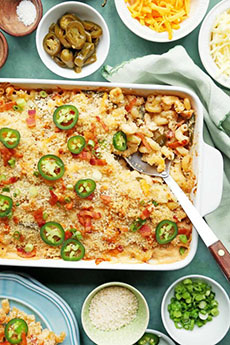
[1] Yummy, isn’t it? Think of it as “Mexican pasta” (photo © Go Bold With Butter).
[2] Fresh rigatoni. You can use any short cut pasta; see below for choices (photo © The Baker Chick).
|
|
If you want an alternative to yesterday’s Chicken Enchilada Casserole recipe,
The recipe was created by Jonathan of The Candid Appetite, and sent to us by Go Bold With Butter.
Prep time is 20 minutes, cook time is 40 minutes.
RECIPE: JALAPEÑO POPPER PASTA BAKE
Ingredients For 6 Servings
1 pound boneless chicken tenders
1-1/2 teaspoons salt
1 teaspoon black pepper
1/2 teaspoon garlic powder
1/2 teaspoon onion powder
1/4 teaspoon cayenne pepper
8 slices bacon, diced
6 tablespoons butter, divided
1 small onion, diced
2 garlic cloves, minced
2 tablespoons all-purpose flour
1 cup chicken stock
1 cup whole milk
8 ounces cream cheese, diced
1-1/4 cups shredded Cheddar cheese
1-1/4 cups shredded Monterey Jack cheese
1 pound short cut pasta (see section below“>), cooked
1/2 cup pickled jalapeños, drained
1/2 cup panko bread crumbs
Garnish: 1 jalapeño, sliced
Garnish: 2 scallions, sliced
Serve with a green salad with a lime vinaigrette, and Tex-Mex toppings: diced tomatoes, chopped bell peppers and onions, guacamole, shredded Jack cheese or cheddar, shredded lettuce and sour cream.
|
Preparation
1. COMBINE in a large bowl and stir until evenly combined, the chicken, 3/4 teaspoon salt, 1/2 teaspoon black pepper, the garlic powder, onion powder and cayenne pepper. Set aside.
2. PREHEAT a large skillet over medium high heat. Once hot, add the bacon and cook, stirring often, until browned and crispy, about 5 to 8 minutes. Using a slotted spoon, transfer the bacon to a plate lined with paper towels. Carefully drain off the bacon grease and return to the skillet to the stove.
3. ADD in 2 tablespoons butter. Once melted, add in the chicken and cook until browned on both sides, about 5 to 8 minutes. Transfer to a cutting board and allow to cool slightly before dicing. Add the onion and garlic to the same skillet and cook until translucent, about 3 minutes.
4. PREHEAT the oven to 375°. Grease a 9×13-inch casserole dish and set aside.
5. ADD 2 more tablespoons of butter to skillet and stir until melted. Stir in the flour and cook for about 30 seconds; then whisk in the chicken stock and milk. Cook, stirring often, until the sauce has thickened.
6. REMOVE from the heat and stir in the remaining salt, pepper, cream cheese, 1 cup Cheddar, and 1 cup Monterey Jack until smooth and melted through.
7. ADD the chicken, pasta, half of the crispy bacon and pickled jalapeños and stir until well combined. Pour into the prepared baking dish and top with the remaining cheeses and bread crumbs.
8. MELT the remaining 2 tablespoons butter and drizzle over the top of the casserole. Bake until bubbly and golden brown, about 18 to 20 minutes. Remove from the oven and top with sliced the remaining bacon, jalapeño and scallions before serving.
WHAT IS SHORT CUT PASTA?
Ribbon pasta is that which is cut into long strands. Short cut pasta is made in bite-size shapes.
Short cut pasta takes several forms:
Tubular pasta. From tiny to jumbo, smooth or ridged (“rigati”), straight-cut or diagonally cut. Well-known varieties include calamaretti (squid rings), garganelli, manicotti, penne, rigatoni and ziti.
Shaped pasta. Cavatappi (corkscrews), conchigliette (shells), elbows, farfalle (bow ties), fusilli (corkscrews), ruote (wagon wheels) are prominent examples. There are endless ways to twist and curl and shape pasta; hence, the hundreds of regional varieties.
Stuffed pasta or pillow pasta. This group includes agnolotti, mezzelune, ravioli, tortellini and “dumpling” pasta like gnocchi. This group is not right for the recipe above.
> CHECK OUT OUR PASTA GLOSSARY FOR MORE TYPES OF PASTA. <
> THE HISTORY OF CINCO DE MAYO <
> COCKTAILS FOR CINCO DE MAYO <
|