|
The first week in November is National Fig Week.
We were sanguine about the opportunity to buy dried figs, for snacking and recipes.
But taking an informal survey among friends and family over the last couple of weeks, we found that none of them buys dried figs.
They’ll eat them when they find them on a restaurant menu or maybe buy a jar of fig jam for a particular recipe. But they don’t integrate figs into meals at home—whether dried or fresh.
To quote a famous line from “Death Of A Salesman,” attention must be paid! Figs deserve it.
Buyer habits change slowly, so we’re here to help.
WHAT’S THE DEAL WITH DRIED FIGS
Fig lovers—or those who haven’t yet developed a taste for the ancient fruit—are lamenting the end of fresh fig season.
There are two harvests of domestic fresh figs: the first few weeks in June, and then from August through October.
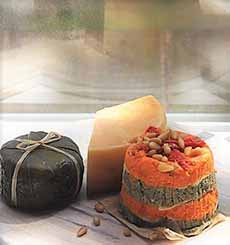
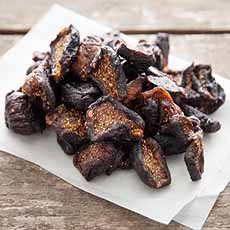
There are hundreds of varieties of figs in the world. In the U.S., the most commonly-found varieties are Black Mission Figs (photo #3—actually they’re dark purple), Brown Turkey Figs and green Kadota figs (photo #2).
(Food Trivia: Since since 1891, Kadota figs have been used for the filling in Fig Newton cookies. January 16 is National Fig Newton Day.)
Once they’re harvested, fresh figs last only about a week. As a result, about 90% of the world’s fig harvest comes to us as dried figs.
You can find them year-round in the produce section or the snacking aisle with the other dried fruits (raisins, apricots, cherries, etc.).
Dried figs are available whole, diced, and made into fig jam, a sophisticated spread that we like with cheese, foie gras, and as a sandwich spread with meat, grilled vegetables, and yes, on a PB & J.
Highly nutritious, naturally sweet, snackable and versatile in recipes, dried figs have a long shelf life.
And they offer a dense nutritional package, starting with an impressive amount of dietary fiber: more than 9 grams of fiber in a serving of four figs.
Dried figs are also a good source of vitamin B6, vitamin E, potassium, and antioxidant phytochemicals.
USES FOR DRIED FIGS
Dried figs fit in wherever raisins, dates and other dried fruit do. That’s a lot of ways to use dried figs.
They add their own unique flavor, a delight on the palate.
Beyond considering a figgy pudding for Christmas, here are 30 ways to use dried figs.
DRIED FIGS FOR BREAKFAST
1. BREAKFAST CEREAL. Like adding raisins to make Raisin Bran, you can chop dried figs (or buy diced figs) to and make Fig Cheerios, Fix Chex, Fig Rice Krispies, fig granola…and of course, fig oatmeal.
2. PANCAKES. After making a disappointing batch of blueberry pancakes (the berries were way too tart), we made the next batch with diced dried figs. Delicious!
3. MUFFINS. Toss dried figs into your muffin batter. A no brainer!
4. COTTAGE CHEESE & YOGURT. Just mix in those diced figs. For more protein, add some sliced almonds or other nuts.
DRIED FIGS FOR LUNCH
5. CARROT & FIG SLAW. Substitute diced figs for the conventional raisins.
Here’s an easy recipe: 4 cups shredded carrots, 1-1/2 cups diced figs, 1/4 cup mayonnaise, 2 tablespoons sugar, 2 to 3 tablespoons milk. Combine carrots and figs in a mixing bowl. In a smaller bowl, combine mayonnaise, sugar and enough milk to achieve a dressing consistency. Thoroughly coat carrot-fig mixture. Yields 8 servings.
6. SALADS. Figs are delicious in a mixed green salad, spinach salad or arugula and endive salad. Their natural sweetness plays well against the bitter greens.
Toss diced figs into coleslaw or a fresh fruit salad: Dried fruits add an interesting counterpoint to the fresh ones. Try them in curried chicken, tuna and egg salads.
7. WRAPS & SANDWICHES. Sprinkle a few figs into just about any wrap, from ham and cheese to turkey to grilled vegetables. Figs add sweetness in the way that chutney and cranberry sauce do.
Then there are peanut butter and fig sandwiches, cream cheese and figs, grilled cheese and figs and one of our favorites, goat cheese and figs on a toasted baguette, and wraps (photo #5).
DRIED FIGS FOR SNACKS
You can buy grab-and-go snack bags of figs (photo #8), or bag your own. And then, there are these fun snacks:
8. ANTS ON A LOG. This retro snack is as much fun today as it originally was in the 1950s. Celery stalks are filled with peanut butter, and raisins placed atop like a line of ants. Or substitute cream cheese for the peanut butter. Whatever your choice, switch out the raisins for diced figs.
9. ENERGY FIX, HUNGER FIX. Keep packages of figs in your desk drawer, glove compartment, gym bag or locker. They’re yummy alone, with a cup of tea, cinnamon-accented coffee or other drink.
10. FIG “S’MORES.” Instead of graham crackers, chocolate and marshmallows, grill thin slices of baguette with a piece of chocolate bar and some dried figs.
11. TRAIL MIX. Long before the term trail mix was coined (in the 1950s), middle class families would keep a candy dish of mixed nuts and diced dried figs on the coffee table. (If you had an especially good grandmother, she would toss M&Ms or chocolate chips into the mix when you were visiting.)
DINNER
12. BEANS & LENTILS. Stir figs into bean and lentil dishes. For baked beans, cut the sugar in half and add a half cup of golden raisins (a nicer color contrast with the beans).
13. CALVES LIVER, FISH, CHICKEN PAILLARD. Add figs to the pan sauce.
14. CHILI. Do you know the trick of adding chocolate to chili to bring out new dimensions of flavor? It works with figs, too.
15. CURRY. Figs accent any curry dish, or any dish seasoned with cinnamon, ginger or turmeric,
16. HAM OR PORK. You can substitute (or add) dried figs for prunes in pork/prune recipes. Or, top ham or pork roasts with a fig sauce: In small saucepan, combine 1 cup water and 1 cup diced figs; bring mixture to boil. In a separate bowl, combine 1/2 cup brown sugar and 2 tablespoons flour; add slowly to fig mixture, stirring constantly until thickened. Add 2 tablespoons butter and 3 tablespoons rum; stir to blend and remove from heat.
17. MEAT DISHES. Pot roast, heavy casseroles and stews of meat and/or poultry get a lift from 1/4 cup of diced figs.
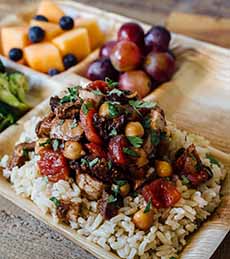
18. RICE & GRAINS. Go Middle Eastern and add figs to your hot rice dishes or rice salads. Do the same with whole grains: barley, brown rice, buckwheat, bulgur, farro, quinoa, etc.
19. STIR FRY. Along with your protein and garlic, add a sweet touch of dried figs.
|