THE NIBBLE BLOG: Products, Recipes & Trends In Specialty Foods


Also visit our main website, TheNibble.com.

RECIPE: Fortune Cookie Cocktail

For National Fortune Cookie Day, July 20th, the perfect drink.

Make it with vodka or rum: The choice is yours. Ganbei!
 
RECIPE: FORTUNE COOKIE COCKTAIL

Ingredients Per Drink

  • 2 tablespoons/1 ounce vanilla vodka (substitute plain vodka), rum or spiced rum
  • 2 tablespoons/1 ounce amaretto liqueur
  • 2 tablespoons/1 ounce Irish cream liqueur
  • 1/2 cup ice
  • Garnish: 1 fortune cookie
  • Optional garnish or rim: crushed fortune cookie crumbs
  •  
    Preparation

      Fortune Cookie Cocktail

    Good luck come with a Fortune Cookie Cocktail? (photo courtesy R A Sushi)

     
    1. PREPARE the rim, if using. You can use a small Martini glass, a Champagne coupe or whatever you have. Finely crush the crumbs and place in a saucer. Moisten the glass rim 1/4″ deep in a saucer or bowl of water; then twist in the crumbs to coat.

    2. PLACE all ingredients except garnish in a cocktail shaker. Shake for 60 seconds.

    3. POUR into the glass.

    4. GARNISH with the fortune cookie on the rim. If the cookie doesn’t lie well on the rim, serve it on the side. If you have extra fortune cookies, you can break them into smaller pieces and add a few to the center of the top as a garnish.


    Comments off

    FOOD HISTORY: The Lollipop

    Lollipops
    [1] Artisan lollipops from Quevanna.
    Fruit Design Lollipops
    [2] European lollipop art (photo courtesy Williams-Sonoma).

    Artisan Lollipops
    [3] Taking lollipops to the next level: art. From MolassesCandy.Blogspot.


    July 20th is National Lollipop Day.

    According to the National Confectioners Association, eating sugar from a stick likely dates to prehistoric man, who licked honey off the stick he used to scrape it from the beehive.

    The ancient Arabs, Chinese and Egyptians made fruit and nut confections candied in honey, which may also have been eaten from sticks, owing to the stickiness of the confection.

    What we think of as a lollipop may date to Europe in the Middle Ages, when sugar was boiled—creating hard candy—and formed onto sticks as treats for the wealthy. They were the only people who could afford sugar. For that reason, the confection didn’t cross over to the mainstream.

    By the 17th century, sugar was plentiful and affordable. In England, boiled sugar (hard candy) treats were popular. The word “lollipop” (originally spelled lollypop) first appears in print in 1784, although it did not always apply to hard candy on a stick.
     
    YANKEE INGENUITY: PATENTING THE NAME

    It took a while, but in the U.S., on October 13, 1931, the name “Lolly Pop” was officially registered by the U.S. Patent and Trademark Office to the Bradley Smith Company of New Haven.

    The company began to produce Lolly Pops in 1908, but it took years to convince the Patent Office to grant an exclusive right to the name.

    Though lollipop is a generic term today, George Smith of the Bradley Smith Company was the first to apply it to hard candy on a stick. He was inspired by the success of a local confection being produced in West Haven called Reynolds Taffy, a chocolate caramel taffy on a stick (the type now made by See’s Candies). The name itself, Lolly Pop, was reportedly inspired by that of a racehorse Smith had seen at a local fair.

    Unfortunately, the Patent Office uncovered the old English term, lollipop, from 1784, where it was described as “a hard sweetmeat, sometimes on a stick.” They refused Bradley Smith’s initial registration.

    The trademark was finally granted after the company proved that Lolly Pop was an original spelling and its first use. During the long registration battle, other producers used the name freely until the Bradley Smith Company won its patent.

    Over the years the term Lolly Pop, and its variant spelling Lollipop, became interchangeable; and so universally used that the trademark could not be maintained (source). (Now you understand “Kleenex Brand Tissues” and “Sanka Brand Coffee” (italics ours).
     
    HOW LOLLY POPS WERE MADE

    At the Bradley Smith Company, Lolly Pops were produced by cutting off a chunk of warm hard candy and pushing in a stick. This was all done by hand. In the process of inserting the stick, the candy was formed and slightly flattened out by the palm.

    Later, Max Buchmuller, a foreman at the company, invented and patented a machine to insert the sticks. The machine featured a continuous chain of split molds, which, when filled and closed, shaped the Lolly Pop. An automated plunger pushed the sticks into the candy.

     
    The Industrial Revolution had come to lollipops! The machines allowed the company to produce 125 pieces a minute. Mechanical improvements were made to keep up with demand, and pushed the production capacity to 750 Lolly Pops per minute.

    The first Lolly Pops sold for a penny. Bradley Smith distributed the sweets and around the world, shipping them everywhere from England to China (source).

    As lollipops evolved, they were made in shapes, embedded with flower designs (photo #3) or actual flowers, accented with gold leaf, inscribed with endearing expressions, and merged with other candies, like Tootsie Pops. Some artisan lollipops are raised to the level of art (photo #2).

    Whether you reach for art or a give-away lolly from the doctor’s office, enjoy National Lollipop Day!
     
     
    Watch the Chordettes sing the 1958 hit, “Lollipop.”
      

    Comments off

    RECIPE: Frozen Daiquirí For Dessert

    July 19th is National Daiquirí Day, honoring a rum drink conceived by a mining engineer on a hot Cuban evening in 1898.

    Here’s the history of the Daiquirí—named after the town in which it was created—as well as the original Daiquirí recipe.

    The Frozen Daiquirí never took off the way the Frozen Margarita has. While it can be made in a blender with ice like any frozen drink, it is more like granita than the velvety-smooth purée that pours forth from a frozen drink machine.

    Nor, do we have room in our small apartment to store a frozen drink machine. (But if you do, you can have one for a few hundred dollars—photo #1.)

    While there’s nothing like a frozen drink poolside, we also like it as a light summer dessert.

    Lacking said frozen drink machine, we’ve had to take the “granita” approach, crushing ice in a blender.

    But Ciao Bella suggests another approach: Mix sorbet into your drink. The result: splendid!

    You can use any flavor of sorbet. While the most popular frozen drink flavors might be mango or strawberry, we’re particularly fond of Ciao Bella’s Blueberry Passionfruit, Blood Orange (photo #3), and Peach Sangria. (O.K., the mango and strawberry are also great.)

    Here’s Ciao Bella’s recipe. If you want a different flavor, e.g. blueberry or mango, use the corresponding fresh fruit and sorbetto.

    If you want more sorbet than the recipe calls for, go ahead!
     
     
    RECIPE: FROZEN STRAWBERRY DAIQUIRÍ

    Ingredients Per Drink

  • 2 ounces rum
  • .75 ounce lime juice
  • .5 ounce simple syrup (recipe)
  • 2 large strawberries, muddled
  • 1.5 large spoonfuls of strawberry sorbetto/sorbet
  • Garnish: notched strawberry on the rim
  •  
    Preparation

    1. WHISK the ingredients together inn a chilled mixing glass (we kept ours in the freezer until ready to mix).

    2. POUR into a serving glass, garnish and serve. If you prefer to use a blender, chill the pitcher in the freezer.
     
     
    Variations

      Frozen Strawberry Daiquiri
    [1] No swimming pool? Enjoy a frozen drink for dessert (photo courtesy Pierre’s Ice Cream).

    Frozen Margarita Machine
    [2] If your heart’s desire is a frozen drink machine, you can have one for $329 from Margaritaville Cargo.

    Ciao Bella Blood Orange Sorbet
    [3] Make whatever flavor you like, matching the sorbet to the fresh fruit for muddling and garnish (photo courtesy Ciao Bella Gelato).

  • Make the drink non-alcoholic by replacing the rum with the equivalent amount of club soda, lemon-lime soda or fresh fruit juice.
  • For another layer of flavor, use a flavored rum.
  • Add a sorbet “garnish” using a second flavor of sorbet (photo #1).
  • For a “Deconstructed Daiquirí,” soak the fruit in the rum, then pour the rum and fruit over a scoop of sorbet. Serve in a Martini glass for more pizzazz.
  • Or, serve “Daiquirí shots”: serve the rum in a shot glass with a rim of lime zest, along with a dish of sorbet.
     
    Have fun with it!
     
     
    TOP RUM COCKTAILS

    Have a rum cocktail party! Construct the menu with the top rum cocktails


  • Comments off

    TIP OF THE DAY: Fruit Gazpacho, Chilled Summer Fruit Soup

    Strawberry Soup Gazpacho
    [1] Chilled strawberry soup with a drizzle of vanilla yogurt. Here’s the five-minute recipe from Carlsbad Cravings.

    Pineapple Gazpacho
    [2] Pineapple gazpacho. Here’s the recipe from Urban Accents.

    Honeydew Gazpacho
    [3] Honeydew-cucumber gazpacho with fresh herbs and green chiles. The recipe is in the article (courtesy Rio Luna).

    Rio Luna Chiles
    [4] Rio Luna premium canned chiles (courtesy Rio Luna).

      A specialty of Spain and Portugal, gazpacho is a cold raw vegetable peasant soup originating in Andalusia, the southernmost region of Spain. Originally made from old bread, olive oil and garlic, the recipe was in use when the Romans conquered the Iberian Peninsula (218-19 B.C.E.).

    Here’s more history of gazpacho.

    Over the centuries, gazpacho has evolved in many directions, in terms of regional ingredients and styles. The blender and food processor have enabled versions with silky textures.

    More recently, chilled fruit soup has been called “gazpacho.”

    Is every chilled soup gazpacho? Of course not (think of vichyssoise).

    Many food terms are adapted for marketing purposes. The category to which this recipe belongs has long been called chilled fruit soup. But Pineapple Gazpacho is more relatable and has more pizzazz than Chilled Pineapple Soup, doesn’t it?

    A chilled purée of strawberry soup should not be called gazpacho, any more than a chilled purée of pea soup.

    But if your fruit soup contains a variety of ingredients, including herbs, like conventional gazpacho (and the recipe below), we’ll allow it.

    Yes, we are the Food Police.
     
     
    RECIPE: HONEYDEW & GREEN CHILE GAZPACHO

    Prep time is 20 minutes plus overnight marinating.

    For a main lunch dish, add some protein with grilled or boiled shrimp or scallops. Supplement with crusty bread and olive oil, or a half sandwich.

    In fact, the next time you’re putting shrimp or other seafood on the barbie, grill some extra for another day’s chilled soup garnish. The seafood not only provides popular flavor; it looks great.

    You can also serve fruit gazpacho for dessert, enhanced with a scoop of lemon or lime sorbet.

    Ingredients For 4 First Courses (1-1/2 Cups Each) or 2 Lunch Dishes

  • 4 cups honeydew melon chunks (about 1 large melon)
  • 2 seedless cucumbers, unpeeled, cut into chunks
  • 3 sprigs fresh mint
  • 3 sprigs fresh cilantro
  • 2 tablespoons champagne vinegar (substitute white wine or sherry vinegar)
  • 1-1/2 teaspoons kosher salt
  • 2 cans (4 ounces each) RIO LUNA Organic Diced Green Chiles, undrained
  • ½ cup toasted almonds
  • 2 tablespoons extra-virgin olive oil
  • 1 tablespoon fresh lime juice
  • Garnishes: diced cucumber and/or melon cubes, herb chiffonade, droplets of basil oil or chile oil
  • Optional: grilled shrimp or scallops
  •  
    Preparation

    1. PLACE the melon, cucumbers, mint, cilantro, vinegar and salt in large resealable bag. Refrigerate overnight to marinate.

    2. REMOVE herb sprigs from bag. Transfer contents of bag to blender. Process until mixture is almost smooth.

    3. ADD the chiles and the remaining ingredients. Blend until completely smooth. Serve chilled.

    More recipes on the website.
     
     
    MORE CHILLED FRUIT SOUP RECIPES

  • Chilled Cantaloupe-Basil Soup
  • Chilled Mango-Raspberry Soup
  • Chilled Melon & Lavender Soup
  • Five Minute Strawberry Coconut Soup, photo #1, a blender soup
  • Swedish Blueberry Soup
  • Watermelon Gazpacho
  •  
    CHILE VS. PEPPER: WHICH IS IT?

    Wild chiles have been a part of the diet in the Americas since about 7500 B.C.E.

    While the first chile may have been domesticated in Bolivia, the oldest known traces of have been found in bowls in Ecuador, dating back 6,100 years.

    Chiles were carried to different parts of Latin America, where soil, climate and cross breeding created many different species. Today there are six species of chiles in the genus Capsicum.

    But how did we get so many different spellings for the chile? And why are chiles called peppers?

  • Chilli: The original word in Nahuatl, the language of the Aztecs, is “chilli,” the spelling that is used in the U.K. and its former colonies.
  • Chile is the spelling used by the Spanish, the first Europeans to taste them, who adapted the spoken Nahuatl word to their spelling conventions. They first brought chiles to Europe in the mid-1500s.
  • Chile is used in the U.S. to describe any hot Capsicum.
  • Bell pepper: The mildest member of the genus became known as bell pepper in the U.S. (because of its shape), but is called capsicum in the U.K.
  • Chile pepper is a misnomer that has stuck, unfortunately, thanks to Christopher Columbus. Upon first tasting chiles in the Caribbean, he equated them to the only other spicy hot food he knew: black pepper, which had been available in Europe since Roman times.
  • Black pepper (Piper nigrum) and chiles (Capsicum) are not related in any way. See the details here.
  • Chili powder, a mixture of ground chiles and other ingredients cumin, garlic powder, onion powder, oregano), is a spelling common among American spice manufacturers.
  •  
    And by the way:

    Chiles are a fruit, not a vegetable. Here’s the difference between fruits and vegetables.
     
     
    ABOUT RIO LUNA

    Rio Luna is a brand of the world’s largest producer of green chiles, the U.S.’s largest producer of jalapeños.

    The products are USDA certified organic, certified kosher by OU, and non-GMO. As a bonus, chiles are fat-free, low-calorie and low-cholesterol.

    Discover more at RioLunaPeppers.com.
      

    Comments off

    TOP PICK OF THE WEEK: Smashmallow Flavored Marshmallows

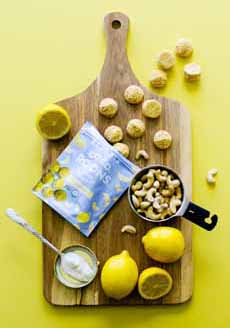
    If most marshmallows are “take it or leave it” to you; if you like artisan marshmallows; or if any marshmallow is a friend of yours; then we’d like to introduce you to Smashmallow (photo #1): commercially-distributed marshmallows in the artisan style.

    These commercially-produced marshmallows have all the appeal of artisan marshmallows handmade by confectioners.

    Just one piece is instant sweet-tooth satisfaction. Pluck one from the bag, or work it into a recipe (for example, photo #3—see the full list below).
     
    FAB FLAVORS

    Smashmallows are made with organic sugar and are all natural: no artificial ingredients, no GMOs. The flavors and colors (photo #2) are both delectable, in:

  • Cookie Dough
  • Crispy Cinnamon Churro
  • Espresso Bean
  • Meyer Lemon Chia Seed
  • Mint Chocolate Chip
  • Root Beer Float
  • Strawberries & Cream
  • Toasted Coconut Pineapple
  •  
    Upcoming holiday flavors include Pumpkin Pie and Sugar Cookie.

    The flavors have inclusions: bits of cookie dough, mini chips, shredded coconut, etc. And, the flavors are true flavors, not an “approximation,” for example, of what a root beer marshmallow should taste like.

    Manufactured in Pennsylvania, Smashmallows can be found at Target stores and Whole Foods Markets, on Amazon, and via the company website.

    These snacks are 80 calories per serving (one serving is four marshmallows), made with organic cane sugar and kosher gelatin. Marshmallows are a gluten-free food.

    Want some wine with that marshmallow? Smashmallow founder John Sebastiani, of the California wine business, suggests:

  • Dessert wine
  • Port
  •  
    Or, try your own favorite pairings; for example, Burgundy with a Cinnamon Churro Smashmallow.
     
     
    TOASTING YOUR SMASHMALLOWS

    Yes, they’re toastable. As opposed to many of us who like to catch the marshmallow on fire and make it extra toasty, even charred, you can preserve more of the lovely colors with the “low and slow” method:

    Hold the marshmallow 18 inches from the flame and rotate it to a slight melt or a light toast.

      Smashmallow Packages
    [1] Look for Smashmallow at Target and Whole Foods Markets (all photos courtesy Smashmallow).

    Smashmallow Marshmallows
    [2] From the bag: fun flavors, fun colors.

    Chocolate Dipped Marshmallows
    [3] One of the treats you can prepare with Smashmallows.

     
    WAYS TO USE SMASHMALLOWS

    Breakfast, Lunch & Dinner

  • Breakfast: Smashmallows melt well on hot cereal, waffles and pancakes. Cinnamon Churro is great here.
  • Breakfast beverages: Hot chocolate is obvious; but for a special treat, try marshmallows in lattes or other coffee drinks (especially Espresso Bean).
  • Casseroles: Smashmallows make the best sweet potato and marshmallow casserole. Try Cinnamon Churro or Toasted Coconut Pineapple.
  • Salads: Add marshmallows, cut into quarters (use a kitchen scissors dipped briefly in water) to fruit salads, or to green salads that contain fruit. Flavors like Strawberries & Cream Toasted Coconut Pineapple work well here.
  •  
    Desserts

  • Cakes: Garnish a layer cake or cupcake.
  • Dessert topping: Fine marshmallows could be the new whipped cream. Pair Strawberries & Cream with chocolate cake. Cinnamon Churro is great with apple pie. You can warm it, or let the heat from the warmed pie melt it a bit.
  • Fondue dippers: for chocolate fondue.
  • Garnish: Almost any flavor tastes great atop a brownie or cupcake.
  • Petit fours: Serve a plate of assorted flavors with after-dinner coffee.
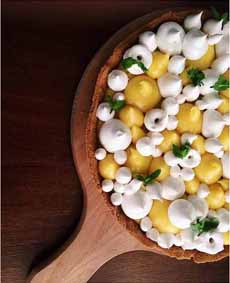
  • Pies: Make a pie topping from marshmallows. After you’ve baked your favorite custard, chocolate, or pumpkin pie, arrange gourmet marshmallows artistically on top. Bake the pie at 400°F for 5 to 10 minutes, or until the marshmallows are toasted.
  • S’mores: Smashmallows make the best s’mores you can imagine. Venture out beyond graham crackers and try, for example, chocolate wafer cookies with Strawberry & Cream marshmallows and a slab of white chocolate. We could write an article with our favorite variations, but pick your favorite ingredients—it’s that easy.
  • Sundaes: Substitute the maraschino cherry atop a sundae for a Smashmallow.
  •  
    Yes, you can still embellish with whipped cream, caramel or chocolate sauce.
     
     
    >>>THE HISTORY OF MARSHMALLOWS<<<   

    Comments off

    The Nibble Webzine Of Food Adventures
    RSS
    Follow by Email


    © Copyright 2005-2025 Lifestyle Direct, Inc. All rights reserved. All images are copyrighted to their respective owners.