THE NIBBLE BLOG: Products, Recipes & Trends In Specialty Foods


Also visit our main website, TheNibble.com.

Jones Turkey & Gravy Soda For Thanksgiving

In 2003 Jones Soda, a Seattle company known its bottle labels that feature photos found a way to Thanksgiving even more fun. They turned Thanksgiving dinner items into soda flavors. The limited-edition five-pack contained Turkey & Gravy Soda, plus four others that varied by year, including:

  • Cranberry Soda
  • Dinner Roll Soda
  • Fruitcake Soda
  • Green Bean Casserole Soda
  • Green Pea Soda
  • Mashed Potatoes & Butter Soda
  • Sweet Potato Soda…
  •  
    and last but not least,

  • Antacid Flavored Soda
  •  
    Although drinkable, these flavors were meant as a gag rather than a fantastic soda experience. It took until 2015 for the brand to issue a “legit” Pumpkin Pie soda (which is no longer in the holiday lineup).
     
     
    25TH ANNIVERSARY EXCITEMENT

    The Thanksgiving flavors have not been made for more than 10 years. But in honor of the brand’s 25th anniversary, Jones has released a limited-edition 35,000 bottle run of the famed Turkey & Gravy Soda.

    This “liquid entrée” is a limited edition that is already sold out on the company website.

    Jones Soda Turkey and Gravy Soda is available at more than 1,500 Kroger stores throughout the U.S., and at Albertsons Safeway stores in Oregon.

    In Canada, consumers can find the flavor at select Buy Low Foods, AG Foods, Nesters, Federated Coop Stores, Rabba and Little Short Stop stores.

    The return of Turkey & Gravy Soda is part of the Jones Soda special release program, which introduces a rotating series of new and retired flavors throughout the year.

    The program launched earlier this year with Special Release Birthday Cake Soda and Special Release Pineapple Cream Soda, two flavors from the brand’s archives that are frequently requested because of their fun taste profiles.
     
     
    CREATE PERSONALIZED BOTTLES

    Jones has a year-round program where you can create your own soda label, choosing from background choices Regular, Gender Reveal, Holiday, Pride, and Wedding. Choose from nine flavors, add a photo and text.

    Head to MyJones.com.


    [1] Have some mashed potatoes with your Turkey & Gravy soda (all photos © Jones Soda).


    [2] If you can get your hands on them, you might grace your table with “place setting” bottles instead of chocolate turkeys.


    [3] The original Thankgiving five-pack.


    Comments off

    Pumpkin Pizza Recipe With Bacon, Apples & Sage


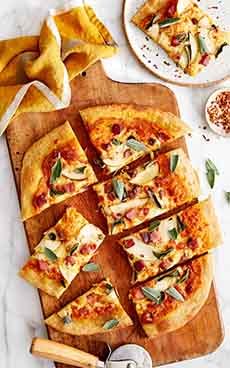
    [1] A special fall pizza with pumpkin purée, apples, bacon and sage (photos #1, #3 and #4 © Good Eggs).


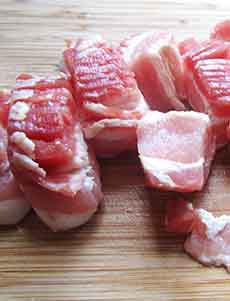
    [2] Cut and precook raw bacon. Fifteen minutes on the pizza isn’t enough to cook raw bacon (photo © Jami Lynn Gardner | CC-BY-NC-SA-2.0 License).

    Canned Pumpkin
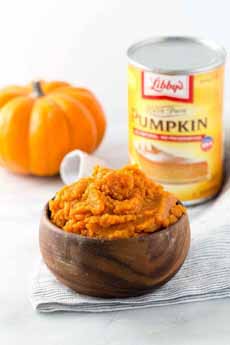
    [3] Pumpkin purée is not sweetened. That’s pumpkin pie filling. Be sure to buy purée (photo © Jessica Gavin Photography).


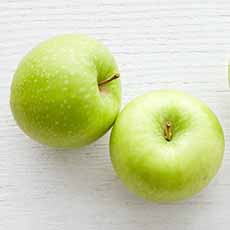
    [4] The sweet-tart Granny Smith is a perfect “pizza apple.”

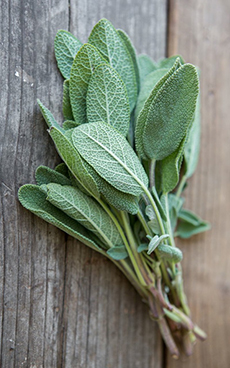
    A Bunch Of Fresh Sage
    [5] Fresh sage has a heavenly aroma and flavor.


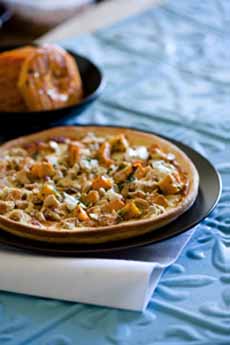
    [6] Butternut squash pizza, a white pizza variation with roasted butternut squash cubes, from pizza champion Theo Kalogaceros, (photo © Theo Kalogaceros).


    How about a special pizza for fall? This recipe, from Good Eggs, substitutes pumpkin purée for the tomato sauce and tops the pie with bacon, apples and fresh sage. The bright flavors create a special pizza experience for the harvest season.

    Be sure to purchase pumpkin purée, not pumpkin pie filling. The latter is sweetened and spiced.

    See uses for the leftover pumpkin purée and leftover sage, below.
     
     
    RECIPE: PUMPKIN PIZZA WITH BACON, APPLES & SAGE

    This recipe is for a 12-inch pizza. For a larger pie, increase the ingredients accordingly.

    Prep time is 20 minutes, cook time is 15 minutes.

    Ingredients

  • Pizza dough
  • 1-2 Granny Smith apples, based on size of pizza
  • 2 tablespoons olive oil, divided
  • 1 tablespoon fresh lemon juice
  • 2-3 garlic cloives
  • Fresh sage, to faste
  • Bacon, chopped and cooked
  • 1/2 cup pumpkin purée)
  • 1 cup shredded mozzarella cheese
  • Optional: grated nutmeg
  • Salt and freshly ground pepper
  • For pan: all-purpose flour
  •  
    Preparation

    1. PREHEAT the oven to 475°F. Line a sheet pan with parchment or foil. Set the pizza dough on the counter and let it come to room temperature.

    2. CORE and slice the apple. Toss the apple slices with 1 tablespoon olive oil and 1 tablespoon lemon juice.

    3. CHOP 2 to 3 garlic cloves. Pick some of the sage leaves, toss the stems, and tear the leaves. Roughly chop any larger pieces of bacon, as necessary.

    4. STIR together in a bowl ½ cup pumpkin purée with 1 tablespoon olive oil (for a 12″ pizza; double for a large pizza). Save any remaining purée for another use. Add the garlic and a pinch of grated nutmeg, and mix until combined. Season with salt and pepper.

    5. SHAPE the dough into a round n a lightly floured work surface. Use your hands or a rolling pin to gently stretch and flatten the dough into a 12-inch disc, about ¼ inch thick.

    6. TRANSFER the dough to the sheet pan. Spread with the pumpkin purée and sprinkle with the mozzarella. Scatter the apple slices over the top. Shower the bacon over the pie, along with half of the torn sage. (Use a light hand and leave some space between toppings, so you don’t weigh down the dough.)

    7. SET the pan in the oven and bake until the crust is lightly golden around the edges and the cheese is bubbly, 12 to 15 minutes.

    8. TRANSFER the pizza to a cutting board and cut it into wedges. Sprinkle with the remaining torn sage and serve warm.
     
     
    USES FOR LEFTOVER PUMPKIN PURÉE

    You can keep leftover pumpkin purée in an airtight container in the refrigerator for a week.

    If you can’t use it within that time, you can freeze it for up to a year. Seal the purée in a zip-top freezer bag and label it. and toss it into the freezer. If you want to pre-portion the purée, freeze it in an ice cube tray or a muffin tin. Once frozen, remove the cubes or pucks and store them in a freezer bag.

    Thanks to Taste Of Home for the tips!

    You can add pumpkin purée to cookies and bars, cheesecake, muffins and quickbreads. But these uses don’t require you to go out of your way:
     
    For Breakfast

  • Oatmeal: Stir pumpkin purée into oatmeal with a pinch of cinnamon, nutmeg and brown sugar.
  • Pancakes: Add pumpkin to your favorite pancake recipe, with a dash of pumpkin pie spice. Don’t forget the maple syrup!
  • Spread: Blend with cream cheese to top a bagel or toast.
  • Yogurt Parfait: Layer up yogurt, crunchy granola and your leftover pumpkin purée for a simple breakfast.
  •  
    For Beverages

  • Cocoa: Mix a dollop of pumpkin and a dash of pumpkin pie spice into a cup of hot cocoa.
  • Milkshake: Blend vanilla ice cream, milk, pumpkin and your favorite spices for a fall milkshake.
  • PSL: Add the purée to a mug of espresso or dark roast coffee, along with cinnamon, ginger and nutmeg and sweetener.
  • Smoothie: Add a few tablespoons to your next smoothie. Pumpkin is a great source of vitamins A and C, plus these health benefits.
  •  
    Dinner

  • Side Dish. Heat the purée and garnish with cinnamon or pumpkin pie spice, and a pat of butter.
  • Pudding. Mix in a sweetener (consider maple syrup instead of sugar) and pumpkin pie spice. Heat and serve with ice cream or whipped cream.
  •  
     
    USES FOR LEFTOVER SAGE

  • Chop and add it to grains, omelets, pasta sauce, salads.
  • Cover it in olive oil, refrigerate and use for sautes.
  • Freeze it in oil for future use.
  • Garnish soups.
  • Infuse honey, oil or vinegar.
  • Use as a plate garnish.
  • Make compound butter to use for other sauces and spreads.
  • Make sage pesto.
  • Mix into stuffing.
  •  
     
    > 50 MORE PIZZA RECIPES
     
     
    > THE HISTORY OF PIZZA


    Comments off

    The History Of Dessert For National Dessert Day


    [1] Simple but elegant: a layered pound cake with whipped cream and berries. Here’s the recipe (photo © The Baker Chick)

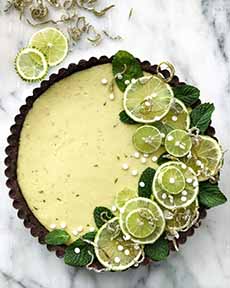
    A Key Lime Pie with a Chocolate Crust
    [2] Do you prefer a fancy tart or a simple piece of apple pie? Here’s the recipe (photo © The Lemon Apron).

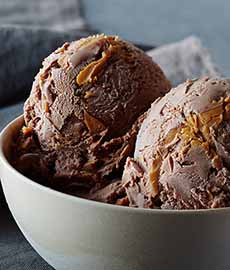
    Bowl Of Chocolate Peanut Butter Ice Cream
    [3] Gelato was invented in the 16th century; but it was so labor-intensive that only those with servants would have it. Here’s the history of ice cream (photo © Häagen Dazs).

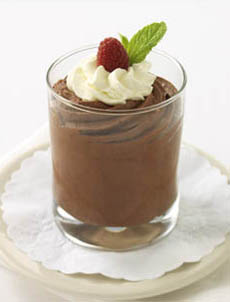
    A glass dish of chocolate mousse topped with whipped cream, a raspberry, and a mint leaf.
    [4] While savory mousse dishes appeared in France in the 16th century, sweet mousse recipes date to the second half of the 19th century (here’s the history of mousse). Chocolate pudding (and other cornstarch- and arrowroot-thickened puddings) appeared in the 19th century. Here’s the history (photo © Morton’s The Steakhouse).


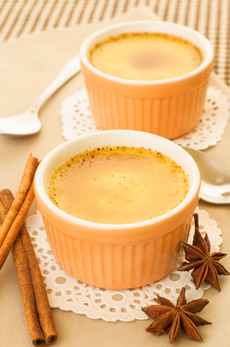
    [5] Baked custards, date to the Middle Ages, were thickened with eggs (photo © Xie Biyun | Fotolia).


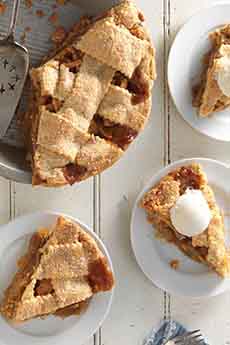
    [6] All-American apple pie with a lattice crust (photo © King Arthur Flour).


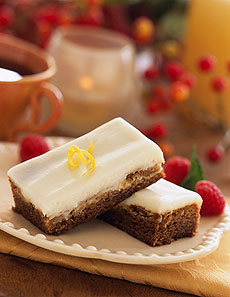
    [7] Gingerbread first appeared in 15th-century Germany. The spices were so costly that gingerbread was a special holiday confection. Here’s the recipe and the history of gingerbread (photo © McCormick).


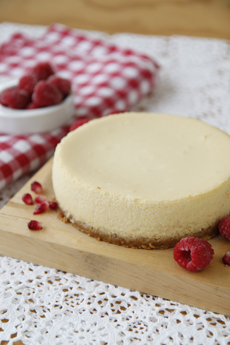
    [8] Savory cheesecakes were made as far back as ancient Greece. But the creation of modern, sweet, cream cheese-based cheesecake began in 1872 when cream cheese was invented by accident in New York. Here’s the history of cheesecake (photo by Elvira Kalviste | © THE NIBBLE).


    October 14th is National Dessert Day, September 4th is National Eat An Extra Dessert Day, and there are more than 200 other dessert holidays. All of them require sugar.

    So today, we focus on the origin of sugar today, because where would dessert be without it?

    > The history of sugar is below.

    > It’s followed by the history of dessert.

    But first, for your perusal:

    > The top 10 desserts in the U.S.

    > The year’s 200+ dessert holidays.
     
     
    WHAT IS DESSERT?

    Dessert can be a naturally sweet food like fruit, or a prepared confection: cakes, cookies, custards, fruit salads, gelatins, ice creams, pastries, pies, puddings, sweet soups, tarts, and more. Sometimes a sweet wine or liqueur is served; sometimes the dessert consists only of a glass of wine or liqueur. If you define dessert as a sweet course at the end of the meal, then dessert is a relatively recent concept, dating to the 17th century.

    There were fruits, but the truly sweet food started with honey, which was gathered by prehistoric man to please his sweet tooth.

    But sweet foods, from honey to dates to other fruits, were a long way from becoming “dessert.”

    Dried fruit and honey were probably the first sweeteners used in most of the world.

    Way back in ancient India and Mesopotamia, sweet foods—often dried fruits and nuts rolled in honey—were so valued that they were left at altars to the gods [source].

    The Persians loved their sweets. Herodotus (484 to 425 B.C.E.), the Greek historian who wrote extensively on the Persian Empire, noted that the main Persian meal was simple, but the Persians would eat many sweet foods afterward [source].

    The oldest written reference to honey dates back to Egypt in 5500 B.C.E., and references to honey abound in antiquity.

    But honeybees are far older than man’s historical record—written, painted, or otherwise. Honeybees originated in Southeast Asia some 40 million years ago. Apis mellifera, known as the Western honeybee, probably originated in Tropical Africa and spread from there, north to Europe and east to Asia.

    So Africans, Middle Easterners, and Europeans had their honey until sugarcane arrived. The spread of sugarcane around the world was essential to the development of dessert.
     
     
    THE HISTORY OF SUGAR

    Sugarcane was originally domesticated around 8000 B.C.E. in New Guinea, an island in the eastern Malay Archipelago, north of Australia.

    Originally, people chewed on the raw sugar cane stalks to enjoy the sweetness of the juice inside.

    From New Guinea, knowledge about sugarcane slowly spread east across Southeast Asia until it reached what is now India, where the first organized production of sugar began [source].

    Refined sugar appears around 500 B.C.E., when residents of India began to make sugar syrup from the cane juice.

    They heated, then cooled it to form crystals that were easier to store and transport than the cane juice. These crystals were called khanda, which is the source of the word candy.

    Sugar and sugarcane were traded, making sugar available to Macedonia by 300 B.C.E. and to China by 600 C.E.

    In the 6th century B.C.E., the Persians invaded India and marveled at the “reed which gives honey without the need for bees” [source].

    In the reign of Alexander the Great in the 4th century B.C.E., sugarcane reached the Middle East, where it became a crop.
     
     
    SUGAR COMES TO EUROPE

    Sugar was little known and rare in Europe until the twelfth century or later, when the Crusades and then colonization spread its use.

    Europeans began to manufacture sugar in the Middle Ages, and as sugar became more affordable, more sweet desserts became available.

    In the Middle Ages in England, France, Italy, and other countries in Europe, dessert as a sweet course following a savory meal still didn’t exist.

    Medieval Europeans sweetened their food with honey up to the eleventh or twelfth century. When sugar arrived in 12th century Europe, it was so costly that only the wealthy could indulge, and usually on special occasions like banquets.

    There was still no tradition of a dessert to conclude a meal, either in Europe or other parts of the world [source].

    Yes, sweets were around: candied nuts and fruits, and other candies and confections.

    But even among the elaborate meals of the wealthy where there was plenty of sugar, there was little order to the incorporation of sugar in the procession of a meal—with an emphasis on order.

    At the banquet table, sweet cakes, pastries, custards, jellies, candied nuts, fruits and flowers, and other sweets were interspersed with the courses of meats, seafood and vegetables.

    These sweets served as palate cleansers between courses, and were believed to be effective digestive aids and fending off “dispelling wind,” as noted by one particularly eloquent 17th-century Frenchman [source].

    Perhaps most disturbing to modern palates, sugar was used as a seasoning for savory dishes!

    Sprinkling sugar on a stew or a cooked bird, or presenting a course of eel in marzipan or in sweet custard, were ways to flaunt one’s wealth.

    Sugar may not have been the tastiest garnish for savory foods, but it looked and tasted “rich,” if not particularly delicious.

    Like all trends, it wouldn’t last forever, but sugar in sweet dishes—cakes, custards, pies, puddings, etc.—remained a status symbol.

    And talk about status: The creation of large sugar sculptures to grace a feast was first created for a ball in honor of Henri III of France at the Palazzo Ducale in Venice, in 1574.

    That’s a fortune in pricey sugar. (We’re guessing that after the banquets, it was recycled back into the kitchen.)

    We had to wait another century for the concept of dessert as a course began to emerge. Until then, let’s take a look at:
     
     
    SUGAR COMES TO THE AMERICAS

    From the late 15th century, shortly after Christopher Columbus’ first voyage to America in the 15th century, sugarcane plantations were developed in the West Indies and then in South America, particularly in Brazil.

    Sugar became the top colonial commodity, planted and harvested by enslaved Africans. This sugar harvest supplied Europe.

    In 1757, beet sugar was discovered by Andreas Sigismund Marggraf of Berlin, who was a pioneer of analytical chemistry.

    But it was not turned into a financially viable crop.

    In the early 19th century, England enacted a blockade on sugar from the West Indies, following England’s abolishment of slavery.

    Napoleon ordered sugar beet to be grown on French soil. In 1811, the first economically viable sugar beet processing plant was built in France.

    European-grown beet sugar became affordable and widely consumed by the late 19th century [source].

    Now, back to dessert.
     
     
    DESSERT BECOMES A COURSE

    According to Saveur, dessert as a distinct course may owe its birth to the salons that began in the late Renaissance, where people of culture and means would gather to drink tea and chat.

    Their chefs took the opportunity to prepare single-portion sweets to accompany the tea. Thus, èclairs, petit-fours, and tartlets became popular—and an avenue to eat indulgent cakes and pastries outside of throwing a party.

    At the same time, a developing trend toward dinner service away from “service à la française,” French-style service, which involved setting a variety of dishes on the table at the same time, toward “service à la russe,” Russian-style service, which presents a meal in courses.

    Service à la russe often culminated in a final dessert dish of a small pastry with a cup of tea or coffee.
     
     
    THE WORD “DESSERT”

    The word “dessert” derives from the French word desservir, meaning “to clear the table.” The term first appears in the 16th century.

    It referred to a course that was served after the table had been cleared of other dishes.

    In France, this might have been a sweet course; but it should be noted that instead of a sweet ending to a daily meal, the French often ended their meal with a cheese course, with sweetness perhaps from fresh or dried fruits. Sweet baked desserts were often reserved for Sunday meals and special occasions.

    The first known use of the term “dessert” in English was in 1600. It appeared in a health education manual entitled “Naturall and artificial directions for health deriued from the best philosophers, as well moderne, as auncient” By William Vaughan, Master of Artes, and student in the ciuill law. Natural and Artificial Directions for Health,” by William Vaughan.

    Yes, that’s the spelling.

    You can read parts of it here.

    Happy National Dessert Day!


    CHECK OUT WHAT’S HAPPENING ON OUR HOME PAGE, THENIBBLE.COM.


    Comments off


    © Copyright 2005-2026 Lifestyle Direct, Inc. All rights reserved. All images are copyrighted to their respective owners.