THE NIBBLE BLOG: Products, Recipes & Trends In Specialty Foods


Also visit our main website, TheNibble.com.

Delicious Fig Recipes For National Fig Week


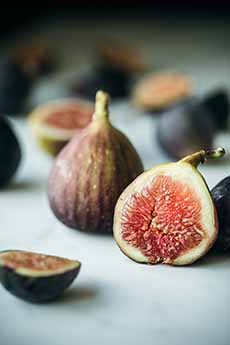
[1] Brown Turkey figs are available fresh from California (photo © Heather Barnes | Wesual | Unsplash).


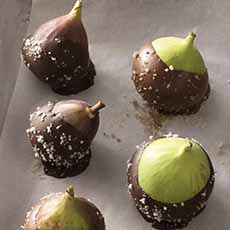
[2] Chocolate-covered figs: Delicious for entertaining and gifting (photo © California Figs).


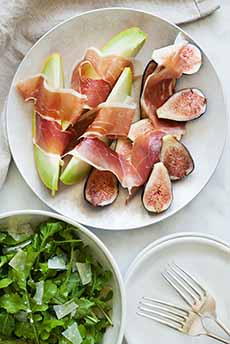
[3] A classic appetizer: melon with figs and prosciutto (photo © Good Eggs).


[4] America’s best-known fresh fig varieties: Brown Turkey, Calimyrna, Kadota, and Mission (photo © California Figs).

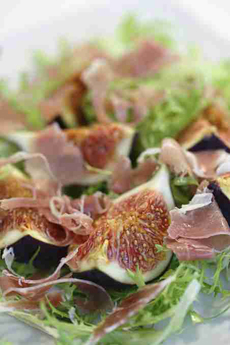
Frisee Fig Salad
[5] Another classic salad with figs: frisée and prosciutto, but you can substitute bacon lardons (photo © Stock Xchange).


[6] For a cheese course: blue cheese with honey and hazelnuts (photo © The French Farm).


[7] Appetizer bites: dried fig, jalapeño, and fig (photo © California Figs).


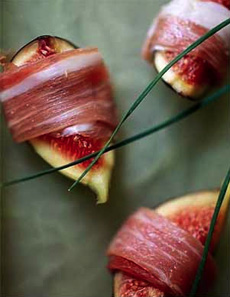
[8] An easy hors d’oeuvre or snack: prosciutto- or -bacon-wrapped figs (photo © Canard).


[9] Eggplant stuffed with figs and leek. Here’s the recipe (photo © G Free Foodie).

Lamb Chops Roasted Figs Recipe
[10] Lamb chops with roasted figs (photo California Figs | Facebook).


Updated August 2026

National Fig Week is the first week in November. Dried figs are available year-round, but fresh figs from California are available only from mid-May through November. So gather ye figs while ye may!

One of the simplest desserts, enjoyed since ancient times, is fresh figs with honey. It couldn’t be easier: just decide how many figs you want to serve to each person (we serve three or four, depending on size), and plate them with a drizzle of honey.

Other decisions: Should you serve just one variety of fig, or three different ones: a black Mission fig, a green Adriatic fig, and a brown turkey fig, for example.

You can garnish one with chopped hazelnuts, one with pistachios, and one with almonds.

Next question: With or without cheese? Figs, honey, and nuts are natural pairings with cheese. Some cheese lovers call it one of the world’s great desserts—and you don’t have to cook a thing!

Another question: Fresh figs have two distinct seasons each year. The first short breba crop† arrives in late May through June, while the larger, primary harvest runs from August through October. So why is National Fig Week in November? See the ‡footnote.

Below:

> Some favorite fig recipes.

> Fig nutrition.

> The history of figs.

> Fig trivia: growing, cooking, and eating figs.

> The year’s fig holidays.

Elsewhere on The Nibble:

> Types of figs, and ways to use figs at every meal.

> Ways to use dried figs.

> Divina fig spreads, and way to use fig spreads.

> The year’s 80 fruit holidays.
 
 
MORE DELICIOUS FIG RECIPES

Figs are often thought of for sweet recipes: fig scones, tarts, chocolate truffles, and of course, figgy pudding, a popular Christmas pudding.

Figs, fresh or dried, are delicious in yogurt or in hot or cold breakfast cereals.

Figgy foods aren’t just for sweet dishes. Figs are often cooked with pork, lamb, and even on pizza. Add them to stuffing; and whenever a recipe calls for prunes, you can substitute figs.

  • Arugula & Fig Salad With Popcorn
  • Brie Torte With Fig Jam
  • Chestnut, Fig & Honey Stuffing
  • Chocolate Covered Figs
  • Dried Chocolate Dipped Figs
  • Fig & Brie Bruschetta
  • Fig & Maple Fizz Cocktail
  • Fig, Goat Cheese & Pancetta Crisps
  • Figgy Blue Cheese Bacon Bites
  • Fig Panna Cotta
  • Grilled Halloumi Cheese With Figs
  • Pasta With Fig Soffrito & Parmesan
  • Pasta With Prosciutto & Goat Cheese-Fig Sauce
  • Pickled Figs
  • Prosciutto & Fig Appetizer Pinwheels
  • Roast Figs, Honey & Chopped Hazelnuts
  • Roast Loin Of Pork With Gingered Figs & Jalapeños
  • Ways To Use Dried Figs
  • Ways To Use Fig Spreads
  • Ways To Use Fresh Figs
  •  
     
    FIG NUTRITION

    Figs are a naturally fat-free, cholesterol-free food. They are an excellent source of vitamin A, along with B6, and K.

    They are also rich in minerals including calcium, magnesium, and potassium.

    Figs are high in soluble fiber (which makes them a natural laxative, like prunes).

    A half cup of figs has as much calcium as a half cup of milk.

    Ounce for ounce, figs have more fiber than prunes and more potassium than bananas.

    One medium (2¼ inch) fig contains 37 calories.
     
     
    THE HISTORY OF FIGS

    Fossils of common fig (Ficus carica), dating to about 9400 B.C.E. have been found in an early Neolithic village near Jericho, in the West Bank.

    Based on this find, fig cultivation in the Fertile Crescent precedes the domestication of barley, legumes, and wheat, and may thus be the first known instance of agriculture*.

    By the time of the Bible, figs had been cultivated for thousands of years (some Biblical scholars believe that figs were actually the forbidden fruit in the Garden of Eden).

    Figs may have been the first crop* cultivated—perhaps first in Egypt. From there they spread to Crete and around the 9th century B.C.E., to Greece, where they became a staple.

    In the millennia before Europe and the Middle East had access to cane sugar or beet sugar, figs were used, in addition to honey, as sweet snacks and in cakes, puddings, and other desserts.

    Figs were brought from Asia Minor to Greece and Rome, then throughout the Mediterranean, and east to India. Figs spread throughout the Mediterranean.

    The ancient Greeks loved figs so much that they enacted a law forbidding the export of the best quality figs (in the ancient world, at least 29 varieties of figs were cultivated).

    Figs trees can produce two crops a year in warm climates, and became common food. In 160 B.C.E., Cato the Elder wrote of several different varieties that were grown in his area.

    A fun fact for foie gras lovers: The Romans used figs to fatten geese for an early version of foie gras.

    From the 15th century onwards, figs were growing in Northern Europe (although yielding just one crop a year in cool climates).

    The word fig, first recorded in English in the 13th century, derives from the Old French figue, from the Occitan (Provençal) figa, from the Classical Latin ficus (fig or fig-tree). (Go back far enough and almost every word in the English language derives from Latin or Greek.)
     
     
    Figs In The New World

    Figs arrived in the New World around 1520, with Spanish explorers. When Spanish missions were established in what is now southern California, the Franciscan priests cultivated planted fig trees.

    The missionaries brought a variety of figs from southern Spain to southern California. By the 1760s, they had planted them up and down the California coast.

    The priests at Mission San Diego originally planted a Spanish fig variety in 1769. This dark purple fig, grown on the property of missions, became known as the “Mission” fig.

    In the 1850s, settlers and Gold Rush participants brought other varieties to California: from the East Coast of the U.S., Europe, Asia, and Africa.

    California, particularly central California, had an ideal climate for figs. It became America’s primary fig-growing region [source].
     
     
    Figs Today

    Today, Turkey is the world leader in fig production and consumption. The rest of the Top 10 are, in order, Egypt, Morocco, Iran, Algeria, Greece, Syria United States, Spain, and Tunisia,

    Nearly all of the figs in the U.S. are grown in California, which has an ideal climate for fig cultivation: 100% of the nation’s dried figs and 98% of the fresh figs.

    The large commercial crops in California comprise six fresh and two dried types.

  • The dried varieties are Golden and Mission figs. The Golden dries to an amber-colored, slightly nutty-flavored fig; and the dark purple Mission fig is the sweetest.
  • The fresh varieties are Brown Turkey (purple with brown highlights), Kadota (green), Mission (purple-black), Sierra (green), and Tiger (green striped).
  •  
    There are more than 7,000 acres dedicated to fig growing in the state.
     
    Learn more about them and find many recipes from the California Fig Commission.
     
     
    FIG TRIVIA: GROWING, COOKING & EATING

    Thanks to Valley Fig Growers of California for these fun fig facts.
     
    Growing Figs

  • The fig is not actually a fruit. It is an inflorescence, a cluster of many inverted flowers and seeds contained inside a bulbous stem. The seeds are technically the ovaries of the fig.
  • There are more than 700 types of fig trees, but only a fraction of them produce the kind of fig that humans consume.
  • Fig trees have no blossoms on their branches. The blossom is inside of the fruit! Many tiny flowers produce the crunchy little edible seeds that give figs their unique texture.
  • Fresh figs are fully ripened on the tree. Dried figs are partially dried on the tree.
  • The fig tree was a classic symbol of abundance, fertility, and sweetness.
  •  
     
    Cooking With Figs

  • Figs naturally help hold in moisture in baked goods, keeping them fresher.
  • Fig purée can be used to replace fat in baked goods.
  •  
    Eating Figs

  • The early Olympic athletes used figs as training food. Figs were also presented as laurels to the winners, becoming the first Olympic “medal.”
  • In Roman times figs were considered to be restorative. They were believed to increase the strength of young people, maintain the elderly in better health, and make them look younger with fewer wrinkles. Source: Pliny the younger (61-113 C.E.).
  • The first commercial product made with figs was Fig Newtons cookies, in 1892.
  •  
     
    THE YEAR’S FIG HOLIDAYS

  • National Fig Week: November 1-7
  • National Fig Newton Day: January 16
  •  
    Someone needs to create National Fig Spread Day!

    While there are not yet designated holidays for jam, preserves, or spreads, there are:

  • National Peanut Butter & Jelly Day: April 2
  • National Jelly-Filled Doughnut Day: June 8
  •  
    ______________

    *Agricultural historians believe the order of cultivation to be figs, wheat, and barley, grapes, olives, sugar, tea, rice, and sesame. Different historians have different orders, and archeological digs regularly reveal new information.

    †A breba crop is the first, early harvest of figs that appears in late spring or early summer. These figs grow on the previous year’s woody shoot growth (old wood) rather than on the new branches that grow in the current year. Breba derives from the Spanish word breva, meaning brief, bestowed by the Spanish Franciscan missionaries who first planted figs at Mission San Diego de Alcalá in California between 1768 and 1769. They planted the dark-skinned variety now known as the Mission fig.

    ‡National Fig Week celebrates figs in general—fresh, dried, preserved, and used in recipes. Even though fresh fig season typically runs from May through October, depending on variety and location, November actually makes some practical sense. Fresh figs are highly perishable but dried figs and fig products—fig preserves, cookies, jams, and others—are available year-round. Also, figs are popular in late-fall and holiday cooking: baked goods, cheese boards, savory dishes, and desserts. National Fig Week is a way to kick off the holiday season with fig-based foods.
     

    CHECK OUT WHAT’S HAPPENING ON OUR HOME PAGE, THENIBBLE.COM.


    Comments off

    Advent Calendars: Delightful Holiday Gifts That You Need To Buy Now

    We love Advent calendars, both giving them and receiving them. But they’re not a last-minute gift: You need to give them to the recipients before December 1st. That’s why for the past few years, we’ve turned to giving them to our loved ones at Thanksgiving dinner. We would spend hours poring over websites to find the right calendar for each person. This year, Aldi has made it oh-so-easy for us, as you’ll see below.

    The 2021 wine and beer Advent calendars (which are the priciest) have already been released*. Others start rolling out tomorrow, November 3rd, which is National Advent Calendar Day.

    “Rolling out” means that not all calendars will be available on November 3rd, so you may have to come back. However, anyone who shops at one of the 2,100-plus Aldi stores in the U.S. is probably a “regular.”
     
     
    THE HISTORY OF THE ADVENT CALENDAR

    The Advent calendar dates to the beginning of the 19th century, when German Lutherans made chalk marks on doors or lit candles to count down the days leading up to Christmas: the fourth Sunday before Christmas through Christmas Eve.

    Early versions were homemade and simple: Families would mark chalk lines on doors, light candles, or hang religious pictures, one for each day.

    The first-known commercial Advent calendar is from 1851, appearing in a children’s book by Elise Averdieck.

    One origin story credits Gerhard Lang (1881-1974) as the inventor of the printed Advent calendars, beginning in 1904.

    Lang’s calendar was inspired by one that his mother had made for him: 24 cookies (some say candies) sewn onto the lid of a box. He was allowed to eat one of them every day during the Advent period. Other parents created their own handmade versions.

    Remembering mom’s cookie countdown, Lang created a pilot calendar in 1904. He printed calendars with small colored pictures that children could attach to a cardboard backing—one picture per day. The first printed, commercially distributed Advent calendar debuted in 1908 [source].

    The calendars became commercially viable and were made with both religious and non-religious themes.

    The now-familiar format with little doors that opened out for the reveal appeared in the 1920s.

    Religious calendars typically counted down each day with a prayer or spiritual imagery—nativity scenes, angels, and biblical verses behind each door.

    Secular versions for children had pieces of candy or tiny toys.

    These first Advent calendars were called “Nicholas calendars,” since they were given out on December 6th, St. Nicholas’ Day.

    Then, calendars were made to begin on December 1st and were called “Christmas calendars.” These typically didn’t follow the full four-week period of Advent, because the date varies in any particular year, which can range from November 27th to December 3rd.

    Instead, they marked the 24 days leading up to Christmas.
     
     
    The Name “Advent Calendar” Appears

    The name “Advent calendar” was established when some calendars were published with the annually variable number of Advent days [source].

    Advent, from the Latin word adventus, means “coming.” It’s a time of waiting and preparation for the celebration of the Nativity of Jesus, on Christmas Day.

    The fun of modern Advent calendars is opening one of the 24 closed windows/doors, that mark each day until Christmas. Young or old, opening the daily window has anticipation and surprise.

    After World War II, the tradition spread beyond Germany. In the 1950s, a man named Richard Sellmer began mass-producing Advent calendars and exporting them internationally, which helped popularize them worldwide.

    The 1950s also saw the introduction of chocolate-filled calendars, which became hugely popular.

    President Dwight Eisenhower is credited with giving Advent calendars a huge popularity boost in the U.S. when national newspapers published a photograph of him opening one with his grandchildren in 1953.

    For most of its history, the Advent calendar was targeted to children. The surprises behind the window were a piece of candy, a charm, a mini toy, or a holiday-themed image (Santa, Rudolph). There are still inspirational versions. The calendars can be basic or very elaborate.

    In recent years there’s been a trend to adult-appropriate Advent calendars, that focus on bottles of beer or wine, fine chocolates, coffee and tea, and even beef jerky.
     
     
    ALDI ADVENT CALENDARS

    OMG: The Advent calendar choices are so great at Aldi, we need to go nowhere else. But caveat emptor: Some sell out quickly.

    Some calendars have windows for the full 24 days, while others are for 12 days. The Sparkling Wine Countdown To The New Year has seven 187ml bottles of wine. Take your pick of 26 calendars:
     
     
    Beverage & Cheese Advent Calendars

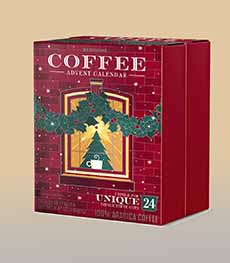
  • Barissimo Coffee Advent Calendar ($9.99)
  • Beer Advent Calendar ($49.99; in select markets)
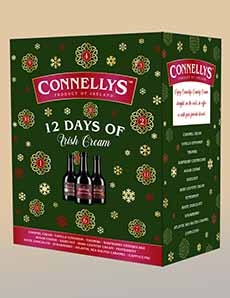
  • Connellys 12 Days of Irish Cream ($29.99)
  • Emporium Selection Cheese Advent Calendar ($14.99)
  • Sparkling Wine Countdown to the New Year ($29.99) 
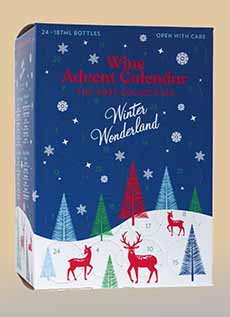
  • The 2021 Collection Wine Advent Calendar ($59.99)
  •  
     
    Chocolate Advent Calendars

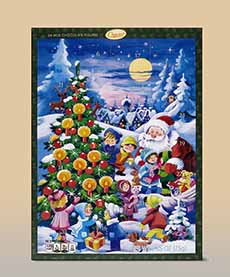
  • Choceur Advent Calendar ($1.49) 
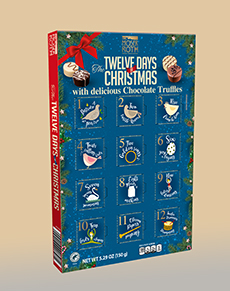
  • Moser Roth 12 Days of Christmas Advent Calendar With Truffles ($4.99)
  • Moser Roth 24 Days of Christmas Nutcracker Advent Calendar With Chocolates and Truffles($8.99) 
  • Moser Roth Luxury Chocolate Advent Calendar ($14.99)
  •  
     
    Personal Care Advent Calendars

  • Bee Happy Craft Advent Calendar ($12.99)
  • Huntington Home Advent Calendar Candle ($4.99)
  • My Beauty Spot 12 Days of Bath Fizzers ($12.99) 
  •  
     
    Pet Advent Calendars

  • Pure Being Cat Advent Calendar ($5.89)
  • Pure Being Dog Advent Calendar ($5.89)
  •  
     
    Toy Advent Calendars

  • Lego City Advent Calendar ($29.99)
  • Lego Friends Advent Calendar ($29.99)
  • Lego Marvel Avengers Advent Calendar ($39.99)
  • Lego Star Wars Advent Calendar ($39.99)
  • Mattel Cars Advent Calendar ($16.99) 
  • Mattel Polly Pocket Advent Calendar ($16.99) 
  • Mattel Kids Toys Advent Calendar ($24.99) 
  • Merry Moments My Friend Gnome Kit ($24.99; limit one per customer) 
  • Nickelodeon Paw Patrol Advent Calendar ($19.99)
  • Warner Brothers Elf Advent Calendar ($29.99)
  • Warner Brothers Christmas Story Advent Calendar ($29.99)
  •  
    Personally, we’ll take the sparkling wine!


    [1] Twelve days of chocolate (all photos © Aldi).


    [2] Twenty-four different cups of arabica coffee await brewing.

    ]
    [3] Twelve days of different Irish cream liqueurs: caramel, hazelnut, white chocolate, and nine more.


    [4] Twenty-four milk chocolate figures.


    [5] Twenty-four different 187ml bottles of red and white wines.


    [6] Cheers and beers: 24 bottles from 11.2 ounces to 12 ounces.


    [7] Seven bottles of sparkling wine—including cava, prosecco, moscato, and others—celebrate the countdown to the New Year.

     
    ________________

    *For wine and beer calendars, note that not all states or municipalities allow alcohol sales at grocery stores.


    CHECK OUT WHAT’S HAPPENING ON OUR HOME PAGE, THENIBBLE.COM.


    Comments off

    Cinnamon Raisin Bread Recipe For National Raisin Bread Month


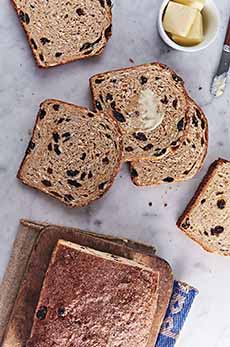
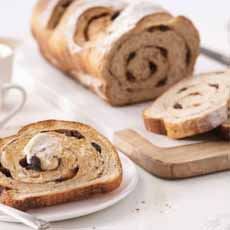
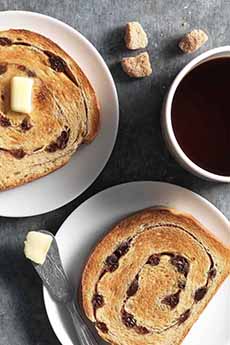
    [1] The recipe for this cinnamon raisin bread is below (photos #1, #2 and #3 © King Arthur Baking).


    [2] A different take on raisin bread has a cinnamon swirl running through the loaf.


    [3] Raisin bread makes truly delicious toast.


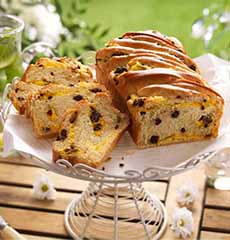
    [4] This raisin cheese bread is an Easter special at St. Pierre Bakery. Here’s an old recipe, made with Muenster cheese (photo © St. Pierre Bakery).

    Turkey Cheddar Sandwich
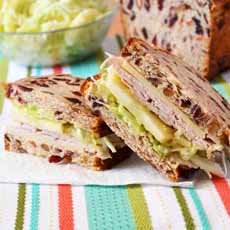
    [5] Raisin bread is different with different sandwich fillings. Here, turkey and cheddar (photo © A Beautiful Mess).


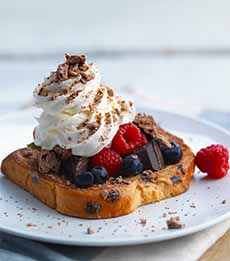
    [6] A sundae set atop toasted raisin bread (photo © St. Pierre Bakery | Facebook).


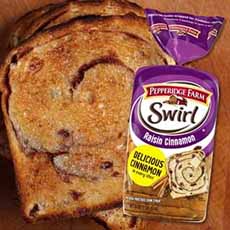
    [7] Don’t want to bake? Brands like Pepperidge Farm sell raisin bread year-round (photo © Harris Teeter).


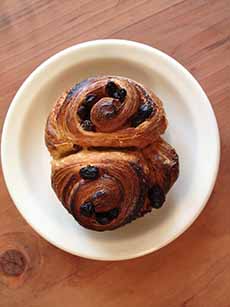
    [6] Beyond raisin bread: raisin danish, raisin bagels and so much more (photo of pain au raisins © Le Marais Bakery | San Francisco).


    We grew up on raisin bread: raisin bread toast at breakfast with melting butter, raisin bread French toast with maple syrup on the weekends. For lunch, cream cheese raisin bread sandwiches, chicken salad with apples and cashews on raisin bread, or peanut butter or Nutella on raisin bread, grilled cheese or ham and cheese with Brie or Gruyère. Raisin bread pudding for dessert.

    Often Mom added chopped walnuts to the cream cheese. And then there was bread pudding. November is National Raisin Bread Month, and we’re waxing nostalgic.

    Cheese. As an adult, we’ve expanded our repertoire. We serve quartered slices toasted, with a cheese plate. We make raisin bread panini with goat cheese, cream cheese or mascarpone, and raspberry jam.

    Dessert. If you bake a loaf, you can cut thick slices and toast them, and serve them like toasted pound cake, topped with vanilla ice cream, caramel sauce, and toasted pecans (photo #6). You can also serve those toast points with chocolate fondue.

    Salad. You can cut and butter thick-sliced raisin bread, cut them into crouton cubes, and bake them in the oven (about 20 to 25 minutes at 375°F). Then, add them to a green salad with goat cheese, apples, beets, and toasted pecans—that is, if you haven’t already munched them all before they’ve even cooled.

    Panzanella. You can make raisin bread panzanella (bread salad), although we’d suggest using half raisin bread and half rustic loaf.

    It’s easy to head to the market and purchase a loaf of raisin bread

    Want to bake your own? A recipe for cinnamon raisin bread, courtesy of King Arthur Baking.

    > The recipe is below.

    > September 15th is National Cinnamon Raisin Bread Day and November is National Cinnamon Bread Month.

    > The year’s 20+ bread holidays.

    > The history of bread.

    > The history of raisin bread is below.

    > The different types of bread: a photo glossary.
     
     
    TYPES OF RAISIN BREAD

    There are different types of raisin bread. They all include raisins and most have cinnamon, but after that, anything goes.

  • It can be white flour, whole wheat flour, —just about any type of flour.
  • It can be an egg dough, like brioche or challah.
  • Some recipes add a sweetener, such as brown sugar or honey.
  • Some are made richer with butter and/or eggs. Guinness raisin bread is also popular.
  • Some include nuts. Hazelnuts, pecans and walnuts work best.
  • Some add rum or other whiskey, for French toast or dessert.
  • We’ve even seen a raisin-cheese loaf (photo # 4).
  •  
     
    RAISIN BREAD HISTORY

    Raisin breads have been made in Europe since at least the 15th century. Some oldies: Danish kringle, Greek stafidopsomo, and Slovakian vianocka, for example.

    Raisins were important in holiday breads: Christmas breads such as German stollen and Italian panettone and pandoro; Easter breads like Russian kulich. Some bakers also added raisins to the Jewish Sabbath bread, challah.

    Raisins made their way into smaller sweet breads, like hot cross buns; and into raisin danish and French pain aux raisins. And in the U.S.: raisin bagels!

    The earliest citation for “raisin bread” in the U.K. is in the Oxford English Dictionary, which cites an 1845 article in Blackwood’s Edinburgh Magazine. Raisin bread became a common element of afternoon tea in the second half of the 19th century [source].

    In the U.S., the first mention of raisin bread may have been regarding Henry David Thoreau (1817-1862), of Walden Pond, Concord, Massachuseetts. He baked his own bread, always experimenting with the recipe. When he added raisins to his dough, “Concord housewives were reportedly shocked at the innovation[s].” [source]

    Subsequent sources named him, incorrectly, as the inventor of raisin bread.

    Searching through different sources, the earliest citation we could find, which implies that raisin bread was well known by then, is:

    Raisin Cinnamon Toast. Cut slices of raisin bread half an inch thick; beat two tablespoons of butter to a cream and gradually beat into it half a cup of sugar mixed with half a teaspoon of ground cinnamon and beat until creamy; spread on the slices of raisin bread: place the bread slices on a baking pan and set in a hot oven until lightly browned. Serve hot. Los Angeles Times, March 5, 1924 [source]
     
     
    RECIPE: CINNAMON RAISIN BREAD

    This recipe mixes the cinnamon into the main batter (photo #1), instead of swirling the cinnamon and raisins (photo #2).

    Prep time is 15 minutes, total rising time is 3-1/2 to 4 hours, bake time is 40 to 45 minutes.

    > If you’d rather have a cinnamon swirl recipe, here’s one.

    > And here’s a recipe for brown bread with Guinness and raisins (no cinnamon).

     
    Ingredients For 1 Loaf

  • 3/4 cup (170g) lukewarm milk
  • 2 tablespoons (28g) butter, softened
  • 1/2 cup (85g) raisins (or chopped dates, dried cranberries, or your favorite dried fruit)
  • 1/2 cup (45g) old-fashioned rolled oats
  • 1/4 cup (50g) brown sugar, packed
  • 1-1/4 teaspoons (8g) salt
  • 1 teaspoon cinnamon
  • 2-1/2 teaspoons instant yeast, we recommend SAF Gold instant yeast for the fastest rise
  • 1/4 to 1/3 cup (57g to 74g) lukewarm water*
  • 3 cups (360g) unbleached all-purpose flour
  • Cinnamon sugar
  •  
    Preparation

    1. WEIGH the flour, or measure it by gently spooning it into a cup, then sweeping off any excess. Combine all of the ingredients, and mix and knead — by hand, mixer, or bread machine set on the dough cycle — to make a smooth, soft dough.

    2. ROUND the dough into a ball, and place it in a greased bowl (or let it remain in the bread machine). Let it rise for about 2 hours, or until it’s noticeably puffy though not necessarily doubled in bulk.

    3. GENTLY DEFLATE the risen dough, shape it into a log, and place it in a lightly greased 8 1/2″ x 4 1/2″ loaf pan. Tent the pan with lightly greased plastic wrap, and let the dough rise until it has crowned 1″ to 1 -1/2″ over the rim of the pan, about 1-1/2 to 2 hours. Towards the end of the rising time, preheat the oven to 350°F.

    4. UNCOVER the risen loaf, brush it with milk or water, and sprinkle it with cinnamon sugar for extra flavor.

    5. BAKE the bread for 40 to 45 minutes, until it’s a deep golden brown and a digital thermometer inserted into the center registers at least 190°F. If the bread appears to be browning too quickly, tent it with aluminum foil about 10 to 15 minutes before it’s done baking.

    6. REMOVE the bread from the oven. After 5 minutes, turn it out of the pan onto a rack to cool. Once it’s completely cool, wrap well, and store at room temperature for up to 5 days. Freeze for longer storage.
     
     
    ________________

    *Use the smaller amount in summer, or under humid conditions; use the larger amount in winter, or when it’s dry outside.


    CHECK OUT WHAT’S HAPPENING ON OUR HOME PAGE, THENIBBLE.COM.


    Comments off


    © Copyright 2005-2026 Lifestyle Direct, Inc. All rights reserved. All images are copyrighted to their respective owners.