THE NIBBLE BLOG: Products, Recipes & Trends In Specialty Foods


Also visit our main website, TheNibble.com.

Pumpkin Manicotti Recipe For Fall, Halloween & Thanksgiving


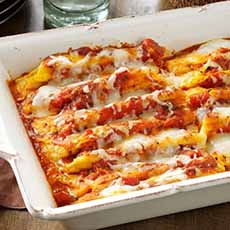
[1] Pumpkin manicotti: comfort food for fall and winter (photo © Taste of Home).


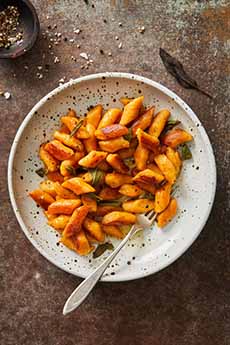
[2] Pumpkin gnocchi with butter sage sauce. Here’s the recipe (photos #1, #2, #3, #4, #5, #6, #7 © DeLallo).


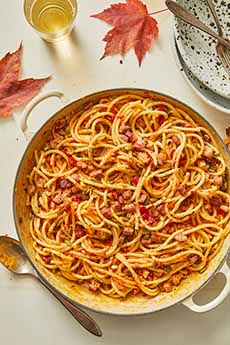
[3] This spicy pumpkin carbonara recipe is made with bucatini—thick spaghetti with a hole in the center. But you can substitute your ribbon pasta of choice. Here’s the recipe.

Pumpkin Fettuccine Alfredo
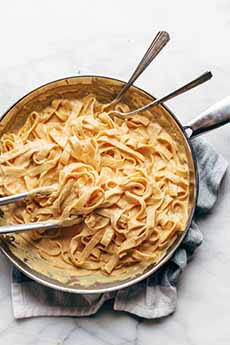
[4] How about some pumpkin fettuccini Alfredo? Here’s the recipe.


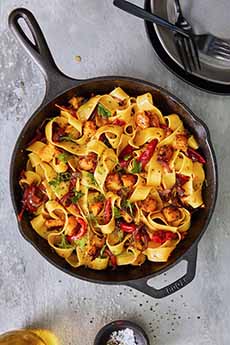
[5] Want some heat? Try this spicy pumpkin pappardelle recipe.


[6] Add potato gnocchi to this pumpkin soup, easy to make with pumpkin puree and chicken stock. Here’s the recipe.


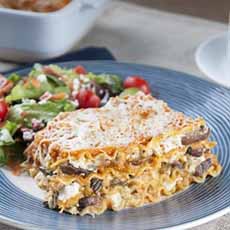
[7] The flavors of fall are in this pumpkin mushroom lasagna. Here’s the recipe (photo © Wheat Foods Council).


October is National Pasta Month and National Pumpkin Month. National Pasta Day is October 17th; October 25th is World Pasta Day. October 26th is National Pumpkin Day. Because of the holidays…the harvest season… Halloween…and Thanksgiving, we thought we’d combine Old World pasta with New World pumpkin. Hence: Pumpkin Manicotti, a Taste Of Home contest winner. The recipe was created by Mandy Howison of Renfrew, Pennsylvania, who makes ravioli and tortellini using the same filling, and notes that it also works well in stuffed shells.

In addition to Pumpkin Manicotti, there are more pumpkin pasta recipes below.

You’ll also find the below the history of manicotti. Manicotti is the American term for what Italians call cannelloni.
 
 
RECIPE: PUMPKIN MANICOTTI

Prep time is 30 minutes, and bake time is 25 minutes. For more sophisticated flavors, check out this Pumpkin & Goat Cheese Cannelloni (a.k.a. Manicotti) With Sage, from The Pasta Project.
 
Ingredients

  • 1 package (8 ounces) manicotti shells
  • 1 container (15 ounces) ricotta cheese
  • 2 cups shredded part-skim mozzarella cheese, divided
  • 1 cup canned pumpkin
  • 1/4 cup grated Parmesan cheese
  • 2 large egg yolks
  • 1/4 teaspoon ground nutmeg
  • 1 jar (24 ounces) garlic pasta sauce, divided
  • Garnish: minced fresh herbs of choice (basil, oregano, parsley, sage, thyme)
  • Optional for serving: grated Parmesan cheese
  •  
    Preparation

    1. PREHEAT the oven to 350°F. Cook the manicotti shells according to package directions for al dente. Drain.

    2. MIX the ricotta cheese, 1 cup of mozzarella, the pumpkin, Parmesan cheese, egg yolks, and nutmeg in a large bowl. Spoon into the manicotti shells.

    3. SPREAD 1 cup of pasta sauce into a greased 13 x 9-inch baking dish. Top with the stuffed manicotti. Pour the remaining pasta sauce over the top; sprinkle with remaining mozzarella cheese.

    4. BAKE, covered, for 25-30 minutes or until the cheese has melted.

    5. SPRINKLE with optional herbs and serve with Parmesan cheese, if desired. We put a wedge of Parmesan on a plate with a grater and pass it around the table.
     
     
    MORE PUMPKIN PASTA RECIPES
    & SOME PUMPKIN PIZZA RECIPES, TOO

  • Dutch Oven Pumpkin Lasagna
  • Mac & Cheese Baked In A Pumpkin
  • Orecchiette With Pumpkin & Sausage
  • Pumpkin & Mushroom Lasagna
  • Pumpkin Fettuccine Alfredo
  • Pumpkin Gnocchi With Butter Sage Sauce
  • Pumpkin Mac & Cheese
  • Pumpkin Pasta Sauce
  • Pumpkin Pizza With Bacon, Apples & Sage
  • Pumpkin Pizza With Goat Cheese
  • Pumpkin Ravioli
  • Pumpkin Soup With Bacon, Sage & Gnocchi
  • Ravioli Lasagna With Pumpkin Sauce
  • Spicy Pappardelle With Pumpkin
  • Spicy Pumpkin Carbonara
  •  
     
    THE HISTORY OF MANICOTTI A.K.A. CANNELLONI

    Did you know that manicotti is the same pasta shape as cannelloni*?

    In Italy, this pasta tube is called cannelloni. In the U.S., it’s called manicotti or maniche (mah-NEE-kay), meaning sleeves. Both of these names refer to either dried pasta tubes or fresh pasta sheets rolled into tubes. Both are stuffed and then baked.

    According to Wikipedia, the original difference may be that cannelloni consists of pasta sheets wrapped around the filling, and manicotti are machine-extruded cylinders with the filling inserted from one end.

    Cannelloni is not an ancient shape. According to some food historians, the first stuffed pasta tube—call it the cannelloni prototype—dates to the first half of the 19th century. Reportedly, Vincenzo Corrado, a Neapolitan cook, made a stuffed version of paccheri*.

    Paccheri are very large, but short, tubes of pasta, originating in the Campania region of Italy—on the western coast right above the “boot.”

    Corrado filled paccheri tubes with minced meat and truffles and cooked them in a tomato sauce. It was an unusual way to serve paccheri at that time. The tubes were typically cooked plain and covered with sauce (and still are).

    But did paccheri become canneloni? Did cannelloni develop independently?

    According to another version of the origin story, the latter may be true. It credits the invention of a dish called cannelloni to a hotel chef on the Amalfi coast (also in the Campania region of Italy), in 1924.

    It is believed that the chef, Salvatore Coletta, cut up sheets of fresh lasagne noodles, topped them with filling, and rolled them into tubes.

    His original filling contained minced meat, béchamel sauce, ricotta, Parmesan, and fior di latte mozzarella. He then covered the rolls with tomato sauce and them.

    You can read that story here.

    Of course, it’s easily possible that two creative chefs could have come up with a similar thought: tubes just begging to be stuffed, lasagna noodles waiting to be repurposed, rolled around a filling, instead of being baked flat, instead topped with layers of fillings.

    Both paccheri and cannelloni/manicotti can be smooth or ridged. Both are considered hearty pasta for robust and flavorful sauces.

    Cannelloni and manicotti can be made with many different fillings: cheese, meat, seafood, vegetables, even tofu and other vegan fillings.

    Similarly, the sauces can be meat-based, like a traditional bolognese; dairy-based, like a classic béchamel; and or vegetable-based, with butter or olive oil. For seafood manicotti, you can use an oil-based sauce with clams, shrimp, mussels, etc; or make a luxurious béchamel with diced lobster or shrimp.
     
     
    > THE DIFFERENT TYPES OF PASTA

    > THE HISTORY OF PASTA

    > THE HISTORY OF BAKED PASTA

    ________________

    *Cannelloni derives from the Latin word for reeds. This evolved into the Italian word cannello, tube. Manicotti means “big sleeve” in Italian.

    †Paccharia, which translates to “slaps,” is said to refer to the slapping sound made when the sauce was poured onto the pasta.


    Comments off

    Halloween Wine? 7 Deadly Zin Zinfandel From California

    Meet 7 Deadly Zins, an old vine Zinfandel from California’s Lodi Valley. The 7 Deadly brand released its first vine in 2002. The company says that the brand was born from the winemaker’s Catholic school upbringing and lust for making hedonistically seductive* wine.

    “Sinful indeed,” they say, “our 2018 Old Vine Zinfandel is full-bodied and seductive. Heaps of jammy berry fruit are followed by aromas of leather, oak, and spice notes. On the palate, the wine is round and layered showing flavors of dark fruits, currants and toffee through a lingering spice-touched finish.”

    Sounds delicious, and a perfect pairing for a feast (gluttony). Are there other special occasions for a sinful wine?

  • Pride. Pleased about a windfall, promotion, or other achievement?
  • Greed. If you covet something you can’t afford (or otherwise can’t possess), pop the cork.
  • Lust. Invite the object of your desire to share a bottle.
  • Envy. Envious of a friend who bought the 2003 Turley Zinfandel Dusi Vineyard (a magnum is $275)? Center yourself with a 7 Deadly Zin for $13.97.
  • Gluttony. Previously mentioned, with this added warning: gluttony includes drunkenness.
  • Wrath. Two glasses of 7 Deadly Zin will diminish the wrath for a while.
  • Sloth. Call someone to open the bottle and bring it to you, along with a glass and some fine cheese.
  •  
    Can a sinful Zin be part of your Halloween celebration?
     
     
    ABOUT 7 DEADLY WINES

    7 Deadly wines are made with grapes grown in the Lodi AVA‡ of California, where Zinfandel reigns supreme.

    7 Deadly also makes 7 Deadly Red and 7 Deadly Cab. All three bold reds are vinified to have a big mouthfeel, good structure and a long finish.

    The wines are also Lodi Rules Certified Sustainable.
     
     
    GET YOUR 7 DEADLY ZINS

    Buy it online here.
    Here’s more about the wine.

    7 Deadly also makes Cabernet Sauvignon and a red grape blend.
     
     
    MORE ABOUT ZINFANDEL

  • Zinfandel Overview, Red Zin Vs. White Zin
  • The History Of Zinfandel
  •  
     
    WHAT IS AN OLD VINE WINE?

    “Old vine” typically refers to a wine made from vines that are 30 to 40 years old, or older; some experts set the minimum at 50 years. Hundreds of years of experience have shown that older vines, when properly maintained, yield a more complex wine. With age brings greater wisdom; or in the case of wine, better flavor.

    Grape vines can grow for more than 120 years. After about 20 years, the vines start to yield fewer grapes, which provide more concentrated, intense wines.

    There is no legal or generally agreed definition for old vines. The designation can apply to an entire estate, or to only a certain parcel, which was planted before the others.

    Diseases such as “dead arm” can also afflict old vines, in some cases further concentrating the juice†.

    In the U.S., the most common old vine wine is Zinfandel. In California, vines up to 125 years old are still bearing small amounts of prized Zinfandel fruit. But that’s nothing!

  • From The 1600s. The oldest known grape-producing vine is a Žametovka vine, a red wine grape growing in Maribor, Slovenia. It is known to have been alive in the 17th century. The yield is teeny: about 35 to 55 kg of grapes each year. The grapes are made into wine which is sold in about 100 miniature bottles.
  • From The 1700s. The oldest vine with a fully authenticated minimum age, and thought to be the largest grape vine in the world, is known as The Great Vine at Hampton Court Palace in England (photo #5). It was transplanted to its current site in 1768. The variety is Schiava Grossa (also called Black Hamburg, or Trollinger, a red grape), originally cultivated in the wine regions of the South Tyrol region of northeast Italy. Contrary to the normal expectation for old vines, it produced its largest crop ever in the autumn of 2001: 383 kilograms (845 pounds).
  • From The 1800s. In the South Tyrol, a white wine grape vine, Versoaln, still thrives at Castel Katzenzungen. The vine is more than 350 years old. It bears grapes that are blended with the fruit of younger vines to produce approximately 500 bottles a year.
  •  


    [1] You can drink this fruity Zinfandel anytime, not just during the contemplation of the seven deadly sins (photos #1 and #2 © 7 Deadly Wines).


    [2] Zinfully blood-red for Halloween (photo © Little Wine Market).


    [3] An old Zinfandel vine. As vines age, they become thicker and more gnarly (photo © Ever Wonder Wine).


    [4] An old Pinot Noir vine at Hanzell Vineyards in Sonoma, California (photo courtesy Prince Of Pinot).


    [5] The world’s largest grapevine, The Great Vine At Hampton Court in England. Yes, this whole leafy green canopy over the trellis is one old, enormous grapevine (photo © SC Wanderlust | Flickr).

     
    ________________

    *That’s a marketing description, not a wine industry term.

    †Dead Arm is a vine disease caused by the fungus Eutypa lata. It randomly affects vineyards all over the world. Often the affected branches are pruned. Left on the vine, they slowly become dead wood. The juice is thus concentrated in the grapes of the remaining branches. Australia’s Dead Arm Shiraz won Wine Of The Year at the 2020 London Wine Competition.

    ‡The Lodi AVA is an American Viticultural Area located in the Central Valley of California, at the northern edge of the San Joaquin Valley, east of San Francisco Bay. The AVA gained approval as a designated wine-growing area in 1986.


    Comments off

    Pumpkin Waffles Recipe For Fall, Halloween & Thanksgiving

    Pumpkin Waffles With Sliced Bananas
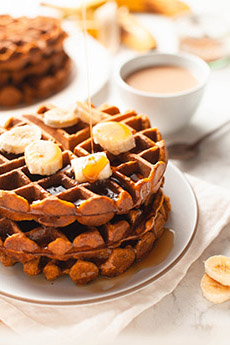
    [1] Mmmm, pumpkin waffles (photo and recipe © Colavita).


    [2] Mashed bananas are mixed with the pumpkin in the waffles. You can also slice bananas as a garnish (photo © Jonathan Cooper | Unsplash).

    Libby Canned Pumpkin Puree
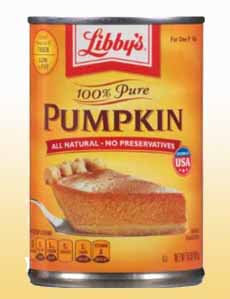
    [3] Pumpkin is a great source of the powerful antioxidant, beta-carotene (photo © Libby’s).


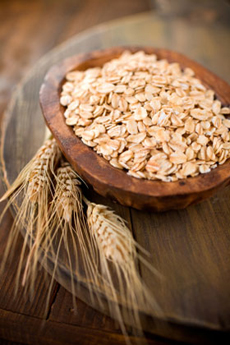
    [4] The mineral and nutrient contents of rolled oats (in photo) match those of steel-cut oats. Here’s more about it (photo © Kelly Cline | iStock Photo).


    You don’t have to wait until Halloween to make this scrumptious pumpkin waffles recipe. Pumpkin waffles are delicious year-round, but especially seasonal through the fall and winter. This recipe from Colavita invites you to customize garnishes, from pumpkin seeds and dried cranberries to chocolate chips and crème fraîche. The recipe is also a better-for-you option, with whole wheat flour and rolled oats and lots of nutrition from the pumpkin, especially beta-carotene*.

    There are more seasonal waffle recipes below.

    > The 15 Different Types Of Waffles

    > How To Make The Best Waffles

    > The History Of Waffles

    > The History Of The Waffle Iron
     
     
    RECIPE: PUMPKIN WAFFLES
     
    Ingredients

  • 2 very ripe bananas, mashed
  • 1 can pumpkin purée
  • 1 cup all-purpose flour
  • ½ cup whole wheat flour
  • ½ cup rolled oats
  • 1¼ cups milk (dairy or nut milk will work)
  • ⅓ cup Colavita Olive Oil
  • 2 eggs
  • 2 teaspoon baking powder
  • 1 teaspoon vanilla extract
  • 1 teaspoonsalt
  • 1 teaspoon cinnamon
  • ½ teaspoon allspice
  • ¼ teaspoon ground nutmeg (ideally freshly)
  • Garnish: banana slices, butter, chocolate chips, crème fraîche, dried cranberries, maple syrup, pumpkin seeds
  •  
    Preparation

    1. COMBINE all the dry ingredients in a large bowl (the flours, oats, baking powder, salt, cinnamon, allspice, and nutmeg). Mix to combine all the ingredients.

    2. COMBINE all the wet ingredients in a separate large bowl, and mix well.

    3. POUR the wet ingredients into the dry ingredients and mix until just combined.

    4. PREHEAT the waffle iron. When it’s ready, grease it lightly with a little olive oil (pour about a tablespoon of oil into a paper towel and rub it onto the waffle iron).

    5. POUR ½ cup of the batter into the waffle iron and close the lid. Cook until the light on the waffle maker turns green (or indicates that it’s ready).
     
    6. REMOVE the waffle from the iron and repeat with the remaining batter. Garnish as desired and serve.
     
     
    MORE SEASONAL WAFFLE RECIPES

  • Gingerbread Waffles
  • Mashed Potato Waffles With Scallions & Sour Cream
  • Pumpkin Dessert Waffles
  • Savory Mashed Potato Waffles
  • Savory Waffle Recipe Ideas
  • Spiced Stout Waffles
  • Thanksgiving Sausage Stuffing Is Turned Into Waffles
  • Waffle Sandwich Cones
  • ________________

    *The bright orange color of pumpkins and other squash is a dead giveaway that pumpkin is loaded with beta-carotene, an important antioxidant. Beta-carotene is one of the plant carotenoids that is converted to vitamin A in the body.

    During the conversion to vitamin A, beta-carotene performs many important functions in overall health. Current research indicates that a diet rich in foods containing beta-carotene may reduce the risk of developing certain types of cancer, and offers protection against heart disease and other diseases, including some degenerative aspects of aging [source].


    CHECK OUT WHAT’S HAPPENING ON OUR HOME PAGE, THENIBBLE.COM.


    Comments off


    © Copyright 2005-2026 Lifestyle Direct, Inc. All rights reserved. All images are copyrighted to their respective owners.