THE NIBBLE BLOG: Products, Recipes & Trends In Specialty Foods


Also visit our main website, TheNibble.com.

PRODUCT: Health Warrior Superfoods Dragon Fruit Chia Bar

We get weekly pitches for food bars: energy bars, nutrition bars, general snack bars.

We don’t pursue most of them; but when something interesting comes along, we try it.

Health Warrior Superfoods Dragon Fruit Chia Bar is made from two trending foods.
 
 
WHAT IS DRAGON FRUIT?

You may already be familiar with chia seeds, but what about dragon fruit?

Lightly sweet and pleasantly crunchy, dragon fruit, called pitaya in its home territory, Central America, is an alluring newcomer to the produce aisle.

Dragon fruit, which sounds more tempting, is the name bestowed upon it by Asian growers, to make it more marketable in other countries.

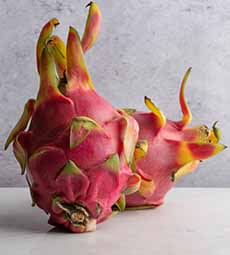
Depending on the species, the skin is textured like dragons’ scales.

The skin ranges in color from hot pink to red. There is also a yellow variety that is more tart and refreshing.

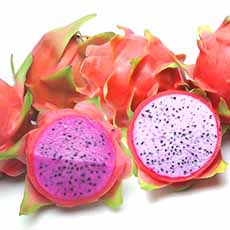
The flesh inside can be white, pink or magenta and has tiny, edible black seeds similar in appearance to those in kiwifruit.

The fruit is a bit of a tease. The exterior looks resplendent but the flesh is on the mild side: like a watermelon that is only mildly sweet.

The flavor comes up best when the fruit is chilled.

The arresting-looking dragon fruit may not taste as luscious as the homely mango, but it’s crunchy and interesting. Or, in the word most used to describe dragon fruit, it’s exotic.

Dragon fruit is now grown in California and Florida, making it more available in U.S. markets.
 
 
THE HEALTH WARRIOR PARTNERSHIP

There are nine flavors of Health Warrior Chia Bars.

As a collaboration with Bobbi Brown Cosmetics to benefit Girls Inc., the new Dragon Fruit & Chia Bar represents a holistic approach to beauty that starts from the inside out.

One hundred percent of all profits from sales of the bar go to Girls Inc., which focuses on the development of the whole girl, to navigate barriers and grow up to be healthy, educated and independent.
 
 
HEALTH WARRIOR SUPERFOODS DRAGON FRUIT CHIA BAR

The opportunity to review Health Warrior’s new Dragon Fruit Chia Bar was an unexpected delight.

The Health Warrior Dragon Fruit Chia bar delivers all of the benefits of chia (more Omega-3s by weight than salmon!) in a handy, delicious and—yes—beautiful bar (the bars are naturally pink from dragon fruit powder).

  • The bars are soy free, dairy free, gluten free, vegan and non-GMO with only 5g of sugar per 90-calorie bar.
  • At the same time they provide 12% of the recommended daily value of fiber, 6% of magnesium, and 4% each of calcium and iron.
  • Chia seeds are the #1 ingredient. They are rich in Omega-3s, whose anti-inflammatory effects are delivered in the form of alpha-Linolenic acid.
  • Chia, the source of most of the calcium, fiber and protein, ties in with a beauty brand in that it can help to promote smooth and glowing skin, hair growth, anti-aging and strong nails.
  •  
    Note that all of Health Warrior Superfoods’ bars are produced on equipment that also processes tree nuts, peanuts, soy, wheat and milk.
     
     
    TAKE A BITE

    Though this was my first experience with dragon fruit it will not be my last.

    With a flavor enhanced by strawberries and the familiar chia crunch, the experience was not unlike eating a fig newton filling, though firmer and not quite as jammy.

    These bars make a great school lunch or backpack snack for kids, with an eye-catching pink wrapper, which includes social media links to Health Warrior Superfoods, Girls Inc., Just Bobbi Brown.

    Health Warrior also makes a selection of pumpkin seed bars (plain or with chocolate or chocolate and peanuts) that are delicious if you are a pumpkin seed fancier and not allergic to peanuts.

    > Get your Dragonfruit & Chia Bars here.

    > Visit the website to check out the other chia and pumpkin seed bars.

    —Georgi Page-Smith


    [1] Health Warrior Dragon Fruit Chia Bars (photo © Health Warrior).

    Pink Dragonfruit
    [2] The “dragon scales” of the dragon fruit (photo © Tanaphong Toochinda | Unsplash).


    [3] The most commonly available variety in the U.S. has rosy pink skin and white flesh (photo © Maddi Bazzocco | Unsplash).


    [4] Dragon fruits with yellow skin are more tart, which gives the mild-tasting fruit more flavor (photo © David Brooke Martin | Unsplash).


    [5] Pink- and white-flesh varieties (photo © Melissa’s Produce).


    Comments off

    The Best Rose Wines Of Summer 2020


    [1] Rosé is the perfect summer wine: light yet substantial, delivering flavor and finish (photo © Herringbone Eats | Santa Monica).


    [2] The rosé rainbow, in colors from the palest pink to the deepest rose (photo © Jacksonville Magazine).
    Thibaud-Boudignon-Rose[/caption]
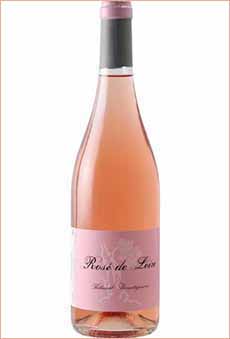
    [3] Top of the list: Thibaud Boudignon Rosé 2019 from the Loire region of France (photo © Thibauld Boudignon).
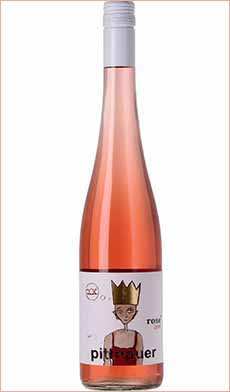

    [4] The top pick from Austria is (photo © Weingut Pittnauer).


    [5] (photo © Fontanafredda).
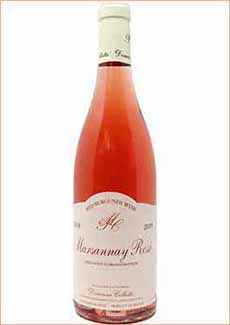

    [6] Domaine Collotte is from Marsannay, the northernmost appellation of the Côte de Nuits region of Burgundy, France (photo © Domaine Collotte).


    [7] Rose is delicious with fruit and cheese (photo © S.L. | Unsplash).


    This summer, a very discriminating oenophile*, Ken Merrill, tried some rosé wines, from Austria, France, Germany, Greece, Italy and Spain.

    The following comprise the top 25%: 10 rosés that made his list of “will buy more of these.”

    The prices are from wine stores in New York City.

    And, in the manner of rosé pricing, they are more than affordable: most are less than $20.
     
     
    SUMMER 2020: THE TOP 10 ROSÉ WINES

    Over the last few weeks, I have been trying a great many of the European rosé wines now available in New York City. It seemed like a very interesting thing to do as we headed into the height of summer, and particularly appropriate to do as we have increased the time we spend on the beautiful rooftop terrace atop our building.

    There are four clear winners from three different countries, which point out that the world of rosé is quite varied, with high points usually being the surprise.

    One big plus is that they were all in the lowest alcohol levels from all that we’ve had. A vivid freshness of red fruits, more strawberry and raspberry, along with herbal and mineral notes made them stand out for their clarity of expression and their lovely, light, dance-like feel.

    When rosé alcohol levels get higher, it actually seems like you start to lose much more than you gain. They start to seem rather heavy and dull, lacking in that joyous, light red fruitiness that gives them their summertime appeal.
     
     
    OUTSTANDING ROSÉ WINES

    Thibaud Boudignon Rosé 2019 (Savennières, Loire, France)
    The Thibaud Boudignon Rosé de Loire 2019 was outstanding. Savory, very complex nose and palate; it started with a light watermelon scent, alluring and mysterious, opening into lighter raspberry scents. A wonderful wine which walks that exciting tightrope of tension between salty minerals and ripe fruit. Made from 80% Cabernet Franc and 20% Grolleau, it’s at that perfect 12.5 alcohol level. Boudignon is now often touted as one of the very finest makers of dry Chenin Blanc. His Savennieres and Anjou Blanc are superb. This rosé wine which he just started making 3 years ago seems clearly to belong in that same high echelon of quality. Chambers Street has it for $22.

    Weingut Pittnauer Burgenland Rosé 2019, (Gols, Austria)
    Another standout was a wine from Austria that we had never heard of before, the Pittnauer Burgenland Rosé 2019. Made from mostly Blaufrankisch, it offers so much at a low 11.5 alcohol! Full bodied, red berry fruit and perfumed with alpine aromas, combined with a crisp, pleasing acidity. Available at Chambers Street for $18. A joy to find such a well made wine from someone unknown to us! And, this is his starter rosé! We have to try some of the other wines!

    Fontanafredda Solerose Langhe Rosato 2018 (Piedmont, Italy)
    The Fontanafredda Solerose Langhe Rosato 2018, a blend of Barbera, Dolcetto, and Nebbiolo, was another real standout. Priced at $19 at Eataly, it is an utterly charming, lovely wine, with beautiful notes of mountain flowers and strawberry, perhaps even closer to fraises des bois. And at 11.5% alcohol, it is a total winner in its balance and grace. More please!

    Carrel Jongieux Vin de Savoie Rosé 2019 (Savoie, France)
    The fourth real standout was a lovely wine coming from an area we tend not to think of so much, the Savoie. Carrel Jongieux Vin de Savoie Rosé 2019 is a blend of 80% Gamay and 20% Mondeuse. Also strawberry scented, it has hints of Alpine flowers and a lovely minerality. The alcohol level is 12.5%. A truly excellent value, it’s available in Manhattan for $12-$14, but Empire Wine in Albany, which has the best shipping rates in the country ($11.88 per case!) has it for $10.

    Domaine Collotte Marsannay Rosé 2019 (Marsannay, Burgundy, France)
    Another standout that we just tasted is the Domaine Collotte Marsannay Rosé 2019. From one of the finest producers in Marsannay, this wine was beautiful and full, hinting of strawberry and cherry. At 12.5% it has that perfect balance of full flavor, beautiful grace, and a lively, engaging personality. Excellent. At Chambers Street Wines for $21.

    Domaine Olga Raffault 2019 (Chinon, Loire, France)
    Another lovely rosé is that of Olga Raffault in Chinon 2019. Made from 100% Cabernet France, at 12.5% alcohol, it shows a lovely, elegant fullness on the palate. We’ve drunk her reds with great pleasure over the years, and this is a very pleasant, enjoyable rosé wine which Chambers Street Wines sells for $20.

    Dr. Loosen Villa Wolf Pinot Noir Rosé 2018 (Pfalz, Germany)
    Dr. Loosen Villa Wolf Pinot Noir Rosé 2018 had some very appealing elements in its bright red fruits nose, but unfortunately for me, it showed some sweetness on the palate which doesn’t suit my current palate for either white or rosé wine. But, many people would undoubtedly enjoy this very easy to drink rosé. The alcohol level is an appealing 11.5% and the wine is priced very reasonably at $10 at Warehouse Wines downtown. Definitely worth trying.

    Chateau de Manissy Tavel Cuvée des Lys Rosé 2019 (Tavel, Rhone, France)
    A wine with higher alcohol, a very precise 13.57%, that proved to be quite good was Chateau de Manissy Tavel Cuvée des Lys Rosé 2019. A very beautiful dark coppery pink, the Grenache based wine had a shy nose, but a wonderful fullness on the palate. Very much a food wine, not for just sipping. A lovely bottle. Available at Chambers Street Wines for $18.

    Lecci e Brocchi Il Meticcio Toscana Rosato 2019 (Siena, Tuscany, Italy)
    The Lecci e Brocchi Il Meticcio Toscana Rosato 2019 was an interesting bottle in the way it developed. At 13.0% alcohol, on the first day it was very tart and lemony, maybe too much so. A lovely color from the blend of Tuscan grapes: Sangiovese, Malvasia Nera, Alicante, Foglia Tonda, Colorino, and Canaiolo Nera, presumably explaining the name of the wine, the Italian word for a cross breed horse. On day two, however, it became beautifully full, richer and more cherry-like. Definitely a wine to try, but I would suggest decanting it to give it its fullness of flavor. Available for $20 at Chambers Street Wines.

    Campo Alle Comete Bolgheri Rosato 2018 (Bolgheri, Tuscany, Italy)
    The Campo Alle Comete Bolgheri Rosato 2018 was another quite delicious rosé. Quite full in flavor, particularly for its 12.5% alcohol. Slightly herbal, raspberry nose. Even better the second day. With medium body, it’s a real food wine for sure—not just for sipping on the terrace. A blend of 50% Merlot, plus 25% each Cabernet Sauvignon and Syrah. They have it at Eataly for $20.
     
     
    MORE WAYS TO ENJOY ROSÉ…

    …but don’t use the stellar rosés above for any of these. You can use a perfectly good $10 bottle of rosé.

  • Rosé Sangria
  • Affordable Sparkling Rosé
  • Frozen Rosé Cocktails
  • Rosé Milkshakes
  •  
     
    FOOD & WINE TRIVIA

    Dry rosé wine is the all-occasion wine in the south of France—no surprise, since Provence is the world base of dry rosé production. There, vin rosé is paired with all the foods, all year around.

    In fact, dry French rosé outsells white wine in France!

    The dry rosés from Provence can be substituted any time you need dry wine. When you can’t decide between red or white wine, reach for the rosé.
     
     
    > What Is Rose Wine & Why Should You Be Drinking It?

    > The History Of Rosé Wine

    > Have A Rosé Tasting Party

    > Rosé Wine & Food Pairings


    Comments off

    PRODUCT: Nocca Gluten-Free Gnocchi

    Our gluten-free expert, Georgi Page-Smith, approves of Nocca’s gluten-free gnocchi (NYAW-kee). Gnocchi are soft dough dumplings that may be made from semolina or ordinary wheat flour and filled with cheese, potato or other ingredients .

    Nocca is an Italian pasta company that specializes in quick-to-the-table, shelf-stable gnocchi.

    They make conventional gnocchi with wheat flour and a potato filling, plus a gluten-free version made with rice flour.

    When I discovered Nocca Gnocchi at last summer’s Fancy Food Show (alas, no show this year due to COVID), I was thrilled for an opportunity to sample the gluten-free version which, as they say, can be ready to serve in as little as 2 minutes on the boil.
     
     
    TASTING THE GNOCCHI

    Perhaps their quick-cooking nature has to do with the size of Nocca’s gnocchi.

  • They have slightly smaller dimensions than the classic packaged gnocchi, this means that the texture, while delightfully pillowy, is somewhat more consistent than a larger dumpling, avoiding the unwelcome surprise of a damp or clammy center.
  • And they still had the trademark ridges for cradling extra daubs of the sauce of your choice (I find the resulting ratio of sauce to gnocchi to be perfectly balanced).
  •  
    Flavor-wise Nocca’s gluten-free gnocchi are a match with the gnocchi I remember from my gluten-tolerant days.

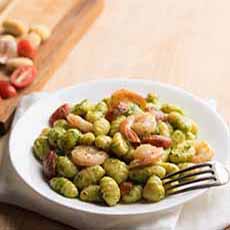
    Tender, with a slight tang, they are a delicious foil for fresh pesto (photo #1).

    This is the gnocchi you want for a light lunch, or when you are putting dinner together quickly and still want something satisfying and/or different.

    It’s also comfort food.

    Nocca makes one plain variety of gnocchi (Original) for the gluten-sensitive, but also makes several other varieties of wheat-based gnocchi for those who can tolerate gluten: Cocoli (mini), Original, Pesto, Truffle and Whole Wheat.

    The line is available in stores across the Northeast and can be found via their store locator.

    You might have to call first to see if they carry the gluten-free variety; but you can buy them on Amazon, along with the wheat-based varieties.

    —Georgi Page-Smith
     
     
    FOOD TRIVIA

    The word “gnocchi” has an unknown origin, but it may have derived from the Italian word nocca, meaning knuckle. The oval-ish shape of the pasta is somewhat reminiscent of a knuckle!

    They’re not Italian: gnocchi are of Middle Eastern origin. As the Roman Empire expanded, favorite foods and recipes were brought home and adapted, based on local ingredients and preferences.
     
     
    GNOCCHI RECIPES

    How about gnocchi for breakfast?

    For breakfast or brunch, take a look at this Egg & Gnocchi Casserole Recipe.

    For lunch and dinner:

  • Clam Chowder With Gnocchi & Pancetta
  • Pumpkin Soup With Bacon, Sage & Gnocchi
  • Acorn Squash Soup With Sautéed Gnocchi
  •  
     
    MORE TO DISCOVER

    > The History Of Gnocchi

    > The Different Types Of Pasta
     
    > What Are Gnudi & How Are They Related To Gnocchi & Pillow Pasta?


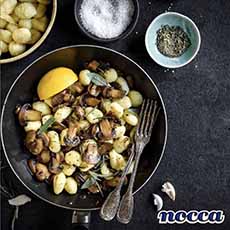
    [1] Gnocchi in pesto sauce with shrimp and cherry tomatoes (all photos © Nocca Gnocchi).


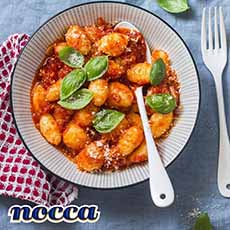
    [2] Gnocchi Bolognese, in meat sauce with a fresh basil garnish.


    [3] Gnocchi with sauteed mushrooms and sage.


    [4] Just pop the gnocchi into boiling water. They’re ready in 2 minutes.


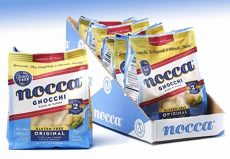
    [5] Here’s what to look for. Or, buy Nocca Gluten-Free Gnocchi on Amazon.


    Comments off

    TIP OF THE DAY: Make Limeade


    [1] Mint limeade (photo © Pasta Eater | NYC).


    [2] Cherry limeade, made with fresh cherries. The recipe is below Stemilt.

    Pint Of Cherry Sorbet
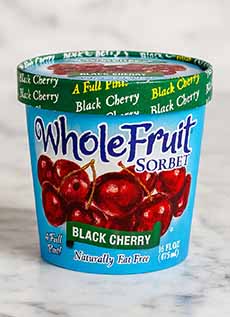
    [3] Add a scoop of cherry, lemon, or lime sorbet to make a float (photo © J&J Snack Foods).


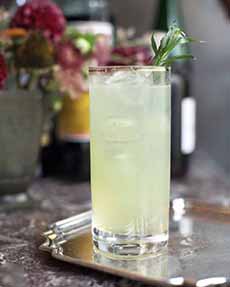
    [4] Classic limeade (photo © Le Coucou NYC | Starr Restaurant Group).

    Blueberry Limeade
    [5] Blueberry limeade. You add any fruit purée into limeade. Here’s the recipe from Ciao Florentina (photo © Ciao Florentina).


    [5] Ready, set, slice (photo © Loveart Foods | Pexels).


    When life gives you lemons, make lemonade.

    But what about limeade?

    It’s just as delicious and refreshing—even more so, since it’s such a rarity in the U.S.

    One reason is that the U.S. is not a lime-growing country, so limes are costlier than lemons.

    Limeade is popular in tropical areas like the Caribbean, India, Pakistan and Southeast Asia, where the heat and humidity are good for lime cultivation.

    Limes were once grown in Florida; but after a series of natural disasters, the groves were not replanted and production moved to Mexico (97% of our limes come from there). Here’s more about the end of U.S. lime production.

    Upcoming days to make a pitcher:

  • February: National Cherry Month
  • May 6: National Beverage Day
  • July, 4th Thursday: National Refreshment Day
  • July 16: National Cherry Limeade Day
  •  
     
    RECIPE #1: BASIC LIMEADE

    The method of preparation for basic limeade is the same as for lemonade: juice the limes and combine the juice with sweetener, water and ice.

    Gin, tequila or vodka can be added to make a limeade cocktail (we call this version a “summer sour”).

    See below for more variations to vary basic lemonade.

    Ingredients For 8 Glasses

  • 7 cups ice water
  • 2 cups freshly-squeezed lime juice, chilled (16 limes*)
  • 1-1/2 cups sugar or sweetener of choice (use superfine sugar or simple syrup to dissolve easily
  • Garnish: fruit, herbs, lime wheel
  •  
    Preparation

    1. COMBINE the lime juice and sugar; stir to dissolve.

    2. ADD to a pitcher of ice water; stir to combine.

    3. SERVE over ice. Garnish as desired.
     
     
    RECIPE #2: CHERRY LIMEADE

    Thanks to Stemilt, a grower of cherries, apples and pears in Washington State, for this recipe (photo #2).

    This recipe uses fresh cherries, although you can substitute frozen cherries or cherry syrup if cherries are out of season.

    For Sonic fans: Sonic’s Cherry Limeade is a different recipe, adding 7Up and maraschino syrup. Here’s a version of it.

    Our favorite way to enjoy this recipe: Add a scoop of cherry, lemon, or lime sorbet for a cherry-lime float.

    The cherry-lime concentrate may be stored in a glass jar in the refrigerator for up to ten days.

    Ingredients

  • 12 ounces fresh cherries, pitted and halved
  • 3 ounces honey
  • 1/2 cup fresh lime juice
  • 32 ounces cold water
  • Ice
  • Garnish: fresh cherries (with stems) or lime wheel
  •  
    Preparation

    1. COMBINE the cherries and honey in a medium saucepan over medium high heat. Bring to a boil and immediately reduce the heat to low. Simmer for 15 to 20 minutes. Cool to room temperature.

    2. ADD the lime juice and stir to combine.

    3. ASSEMBLE: For a single serving, add 2 ounces of the cherry-lime concentrate to a tall glass. Fill with ice and top with water. Stir and garnish with fresh cherries. To prepare a pitcher-full, combine the concentrate with 32 ounces of water and lots of ice.
     
     
    LIMEADE VARIATIONS

  • Fruit: Substitute fruit puree of choice, from berry (blueberry, raspberry, etc.) to mango
  • Herbs: Add a garnish of basil, mint, rosemary, etc.
  • Cucumbers or watermelon: Add slices of cucumber and/or cubes of watermelon to the limeade.
  • Other additions: grated fresh ginger,
  • Sparkling water: instead of still water.
  • Slushie: blend with ice instead of water.
  •  
     
    MORE TO ENJOY

    > The Different Types Of Limes
     
    > The History Of Limes
     
    > The History Of Cherries
     
    > The History Of Lemonade

    ________________

    *The average lime yields 2 tablespoons of juice.


    CHECK OUT WHAT’S HAPPENING ON OUR HOME PAGE, THENIBBLE.COM.


    Comments off

    TIP OF THE DAY: Mediterranean Food For Labor Day & A Mezze Buffet

    Labor Day pays tribute to the contributions and achievements of American workers*, and an all-American cookout is traditionally on the menu?

    But what if you decided instead to observe the cuisine of laborers elsewhere?

    Most of us have a Labor Day grilling routine. We decided to try a different grilling menu, focusing on a sure-to-delight theme: skewers.

    The word kebab† refers to fish, meat or vegetables that are roasted or grilled on a skewer or spit. In the U.S., “skewers” has become the term used outside of Mediterranean restaurants.

    This Labor Day we’re going kebab crazy, with grilled skewers and Greek and Middle Eastern sides, the latter called mezze in Greek.

    Scroll down to see all the mezze. The hardest part for us is deciding what to make (or buy). We want them all!
     
     
    SKEWERS, A.K.A. KEBABS, KABOBS & OTHER SPELLINGS

    Instead of an American buffet with grilled whole foods like brats, burgers, chicken, fish, franks or steaks, we’re grilling skewers of some of the same meats:

  • Beef
  • Chicken (you can also skewer wings)
  • Fish & Seafood (meaty fish like striped bass or swordfish, scallops, shrimp)
  • Lamb
  • Pork
  • Sausage (instead of Franks)
  • Vegetables
  • Optional: Seitan (vegan)
  •  
    (Personally, we’ve decided on chicken, scallops and shrimp.)
     

    MEZZE TO SERVE WITH YOUR SKEWERS

    We decided to bypass the corn on the cob and potato salad for Mediterranean sides, like Israeli salad and basmati rice pilaf with dried fruits and almonds.

    We’ve also chosen three Mediterranean spreads, to enjoy on their own or dip with pita triangles.

    Because hummus, baba ganoush and tabbouleh are everyday foods at our house, we chose three other: tzatziki/cacik seasoned yogurt, which is a great side to the grilled meats; skordalia, garlicky potato purée; and melitzanosalata, a chunky eggplant dip.

    Mediterranean Dips/Spreads

    In Greek these are called mezze (MEH-zay), meze in Arabic. They are a selection of small dishes that originally accompanied drinks, either as a snack or as a first course to a meal.

    Mezze can include the dips and spreads on this list, served with pita; plus dolmades (stuffed grape leaves), falafel, feta, halloumi cheese, kibbeh, olives and other Mediterranean delights. Check out this list for a “full menu.”

    Depending on country—Greece versus any of the countries in what was formerly called the Levant*—there may be different names for the same or similar dishes. For example, Greek tzatziki is Turkish cacik.

    Here are a dozen favorites. Note that spellings may differ because the names are transliterated into the Latin alphabet from the Arabic or Greek alphabets.

    Babaganoush: Smoky roasted eggplant and tahini combine in a dip that can be smooth or chunky. Baba ghannouj is another spelling. Here’s a recipe.

    Cacik: The Turkish name for tzatiki, a yogurt and cucumber dip. It is pronounced kah-SEEK.

    Ezme: Similar to Israeli salad, ezme is a Turkish salad of finely chopped tomatoes, cucumbers, onions, mild peppers, parsley and olive oil.

    Hummus: A paste of chickpeas, olive oil, garlic and spices. There surge in popularity has resulted in dozens of blend-ins, from the traditional Mediterranean flavors (olive, red pepper) to the trendy (chipotle, edamame hummus, everything bagel topping). Here’s a recipe to make your own.

    Labneh: Labneh is thick, strained yogurt with a consistency similar to spreadable cheese like cream cheese. It is spread onto pita. Here’s more about it, and a recipe.

    Htipiti: Htipiti (tee-PEE-tee) is a spicy spread of roasted red pepper and feta, mixed with olive oil, thyme, shallots and garlic. It can be smooth or chunky, and is closely related to kopanisti and tirokafteri (see below).

    Melitzanosalata: This traditional Greek Eggplant dip is difference from baba ghanoush in that the latter is Levantine‡ and uses tahini. Melitzanosalata is Greek and doesn’t have tahini. Common ingredients are eggplant, olive oil, garlic, lemon, salt, pepper. Some melitzanosalata recipes add onion. Chopped parsley is a traditional garnish.

    Muhammara: A Syrian dish of roasted red peppers, walnuts and pomegranate molasses.

    Skordalia: A Greek potato and garlic dip (purée).

    Tabbouleh: A salad of bulgur, chopped parsley, mint, onion and tomatoes, seasoned with olive oil, lemon juice, salt and pepper.

    Taramasalata: A spread made from tarama, cured carp (or other fish) roe, whipped with lemon juice and olive oil.

    Tirokafteri: Feta cheese dip, similar to htipiti. It includes feta, olive oil, red wine vinegar, chopped chilies or red pepper flakes, oregano, and often roasted red peppers (not hot) and yogurt. Kopanisti, another spicy feta dip, includes olive oil, lemon juice, mint, pepperoncini, garlic and red pepper flakes.

    Tzatziki: A yogurt and cucumber dip. It is very similar to Indian raita, and like the latter, it is also served with grilled meats. Here are recipes for both.


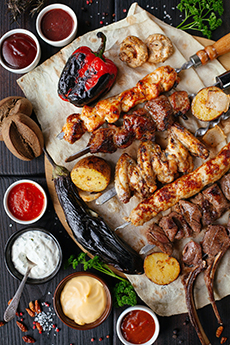
    [1] We can’t wait for this assortment of kebabs, a.k.a. skewers (photo © Victoria Shes | Unsplash).


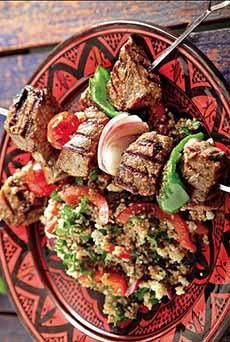
    [2] The classic shish kebab: lamb skewers, served with tabbouleh (photo © Stix Restaurant | NYC).


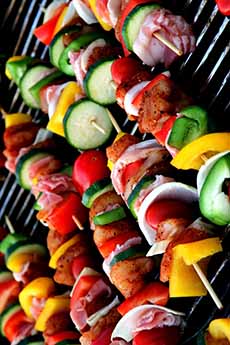
    [3] Mixed vegetable skewers, always popular. You can also make skewers of cherry tomatoes (photo © Pixabay | Unsplash)).


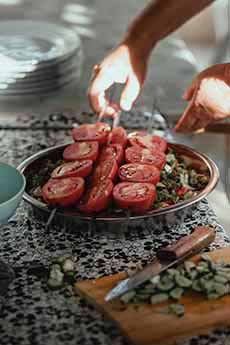
    [4] How about grilled, halved beefsteak tomatoes? (photo © Tolga Ahmetler | Unsplash).


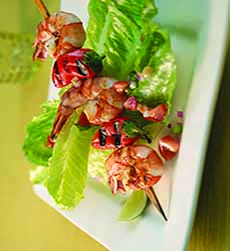
    [5] Shrimp skewers (photo © Seasoned Skewers).


    KEBAB HISTORY

    Spell it kebap, kabab, It appears in Turkish texts as early as the 14th century, meaning roasted meat.

    It may be broiled or grilled on skewers, but also the word also refers to meatballs, stews and other formats.

    In English, the word has come to mean food on a skewer, be it small chunks of meat, seafood, vegetables, seitan, tofu, etc.

    The word kebab likely came to English in the late 17th century from the Arabic kabāb, which has roots in the Persian, Turkish, Urdu and other old tongues, including Aramaic and its predecessor, Akkadian.

    The skewered form has spread around the world, from Europe and the U.S. to the satays of Southeast Asia.

    ________________

    *Labor Day is observed on the first Monday in September. It was created by the labor movement in the late 19th century and became a federal holiday in 1894. Here’s more about it.

    †The word kebab came to the English language in the late 17th century, from the Arabic word kabāb. Kabāb, in turn, derived from kabab, from the Persian, Turkish and Urdu languages. Transliterated from the Arabic alphabet, there are various spellings including kabob and kebap.

    ‡The Levant was a large area in southwest Asia: south of the Taurus Mountains, with the Mediterranean Sea as the western boundary, and the north Arabian Desert and Mesopotamia in the east. “Levant” is an English term that first appeared in 1497. It originally referred to the “Mediterranean lands east of Italy.” The historical area comprises modern-day Iraq, Israel, Jordan, Lebanon, Palestine and Syria. Among other popular foods, Levantine cuisine gave birth to baklava, falafel, kebabs, mezze (including tabbouleh, hummus and baba ghanoush), pita and za’atar, among other dishes that are enjoyed in the U.S. and around the world.


    Comments off

    The Nibble Webzine Of Food Adventures
    RSS
    Follow by Email


    © Copyright 2005-2026 Lifestyle Direct, Inc. All rights reserved. All images are copyrighted to their respective owners.