THE NIBBLE BLOG: Products, Recipes & Trends In Specialty Foods


Also visit our main website, TheNibble.com.

Baked Carrot Fries Recipe For International Carrot Day

What’s up, Doc? It’s International Carrot Day and we’re making carrot fries for dinner. They’re baked carrot fries, so much easier than deep frying these days. Not to mention, they’re a healthier alternative (less fat and calories).

We’re making ours in the air fryer, coating them with Parmesan, and doing a flavored ketchup tasting: bacon, smokey, spicy, and truffle.

> The history of carrots.

> More carrot recipes.

> A year of carrot holidays.
 
 
RECIPE: CARROT FRIES

You can serve this recipe with a more elegant dip than ketchup—aïoli, hot honey, peanut sauce, spicy mayo, even hummus or Greek yogurt flavored with herbs and garlic.

You can peel the carrots or not. See the discussion below.

This recipe uses standard American seasonings, garlic and onion powders. But you can use anything in your spice cabinet, from cumin and garam masala, or za’atar, to the heat of Cajun seasoning, chipotle, or other ground chile.

Minced parsley adds brightness to the layers of flavor.
 
Ingredients

  • 1 pound carrots, peeled (or not) and cut 3/8″ to 1/2″ thick
  • 1/4 cup olive oil
  • 1/3 cup grated Parmesan cheese*
  • 1 tablespoon cornstarch
  • 1 teaspoon onion powder
  • 1 teaspoon garlic powder
  • Salt and pepper
  • Garnish: minced fresh parsley
  • Optional dip: parsley for garnish sauce of choice for dipping
  •  
    Preparation

    1. PREHEAT the oven to 400°F. Line a baking sheet with parchment paper (we use air fryer liners).

    2. COMBINE the olive oil, Parmesan, cornstarch, and seasonings in a bowl and mix well. Add the carrots and toss to coat well.

    3. SPREAD the carrots evenly on the baking sheet in a single layer. Bake for 25-30 minutes until desired crispiness is reached, flipping the carrots halfway with a spatula.

    4. GARNISH with fresh parsley and serve with dipping sauce. Eat ‘em while they’re hot!
     
     
    FOR CRISPIER CARROT FRIES

    Carrots don’t have the starch content potatoes do, which is why we prefer the air fryers to the oven (but either is fine).

    For crispier carrot fries, toss the carrot sticks in olive oil and then in corn starch or arrowroot powder.
     
     
    TO PEEL, OR NOT TO PEEL?

    If you choose not to peel the carrots, the benefits are extra nutrients like vitamin C, beta-carotene, and niacin. You also reduce food waste, and can use the peels for carrot peel chips, pesto, candied carrot peels, or in smoothies, soup, or stock.

    The argument for peeling is that baked peel has a slightly earthy taste and texture of the skin. Some people find them more aesthetic.

    But we enjoy fries with the peel on, so we often keep it on other vegetable fries.
     
     
    ________________
     
    *For a dairy/free vegan substitute, use a blend of nutritional yeast and cornstarch or tapioca starch.


    CHECK OUT WHAT’S HAPPENING ON OUR HOME PAGE, THENIBBLE.COM.


    Carrot Fries
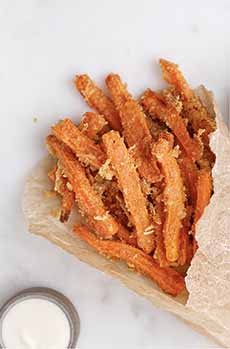
    [1] Carrot fries with aïoli, garlic mayonnaise (the recipe). Make them in the oven or air fryer (photo © Get Flavor).

    Grated Parmesan Cheese
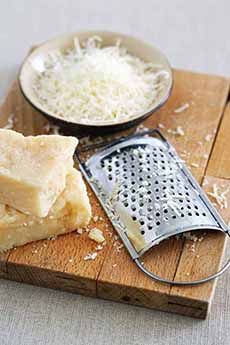
    [2] Grated Parmesan gives the fries a bit of cheesiness and flavor (photo © London Deposit | Panther Media).


    [3] Minced parsley adds brightness to the finished fries (photo © Good Eggs).

    Bugs Bunny
    [4] Bugs Bunny just might trade his carrot for a plate of these fries (photo © Warner Brothers).


    Comments off

    Rainbow Foods & Rainbow History For National Find A Rainbow Day

    Rainbow Tacos
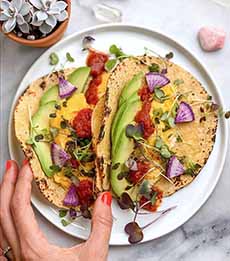
    [1] Rainbow tacos. Pick your veggie colors from this list (photo © Maria And Ricardo’s).

    Colorful Salad
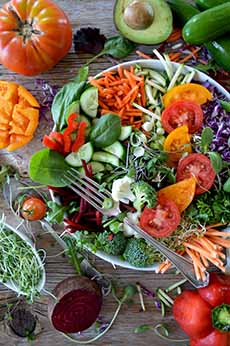
    [2] We also made a rainbow salad for lunch (photo © Nadine Primeau | Unsplash).

    A Bowl Of Rainbow Pasta
    [3] Rainbow pasta. Here’s the recipe (photo © Cool Mom Eats).

    Rainbow Spring Rolls
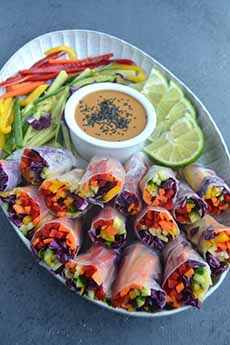
    [4] Rainbow spring rolls. Here’s the recipe (photo © Nutritionist Reviews).

    Cone Of Rainbow Sherbet
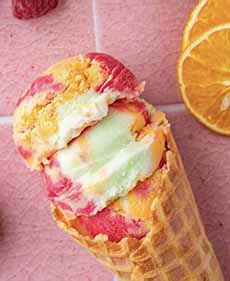
    [5] Time for dessert: rainbow sherbet. Here’s the recipe (photo © Dinner Then Dessert).

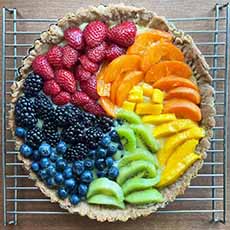
    Rainbow Fruit Tart
    [6] Or if you prefer, a rainbow fruit tart. Here’s the recipe (photo © Ugly Duckling Bakery).


    We did not find a rainbow today, National Find A Rainbow Day. It was a dry, cloudy day, lacking the water vapor/droplets and sunlight required to create a rainbow.

    But we did have a rainbow breakfast taco (photo #1), thanks to Maria and Ricardo, two cousins from Mexico who brought tortillas to Boston in the 1980s.

    We found the idea on their Instagram page.

    Since we first saw their rainbow tacos, we’ve been making them regularly. Today, National Rainbow Day, is certainly one of those days.

    It’s easy to decide what rainbow colors to put in the taco (or burrito or sandwich).

    We just head to our article, Eat The Rainbow, which lists every veggie and fruit by color group: green, orange, purple, blue, yellow, and white.

    We included scrambled eggs, which counted as the yellow color.

    There are many more rainbow dishes to make, from pizza to sushi to desserts galore. And more rainbow holidays to celebrate, below.

    If you want to find a rainbow in a hurry, head to Hawaii, “The Rainbow Capitol of the World.” Here’s more about it.
     
     
    THE “HISTORY” OF THE RAINBOW

    We learned in 8th grade science class that the colors of the rainbow were, in order of their place on the spectrum, red, orange, yellow, green, blue, indigo and violet (ROYGBIV). The colors are the result of light being split into different wavelengths. Red is the longest, violet the shortest.

    These were the original colors described by Sir Isaac Newton. There are far more, because a rainbow is actually made up of a myriad of individual spectral colors that overlap and mix.

    Modern scientists who study the phenomena of rainbows—the meteorologists, atmospheric physicists, optical physicists, and spectroscopists—have dropped the “I,” combining indigo with the blue and violet spectra.

    But at the beginning, there were the philosophers†.

    In fact, the first writings about rainbows come from the Greek philosopher Aristotle, who mused about their colors as far back as 350 B.C.E. He recognized that rainbows involved the reflection of light in water droplets.

  • 350-330 B.C.E.: Aristotle writes about rainbows in his treatise “Meteorologica” (Meteorology). He discusses the physical nature of rainbows, their shape and formation, the colors visible in rainbows and their order, and the conditions needed for rainbows to appear.
  • 65 C.E., The Roman philosopher Seneca the Younger picked up on Aristotle’s ideas and added his own in his book, Naturales Quaestiones. He predicted the prism effect that was established by Sir Isaac Newton centuries later.
  • 1304: Theodoric of Freiberg demonstrated how light is refracted and reflected inside raindrops using glass spheres filled with water.
  • 1637: René Descartes calculated the path of light through a raindrop and explained the primary rainbow.
  • 1666*: Isaac Newton discovered through his prism experiments that white light contains all colors of the spectrum. This finally explained how rainbows were created.
  • 1800s: Scientists discovered ultraviolet and infrared light beyond the visible spectrum.
  •  
    Modern physics now explains rainbows as the result of light being refracted, reflected, and dispersed within water droplets, creating its arc of colors.

    In the process, modern definitions of the spectrum of visible light have come to exclude indigo as a primary spectral color, merging it into the ranges of shades of blue and violet.

    Thus, most modern physics textbooks, scientific literature, and educational materials now use the six-color model (ROYGBV).

    A Rainbow Over Mountains
    [7] Contemplation of rainbows began with Aristotle, who was the first to write about them in a scientific manner (photo © Look Up Look Down Photography | Unsplash).


    RAINBOW HOLIDAYS

  • April 3: National Find a Rainbow Day (celebrate their beauty and the science behind rainbows)
  • June: Pride Month (coincides with the anniversary of the 1969 Stonewall riots)
  • June 28: Christopher Street Day (commemorates the Stonewall Riots)
  • August 28: Rainbow Bridge Remembrance Day (remembers beloved pets who have passed away)
  • October 22: National Color Day (focuses on the impact color has on each of us)
  •  
    ________________
     
    *When Newton first published his work on the spectrum in 1672 in the Philosophical Transactions of the Royal Society—six years after his discovery in 1666—he initially distinguished five primary colors: red, yellow, green, blue, and violet (or purple). However, when he published his comprehensive work “Opticks” in 1704—another 22 years later—he had expanded his model to seven colors: red, orange, yellow, green, blue, indigo, and violet (the familiar ROYGBIV).

    †Science did not appear as a separate field until the Scientific Revolution, 1500-1700.


    CHECK OUT WHAT’S HAPPENING ON OUR HOME PAGE, THENIBBLE.COM.


    Comments off

    Grape-Nuts Pudding Recipe For National Grape-Nuts Day

    April first is National Grape-Nuts Day, and that’s the truth: no April Fool.

    Every American has certainly heard of, if not eaten, Grape-Nuts breakfast cereal. Beyond cereal, our 15 favorite uses for Grape-Nuts is below, along with a recipe for Grape-Nuts Pudding.

    We’ll start with a brief history of Grape-Nuts.

    Below are:

    > The Grape-Nuts Pudding recipe.

    > The history of Grape-Nuts and Grape-Nuts Pudding.

    > 12 more ways to use Grape-Nuts.

    > The year’s 14 cereal holidays.
     
     
    THE HISTORY OF GRAPE-NUTS CEREAL

    Grape-Nuts is one of cold breakfast cereals invented as part of the health care movement of the late 19th century. Before then, cold cereal was not a breakfast item.

    It was initially marketed as a natural cereal that could enhance health and vitality.

    As a whole-grain cereal with no refined sugar, that still rings true today: Grape-Nuts offers significant nutritional benefits with high fiber content, protein, and essential nutrients‡. The cereal is low in sugar compared to many competitors and provides sustained energy.

    The pioneers were:

  • Granula (1863), created by Dr. James Caleb Jackson at his health sanitarium in Dansville, New York. It consisted of graham flour baked into sheets, broken into pieces, and baked again. The result was so hard it needed overnight soaking before consumption.
  • Granola (1877), developed by Dr. John Harvey Kellogg at the Battle Creek Sanitarium in Michigan. It was a modified version of Jackson’s Granula that used oats instead of graham flour. Here’s more about it.
  • Shredded Wheat (1893), invented by Henry Perky. It consisted of whole wheat that was boiled, shredded, and formed into biscuits.
  • Grape-Nuts (1887), created by Charles William (C.W.) Post, a former patient at the Battle Creek Sanitarium. It was made from wheat and barley. There’s more about it below.
  • Corn Flakes (1898), developed by John Harvey Kellogg and his brother Will Keith Kellogg. According to story, it was an accident when some cooked wheat was left out overnight and went stale. Here’s more about it. Kellogg’s Rice Krispies didn’t appear until 1928.
  •  
     
    Why Is Grape-Nuts So Named?

    Grape-Nuts contains neither grapes nor nuts but was made from from whole wheat-and-barley bread. Baked loaves are ground into crumbs, which are baked again to create the whole-grain cereal.

  • Grape sugar. C.W. Post believed (correctly) that grape sugar (glucose) was created when the product was baked. (Glucose was also called grape sugar at the time because it’s found in grapes.)
  • During a lengthy baking process, the malted barley facilitated the breakdown of starches in the grains into simpler sugars, including glucose.
  • The extended baking causes a Maillard reaction that produces the distinctive flavor and brown color, while also converting some of the grain starches into maltose and glucose. This natural sweetness was one of the product’s selling points, making the the cereal palatable without adding refined sugar.
  • Nutty flavor. The cereal had no nuts but did have a nutty flavor. The malted barley contributes significantly to the nutty flavor profile, as does the whole wheat and the Maillard Reaction.
  •  
     
    And The Pudding Recipe History?

    In the early 1900s, to promote sales, Post advertised Grape-Nuts extensively, including contests to encourage consumers to create recipes that showed extended ways to use the cereal.

    Grape-Nuts Pudding may have been one of the winners†, since the brand’s promotional materials often included recipes for it.

    The recipe had become widely popular in New England households by the 1910s and 1920s. It evolved into a regional specialty and remains entrenched in New England cuisine [source: ChatGPT 2025-04-01].

    > There are plenty of recipes on the Grape-Nuts website.

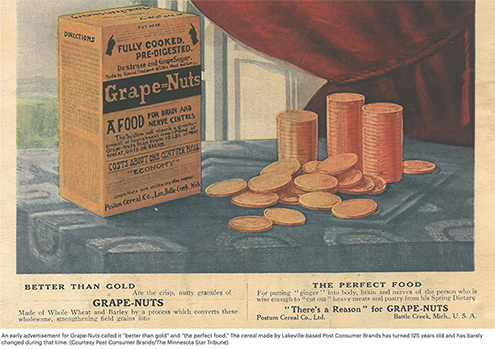
    Early Grape Nuts Ad
    [8] An early Grape-Nuts ad showing the original packaging. Here’s how the box has evolved (photo courtesy Post Consumer Brands).
     
     
    RECIPE: GRAPE NUTS PUDDING

    Grape-Nuts Pudding is a custard dessert with the cereal providing texture and flavor. It became particularly popular in New England cuisine, where it remains a regional specialty today, especially in Maine and Massachusetts.

    The basic recipe typically includes eggs, milk, sugar, vanilla, and Grape-Nuts cereal, baked until set. The cereal absorbs moisture from the custard mixture, softening while still providing a distinctive texture and nutty flavor to the finished pudding.

    While early recipes for the pudding have a very mild flavor, Nancy Mock of Taste Of Home has updated the ingredients with a bit of cinnamon, maple syrup, and extra-toasty cereal. It can be served warm or chilled.

    Prep time is 10 minutes and cook time is 45-50 minutes.
     
    Ingredients For 9 Servings

  • 1 cup Grape-Nuts
  • 3 cups whole milk
  • 3 large eggs, room temperature, lightly beaten
  • 1/2 cup packed brown sugar
  • 1/4 cup maple syrup
  • 2-1/2 teaspoons vanilla extract
  • 1 teaspoon ground cinnamon
  • 1/2 teaspoon salt
  • Pinch ground nutmeg*
  • Optional for serving: whipped cream, ice cream (butter pecan, cinnamon, or vanilla), fresh berries, sliced bananas, a drizzle of caramel sauce, butterscotch sauce or hard sauce
  • ____________

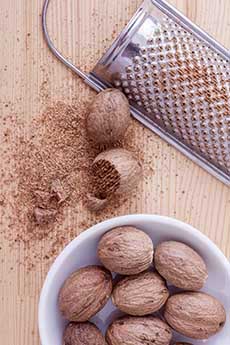
    *We highly recommend freshly-grated nutmeg.

     
    Preparation

    1. PREHEAT the oven to 350°F. Lightly grease an 8-inch-square baking dish.

    2. HEAT a small nonstick skillet over medium heat; add the Grape-Nuts. Stirring constantly, toast the Grape-Nuts for 3-4 minutes, just until fragrant and beginning to turn deep brown. Transfer to a bowl or plate to cool.


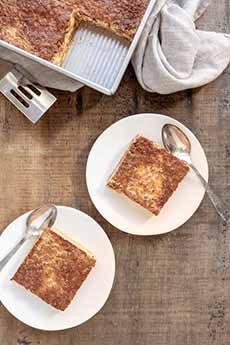
    Two Slices Of Grape Nuts Pudding
    [1] Grape-Nuts Pudding can be served warm or chilled (photos #1 and #2 © Nancy Mock | Taste Of Home).

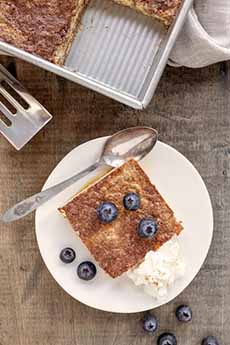
    A Slice Of Grape Nuts Pudding
    [2] A bit of garnish is optional but always welcome.

    Grape Nuts Cereal Box & Bowl
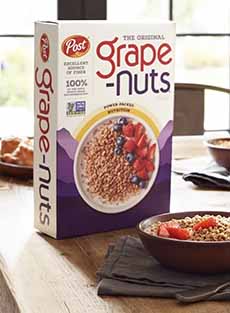
    [3] A box of Grape-Nuts (photos #3, #4, and #8 © Post Grape-Nuts).

    Grape Nuts April Fools Box
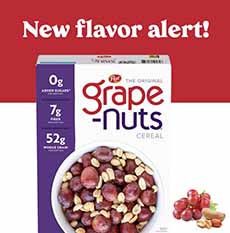
    [4] April Fool! Note the bowl of cereal that consists of grapes and nuts. See the footnote†† as to why the brand’s holiday ended up on April 1st.

    A Tablespoon Of Ground Cinnamon
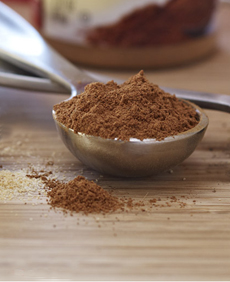
    [5] Cinnamon perks up the flavor and aroma (photo © McCormick).

    Nutmeg Nuts & Grater
    [6] As does nutmeg (photo © SCYMP | Pixabay).

    A Bottle Of Maple Syrup
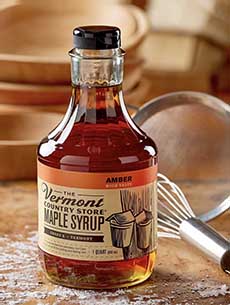
    [7] And maple syrup—a nice New England touch (photo © Vermont Country Store).

     
    3. POUR the milk, eggs, brown sugar, maple syrup, vanilla extract, cinnamon, and salt into a large mixing bowl. Whisk together until thoroughly combined; then whisk in the toasted Grape-Nuts. Pour mixture into the prepared baking dish and dust the top with ground nutmeg.

    4. CREATE a water bath by placing the pudding dish inside a large roasting pan or baking dish. Set the nested pans on the center rack in the oven. Carefully pour hot water (from the tap or heated) into the roasting pan until it rises about three-quarters of the way up the outside of the pudding dish.

    5. BAKE the pudding, uncovered, for 45-50 minutes or until the pudding is set with just a slight wobble in the center and a toothpick inserted in the center of the pudding comes out clean.

    6. CAREFULLY LIFT the pan of pudding out of the water bath and transfer it to a wire rack to cool for about 15 minutes. Slice and serve.

    To serve cold, let the pudding cool completely and refrigerate it for at least 1 hour.

    Store leftovers tightly covered with plastic wrap for up to five days.
     
     
    12 MORE WAYS TO SERVE GRAPE-NUTS

  • Baking in cookie dough, muffins, pie crusts, quick breads
  • Breading for chicken or fish
  • Breadcrumb substitute in meatloaf, meatballs, stuffing
  • Breadcrumb/crouton garnish substitute: salads, mac and cheese
  • Breakfast: mixed into pancake or waffle batter
  • Garnish: fruit salad, ice cream, pudding
  • Homemade cereal bars/energy bars
  • Oatmeal garnish or mix-in
  • Porridge substitute: soak Grape-Nuts in hot milk or water to soften and serve like oatmeal or make “overnight oats”
  • Streusel topping for fruit crisps or pies
  • Topping for cottage cheese, smoothie bowls, yogurt, yogurt parfait
  • Trail Mix
  •  
     
    MORE CEREAL HOLIDAYS

  • January: National Oatmeal Month
  • February: Barley Month
  • February, Second Monday: Oatmeal Monday
  • March 7th: National Cereal Day
  • April 1: National Grape-Nuts Day
  • April 14: National Grits Day
  • June 23rd: National Porridge Day
  • July 31: National Shredded Wheat Day
  • September 2nd: National Grits for Breakfast Day
  • September 26th: Better Breakfast Day
  • October 29th: National Oatmeal Day
  • November 15th: National Raisin Bran Cereal Day
  •  
    Plus

  • January 11th: National Milk Day
  • January 21st: National Granola Bar Day
  • September 18th: National Rice Krispie Treats Day
  • ________________
     
    Sweet bread puddings were already popular in the northeastern as a way to use up stale bread. Using Grape-Nuts in place of regular bread crumbs made a more flavorful yet still inexpensive pudding.

    ††An April Fool’s joke? Some food professionals have speculated that the April 1st date for National Grape-Nuts Day could be a playful nod to the cereal’s misleading name. As it contains neither grapes nor nuts, it’s actually “April Food Foolery.” However, there’s no official confirmation of this theory.

    Grape-Nuts provides several essential nutrients, particularly due to its whole grain ingredients and fortification. The specific levels of fortification have changed over time as nutritional guidelines and understanding have evolved. Today they include:
    > B vitamins including thiamin (B1), riboflavin (B2), niacin (B3), vitamin B6, and folic acid, which support energy metabolism and nervous system function.
    > Copper, iron, magnesium, phosphorus, selenium, vitamin D, and zinc.
    > High fiber content, about 7g per serving.
    > Plant-based protein, about 6g per serving.


    CHECK OUT WHAT’S HAPPENING ON OUR HOME PAGE, THENIBBLE.COM.


    Comments off

    Drink Pairings For National Clams On The Half Shell Day

    Clams On The Half Shell With Chardonnay
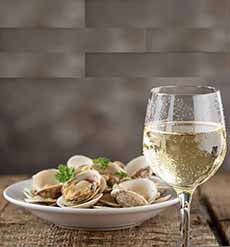
    [1] Cherrystone clams on the half shell with a glass of Chardonnay (photo by Chat GPT 2025-03-31).

    Clams On The Half Shell
    [2] Topneck clams with a glass of sparkling wine (photos #2 and #3 by FLUX 1.1 2025-03-31).

    Clams On The Half Shell
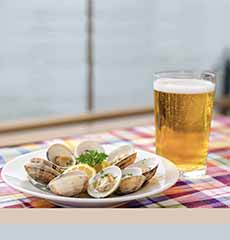
    [3] Littleneck clams with a beer.

    3 Sizes Of Hardshell Clams
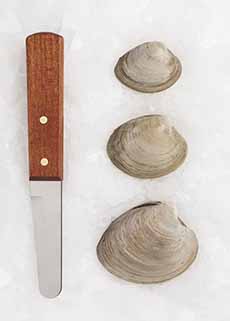
    [4] A comparison of some quahog sizes, from the top: littleneck, topneck, and cherrystone. Here’s more about these and other sizes of hard-shell clams (photo © Atlantic Aqua Farms).

    A Bowl Of Littleneck Clams
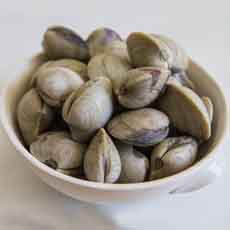
    [5] A bowl of littleneck clams (photos #5 and #8 © Good Eggs).

    Mignonette Sauce
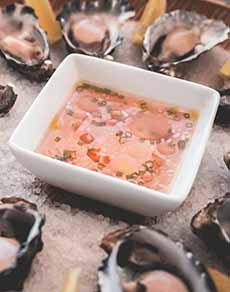
    [6] Mignonette sauce. The recipe is at the right (photo © Lachlan Ross | Pexels).

    A Glass Dish of  Mignotte Sauce
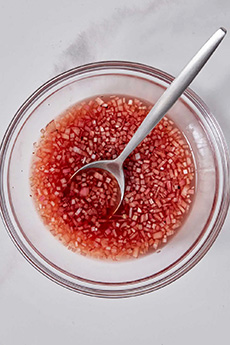
    [7] Here’s another Mignonette sauce recipe, with advice on swapping out the vinegar and the allium (photo © New York Times | Joel Goldberg photographer | Barrett Washburn food stylist).

    Black Peppercorns
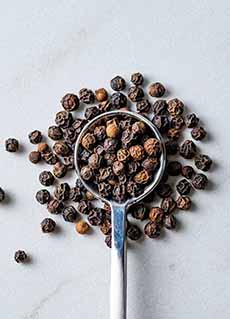
    [8] Cracked pepper is an essential ingredient in Mignonette Sauce. If you don’t have a peppermill that can grind them coarsley, see other techniques in the footnote† below (photo © Savory Spice Shop).


    We know what we’re having after work today: clams on the half. It’s National Clams On The Half Shell Day, celebrating a plate of raw clams with a squeeze of lemon, mignonette sauce, or cocktail sauce.

    We’ve invited neighbors, tasking one with the shucking. The next question coming up: What to drink?

    The recommendations that follow also work with oysters on the half shell.

    > Below: What types of clams are served on the half shell?

    > The different types of clams.

    > The history of clams.

    > A recipe for Mignonette Sauce (photo #6) is below.

    > So are the year’s 56 fish and seafood holidays.
     
     
    1. CLAMS ON THE HALF SHELL WITH WINE

    Clams on the half shell pair best with crisp, dry, minerally wines, which complement their brininess.

    We’re using the opportunity to have a wine pairing with bottles of:

  • Albariño, a Spanish white with high acidity and stone fruit notes that match the delicate sweetness of clams.
  • Chablis, a mineral-forward, unoaked Chardonnay from Burgundy that enhances the clams’ natural flavors.
  • Champagne or other sparkling wine—the effervescence and acidity pair beautifully with the salinity of the clams (photo #2).
  • Muscadet, a light, dry white from the Loire Valley, with bright acidity and salinity.
  • Sancerre, a crisp Sauvignon Blanc from the Loire Valley with citrus and herbal notes.
  •  
    If you want to keep your dollars in the U.S., try:

  • Albariño from Oregon’s Columbia Valley.
  • Chenin Blanc from Washington.
  • Pinot Gris from Oregon.
  • Riesling from Oregon’s Willamette Valley or New York’s Finger Lakes.
  • Sauvignon Blanc from Napa or Sonoma.
  • Sparkling wines from California, New York Finger Lakes, Oregon Willamette Valley, or Washington State.
  • Unoaked Chardonnay from California’s Santa Barbara or Sonoma Coast areas or from Long Island (photo #1).
  •  
     
    2. CLAMS ON THE HALF SHELL WITH BEER

    If your crowd prefers beer, this is not the time to bring out the a IPA. Instead, choose:

  • Pilsner, crisp and clean, won’t overpower the delicate taste of the clams (photo #3).
  • Saison, a farmhouse ale with a hint of spice and citrus that complements the shellfish.
  • Witbier, the Belgian wheat beer with light citrus and coriander notes that also play well with the clams.
  •  
    > Here’s more about these types of beer.
     
     
    3. CLAMS ON THE HALF SHELL WITH COCKTAILS

    For the cocktail crowd, serve

  • Dry Gin Martini, but not a Dirty Martini—the olive juice can overwhelm the fresh shellfish.
  • Gin & Tonic, refreshing and herbal, a good match for raw seafood.
  • Straight Spirits: aquavit or vodka (including cucumber-infused vodka), chilled or on the rocks—clean and crisp flavors that don’t compete with the clams.
  •  
     
    4. CLAMS ON THE HALF SHELL WITH NON-ALCOHOLIC DRINKS

  • Sparkling water with a big squeeze of fresh lemon or lime.
  • Infused water with cucumbers and/or fresh herbs. Recipes:
  •  
    > Cucumber Water
    > Lemon-Cucumber Water
    > Herbal Water
     
     
    WHAT TYPE OF CLAMS ARE SERVED ON THE HALF SHELL?

  • Littleneck clams, a small variety of quahog clams (hard-shelled clams, Mercenaria mercenaria), are by far the most common clam served on the half shell in the U.S. They’re small, tender, and sweet with a briny flavor.
  • Cherrystone clams are also quahogs, slightly larger than littlenecks.
  • Topneck clams are a size in-between littlenecks and cherrystones.
  • Manila clams, more available on the West Coast, can be served raw although are more commonly cooked in soups and noodle dishes.
  •  
     
    RECIPE: MIGNONETTE SAUCE FOR CLAMS & OYSTERS

    Ideally make this the day before; or allow two hours for the flavors to blend and the shallots to soften. It will keep in the fridge for months.

    (Of course, if you need to use it ASAP, go right ahead.)

    If you don’t have red wine vinegar, use another fine vinegar: Champagne vinegar, white wine vinegar, even sherry vinegar. You can even use white balsamic vinegar, but steer clear of regular balsamic.

    While we usually don’t use the “optional” ingredients which can mask the delicate bivalve flavors, we include them
     
    Ingredients

  • ½ cup red wine vinegar
  • 2 tablespoons minced shallots
  • ½ teaspoon freshly cracked† (or coarsely ground) black pepper
  • Pinch of salt
  • Optional: pinch of sugar
  • Optional: minced jalapeño or other chili, squeezer of lemon or lime, fine dice of apple (with skin) or cucumber (peeled)
  •  
    Variation

    As an alternative to mignonette, make what we call “Asian chimichurri sauce” with white wine or rice vinegar, minced shallots, minced garlic, and grated ginger, lightly seasoned with salt and pepper.
     
    Preparation

    1. COMBINE all ingredients in a small bowl and whisk to combine.

    2. SET aside at room temperature for 2 hours for the flavors to meld. Then, use or refrigerate.
     
     
    The History Of Mignonette Sauce

    Historically, vinegar-based sauces have been used for centuries to complement seafood. Mignonette sauce originated in France as a condiment for oysters on the half shell, and gained popularity in the 19th century. The original was a simple blend of shallots, vinegar, and cracked black pepper. Its sharp, tangy, and slightly spicy flavors was designed compliment the brininess of the oysters.

    Today, variations include additions like citrus juice, herbs, or even a touch of sugar to balance the acidity. Cooks have enhanced the sauce with diced apples, cucumbers, and other fruits.

    The word mignonette comes from the French word mignon, meaning small or delicate.

    In old French cooking, poivre mignonette referred to the cracked or coarsely ground black pepper, which is an essential ingredient in the sauce.
     
     
    ________________

    How to crack peppercorns without a coarse grinding setting on your peppermill: Grind them with a mortar and pestle. Or put the peppercorns in a sealed plastic bag and use a rolling pin, heavy pan, meat mallet, or knife blade to crack them. You can also pulse the peppercorns briefly in a coffee grinder or spice grinder.


    THE YEAR’S 57 FISH & SEAFOOD HOLIDAYS
    January

  • January 10: National Oysters Rockefeller Day
  • January 24: National Lobster Thermidor Day
  • January 25: National Fish Taco Day
  •  
    February

  • February 18: National Crab Stuffed Flounder Day
  •  
    March

  • March 3: Global Omega-3 Day
  • March 7: Friday Fish Fry Day
  • March 9: National American Paddlefish Day
  • March 12: National Baked Scallops Day
  • March 20: Crawfish Cravers Awareness Day
  • March 25: National Lobster Newburg Day
  • March 31: National Clams On The Half Shell Day
  • Friday after Lent: National Tartar Sauce Day
  •  
    April

  • April 3: Fish Fingers and Custard Day
  • April, 2nd Saturday: National Catch and Release Day
  • April 17: National Crawfish Day
  • April 21: Tuna Rights Day
  •  
    May

  • May 2: World Tuna Day
  • May 10: National Shrimp Day
  • May 16: National Coquilles Saint Jacques Day
  • May 21: World Fish Migration Day
  • May 31: National Fisherfolks Day
  •  
    June

  • June, 1st Friday: National Fish & Chips Day (UK)
  • June, 1st Full Week: National Fishing and Boating Week
  • June 5: International Day for the Fight against Illegal, Unreported and Unregulated Fishing
  • June 15: National Lobster Day
  • June 18: International Sushi Day
  • June 18: National Fishing Day/Go Fishing Day
  • June 25: National Catfish Day
  • June 27: National Women’s Fly Fishing Day
  • June, Last Week: Fish Are Friends, Not Food Week
  • June 29: International Fisherman Day
  • July

  • July 18: National Caviar Day
  • July 24: National Fishing Month Begins
  •  
    August

  • August: National Catfish Month
  • August 5: National Oyster Day
  • August 27: Crab Soup Day†
  •  
    September

  • September 25: National Lobster Day
  • September, 4th Saturday: Fish Amnesty Day
  • September, 4th Saturday: National Hunting & Fishing Day
  • September 25: National Lobster Day*
  • September 28: International Poke Day
  •  
    October

  • October: National Pescatarian Month
  • October: National Seafood Month
  • October, 1st Sunday: International Blessings of The Fishing Fleet Day
  • October 2: National Fried Scallops Day
  • October 8: National Salmon Day
  • October 10: Squid and Cuttlefish Day
  • October 12: National Gumbo Day
  • October 15: National Dashi Day
  • October 19: National Seafood Bisque Day
  • October, 3rd Wednesday: National Hagfish Day
  •  
    November

  • November 3: World Jellyfish Day
  • November 21: World Fisheries Day
  • November 24: National Sardines Day
  •  
    December

  • December 14: National Bouillabaisse Day
  • December 21: National French Fried Shrimp Day
  • December 24: Feast Of The Seven Fishes
  •  
    ________________
     
    *There are two National Lobster Days. September 25th was designated as National Lobster Day by the United States Senate, recognizing the cultural, economic, and environmental importance of the lobster industry, particularly in Maine. The June 15th date was a pre-existing celebration. Here’s more about it.

    Crab Soup Day originated in Nicaragua and is also recognized in the U.S. as National Crab Soup Day. In Nicaragua, the day is part of a festival to mark the end of slavery with food, music, and parades. In the U.S., it’s a food-focused holiday for enjoying various types of crab soup, from creamy bisques or hearty chowders.


    CHECK OUT WHAT’S HAPPENING ON OUR HOME PAGE, THENIBBLE.COM.


    Comments off

    Bell’s Cookies, Worth Sending For, Plus How To Store Cookies

    One of the great things about Bell’s Cookies, a baker of artisan cookies in Seattle, is that no one will mind if their gift is late.

    The monthly mix of all-natural flavors offer upgrades on the classics plus new flavor combinations. And the whole line is our Top Pick of The Week.

    While there are numerous artisan bakers who make a great chocolate chip, oatmeal, red velvet or snickerdoodle cookie—and yes, Bell’s sells those flavors—we really go out of our way for the flavors with a twist:

  • Chocolate Sesame Halva, eye-opening.
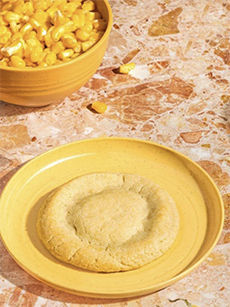
  • Colombian Corn, a personal favorite of both ours and the owners, made with three different types of corn flour (they call it a sweet take on the arepa).
  • The Bell’s, a chocolate chip pecan cookie with toffee and potato chips.
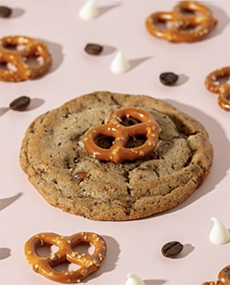
  • The Pantry, white chocolate chunks, toffee, pretzels, and espresso.
  •  
    With our first order in December, we tried the whole shebang: Black Cocoa Crinkle, Chocolate Chunk (sprinkled with Maldon salt), Chocolate Sesame Halva, Christmas Confetti, Colombian Corn, Cookie Butter, Eggnog Snickerdoodle, Ginger Molasses, Peppermint & Cornflake, Pistachio Citrus, Pumpkin Cinnamon Roll, Red Velvet, S’mores, and Vegan Chocolate (which is also gluten-free, made with almond flour).

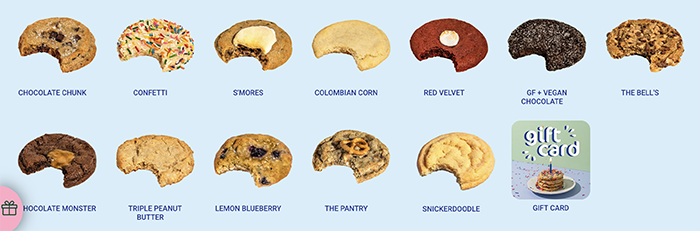
    You can see the current website selection in photo #9 and here: Chocolate Chunk, Chocolate Monster, Columbian Corn, Confetti, Gluten Free & Vegan Chocolate, Lemon Blueberry, Red Velvet, Snickerdoodle, The Bell’s, The Pantry, and Triple Peanut Butter.

    We’re waiting to see what next month will bring. We think we’ll be seeing a special Easter cookie.

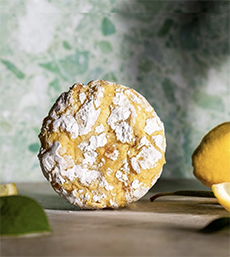
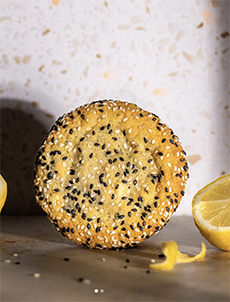
    And we’ve only seen photos of Lemon Crinkle, Sesame Yuzu, and Chocolate-Covered Strawberry on social media. And we want them.

    The most popular flavor is, of course, the Chocolate Chunk, followed, not surprisingly, by Red Velvet. The Colombian Corn (photo #4) takes the bronze. That is a surprise, and you should require no arm-twisting to order some.

    But if you’re a real foodie, skip the familiar and customize a box that includes the more unusual. Our Christmas box contained Chocolate Halva, Colombian Corn, Eggnog Snickerdooddle, Peppermint Cornflake, and Pumpkin Cinnamon Roll, and we fill out the box with other flavors.

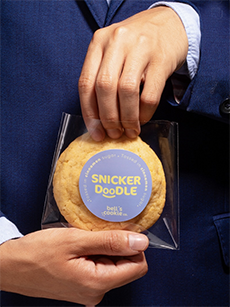
    Each cookie is individually wrapped for freshness (photo #2) and has an ingredients label.

    Bell’s also sells their cookie dough by the pint—but personally, we’d be afraid that the dough would never get to our oven.

    Before we continue, check out:

    > The history of cookies.

    > The 11 basic cookie styles.

    > The different types of cookies: a photo glossary.

    > The year’s 44 cookie holidays.

    > How to keep cookies fresher for longer (below).
     
     
    A BRIEF HISTORY

    Bell’s Cookie Co. was founded in 2020 by husband and wife team Tomas and Brooke Perez, after their catering business was interrupted by the pandemic.

    While adapting to the times, they remembered how much their catering customers loved their cookies.

    They pivoted to focus on those cookies—a treat that always brings a smile to people’s faces, in hard times and good.

    The brand was named after their daughter Isabella, and was a success from the get-go.

  • Seattle Yelp named the bakery the best in the state for cookies, calling them “delicious and gooey.”
  • Numerous other broadcast and online media have named it the city’s top cookie spot.
  • Delta Airlines has selected the cookies to serve on its domestic flights.
  •  
    Our hope is that, while going from producing 20,000 cookies a month to 500,000 cookies to accommodate Delta, there’s still enough love to bake into each bite.

    And a second hope—not in the least way self-serving—that they open a Bell’s Cookies near us.
     
     
    GET YOUR BELL’S COOKIES

    Bell’s has done the hard work by packaging five different assortments of 12 cookies.

    Or, you can customize your own assortment.

    There are subscriptions and gift cards.

    > Head to the Bell’s Cookies website.
     
     
    TIP: HOW TO KEEP YOUR COOKIES FRESHER FOR LONGER

    Let’s say you only like to eat a little at a time. Or that you baked the cookies (or cakes, pies, or breads) more than two days ago.

    Here’s how to extend the life of fresh baked goods, made without preservatives, keeping everything good to the last bite.

    Cookies can go bad due to:

  • Moisture loss (staleness) due to air exposure, which causes the starches to crystallize.
  • Absorbing moisture (sogginess), from humidity in the air.
  • Spoilage from ingredients like dairy (butter, eggs, milk/cream) or fresh (like fruit) that can develop mold or bacteria if left out too long.
  • Oxidation (rancidity) of fats (butter, chocolate, nuts, oil) that go rancid over time.
  •  
    The fridge is not always the solution.

    While keeping cookies in the fridge will forestall bacteria and mold for longer, it also can dry them out (make them stale) much faster.

    In fact, the cold temperature in the fridge accelerates the crystallization of the starch molecules in the flour, which draws moisture out of all baked goods.

    While recipes with custard, cream cheese, or whipped cream should be refrigerated (cheesecake can be frozen), consume them sooner rather than later. But as they have less flour than other cakes, they’ll keep longer.
     
     
    HOW GIVE BAKED GOODS A LONGER SHELF LIFE

    If they’re home baked, let them cool completely before putting them in a container or wrapping. This will stop condensation from building up inside the container, which can make the stored goods soggy.

    Then make them airtight. As soon as they have cooled, store your baked goods in airtight containers. This minimizes their exposure to air, which dries them out.

    Use parchment or wax paper between the layers to absorb the moisture from each layer and prevent sogginess.

    While cookies can be stored in a high quality airtight container at room temperature for several days, cake and cheesecake should be refrigerated.
     
     
    What About Pies?


    Stack Of Bell's Cookies
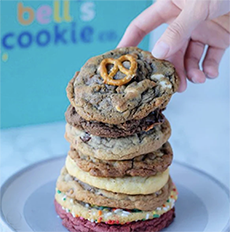
    [1] Yes, please! The cookie on top is The Pantry, a favorite (all photos © Bell’s Cookies).
    Snickerdoodle Cookie
    [2] Each cookie is individually wrapped with an ingredients label. Pop them right into a gift bag.
    Chocolate Chip & Pretzel Cookie
    [3] We love The Pantry, a white chocolate chunk cookie with toffee, espresso, and a pretzel on top.
    Colombian Corn Cookie
    [4] Don’t overlook Colombian Corn—it may not look glam but it’s the #3 best-seller.
    Lemon Crinkle Cookie
    [5] We’re keeping an eye out for Lemon Crinkle to return.
    Sesame Yuzu Cookies
    [6] Ditto for Sesame Yuzu.

    Cookies Warming In A Toaster Oven
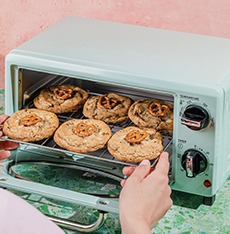
    [7] Bell’s tip: Microwave the cookies 5-15 seconds for gooey, or 3-5 minutes in the toaster oven for chewy. Store leftovers (as if!) in an airtight container for up to 5 days.
    Box Of Bell's Cookies
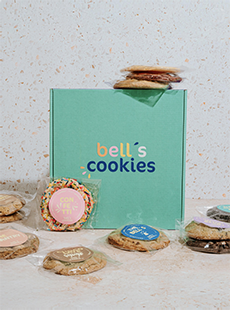
    [8] Who wouldn’t love to receive a box of Bell’s Cookies?

  • Fruit pies can be stored at room temperature for up to two days, loosely covered. After that, refrigerate or possibly freeze them*.
  • Custard, cream, and pumpkin pies should always be stored in the fridge, as they contain dairy and eggs that can spoil. (Food trivia: Pumpkin pie is a pumpkin-flavored custard pie.)
  • Pecan pie should also be refrigerated due to its egg content.
  • Store-bought pies should be stored as they were sold: either at room temperature or refrigerated.
  •  
    Thanks to Coupon Mister for some of these tips.
     
     
    Bell's Cookie Flavors
    [9] These flavors were available on the publication date of this article. Whatever is available when you get there, you can’t go wrong with any one of them.
     
    ________________
     
    *Cream/whipped cream, custard, fresh fruit, and meringue pies shouldn’t be frozen. When thawed, the filling can separate or become watery.


    CHECK OUT WHAT’S HAPPENING ON OUR HOME PAGE, THENIBBLE.COM.


    Comments off

    The Nibble Webzine Of Food Adventures
    RSS
    Follow by Email


    © Copyright 2005-2025 Lifestyle Direct, Inc. All rights reserved. All images are copyrighted to their respective owners.