|
Updated July 2026
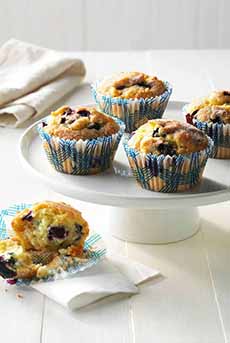
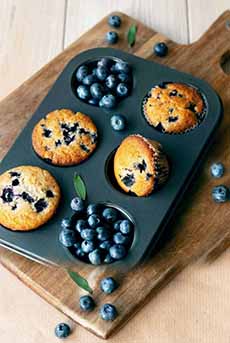
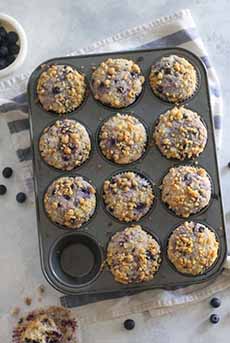
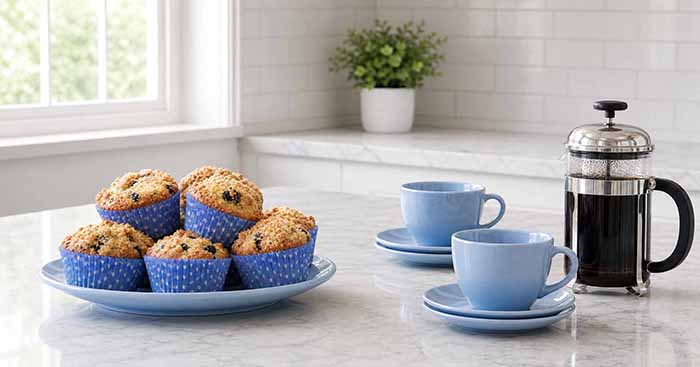
July 11th is National Blueberry Muffin Day. If you’ve never made blueberry muffins from scratch, today’s the day.
Use seasonal fresh blueberries. There’s nothing like the real deal.
Most commercial blueberry muffins use frozen blueberries, which can get watery when baking at home. The technique for fixing that is below.
The creator of this recipe is unknown, but it appeared in early versions of the Fanny Farmer Cookbook. Our Nana used it.
The recipe is not in recent editions of the cookbook, but you can purchase a reprint of the Fannie Farmer 1896 Cook Book.
Below:
> Recipe: Twin Mountains Blueberry Muffins.
> How to use frozen blueberries.
> How to freeze the muffins.
> The difference between muffins and cake.
> The year’s 4 muffin holidays.
Elsewhere on The Nibble:
> The history of blueberries.
> More blueberry recipes.
> The year’s 11 blueberry holidays.
> All of the July food holidays.
RECIPE: TWIN MOUNTAINS BLUEBERRY MUFFINS
The name references the Twin Mountains in Franconia, New Hampshire, a pair of mountain peaks called North Twin and South Twin in New Hampshire’s White Mountains.
Fanny Farmer, who became the principal of the Boston Cooking School in 1891, originally titled her book The Boston Cooking-School Cook Book in 1896.
In that first edition the recipe is listed as “Twin Mountain Muffins,” a basic muffin without inclusions. The blueberries were a subsequent adaptation.
New England readers would have been familiar with the Twin Mountains.
The name likely worked much like Maine Blueberry Muffins or Cape Cod Cranberry Muffins: It gave readers a sense of place and signaled a rustic northern New England blueberry tradition.
Ingredients
2 cups pastry flour*
3 teaspoons baking powder
1/4 teaspoon salt
1/2 cup sugar
2 eggs, slightly beaten
1 cup milk
1/4 cup melted butter
1 cup blueberries
Preparation
1. PREHEAT oven to 400°F. COMBINE 1-1/2 cups flour, baking powder, salt, and sugar in a mixing bowl. In a second bowl combine eggs, milk, and butter. In a third bowl, sprinkle 1/2 cup flour over the blueberries.
2. POUR the egg mixture over the flour mixture. Stir only enough to dampen the flour; the batter should not be smooth. Gently stir in blueberries.
3. SPOON into buttered muffin tins. The batter should fill each muffin cup two-thirds high. Bake for 15 minutes.
To freeze fresh blueberries for muffins without them becoming watery or bleeding too much juice into your batter, you can use the flash-freeze method combined with a few baking techniques.
HOW TO USE FROZEN BERRIES
Frozen berries can become watery when defrosted. Here are tips for the best results with any type of berry:
1. WASH the berries and ensure they are completely dry by patting them with paper towels or—ideally—letting them air dry on a clean kitchen towel. Any residual moisture will turn into ice crystals that cause sogginess later.
2. SPREAD the dry berries in a single layer on a parchment-lined baking sheet, making sure they aren’t touching, and place the tray in the freezer for about two hours until they are frozen solid.
3. TRANSFER the frozen berries to a freezer-safe bag or airtight container, which prevents them from clumping together and allows you to measure out exactly what you need. When you’re ready to bake…
3. DO NOT THAW the berries: This is when they release most of their liquid and become watery. Instead, take them directly from the freezer and toss them in a small amount of flour (a tablespoon or two taken from the recipe’s total flour amount) to help them stay suspended in the batter and absorb excess moisture during the bake.
4. GENTLY FOLD the frozen, floured berries into the batter at the very last second and get the muffins into the oven immediately to ensure the best texture and appearance.
The article continues below the photo.
|