THE NIBBLE BLOG: Products, Recipes & Trends In Specialty Foods


Also visit our main website, TheNibble.com.

Cumin-Spiced Pistachio Pesto Recipe For National Pistachio Day

Here’s another recipe for National Pistachio Day: a cumin-spiced pistachio pesto recipe that is delicious on:

  • Baked, broiled, or grilled chicken or fish
  • Dip for crudités
  • Eggs any style
  • Pasta and pizza
  • Roasted root vegetables
  • Salad dressing (thin with olive oil as desired)
  • Sandwich and toast spread
  •  
    > Check out these additional pistachio recipes for breakfast, lunch, dinner, and snacks.

    > The history of pistachio nuts.

    > The year’s pistachio holidays.

    > The year’s 38 nut holidays.
     
     
    RECIPE: CUMIN-SPICED PISTACHIO PESTO RECIPE

    This recipe adds a Middle Eastern spin to pesto, from the pistachio nuts to the cumin (see more about cumin below). Unlike Italian pesto, this recipe has no cheese; the recipe is vegan.

    The recipe makes enough for 2-3 pounds of chicken or fish. Prep time is 15 minutes.

    Thanks to Pereg Gourmet for the recipe.
     
    Ingredients For 1 Cup

  • 1/3 cup shelled pistachios
  • 3/4 teaspoon lime zest
  • 1/4 fresh lime juice (about 1 medium lime)
  • 1/2 cup loosely packed basil leaves
  • 1 bunch of fresh parsley
  • 3 garlic cloves, peeled
  • ½ teaspoon salt
  • 1½ teaspoon ground cumin
  • 1/3 cup + 2 tablespoons olive oil
  •  
    Preparation

    1. ADD the pistachios to a food processor and pulse at high speed. Add the lime zest and juice and process at high speed.

    2. ADD the rest of the ingredients. For the parsley, twist the bunch with your hands, separating the leaves and small stems from the long bottom stems. Discard the bottoms.

    3. MIX on low speed or pulse, stopping to push down the mixture. Once all the ingredients are incorporated…

    4. BLEND at high speed until a uniform puréed consistency is achieved. This should take around 15-30 seconds. For a smoother texture, blend for up to 1 minute.

    5. TASTE and just the seasoning accordingly, adding more salt or lime juice as desired. Refrigerate, covered, until ready to use.
     
     
    For Salmon Or White Fish (Cod, Flounder, Tilapia) With Pistachio Pesto

    1. PREHEAT the oven to 425°F. On a parchment-lined tray, place the salmon, skin-side down, and pat dry. Spread the pesto generously over the fish. Bake uncovered for 20-25 minutes (baking time will vary depending on the thickness of the fish.)
     
     
    For Eggs With Pistachio Pesto

    If you’d like some heat, blend 1/2 a jalapeño chile into the pesto mix and drizzle on scrambled eggs.

    For a refreshing take on sunnyside-up eggs, add the pesto to the hot skillet before adding the eggs.
     
     
    WHAT IS CUMIN

    Cumin is the dried seed of the herb Cuminum cyminum, a member of the parsley family (Apiaceae). It originated in the Iranian plateau.

    Cumin seeds are easily confused visually with caraway seeds, another spice in the parsley family. Many Slavic and Uralic languages refer to cumin as “Roman caraway” or “spice caraway.” The distantly related Bunium persicum and Bunium bulbocastanum and the unrelated Nigella sativa are both sometimes called black cumin [source].


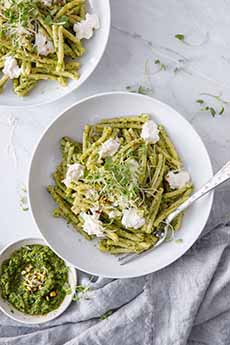
    Casarecce Pasta With Pistachio Pesto
    [1] Pistachio pesto on casarecce pasta. Here’s the recipe for this delicious pasta dish (photo © Love & Olive Oil | DeLallo).

    Pistachio Pesto On Tlast
    [2] Pistachio pesto on toast (photo by Shana Maikhor | Rule Of Plum).

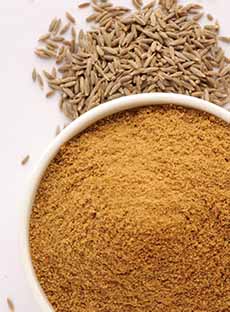
    Whole and ground cumin
    [3] Whole and ground cumin seeds. You’ll need ground cumin for this recipe (photos #3 and #4 © The Spice Lab).

    Lamb Stew With Cumin & Bowls of Rice
    [4] Middle Eastern lamb stew, seasoned with cumin.

     
    Cumin has been used as a spice for thousands of years. Seeds of wild cumin excavated in the settlement of Atlit-Yam were dated to the early 6th-millennium B.C.E.

    Cumin was a significant spice for the Minoans in ancient Crete. The ancient Greeks kept cumin at the dining table in its own container (much as pepper is frequently kept today), a practice that continues in Morocco.

    Cumin was also used heavily in ancient Roman cuisine and in India.

    Cumin was introduced to the Americas by Spanish and Portuguese colonists. And some spice trivia: Cumin is often used as part of bird food mixes [source].

    According to McCormick, cumin is one of the top 10 spices sold in the U.S. In fact, cumin is the second-most-sold spice in the world, just behind black pepper [source].
     
    Ways To Use Cumin

    Cumin has a distinctive flavor and aroma: earthy, nutty, piquant, tangy, and warming.

  • Whole cumin can be found in some cheeses (e.g. Gouda and Leyden, both Dutch) and in some breads from France, Greece, and India.
  • Ground cumin can be an ingredient in blended spices: achiote blends, adobos, bahaarat, chili powder (often Tex-Mex or Mexican-style), curry powder, garam masala, pickling spice, and sofrito, among others. In South Asia it is often combined with ground coriander seeds in a popular blend called dhana jeera.
  • It is used in baked goods such as cookies in India and Pakistan.
  •  
    Use ground cumin in:

  • Indian curries, Mexican and Tex Mex, and Middle Eastern dishes (falafel, hummus)
  • Beef and pork recipes, including stews
  • Marinades
  • Rubs
  • Vegetarian dishes
  •  
    This week we tossed some into a shrimp boil, along with cloves. The flavor and aroma were a delight!


    CHECK OUT WHAT’S HAPPENING ON OUR HOME PAGE, THENIBBLE.COM.


    Comments off

    Pistachio Quick Bread (Loaf Cake) Recipe For National Pistachio Day

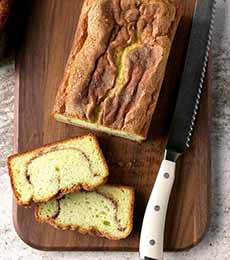
    Spiced Pistachio Quick Bread
    [1] A very pistachio quick bread (photo © Taste Of Home).

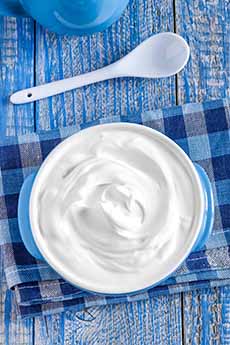
    Types Of Cream
    [2] Sour cream provides richness and moisture (photo © Yelena Emchuk | Panther Media).

    Bowl Of Cinnamon Sugar
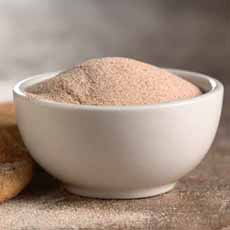
    [3] Cinnamon sugar provides the ribbon inside the quick bread (photo © King Arthur Baking).

    Banana Bread
    [] Banana bread, this one with a topping of pecans and halved bananas (photo © Leigh Skomal | Unsplash).

    Zucchini Bread
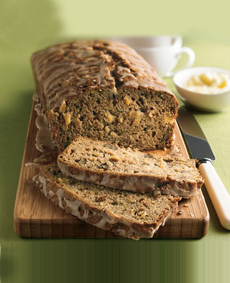
    [5] Zucchini bread, another sweet quick bread (photo © Betty Crocker).

    Pound Cake
    [6] Then why is pound cake, also baked in a loaf can, called a “cake?” The answer may lie in its history (photo © Wholesome Junk Food Cookbook).


    This recipe was created by Judy Fischer of Green Bay, Wisconsin, who notes, “I love making many of these special loaves to give away for the holidays. They also freeze well so it is easy to pull out for unexpected guests.”

    But there’s no reason to save this recipe for the holidays. It’s delicious for breakfast or dessert any time of the year.

    The recipe makes two loaves: one to eat, one to give away or freeze for later.

    And it’s so easy:

  • Because the ingredients include cake mix and pudding mix, there’s no dry measuring except for cinnamon and sugar.
  • There aren’t even any pistachio nuts to chop. The pistachio flavor comes from the pudding. (Although, we tossed chopped pistachios into the middle of the cake in Step 2, and also made an iced version garnished with pistachios.
  • The batter comes together quickly, and is easy to make when you need a dessert or something to bring to a gathering.
  •  
    > Check out these pistachio recipes for breakfast, lunch, dinner, and snacks.

    > The history of pistachio nuts.
     
     
    RECIPE: PISTACHIO QUICK BREAD

     
    Ingredients

  • 1 package white cake mix (regular size)
  • 1 package (3.4 ounces) instant pistachio pudding mix
  • 4 large eggs, room temperature
  • 1 cup sour cream
  • 1/4 cup water
  • 1/4 cup canola oil
  • 1/3 cup sugar
  • 3/4 teaspoon ground cinnamon
  •  
    Preparation

    1. PREHEAT the oven to 350°F. In a large bowl, combine the cake and dry pudding mixes. Add the eggs, sour cream, water, and oil; beat until blended (the batter will be thick).

    2. COMBINE the sugar and cinnamon. Spoon half of the batter into 2 greased 8″ x 4″ loaf pans. Sprinkle each with 2 tablespoons of cinnamon sugar. Spread with the remaining batter; sprinkle with remaining cinnamon sugar.

    3. BAKE until a toothpick inserted in the center comes out clean, 35-40 minutes. Cool for 10 minutes before removing from pans to wire racks.
     
     
    THE DIFFERENCE BETWEEN QUICK BREAD & LOAF CAKE

    When you look at a loaf cake that’s called a “bread”—banana bread or zucchini bread, for example—you may wonder why they are not called cake, like the carrot cake and pound cake made in the same loaf pan.

    Much of the explanation in this example lies in tradition—who called it what in published recipes (e.g., why is a conventional layer cake called a Boston Cream Pie).

    If we were able to change the system, we’d call sweet quick breads “loaf cakes” and leave “quick bread” to refer to the savory items that fall into the quick bread category: beer bread, biscuits, cornbread, muffins, pancakes, scones, and soda bread.

    Sweet quick breads/loaf cakes and cakes begin with the same ingredients: flour, sugar, eggs, milk (or other liquid binder), and some form of fat.

    The difference between the three is the proportion of ingredients used.

  • Add more eggs and you have a cake.
  • Take out some of the fat and you have a quick bread.
  • And take out the liquid and you have a cookie.
  •  
    Let’s look closer at sweet quick breads (i.e., loaf cakes).

  • Quick breads typically have less sugar and fat than cakes. The crumb tends to be coarser, which makes the quick bread denser.
  • Perhaps a more obvious difference is that the quick bread/loaf is made in a loaf pan. Cakes are made in round pans, including bundts and tube pans (with some exceptions such as sheet cakes and Swiss rolls/roulades).
  • A quick bread can be served uniced (as can other cakes such as Bundts and roulades, but not layer cakes).
  • A quick bread is more casual, sliced in rectangles. Yet, it can be garnished with ice cream, whipped cream, and/or berries, and served with coulis or other sauce, just like a round cake.
  •  
     
    How about the difference between conventional bread and quick bread?

    The difference between bread and quick bread is that bread is leavened using yeast.

    Quick breads and cakes are leavened using baking soda and/or baking powder.

    Plus, sweet quick breads include sugar and other ingredients to create their flavor (flavorings, inclusions), while most types of bread are prepared chiefly with flour, water, and salt, plus yeast*.

    What is the difference between loaf cake and bread?


    ________________
     
    *Specialty breads, like brioche and challah, also contain eggs, butter, and for brioche, milk or cream. Sourdough bread contains sourdough starter, fruit and nut breads contain dried fruits and/or nuts, cheese breads contain cheese, beer breads contain beer, etc.


    CHECK OUT WHAT’S HAPPENING ON OUR HOME PAGE, THENIBBLE.COM.


    Comments off

    FOOD FUN: Bacon & Eggs Deviled Eggs & More Deviled Egg Recipes

    Updated August 2026

    National Deviled Egg Day isn’t until November 2nd, and there’s no Bacon & Eggs Day. There are other holidays, of course, for both eggs and for bacon—conveniently listed below.

    But Easter is coming, and according to McCormick, nearly 2/3 of Americans—61%—plan to make and/or eat deviled eggs this Easter [source].

    You can serve them as hors d’oeuvres or appetizers (see the difference below) not only for Easter, but for meals throughout the year.

    Deviled eggs are especially popular food for parties and other gatherings, especially barbecues, picnics, holiday gatherings, potlucks, and showers.

    They’re less an everyday staple than a highly recognizable celebration and party food.

    Below:

    > The bacon and egg deviled eggs recipe.

    > The classic deviled eggs recipe.

    > More deviled egg recipes.

    > The year’s 11 bacon holidays.

    > The year’s 10 egg holidays.

    > The difference between hors d’oeuvre and appetizers.

    > The history of aperitifs and hors d’oeuvres.

    Elsewhere on The Nibble:

    > How to make perfect hard-boiled eggs.

    > The history of deviled eggs.

    > The different types of eggs: a photo glossary.
     
     
    Deviled Eggs Platter With Wine
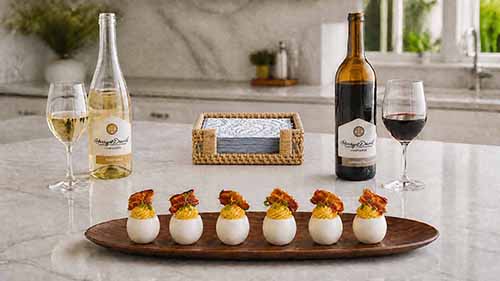
    [9] Bacon deviled eggs with a bottle of white, a bottle of red (photo © The Nibble).
     
    RECIPE: BACON & EGGS DEVILED EGGS

    If you don’t have a recipe, we’ve our Nana’s classic recipe follows this one.

    Ingredients

  • Deviled eggs, peeled
  • Bacon, crispy and cut into 2″ long pieces
  • Optional layer: bacon jam
  • Optional garnish: microgreens
  •  
    Preparation

    1. HALVE the boiled eggs lengthwise and remove the yolks. Set the hollowed egg-white halves aside.

    2. PREPARE the filling and spoon it into the egg white halves.

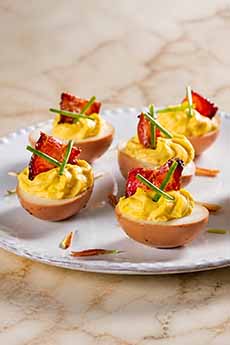
    3. TOP with a dab if bacon jam and crown with a piece piece of bacon placed lengthwise across the egg halves.

    Variation

    Create a deviled egg “surprise” by placing a layer of bacon jam in the egg half before adding the filling.
     
     
    RECIPE: CLASSIC DEVILED EGGS

    Ingredients For 6 Eggs/12 Halves

  • 6 large or jumbo eggs
  • 1/4 cup mayonnaise
  • 1 teaspoon white wine vinegar
  • 1 teaspoon Dijon mustard
  • 1/8 teaspoon salt
  • Freshly ground black pepper
  • Garnish: paprika is classic, but we prefer snipped chives)
  •  
    Preparation

    1. HARD-BOIL the eggs. Place the eggs in a single layer in a saucepan and cover with water to cover by 1-1/2 inches. Heat on high until the water begins to boil. Cover the pan, turn the heat to low, and cook for 1 minute. Remove the pan from heat and leave covered for 14 minutes. Then, drain the hot water and rinse the eggs under cold water continuously for 1 minute. (We place the eggs in a sieve for this.)

    2. PEEL the eggs. Crack the egg shells and carefully peel them under cool running water. Gently pat the peeled eggs dry with paper towels.

    3. SLICE the eggs in half lengthwise. Remove the yolks to a medium bowl, being very careful not to tear the whites. Place the whites on a plate or serving platter.

    4. MASH the yolks finely with a fork. Add the mayonnaise, vinegar, mustard, salt, and pepper. Mix well.

    5. EVENLY fill the egg whites with heaping teaspoons of the yolk mixture. Garnish and serve.
     
     
    MORE DEVILED EGG RECIPES

  • Bacon & Cheddar Deviled Eggs
  • Barbecue Deviled Eggs
  • Beet-ing Heart Deviled Eggs
  • California Roll Deviled Eggs
  • Crabmeat, Sturgeon & Smoked Salmon Deviled Eggs With Caviar Caps
  • Curried Deviled Eggs
  • Deviled Egg Chicks On Wheatgrass
  • Deviled Egg Party Bar
  • Deviled Eggs With Bacon & Cheddar
  • Deviled Egg & Ham Salad
  • Deviled Eggs With Smoked Okra
  • Gourmet Deviled Eggs
  • Green Deviled Eggs For Spring & St. Patrick’s Day
  • Green Goddess Pesto Deviled Eggs
  • Halloween Eyeball Deviled Eggs
  • Luxury Deviled Eggs With Caviar, Smoked Salmon & Sturgeon
  • Mix & Match Deviled Egg Stuffings
  • Pink, White & Green Deviled Eggs For Easter
  • Smoky Deviled Eggs
  • Spider Deviled Eggs For Halloween
  • Sweet Pea Deviled Eggs For Spring
  • 35 Garnishes For Deviled Eggs
  •  
     
    THE YEAR’S 11 BACON HOLIDAYS

  • February 27: The Big Breakfast Day
  • March 3: Canadian Bacon Day
  • April: National BLT Sandwich Month
  • April 6: National Carbonara Day
  • May 20: National Quiche Lorraine Day
  • June 29: National Bacon Burnt Ends Day
  • July 8: Kevin Bacon’s Birthday (LOL)
  • August 20: National Bacon Lovers Day
  • August or September, Saturday before Labor Day: International Bacon Day
  • September: Better Breakfast Month
  • December 30: National Bacon Day
  •  
     
    THE YEAR’S 10 EGG HOLIDAYS

  • April: Easter
  • April 16: National Eggs Benedict Day
  • June 3: National Egg Day
  • July 9: National Don’t Put All Your Eggs In One Omelet Day
  • September: Better Breakfast Month
  • September 26: Better Breakfast Day
  • October, Second Friday: World Egg Day
  • November 2: National Deviled Egg Day
  • November 6: Jalapeño Bacon Egg Bake Day
  • December 24: National Eggnog Day
  •  

    Pickled Deviled Eggs With Bacon
    [1] They might look like potatoes, but they’re pickled deviled eggs. Here’s the recipe. Adding deviled egg filling to small potatoes is a thought, though (photo © Flavor & The Menu | Carlos Garcia).

    Valentine Deviled Eggs Recipe With Beets
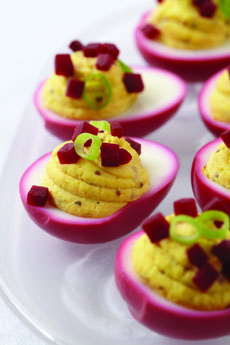
    [2] Pink deviled eggs (here’s the recipe) can be combined with green and white deviled eggs (the recipe) for Easter (photo © Andrews McNeel Publishing).

    Deviled Eggs With Different Toppings
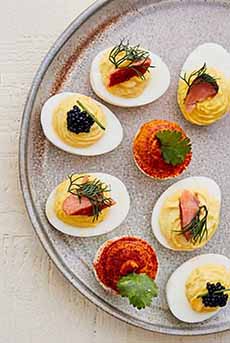
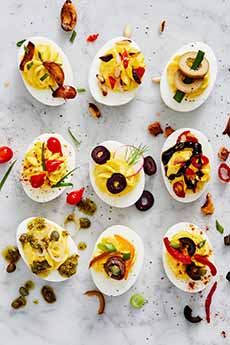
    [3] An elevated approach: Top the deviled eggs with an assortment of garnishes (photo © California Wine Institute).

    Easter Chick Deviled Eggs
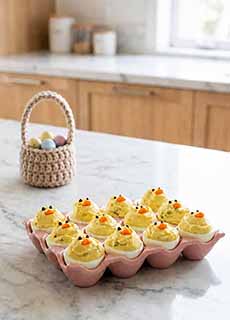
    [4] For a fun Easter approach, garnish your favorite deviled egg recipe to look like chicks. Mound the egg mixture to create a head shape, use black sesame seeds for the eyes, and 2 tiny carrot triangles for each beak. Here’s a recipe (photo © The Nibble).

    Surf & Turf Recipe Scallops With Pancetta
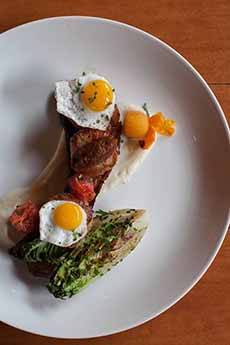
    [5] Seared scallops with bacon and eggs (photo © Chef David Burke).

    Mediterranean Deviled Eggs
    [6] These deviled eggs are garnished with a Mediterranean theme Here’s the recipe (photo © Smithfield Foods).

    Deviled Eggs With Caviar Garnishes
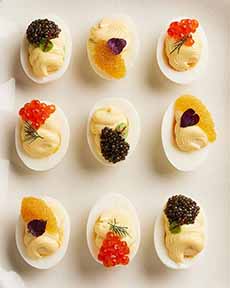
    [7] If you’re in the chips, your theme could be different caviars (photo © Petrossian).

    Green Goddess Pesto Deviled Eggs
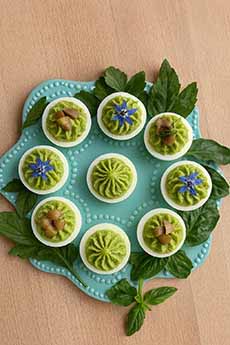
    [8] Spring? Summer? St. Patrick’s Day? Here’s the recipe (photo © Woodhouse Chocolate).


    THE DIFFERENCE BETWEEN HORS D’OEUVRES & APPETIZERS

    The difference between hors d’oeuvres and appetizers is twofold.
     
    When They’re Served

  • Hors d’oeuvres are typically served before the meal begins, with an apéritif or other beverage—or when there is no meal at all, such as at a cocktail party.
  • In fact, the French word hors-d’oeuvre (or-DURV) literally means “outside the work,” i.e., not part of the meal.
  • When there is a meal of more than a main course, appetizers are the first course. More recently, restaurants have renamed them “starters.” They are the first course of the meal.
  • While hors d’oeuvres are not considered to be part of the meal, appetizers are. They are usually chosen to complement the main course (or the next course, in a meal with more courses, e.g. soup, salad, fish course, meat course, cheese course, dessert).
  • While the deviled eggs featured above are usually hors d’oeuvres, you can serve them as an appetizer by adding them to a plate of salad, etc.
  •  
    Portion Size

  • Hors d’oeuvre are typically finger foods that can be consumed in one or two bites.
  • Appetizer portions are larger and consumed with utensils.
  •  
     
    THE HISTORY OF APÉRITIFS & HORS D’OEUVRE*

    Apéritifs

  • While the first mention of an apéritif dates to 5th century Greece [source]. But the custom did not survive.
  • The custom of the modern apéritif was created in Turin in 1786 with the precursor of modern vermouth [source]. By the 19th century, it had become popular in the major cities of Italy and began to spread to other European countries.
  • Dubonnet, created in France in 1846 as a palatable means of delivering malaria-fighting quinine, was served to French Foreign Legion soldiers in mosquito-infested Northern Africa. Back in France, Dubonnet’s wife was so fond of the drink that she served it to her friends, and its popularity as an apéritif spread [source].
  •  
    Hors D’Oeuvre

  • In Europe, appetizers/first courses have long been part of the afternoon and/or evening meal for more affluent people).
  • Towards the end of the 19th century, having an apéritif prior to dinner became a trend in France. An apéritif is defined as an alcoholic drink taken before a meal to stimulate the appetite [source].
  • In the 17th century, smaller dishes began to be served by being placed “outside the main work” of the formally placed dishes. These were known as hors d’oeuvre: originally canapés of small toasted bread with a savory topping served with alcohol before a meal [source].
  • The first mention of hors d’oeuvre is in François Massialot’s 1691 cookbook: Le cuisinier royal et bourgeois (The Royal and Bourgeois Cook).
  • In the cuisine of other regions worldwide, small bites before the main meal. But we’ll end here with Europe.
  •  
    ________________
     
    *In French, the singular and plural are the same: hors d’oeuvre. In English, an “s” is added to create the plural, hors d’oeuvre.


    CHECK OUT WHAT’S HAPPENING ON OUR HOME PAGE, THENIBBLE.COM.


    Comments off


    © Copyright 2005-2026 Lifestyle Direct, Inc. All rights reserved. All images are copyrighted to their respective owners.