THE NIBBLE BLOG: Products, Recipes & Trends In Specialty Foods


Also visit our main website, TheNibble.com.

Memorable Champagne Cocktail Recipes: French 75 & Kir Royale

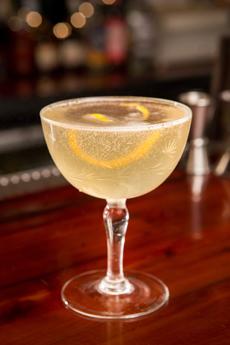
TanquerayFrench75-230
[1] Celebrate Bastille Day with a French 75 cocktail (photo © Tanqueray).

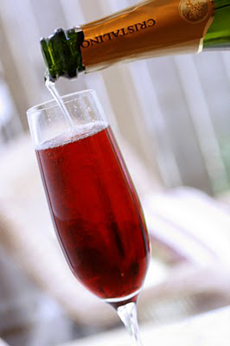
kir-royale-drinkandcocktail.blogspot-230
[2] Invented in Dijon, France, Kir and its variations have a base of crème de cassis, blackcurrant liqueur (photo © Chandon USA).

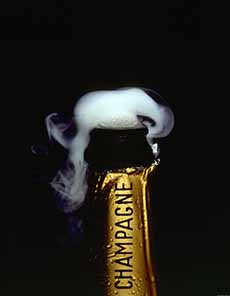
Champagne Bottle Top
[3] Cheers (photo © Champagne Bureau).


Today’s tip will help you make a perfect champagne cocktail, with advice from the experts at Cabo Flats.

Along with the cocktail best practices, we’re rolling in today’s food holiday. Well, it’s sort of a food holiday, since it concerns one of the great culinary countries of the world.

It’s Bastille Day in France, commemorating the storming of the Bastille on July 14, 1789 that launched the French Revolution. Just as the holiday we call July 4th is formally named Independence day, the official French name for Bastille Day is La Fête Nationale (The National Celebration), and commonly Le Quatorze Juillet (the fourteenth of July).

Today, make your cocktail something French. First and foremost, we love the Kir and Kir Royale, invented by a mayor of Dijon, France. The Kir Royale recipe, made with sparkling wine, is below.
 
 
RECIPE #1: FRENCH 75 COCKTAIL

Made from gin, Champagne, lemon juice, and sugar, the French 75 is attributed to bartender Harry MacElhone, created in 1915 at the New York Bar in Paris (later called Harry’s New York Bar). Some say it was actually the idea of American officers who frequented the bar.
 
The drink was said to have such a kick that it felt like being shelled with the powerful French 75mm field gun. The gun was also called a Soixante Quinze (the number 75 in French) and a 75 Cocktail.

Ingredients Per Cocktail

  • 1.25 ounces gin
  • .5 ounce simple syrup
  • .5 ounce lemon juice
  • Champagne
  • Garnish: lemon peel curl
  • Ice
  •  
    Preparation

    1. SHAKE the ingredients with ice in a cocktail shaker.

    2. STRAIN into a rocks glass or Champagne coupe and top with Champagne. Garnish with lemon peel.
     
     
    RECIPE #2: KIR ROYALE

    There are many variations of the original Kir cocktail. There is also a “cousin” made with Chambord, raspberry liqueur.

    If you have Chambord but not crème de cassis you can substitute it. This creates a Kir Impériale.

    Ingredients For 4 Cocktails

  • 1 bottle crème de cassis
  • 1 bottle Champagne* or other sparkling wine, chilled
  • Optional garnish: blackberries or raspberries on a pick
  •  
    Preparation

    1. PLACE 4 Champagne flutes in the freezer for 15 minutes. Remove and add 1 tablespoon of the liqueur to each flute.

    2. FILL each flute to the top with Champagne and serve immediately. If you want a more fruity flavor, use more liqueur.


    TRICKS TO MAKE THE PERFECT COCKTAIL

    According to the expert mixologists at Cabo Flats, whatever you’re mixing up, you need:

    1. Balance. Balancing the amount of alcohol with bitter taste to sweet taste. Some believe that more alcohol is better, but the taste has to be considered. Correctly measure the alcohol, mixer, and sweetener.

    2. Fresh Juice. Whether it’s fresh-squeezed orange juice, pink grapefruit juice, lemon juice, or lime juice – it is extremely important to use fresh-squeezed juice and nothing packaged or pasteurized.

    3. Sweetener. Agave needs to be used with tequila, simple syrup needs to be used for vodka or gin. For brown spirits, according to Cabo Flats, you should use pure cane sugar.

    4. Quality of Alcohol. Some people think you can get away with cheap (low-quality) spirits, but they will ruin your drink every time.

    5. Final Touch. The last component of a perfect cocktail is the garnish: foam, fruit, oil, rim, and savory garnish (celery, olives, shrimp, etc.). This will have a huge effect on the taste and look of the cocktail.
     

    __________________

    *CONSIDER OTHER SPARKLERS. Sparkling wines from other regions are more affordable than Champagne and make more sense in this recipe, given that the strong currant flavors will cover the delicate toastiness of Champagne. Consider Asti and Prosecco from Italy, Cava from Spain, Crémant from France (eight different regions produce it), Espumate from Portugal and Sekt from Germany. Also consider sparklers from Australia, Austria, New Zealand, South Africa, the U.S. and other countries We often use the inexpensive but delightful [yellow tail] from Australia, and especially the rosé [yellow tail] (yes, that’s how the winery spells it!).


    CHECK OUT WHAT’S HAPPENING ON OUR HOME PAGE, THENIBBLE.COM.


    Comments off

    FOOD FUN: BLT Gazpacho

    BLT-gazpacho-munchery-230sq
    Bright red tomato gazpacho shows off the BLT topping. Photo courtesy Munchery.com.

      Like BLTs? Turn the concept into a soup, as Munchery.com did with this tomato gazpacho.

    There are as many recipes for gazpacho as there are people who make them. Each region of Spain has its own preferred style, dating back hundreds of years. And then, there are modern approaches, from mango gazpacho to gazpacho with beer (the recipe iinks are below).

    Here’s the history of gazpacho.

    The recipe below is a thin tomato purée. No chunky vegetables are used, in order that the BLT topping can stand out.

    But you certainly can place the garnish atop a chunky soup recipe (we have more of those at the bottom of this article).

    You can also use the BLT topping on hot tomato soup.

     
    RECIPE: SMOOTH TOMATO GAZPACHO

    Ingredients

  • 1 slice country-style bread, about 1″ thick, crusts removed
  • 2 small cucumbers, peeled, seeded, and chopped*
  • 2 pounds very ripe tomatoes, seeded and coarsely chopped
  • 1 cup water
  • 1 clove garlic, peeled and chopped
  • 2 tablespoons sherry vinegar
  • 1/2 cup extra-virgin olive oil
  • Salt to taste
  • 1 teaspoon freshly ground black pepper
  •  
    For The BLT Garnish

  • Tomato gazpacho or tomato soup.
  • Crisp bacon, crumbled or chopped.
  • Baby arugula, representing the lettuce.
  •  
    If you want a BLTA, add some diced avocado. Munchery also added croutons, pickled onions and cubes of boiled potato.
     
    *If the tomatoes aren’t ripe enough or are too pricy, you can substitute 3 cups of tomato juice.


    Preparation

    1. SOAK the bread for a half hour in a small bowl, covered in water. Squeeze out the moisture with your hands.

    2. PURÉE the bread, cucumbers, tomatoes, garlic, vinegar, olive oil, and 1 cup of water in a food processor until very smooth.

    3. USE a coarse sieve to strain, pushing the purée through with the back of a wooden spoon. Season to taste with salt.

    4. CHILL the gazpacho in the refrigerator for at least 2 hours. Adjust the seasoning as needed. Serve in individual bowls or glasses, topped with the BLT garnish.
     
    MORE GAZPACHO RECIPES

  • Avocado Gazpacho, topped with shrimp
  • Gazpacho Verde (green gazpacho)
  • White Gazpacho with cucumber, leeks and sour cream
  • White Gazpacho with almonds, garlic and grapes
  • Mango Gazpacho with crème fraîche sorbet
  • Pineapple Gazpacho with chile heat
  • Yellow Bell Pepper Gazpacho
  • Tomato Gazpacho With Beer
  •   arugula-bowl-parkseed-230
    Baby arugula substitutes for the lettuce in this BLT garnish. You can also use it instead of iceberg or romaine lettuce on a BLT sandwich.


    Comments off

    TIP OF THE DAY: Make The Best French Fries

    fries-calphalon-fryer-WS-230
    [1] If you love to make French fries, you need a fry basket (photo © Calphalon).

    Julienne_Fries_alexia-230ps
    [2] Season your fries with rosemary, thyme or other favorite herb (photo © Alexia Foods).

    Sweet Potato Fries With Dipping Sauce
    [3] Sweet potato fries with green goddess dipping sauce (photo © Good Eggs).

      July 10th is National French Fry Day, the perfect day to explore how to make the best French fries.

    We contacted our friends at the Idaho Potato Commission, a website with tons of tips and recipes.

    They start by advising you to buy Idaho potatoes, which are branded russet potatoes that reflect the unique growing conditions of the state. Depending on where potatoes are grown, they will have more or less moisture. Idaho russets have less moisture, which is desirable for crisper fries.

    (By the way, all agricultural products reflect their terroir, pronounced tur-WAH, a French agricultural term referring to the unique set of environmental factors in a specific habitat that affect a crop’s qualities. It includes climate, elevation, proximity to a body of water, slant of the land, soil type and amount of sun. These environmental characteristics gives a fruit or vegetable its unique character.)
     
    Here’s how chefs do it—a twice-fried method. But first:

    > The 27 different types of French fries.

    > The history of French fries is below.

    > 16 yummy French fries recipes.

    > How to ceate your signature French fries recipe.

    > The history of potatoes and the different types of potatoes: a photo glossary.

    > The year’s 30 potato holidays.
     
     
    HOW TO FRY PERFECT FRENCH FRIES

    1. WASH and scrub the potato skins well, and allow to air-dry in a single layer on a sheet pan.

    2. USE a French fry cutter to cut the potatoes into the desired size and shape, leaving the skins on. RINSE thoroughly so the excess starches and sugars are removed.

    At this point, you can leave the sliced potatoes covered with water in the fridge up to 24 hours in advance of cooking.

    3. SPIN the potatoes dry with a salad spinner or drain on a drip screen (i.e., cooling rack) before frying.

    4. BLANCH or partially cook the fries to keep the potatoes from oxidizing/darkening, in a 250°F fryer for 2-3 minutes. Remove from the fryer and drain. Allow the fries to cool to room temperature before the final fry. Fries should be bendable. Then, chill in the fridge before the final fry.

    5. FINISH the fries in the fryer at 350°F for 3-4 minutes until golden brown and fully cooked. Remove and drain well. TIP: Fill the fry basket only half full. Better oil circulation results in crisper fries.

    6. After draining on a screen, season with salt. Do not season over the hot oil! Consider seasoning with dried herbs as well—rosemary or thyme, for example—or substituting garlic salt.
     
     
    THE HISTORY OF FRENCH FRIES

    It begins with the potato, of course. Potatoes originated in Peru and spread to other parts of Latin America. Fried potatoes—cooking potatoes in fat over a fire—is a practice that’s thousands of years old.

     
    Potatoes were “discovered” and brought back to Europe by the Spanish conquistadors—where they were uses as hog feed! The French were convinced that potatoes caused leprosy, and French Parliament banned the cultivation of potatoes in 1748.

    A French army medical officer, Antoine-Augustine Parmentier, was forced to eat potatoes as a prisoner of war, and discovered their culinary potential. Through his efforts, in 1772, the Paris Faculty of Medicine finally proclaimed that potatoes were edible for humans—though it took a famine in 1785 for the French to start eating them in earnest.

    In 1802, Thomas Jefferson’s White House chef, Honoré Julien, a Frenchman, prepared “potatoes served in the French manner” for a state dinner. The potatoes were “deep-fried while raw, in small cuttings.” French fries had arrived! By the early 20th century, the term “French fried,” meaning “deep fried,” was being used for other foods as well (onion rings and zucchini sticks, anyone?).


    CHECK OUT WHAT’S HAPPENING ON OUR HOME PAGE, THENIBBLE.COM.


    Comments off


    © Copyright 2005-2026 Lifestyle Direct, Inc. All rights reserved. All images are copyrighted to their respective owners.