THE NIBBLE BLOG: Products, Recipes & Trends In Specialty Foods


Also visit our main website, TheNibble.com.

TIP OF THE DAY: Try The Best Cheeses In America

If you passion is great cheese, why not try the best on your pizzas, sandwiches, entrées and salads? The winners of the 2015 American Cheese Society Competition, held last month, are worth seeking out.

Here are the first place winners in the top 5 categories (based on the volume of cheese sold in the U.S.), including sub-categories:

MOZZARELLA

  • Brick, Scamorza Or String cheese: Farmer’s Rope String Cheese, Crave Brothers (Wisconsin)
  • Fresh Mozzarella, 8 Ounces Or More, Balls or Shapes: Crave Brothers Farmstead Cheese (Wisconsin) and Bella Casara Buffalo Mozzarella (Ontario)
  • Fresh Mozzarella Under 8 Ounces: Crave Brothers Farmstead Cheese Bocconcini (Wisconsin)
  • Burrata: Calabro Cheese (Connecticut)
  •  
    CHEDDAR CHEESE

  • Aged Cheddar, 12 To 24 Months: Face Rock 2-Year Extra Aged Cheddar, Face Rock Creamery (Oregon);
  • Cheddar Aged Up To 12 Months: Tillamook White Medium Cheddar, Tillamook County Creamery (Oregon)
  •    

    /home/content/p3pnexwpnas01_data02/07/2891007/html/wp content/uploads/farmers rope string cheese eatmadison 230

    The best string cheese in America: Farmer’s Rope String Cheese from the Crave Brothers of Wisconsin. Photo courtesy EdibleMadison.com.

  • Cheddar Aged Up To 12 Months—Goat, Sheep, Buffalo Or Mixed Milks: Goat Cheddar, Central Coast Creamery (California)
  • Mature Cheddar, 24 To 48 Months: Four Year Flagship, Beecher’s Handmade Cheese (Washington)
  • Mature Cheddar, Aged Over 48 Months: Cabot Old School Cheddar, Cabot Creamery (Vermont)
  • Cheddar Wrapped In Cloth, Aged Up To 12 Months: Cabot Clothbound Cheddar, Cellars at Jasper Hill, (Vermont)
  • Cheddar Wrapped In Cloth, Aged Over 12 Months: Cabot Clothbound Cheddar Select, Cellars at Jasper Hill (Vermont)
  •  

    /home/content/p3pnexwpnas01_data02/07/2891007/html/wp content/uploads/celtic blue reserve glengarry fine cheese MisaMePhotography 230
    The best cheese of 2015 is Celtic Blue Reserve from Glengarry Fine Cheese in Ontario. Photo © Misa Me Photography.


    MONTEREY JACK CHEESE

  • Southwest Cheese (New Mexico)
  •  
    SWISS CHEESE

  • Baby Swiss, Guggisberg Cheese (Ohio)
  •  
    PARMESAN CHEESE

  • Cello Riserva Copper Kettle Parmesan Cheese, Cello Cheese (Wisconsin)
  •  
    BEST OF SHOW

  • Celtic Blue Reserve, Glengarry Fine Cheese (Ontario)
  •  
    The awards mentioned here represent just a few of this year’s categories and winners. To see the complete list of awards in all categories, visit The American Cheese Society website.


    Comments off

    FOOD FUN: Summer Caprese Salad With Flowers

    We saw this photo on GourmetAttitude.com and thought: We must make this!

    It’s a miniaturized Caprese Salad, with these substitutions:

  • Bite-size mozzarella balls instead of sliced mozzarella
  • Cherry and/or grape tomatoes instead of sliced beefsteak tomatoes
  • Baby basil leaves instead of large leaves
  • A garnish of edible, summery flowers
  •  
    It’s a beautiful summer salad; and since good cherry tomatoes can be found year-round, it’s also a treat for Valentine’s Day and Mother’s Day.

    For more food fun, you can serve the salad in individual Martini glasses.

    RECIPE: SUMMER SALAD WITH FLOWERS

    Ingredients

  • Bocconcini, bite-size mozzarella balls, or the tinier pearl-size perlini
  • Cherry tomatoes, ideally heirloom in an array of colors
  •   cherry-tomato-mozz-flower-salad-gourmetattitude-230
    We call this salad “Flower Power.” Photo courtesy GourmetAttitude.com.
  • Optional: yellow grape tomatoes for contrast
  • Small basil leaves (if you can’t find any, make a chiffonade of regular leaves)
  • Edible flowers (more information)
  • Good olive oil (infused olive oil—basil, rosemary, etc.—is great)
  • Vinegar, lemon or lime juice (we like balsamic, but anything works)
  •  

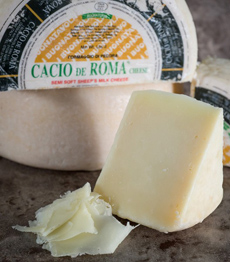
    /home/content/p3pnexwpnas01_data02/07/2891007/html/wp content/uploads/cacio de roma cheesemonthclub 230
    Cacio di Roma. Photo courtesy Cheese Of The Month Club.

      Preparation

    You can dress the salad in oil and vinegar, allow guests to pour their own from cruets, or drizzle olive oil and vinegar on the plate before adding the salad, and allow guests to “swoosh” the tomatoes in it.

    1. TOSS the tomatoes with a small amount of salt. Combine in a mixing bowl with the drained bocconcini and herbs.

    2. SERVE on a platter or shallow glass bowl or on individual plates.
     
    WHAT IS CACIO CHEESE?

    Formally called Cacio de Roma, cacio is a semi-soft Italian cheese originally made in the countryside outside of Rome from sheep’s milk. Cacio simply means cheese in some dialects (formaggio is the word used universally in Italy).

     
    The cheese—not readily found in the U.S.—is made in small rounds called caciotta and aged for about one month. It is a classic sheep’s milk cheese. Like mozzarella, made from the milk of cows or water buffalo, it melts very well for cooking and is enjoyed as a snack, with pasta, pizza and salad.
     
    SOME CAPRESE SALAD HISTORY

    Like most recipes, Caprese salad has evolved.

    The original name originated on the island of Capri, on the south side of the Gulf of Naples in the Campania region of Italy. The island has been a resort since Roman Times.

    But Caprese Salad is a more modern invention, dating (by name, anyway) to the early 20th century. The original salad was made with four ingredients: cacio cheese, beefsteak-type tomatoes called cuore di bue (steer’s heart), whole basil leaves and olive oil.

    Later, possibly after World War II when American tourists ventured to Capri (it was a Jet Set favorite), sliced mozzarella (fior di latte or bufala) replaced cacio and the recipe spread throughout Italy and overseas with the tourists who loved it.

    In classic style, slices of mozzarella and tomatoes plus the basil leaves were overlapped on a plate, drizzled with olive oil.
      

    Comments off

    Make Beef Carpaccio For National Filet Mignon Day

    August 13th is National Filet Mignon Day. Filet mignon, the most tender and expensive cut of beef, comes from the small end of the tenderloin, and accounts for less than 1% of the entire carcass of the steer.

    The term “filet mignon” is a French derivative, the literal meaning is small (mignon) boneless meat (filet). On restaurant menus it is called filet mignon, tournedos, medallions, filet de boeuf and tenderloin steak; in the U.K. it is called fillet steak. Here’s more about this coveted cut.

    > Check out the different cuts of beef in our photo Beef Glossary.

    Below:

    >The history of carpaccio.

    > Filet mignon trivia.

    > Names for filet mignon in other languages.
     
     
    ENJOY IT COOKED OR RAW

    For National Filet Mignon Day you have two easy choices: cook it or enjoy it uncooked (yes, raw).

    The easiest ways to serve cooked filet mignon:

  • Whole, plated with vegetables and potatoes
  • Steak sandwich, on a toasted baguette with caramelized onions, or with lettuce and horseradish mayo (blend prepared horseradish into mayonnaise, to taste)
  • Steak salad, sliced and placed atop a bed of greens with blue cheese dressing; substituted for tuna in a Nicoise Salad; or substituted for ham in a Cobb Salad
  •  
    The easiest ways to serve raw filet mignon:

  • Sliced into carpaccio
  • Ground into steak tartare
  •  
    Carpaccio is the absolute easiest.
     
     
    WHAT IS CARPACCIO & ITS HISTORY

    Carpaccio is the Italian term for raw beef filet (crudo is the term for raw seafood). Typically made from sirloin, the dish was created in Venice in 1963, at the time of an exhibition dedicated to Venetian painter Vittore Carpaccio (1465-1526).
     
    The carpaccio dish was based on the Piedmont speciality, carne cruda all’albese, created by Giuseppe Cipriani, founder of Harry’s Bar in Venice. Using fine Piedmontese beef (Piemontese in Italian), he originally prepared it for a countess whose doctors had recommended that she eat raw meat. [Source]

    It is a very popular first course.
     
     
    RECIPE: BEEF CARPACCIO

    To make carpaccio, buy freshly-cut filet mignon or sirloin from the butcher.

    Ingredients

  • Filet mignon or sirloin
  • Fine olive oil (infused oil, such as basil or rosemary, is great)
  • Shaved Parmesan cheese or white truffles
  • Baby arugula (or baby spinach if you prefer)
  • Optional: sliced onions
  • Toasted baguette on the side
  • Optional: lemon wedges
  • Dishes of flake salt (Cyprus, Maldon, Smoked—substitute coarse sea salt) and cracked pepper
  •  
    Ingredients

    1. PLACE the beef in the freezer for 30 minutes (longer if needed) to firm it and make it easier to slice thin. Using your sharpest knife, slice thin pieces. Arrange on individual plates or a platter. You can create a “sunburst” or “wheel spoke” or parallel slices, depending on the plate or platter.

    2. DRIZZLE olive oil over the top of the beef or around the rim of the plate. If using onions (not part of the original recipe), scatter over the beef, along with the shaved Parmesan. Lastly, top with the arugula.

    3. SERVE with optional lemon wedges and pass dishes of salt and pepper (or go the conventional route, with salt and pepper shakers).
     
     
    FILET MIGNON TRIVIA

  • Filet mignon is the most tender cut of beef. It is cut from the tenderloin, a muscle in the middle of the back between the sirloin and the ribs. Because the muscle is not weight-bearing, it contains less connective tissue. This is why it’s the most tender.
  • The name is French for “tender fillet” or “dainty fillet.” Fillet, pronounced FILL-it, is the English spelling of filet. Americans use the French spelling and pronunciation, fee-LAY min-YONE.
  • Filet mignon is the most expensive cut of beef. That’s not only because it’s so desirable for its tenderness, but because the tenderloin is very small.
  • The tenderloin weighs an average of five to seven pounds. It is not an even width; it tapers on both ends, so filets mignon can only be cut from the center. The center cut of a 5-1/2 pound tenderloin is just 2 pounds or so.
  • The entire center cut can be roasted whole—the dish known as Chateaubriand. For even more tenderness, you can poach the center cut. It’s our favorite dish for entertaining—very easy, requiring no time to check on it as it cooks. We’ll publish the recipe in a future tip.
  • The tenderloin is generally not as flavorful (“beefy”) as other premium cuts of beef (e.g., the rib eye or the strip steak). That’s why it is sometimes wrapped in bacon or served with a sauce.
  • Tournedos are small round pieces of beef cut from the tail and head of the tenderloin, often cooked with bacon.
  • The pieces that are too small to use as steak are often cut into 1-inch pieces for a Beef Stroganoff or other dishes. You can use them in a steak salad.
  •  
     
    SOME OTHER NAMES FOR FILET MIGNON

  • Dutch: ossenhaas
  • English (U.S.): medallions, tenderloin steak
  • English (UK, Ireland): fillet steak
  • English (Australia, New Zealand): eye fillet
  • French: filet de bœuf (the entire center-cut tenderloin is the dish known as Chateaubriand)
  • French (Québec): filet mignon
  • Italian: filetto
  • Norwegian: indrefilet
  • Portuguese: filé or filé mignon
  • Spanish: filete miñón or filet mignon
  • Swedish: oxfilé
  •  
    (Source)


    CHECK OUT WHAT’S HAPPENING ON OUR HOME PAGE, THENIBBLE.COM.


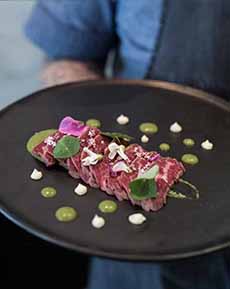
    Beef Carpaccio
    [1] Beef carpaccio with a twist: dots of coriander and miso sauces instead of olive oil and flowers instead of shaved parmesan cheese (photo © Bamboo Sushi | Portland, Oregon).

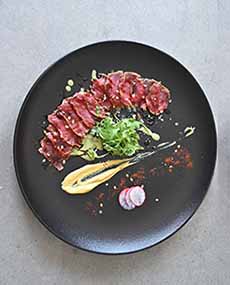
    A beautifully arranged plate of beef carpaccio
    [2] A beautiful presentation of beef carpaccio. Here’s the recipe (photo © ICCA | Dubai).

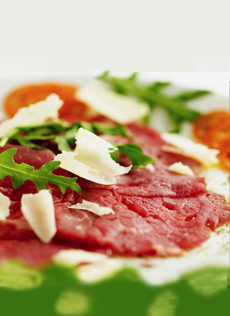
    /home/content/p3pnexwpnas01_data02/07/2891007/html/wp content/uploads/carpaccio atlantisparadiseresort 230
    [3] A traditional carpaccio with olive oil (here, basil-infused olive oil), topped with shaved Parmigiano-Reggiano cheese (photo © Atlantic Paradise Resort).

    Raw Filet Mignon
    [4] Raw filet mignon, ready to be sliced into carpaccio. Freeze it for 30 minutes to make it easy to slice thin pieces (photo © Mackenzie Ltd).

    Filet Mignon Nigiri Sushi
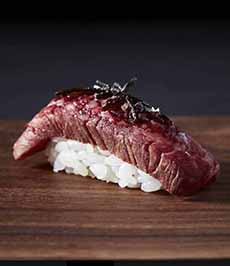
    [5] You can use any quality beef for sushi nigiri or chirashi—even bison and venison. Here, filet mignon is garnished with kombu (aged kelp) and Maldon sea salt. (photo © Mako | Chicago).

    Filet Mignon
    [6] For many people, a great dinner is a filet mignon and a glass of red wine (photo © Ruth’s Chris Steak House).

    Surf & Turf
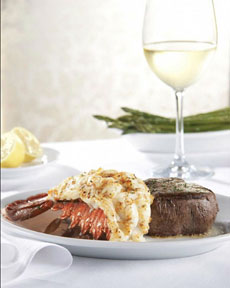
    [7] Surf and Turf, a popular combination of beef and seafood, most popularly filet mignon and lobster (photo © Ruth’s Chris Steak House).


    Comments off


    © Copyright 2005-2026 Lifestyle Direct, Inc. All rights reserved. All images are copyrighted to their respective owners.