THE NIBBLE BLOG: Products, Recipes & Trends In Specialty Foods


Also visit our main website, TheNibble.com.

PRODUCT: Cetara Anchovies & Anchovy Pasta Recipe

Anchovies get a bad rap in the U.S. They typically appear on “most hated foods” lists. That’s because many people were first introduced to cheap, oily, odoriferus, overly salty and “fishy” tasting examples on pizzas or in Caesar salads at the local diner.

One reason those anchovies are so intense is that casual restaurants don’t take the time to rinse the anchovies, but just scoop them up from the oil.

Another reason is using cheaper anchovies!

But in fact, these little fish can be truly delightful—still with a strong flavor, but one that’s delicious.
 
 
THE BEST ANCHOVIES

The 144 species of anchovies, a salt-water fish related to herring. They live in many of the world’s oceans and seas, including the Atlantic, Indian, Mediterranean and Pacific.

The good brands are things of beauty. Italians—who not only make some of the world’s best food, but as a society have among the most demanding palates—use them as a backbone in many recipes.

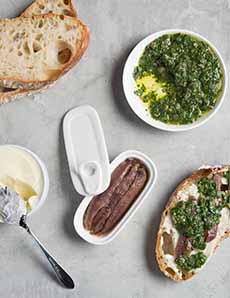
The best Italian anchovies come from Cetara (photo #1), an enchanting fishing village along the Amalfi coast, on the Gulf of Salerno. They are packaged by Nettuno, a family-run company. Production is completely by hand, using simple but precise traditions of local anchovy preserving.

The best anchovies are caught between March and July when their flesh is at its most plump; the better brands only fish during this period.

The fresh anchovies are immediately placed in oak barrels layered with water and sea salt and cured for about five months. The salt used by Nettuno is the exceptional sea salt that is hand-harvested in the salt panes of Trapani, Italy—uncontaminated Sicilian waters.

The result: anchovies that are soft, moist, and plump. It takes only a few seconds to rinse them in cold water and then put them to use.

Look for Cento, Nettuno and Agostino Recca sardines.

And if you’re a true anchovy lover, try a bottle of colatura, “anchovy juice” that is the modern version of garum, the favorite condiment in ancient Rome. You can buy it here.

Here’s more about garum, a great umami flavor.
 
 
RECIPE: PENNE PASTA SALAD WITH ANCHOVIES

This recipe is courtesy of La Cucina Italiana and Chef Andrea Tiberi.

Ingredients for 4 Servings

  • Coarse sea salt—Trapani or substitute
  • 2.75 pounds plum tomatoes
  • 1.1 pounds penne or other short pasta (Chef uses Martelli brand)
  • Extra-virgin olive oil (Chef uses organic Pianogrillo olive oil)
  • 3 ounces mixed baby greens (about 5 cups)
  • 8 ounces Piennolo cherry tomatoes* (you can substitute San Marzano tomatoes)
  • 12 salted anchovy fillets, rinsed
  • 1 tablespoon salt-packed capers (rinse and soak capers for 10 minutes, then rinse again)
  • 2 tablespoons finely chopped chervil
  • 1 tablespoon finely chopped marjoram
  • Fresh ground black pepper
  •  
    Preparation

    1. HEAT the oven to 200°F. Line a baking sheet with parchment paper.

    2. BRING a large saucepan of salted water to a boil. Drop plum tomatoes into water and boil for 30 seconds. Using a slotted spoon, remove tomatoes from the pot (reserve the cooking water). Drain, peel, cut in half, and seed.


    Spaghetti With Anchovies
    [1] This spaghetti recipe uses anchovy and capers compound butter that’s so good, you might also want to spread it on bread and canapes. Here’s the recipe (photo © DeLallo).


    [2] Catching anchovies (photo © Gillian’s List).


    [3] Anchovy fillets. When buying anchovies are sardines, get the best possible brand. Cento anchovies are very good for the money; these are from a premium brand, Agostino Recca (photo © Agostino Recca).

    A jar of Piennolo del Vesuvio tomatoes
    [4] Piennolo tomatoes (photo © Emporio Italiano).

     
    3. PLACE the tomatoes on a baking sheet and sprinkle with salt. Bake until tomatoes are partially dried and flavor is concentrated, about 3 hours.

    4. RETURN water to boil. Add pasta and cook until al dente. Drain, transfer to a large bowl, and toss with a drizzle of oil and a pinch of salt. Set aside to cool.

    5. REMOVE the tomatoes from the oven; transfer to a cutting board and finely chop. Add to the bowl with the pasta.

    6. ADD the the greens, Piennolo tomatoes, 3 tablespoons oil, anchovies, capers, chervil, and marjoram; toss to combine. Arrange on plates. Sprinkle with a pinch of sea salt and some fresh ground pepper.
     
     
    __________________

    *The Vesuvio Piennolo cherry tomato is a variety grown in the southern Italian region of Campania, around Mount Vesuvius. They owe their intense flavor to the mineral-rich volcanic soil. These small, sweet tomatoes have a certified origin (DOP): Pomodorino del Piennolo del Vesuvio DOP. A regional specialty, they hang in clusters outside homes in the Sorrento peninsula in early fall and are preserved in water for pure taste. For a delicious sauce, simply cook down the tomatoes in their juices over high heat for 4-5 minutes and serve them over pasta. They are available jarred in the U.S. (you can find them on Amazon and elsewhere).


    CHECK OUT WHAT’S HAPPENING ON OUR HOME PAGE, THENIBBLE.COM.


    Comments off

    COOKING VIDEO: Healthy Chips And Dip


    As a nation, we love crunchy snacks and creamy dips. As calorie counters, we don’t.

    In this video, chef Curtis Stone shows how easy it is to make your own lowfat baked chips (commercial chips can have 30% fat) and lowfat, low-calorie dips.

    They taste good and keep you looking good (Chef Stone looks great!).

    See our Snacks Section with healthful snacks and recipes.


    Comments off

    TOP PICK OF THE WEEK: Crunchies Healthy Snacks


    Addictively good and good for you snacks. Photo by Elvira Kalviste | THE NIBBLE.
     

    Crunchy, freeze-dried vegetable and fruit snacks have been growing in popularity. They taste good, provide the crunch factor, are full of fiber and moderate in calories. If you haven’t tried them, you’re missing out.

    One of our favorite brands is Crunchies, A selection of all natural snacks that are gluten free and available in kosher-certified and organic-certified versions.

    Fresh fruits and veggies are placed in a refrigerated vacuum chamber that removes up to 97% of the moisture. The process retains a high percentage of the nutritious enzymes that are lost through conventional heat-drying dehydration and provides an extra-crunchy texture.

    While snacking on the crunchy delights by the handful is the original intent, they make most excellent additions to everyday foods and recipes, from yogurts and salads to tea and hot chocolate.

    Read the full review to see all the different ways we’ve used Crunchies in recipes.

    See all of our favorite snacks in our Gourmet Snacks section.


    Comments off

    TIP OF THE DAY: Make Your Own Corned Beef & Pastrami

    Some home cooks just like to go the extra yard. Why buy corned beef and pastrami when you can make your own?

    You can create the complex flavors and tender texture that will bring kudos from others at the dinner table while you get deeper in touch with your inner chef.

    The first time you make corned beef or pastrami from scratch, you may want to rely on a kit of ingredients and instructions that walks you through the process of curing and cooking a brisket (the base of corned beef and pastrami). Even professional chefs use this Corned Beef & Pastrami Kit from Leener’s.

    The kit comes with everything you need except the brisket: Morton Tender Quick, a very effective meat tenderizer, curing salts, plus spices, wood chips and a tenderizing tool. While you can certainly come up with your own tenderizer, black pepper, garlic powder, mustard seed, paprika and and other spices, this Make It kit is a turnkey cookbooks with simple instructions.

     
    BYO brisket and make corned beef and pastrami with this kit. Photo courtesy Leeners.
     

    There’s enough in each kit for up to 10 pounds of brisket. The only caveat is that you need to cure the seasoned meat in the fridge for five days per each inch of meat thickness. In our packed apartment-size fridge, we’d have to toss all the condiments to make space!

    It took Leener’s, which specializes in “Make It” kits, six months to perfect the Corned Beef and Pastrami Kit. “We tried many recipes and methods of making corned beef and found that the traditional brine method produces the highest quality corned beef possible,” says company president Jim Leverentz. “Our goal is to bring back the old-fashioned goodness and flavors of a more patient time along with the satisfaction of making it yourself. You will be enjoying the best corned beef and pastrami sandwiches you have ever eaten.” (EDITOR’S NOTE: Although it goes without saying, you also need a top-quality brisket.)

    In fact, the company also makes kits for the other ingredients of a Reuben sandwich: an Artisan Bread Kit to make deli-style rye, a Sauerkraut and Dill Pickle Kit, a Deluxe Cheese Kit for the Swiss cheese and a Mustard Making Kit. Pair the Reuben with your choice of brews from Leener’s Home Brewery System.

    The Corned Beef & Pastrami Kit is sold in a four-pack for $32.95, or $8.00 and change per brisket. You can give any extra kits to people who invite you over for barbecue or other meat-centric meals. Kits are also fun gifts for anyone who likes to cook.

    Get your kits now.
    BRISKET 101: A beef brisket consists of two parts, the flat and the point. Traditionally the flat is used to make corned beef for slicing. The point, while cured in the same way, is smoked to make pastrami.
      

    Comments off

    FOOD HOLIDAY: National Catfish Day & Grilled Catfish Recipe

    A Plate Of Grilled Catfish
    [1] Grilled catfish with ancho-chile rub. The recipe follows. (photo by A.I.).

    A Bowl Of Ancho Chiles
    [2] Ancho chiles are dried poblanos (photo © Rancho Gordo.).

    Poblano Chiles On A Cutting Board
    [3] Poblano chiles (photo © Rio Luna).

    A spoon of ancho chile powder
    [4] Ancho chile powder (photo © Savory Spice Shop).


    [5] A simple preparation: Parsley leaves, cherry tomatoes and lime juice make a salad topping for catfish. You can do a mixture of parsley and cilantro, and/or add a bit of EVOO, as well (photo © Whole FoodsMarket).

      Chefs nationwide are adding catfish dishes to their menus today, National Catfish Day.

    The catfish, one of the world’s least attractive fishes, gets its name from the long barbels (feelers) hanging down from around its mouth, which resemble whiskers (but far less cute). Catfish are found worldwide: Most catfish are freshwater, though there is also a saltwater variety found on the Atlantic and Gulf coasts.

    The majority of catfish sold today in the U.S. are farmed in ponds in the Mississippi Delta.

    Looks apart, a catfish is a tasty fellow, low-fat with firm, mild-flavored flesh (though the tough, inedible skin must be removed before cooking). Catfish is versatile, and suited to most manners of preparation, including soups and stews. Much of the time, it’s filleted and fried, grilled, or sautéed.

    At the Grand Central Oyster Bar (the seafood restaurant located “below sea level” at Grand Central Terminal in New York City), executive chef Sandy Ingber shares his National Catfish Day recipe so you can whip it up at home (we got our catfish at Whole Foods Market).

    > The different types of fish and seafood: a photo glossary.

    > The different types of chile peppers: a photo glossary.

    > The history of chile peppers.

    > The year’s 56 fish and seafood holidays.
     
     
    RECIPE #1: GRILLED CATFISH FILET WITH ESPRESSO-ANCHO RUB & LEMON CAYENNE SAUCE

    Ingredients For 6 Servings

  • 6 catfish filets, 5-6 ounces each, skin off (either wild or farmed)
  • Espresso-ancho rub (recipe below)
  • Soy or other oil for grilling
  • Lemon-cayenne sauce (recipe below)
  •  
    Preparation

    1. Rub all catfish filets with the espresso-ancho rub (below). Shake off excess.

    2. Heat grill to medium hot. Dip rubbed filets into a small amount of oil and place them on the grill. Cook fairly slowly until browned on one side, about 5 minutes, being careful not to burn. Flip over and repeat. Catfish should be cooked all the way through.

    3. Put on a plate and serve with 2 ounces of sauce per person. Serve with brown rice and cornbread—both whole grain foods—and a side salad.
     
     
    RECIPE #2: ESPRESSO-ANCHO RUB

    Ingredients

  • 2 tablespoons ancho chili powder
  • 2 tablespoons instant espresso powder
  • 2 tablespoons dark brown sugar
  • 1 tablespoon ground coriander
  • 1½ teaspoons dried oregano
  • 1½ teaspoons salt
  • 1½ teaspoons ground black pepper
  • ¼ teaspoon cayenne pepper
  •  
    Preparation

    Mix all ingredients in a small bowl. The rub can be made up to one week ahead, covered, and stored at room temperature.
     
     
    RECIPE #3: LEMON-CAYENNE VIN BLANC SAUCE

    Vin blanc is one of the mother sauceswe presented a few months ago. It’s a key ingredient of Coquilles St. Jacques and Oysters Rockefeller. After you make it the first time, you’ll find many ways to use it with fish, seafood, and poultry. This recipe makes about 1-1/3 cups.

    Ingredients

  • 1 cup dry white wine
  • 2 tablespoons minced shallots
  • 1¼ cups water
  • ¼ cup heavy cream
  • 2 teaspoons instant fish bouillon
  • 3 tablespoons salted butter
  • 3 tablespoons all-purpose flour
  • 2 tablespoons fresh squeezed lemon juice
  • ½ teaspoon cayenne pepper or to taste
  •  
    Preparation

    1. Combine the wine and shallots in a saucepan and bring to a full boil. Reduce by half. Add the water, cream, and bouillon and return to a boil.

    2. Meanwhile, melt the butter in a saucepan over medium heat. Add the flour and cook, stirring, until it smells toasty, about 1 minute. Don’t let the flour brown. Now you have a roux (pronounced ROO).

    3. Add about half of the liquid and stir well to dissolve the roux. Stir in the rest of the liquid and bring to a simmer.

    4. Add cayenne pepper, which you liquefy with 1 teaspoon of water. Reduce the heat and simmer gently for 5 minutes. Finish with the lemon juice. Strain the sauce through a fine strainer.

    Let us know if you think it’s the cat[fish]’s meow.


    CHECK OUT WHAT’S HAPPENING ON OUR HOME PAGE, THENIBBLE.COM.


    Comments off

    The Nibble Webzine Of Food Adventures


    © Copyright 2005-2026 Lifestyle Direct, Inc. All rights reserved. All images are copyrighted to their respective owners.