|
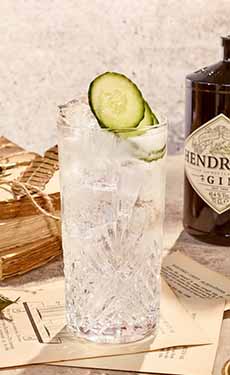
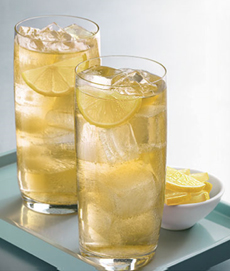
[1] The classic gin and tonic (photo © Hendrick’s Gin).
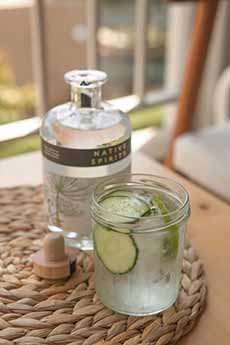
[2] Go rogue with a cucumber garnish (photo © Maddi Bazzocco | Unsplash).
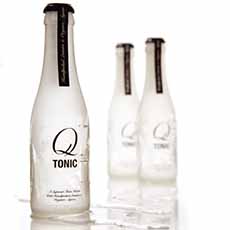
[3] For the best G&T, in addition to good z, use good tonic water—one which uses real sugar and quinine instead of corn syrup and artificial quinine flavor (photo © Q Mixers).
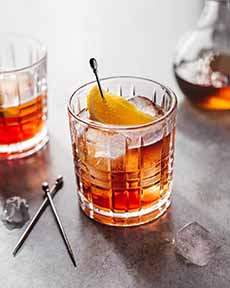
[4] Negroni, one of the world’s favorite cocktails, combines gin with red vermouth and Campari (photo © Lyres Spirit Co | Facebook).
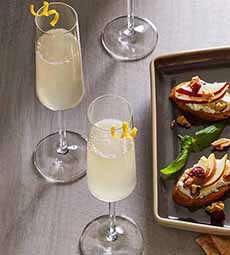
[5] A French 75 blends gin with Champagne (photo © Pampered Chef).
|
|
June 15th is World Gin Day, a holiday created by Neil Houston of Birmingham, England. It started modestly in 2009 when Houston. who reviews gin on his website, Yet Another Gin, gathered some friends. It has since turned into a worldwide celebration.
“World Gin Day is a celebration of all things gin,” says Houston, “and a chance to mix up your favourite G&T [gin and tonic] or other gin cocktail.”
We’ll go for the G&T: as delicious as it is simple to prepare.
We start with the top gin cocktails. Also below, you’ll find:
> The classic Gin & Tonic recipe.
> The history of the Gin & Tonic.
> The year’s 13 gin-related holidays.
THE TOP GIN COCKTAILS
In alphabetic order:
Aviation Cocktail
Bramble
Clover Club
French 75 (photo #5, the recipe)
Gin Fizz*(the recipe)
Gin & Tonic (photos #1, #2, and #, the recipe)
Martini (classic Martini recipe)
Negroni (photo #4, the recipe)
A YEAR OF GIN HOLIDAYS & RELATED HOLIDAYS
January: Ginuary
January 11th: National Hot Toddy Day
February 27: Open That Bottle Day
March 21st: Vermouth Day
March 24th: National Cocktail Day
April 9th: National Gin & Tonic Day
May 13th: World Cocktail Day
June, second Saturday: World Gin Day
June 19th: World Martini Day
August 8th: International Scottish Gin Day
September, Second Week: Negroni Week
September 10th: Canned Cocktail Day
October 19th: International Gin & Tonic Day
RECIPE: CLASSIC GIN & TONIC
Ingredients
3 ounces London Dry Gin
4 ounces tonic water
1 table fresh lime juice
Garnish: Lime wedge
Ice cubes or tonic water ice cubes (see below)
Preparation
1. FILL a highball glass with ice cubes. Add the gin, tonic water, and lime juice. Stir thoroughly to blend.
2. GARNISH with a lime wedge and serve.
TIP: To prevent dilution of your drink, use our favorite trick: Make ice cubes with tonic water. For other drinks: make iced tea ice cubes for iced tea, juice ice cubes for juice, etc.
Simply freeze tonic water in an ice cube tray. We use a covered ice cube tray to keep the cubes tasting fresh, but you can use plastic wrap.
THE HISTORY OF GIN & TONIC
Historically, spirits were created for medicinal purposes. So was the G&T.
Malaria was a persistent problem in the world’s tropical regions. In the 1700s, quinine, a muscle relaxant developed from the bark of the cinchona tree by the Quechua natives of Peru, was found to be helpful in treating the disease.
Like much medicine, quinine had an unpleasant, bitter taste, even when diluted in water (quinine water).
Malaria was prevalent among British soldiers stationed in India. A Scottish physician, Dr. Francis Buchanan, who served with the East India Company in the early 19th century, advocated the use of quinine as both a prophylactic and treatment for malaria.
While it was not known who suggested masking the quinine more palatable with gin, this wasn’t a stretch because gin was the British spirit of choice.
Thus emerged the Gin & Tonic: tonic water (quinine water) by adding sugar, lime, and gin to the quinine.
|
The addition of sugar to quinine preparations to make them more palatable was attempted by a variety of people.
But a breakthrough occurred in the mid-19th century when British pharmacist Erasmus Bond created and marketed “Indian Tonic Water,” which included quinine and sugar. Over time, the name was shortened to simply “tonic Water,” and the G&T became a standard in cocktail culture anywhere in the world.
The first quinine water was not carbonated. With the expansion of carbonated beverages, fizz was added, and it was given another name, tonic water, to express its value in cocktail culture.
Today’s quinine water contains much less quinine since it is no longer used as an anti-malarial. That’s why some people enjoy it as a soft drink.
And note that mass brands contain artificial quinine—it’s much cheaper. For the real quinine experience, try an artisan brand like Q Tonic.
________________
*What’s the difference between a Gin Fizz and a Ramos Gin Fizz? In addition to the ingredients present in a typical Gin Fizz (gin, lemon juice, simple syrup, and club soda), a Ramos Gin Fizz also includes lime juice, orange flower water, heavy cream, and an egg white. It’s solid white and creamy. Here’s a photo and recipe.
CHECK OUT WHAT’S HAPPENING ON OUR HOME PAGE, THENIBBLE.COM.
|