THE NIBBLE BLOG: Products, Recipes & Trends In Specialty Foods


Also visit our main website, TheNibble.com.

GIFT OF THE DAY: Make-Your-Own-Bitters Kit

Hella Bitters Kit

Hella Handcrafted Bitters Kit
This kit from Hella enables any mixologist or hopeful to craft his/her small-batch bitters (photos courtesy Hella Company).


The creative mixologists in your life can perfect their own, homemade bitters recipes for cocktails and mocktails.

You can also make coffee and iced coffee more sophisticated with a dash of bitters (check it out).

The same materials also enable the production of extracts for cooking and baking.

This handsome kit from Hella Bitters contains all the tools and ingredients required, except the alcohol (vodka or other neutral spirit).

Just add alcohol and follow the easy, step-by-step instructions. The handcrafted, small-batch bitters will be ready in no time.

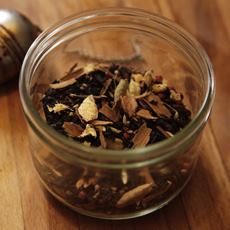
The kit contains all the equipment needed, plus Hella’s proprietary mixes of herbs, spices, bittering agents and dried fruit peel as a starting point for other blends.

  • Unique bitters can be made simply by adding other flavor component. We’ve made cardamom bitters and star anise bitters for holiday cocktails.
  • Check out this article from BonAppetit.com, which includes everything from baking and fruit salad, ice cream, floats and whipped cream.
  •  
    The kit is $64.95 at HellaCompany.com.

    Optionally, you can add a good bottle of vodka for $15: New Amsterdam, Pinnacle, Smirnoff Red, Sobieski, UV, etc.

    Save the Stolichnaya Elit ($60) for sipping on the rocks.

     
    WHAT ARE BITTERS?

    Bitters, which date back to ancient Egypt, are liquids consisting of water, alcohol and botanical extracts.These botanicals—aromatic herbs, barks, flowers, fruits and roots—were known for their medicinal properties.

    Popular botanicals included cascarilla, cassia, gentian, orange peel, and cinchona bark.

    The word bitters derives from Old English biter, which evolved thousands of years earlier from the Gothic baitrs, “to bite,” describing the taste of numerous botanicals.

    The Middle Ages saw an increase in the development of medicines that combined botanicals with alcohol to create tonics, often used to aid digestion (hence the term, digestive bitters, as opposed to the modern “cocktail bitters”). Available “over the counter,” they came to be used as preventive medicines.

    By the turn of the 19th century, the British practice of adding herbal bitters to wine had become very popular in the U.S. as well.

    What happened next? By 1806, there are American references to a new preparation, the cocktail, described as a combination of “a stimulating liquor, composed of spirits of any kind, sugar, water, and bitters.”
      

    Comments off

    Lasagna Soup & More Lasagna Recipes For National Lasagna Day

    Updated July 2026

    We have a double reason to celebrate pasta this month: July is Lasagna Awareness Month and July 29th is National Lasagna Day.

    Lasagna is one of our favorite foods, but if we make a lasagna, we eat the whole thing.

    Not to mention, we spend the whole day making it. One of these days, we’ll try Crockpot Lasagna.

    But one way to get a quick lasagna fix is ravioli lasagna (photo #3), with layers of purchased ravioli replacing the lasagna noodles (and adding the flavor of their fillings, from cheese to pumpkin). Just add sauce, mozzarella and more cheese.

    You can make something similar with angelotti, tortellini and other stuffed pasta; and also with rigatoni, penne or other tubular pasta: Anything to avoid wrangling those lasagna noodles (here are the different types of pasta).

    You can make gluten-free lasagna with GF noodles, or with zucchini ribbons or potatoes (white or sweet).

    We start with a lasagna soup recipe from Eat Wisconsin Cheese. Prep time is just 10 minutes cook time is 30 minutes.

    Are there other ways to enjoy lasagna? We have 30 more ways—not conventional recipes, but creative ways to adapt the flavors to other foods. Check out the chart.

    Below:

    > Recipe: lasagna soup.

    > The history of lasagna.

    > More lasagna recipes.

    > Very different ways to adapt lasagna.

    Elsewhere on The Nibble:

    > The history of pasta.

    > The different types of pasta: a photo glossary.

    > The year’s 20+ pasta holidays.

    > The year’s 18+ soup and stew holidays.
     
    Classic Lasagna
    [6] Classic lasagna (photo © Michael Angelo’s).
     
    Lasagna Soup
    [7] Lasagna soup. The recipe follows (photo © Wisconsin Cheeese).
     
     
    1. RECIPE: LASAGNA SOUP

    Ingredients For 6 Servings

  • 1 pound bulk sweet/mild Italian sausage
  • 1 yellow onion, thinly sliced
  • 4 garlic cloves, minced
  • Optional: 1/4 teaspoon red chile flakes
  • 1 can (28 ounces) crushed tomatoes
  • 4 cups (32 ounces) chicken stock
  • 1-2 cups water
  • 8 ounces lasagna noodles (not no-boil), broken into 1-2-inch pieces
  • 1/4 cup fresh basil leaves, plus additional for serving
  • 1/4 teaspoon black pepper
  • 2 cups fresh spinach, packed and roughly chopped
  • Salt to taste
  • 2 cups (8 ounces) mozzarella cheese, shredded
  • 2 cups (16 ounces) ricotta cheese
  • 1/2 cup (2 ounces) Parmesan cheese, shredded
  •  
    Preparation

    1. HEAT a Dutch oven or large pot over high heat. Brown the sausage for 5 minutes, breaking it up as it cooks. Add the onions; cook 3-4 minutes, until the onions are softened and the sausage is cooked through.

    2. ADD the garlic and red chile flakes; cook 1 minute. Add the crushed tomatoes, scraping the bottom of the pan with a wooden spoon. Add the stock, 1 cup water, lasagna noodles, basil and pepper. Bring to a boil.

    3. REDUCE the heat to medium-high; cook at a gentle boil 10-12 minutes, until noodles are cooked through, stirring occasionally to prevent noodles from sticking to pot.

    4. STIR in the spinach. Add salt to taste. If the soup is too thick, add the additional 1 cup of water or portion thereof. Remove from the heat.

    5. SERVE: Divide the mozzarella among 6 serving bowls and ladle the soup over it. Top with spoonsful of ricotta, parmesan and additional basil.


    Eggplant Parmesan Lasagna
    [1] Eggplant Parmigiana lasagna. Here’s the recipe (photo © DeLallo).

    Spicy Pumpkin Lasagna
    [2] Spicy pumpkin lasagna. Here’s the recipe (photo © DeLallo).

    Ravioli Lasagna
    [3] Ravioli lasagna. Place cheese ravioli atop ground meat, top with tomato sauce and mozzarella. Here’s the recipe (photo: The Nibble).

    Pasta Al Forno, Like Lasagna Made With Rigatoni Instead Of Wide Ribbons
    [4] Pasta al forno, and its Greek cousin pastitsio, exchange lasagna noodles for rigatoni or other tubular pasta (photo: The Nibble).

    Lasagna Pizza
    [5] Lasagna pizza is a fusion of two favorites. Here’s the recipe (photo © DeLallo).

     
    Chicken Parm Lasagna
    [8] Chicken Parmesan lasagna (photo: The Nibble).
     
     
    THE HISTORY OF LASAGNA

    When the military might of Rome overthrew Greece in 146 B.C.E., they recognized Greece’s superior culture, and took much from it, including fine food.

    The classic Italian pasta dish, lasagna, did not originate in Italy but in ancient Greece!

    Lasagne, the modern plural form of the individual lasagna noodles, is derived from the Greek laganon, the first known form of pasta. The dish it was baked in was a lasagnum.

    Laganon was not the modern-age lasagna we know, made with traditional Italian ingredients. It was composed of layers of noodles and sauce and baked. The noodles were flattened dough, sliced into strips and baked without boiling.
     
    Today, laganon remains the Greek word for a thin flatbread. And “Greek lasagna” is pastitsio, with very similar ingredients to Italy’s lasagna bolognese, tomato sauce with ground meat).

    It survives today as the Greek dish, pastitsio, with ground beef and béchamel sauce.
     
    The Romans Improve Greek Laganon

    The Romans served pasta-like layers with other fillings between these layers, and this is how modern lasagna came to be. The first known lasagna recipe of the modern age (or at least, the Middle Ages, a.k.a. the medieval period) is in a cookbook published in Naples in 1390.

    Also a layered dish, it was laboriously crafted by the cooks of the wealthy, with many more ingredients between the layers than sauce and cheese, including meats, offal (such as chicken livers), vegetables and hard-boiled eggs. It was a special-occasion dish.

    Regional variations ensued: besciamella (the white sauce béchamel—here’s a recipe) and seafood on the coast. Where meat was plentiful, it was ground into a sauce; when meat was scarce, there were layers of vegetables.
     
    At some point, the Italians changed the name from lasagnum, the name of the baking dish, to lasagna (spelled lasagne in the U.K.), the name that denoted a layered pasta dish with wide ribbon noodles.

    The first version that came to the U.S. in the 1880s with the wave of southern Italian immigration was with marinara, a simple tomato sauce (in northern Italy, spinach pasta and besciamella (béchamel) were the preferred ingredients.

    Finding affordable meat in the U.S., ground beef or pork, and/or sausage, was added to the sauce; and large meatballs, not found in Italy due to the price of meat, became popular with the dish of spaghetti.

    Since then, chefs and home cooks alike have been preparing their signature recipes.

    Our mom’s included, between the layers of lasagna noodles, meat sauce and ricotta, a layer of mini meatballs (an authentic Italian ingredient), a layer of sliced sweet Italian sausage (with fennel!), and a layer of pesto (just basil, Parmesan and oil, no nuts). All layers got a topping of fresh-shredded Parmesan, and the whole was crowned with a thick topping of mozzarella.

    We’ve never had a better lasagna.
     
    Asparagus-Pesto Lasagna With Goat Cheese
    [10] “Green lasagna” with asparagus, pesto, and goat cheese, topped with béchamel instead of tomato sauce. Use green lasagna noodles if you can find them. Here’s the recipe (photo © Good Eggs).
     
     
    MORE LASAGNA RECIPES

  • Chicken Parmesan Lasagna
  • Dessert Lasagna
  • Dutch Oven Pumpkin Lasagna & Ravioli Lasagna With Pumpkin Sauce
  • Eggplant Parmigiana Lasagna
  • Gluten-Free Indian-Style Potato Lasagna
  • Gluten-Free Polenta Pesto Lasagna
  • Gluten-Free Rice, Pesto, Goat Cheese & Red Pepper Lasagna
  • Green Lasagna: Asparagus, Béchamel & Pesto
  • Lasagna Soup (recipe above)
  • Mexican Chicken Lasagna
  • Pasta Al Forno (lasagna made with ziti)
  • Pisagne (Pizza Topped With Lasagna)
  • Pumpkin & Mushroom Lasagna
  • Pumpkin Lasagna with Ricotta & Swiss Chard
  • Ravioli Lasagna With Pumpkin Sauce
  • Ravioli Lasagna With Tomato Or Cream Sauce
  • Smoked Scamorza & Porcini Lasagna
  • Spinach Lasagna
  •  
     
    DIFFERENT WAYS TO ADAPT LASAGNA

    These options will keep a lasagna lover busy for a while!
    Lasagna Chart
    [10] Chart: The Nibble.


    CHECK OUT WHAT’S HAPPENING ON OUR HOME PAGE, THENIBBLE.COM.


    Comments off

    RECIPE: One-Pan Chicken Dinner For Fall & Winter

    Chicken & Fall Vegetables

    Delicata Squash
    [1] Winner, winner: quick and easy chicken dinner. [2] Delicata squash has an edible rind and a built-in scalloped edge (both photos courtesy Good Eggs).


    Winner, winner chicken dinner!

    This phrase is typically credited with originating on the Vegas Strip. Back in the 1950s, every casino had a $1.79 three-piece chicken dinner, which included a potato and a vegetable. At that time, a standard bet was $2. So if you won a hand, you’d have enough money to buy yourself a nice chicken dinner.

    At the time, as in many places today, this simple chicken dinner was the cheapest dinner around. So you didn’t win the roast beef dinner.

    But hey, don’t disparage a good plate of chicken and veggies. It’s one of America’s favorite meals.

    This one is a winner because you make it all in one pan, as in: Winner, winner, chicken dinner with a side of delicata squash and brussels sprouts.

    If you haven’t had delicata squash, it’s a great opportunity to try it. It may become a favorite.

  • Its orange flesh has a sweet and nutty flavor like acorn squash, but the skin is edible: no peeling required! That’s why it’s called delicata, Italian for delicate*.
  • It creates flower-like slices with great eye appeal for no extra effort.
  • Slices can be served atop green salads, with cottage cheese and/or Greek yogurt, topped with grains, potatoes, or other vegetables. It’s a winner.
  • You can roast it like any other winter squash.
  •  
    Thanks to Good Eggs, which delivers fine provisions in the Bay Area, for the recipe.

    RECIPE: ONE-PAN CHICKEN THIGHS WITH FALL VEGETABLES

    You can have this on the table in 35 minutes. If you don’t like brussels sprouts, exchange it for something else.

    Ingredients For 2 Servings

  • 4 chicken thighs
  • Salt and pepper to taste
  • Olive oil
  • 4 cloves garlic, sliced
  • 1 handful sage leaves, chopped roughly
  • 1 pinch chile flakes
  • ½ pound brussels sprouts, trimmed and halved
  • 1 delicata squash, cut in half lengthwise, seeds scooped out and cut into ½ half moons
  •  
    Preparation

    1. SEASON the chicken thighs on both sides and set aside.

    2. HEAT a large (10-inch) cast iron pan over high heat. When the pan is hot, add the chicken thighs skin side down and cook until the skin starts to turn golden brown, about 6 minutes. Remove the thighs and set aside.

    3. ADD a tablespoon of olive oil to the same pan. When the oil is hot, add the garlic, sage and chile flakes. Cook until the garlic starts to color, about 4 minutes. Add the brussels sprouts and squash and cook for about 5 minutes. When the vegetables start to soften…

    4. NESTLE the chicken skin-side-down in the vegetables. Turn the heat to medium and cover the pan. Cook until the thighs are cooked through and the vegetables are tender and caramelized, about 25 to 30 minutes.
     
    ________________
    *In fact, the delicate skin is why no American over 20 years of age grew up with delicata squash. The thin rind is susceptible to mildew which rots the crop. Thus, delicata squash all but disappeared after the Great Depression. Thankfully, a group at Cornell University’s Department of Plant Breeding took it under their wing around 2000, and bred a variety that was resistant to most squash diseases.

    †A handful is one of those imprecise measures that says: Use how much you want. More or less of the ingredient is not critical to the recipe’s outcome.
      

    Comments off


    © Copyright 2005-2026 Lifestyle Direct, Inc. All rights reserved. All images are copyrighted to their respective owners.