THE NIBBLE BLOG: Products, Recipes & Trends In Specialty Foods


Also visit our main website, TheNibble.com.

TIP OF THE DAY: Coffee Milk

coffee-milk-davescoffeesyrup-230
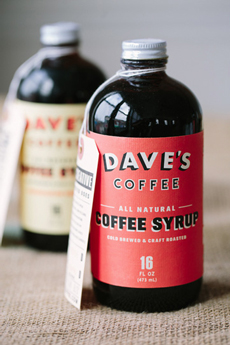
Coffee milk is a simple and delicious union of milk and coffee syrup. Photo courtesy Dave’s Coffee Store.
 

Coffee lovers, and especially iced coffee lovers: Have you had coffee milk, the official* state drink of Rhode Island?

Like chocolate milk, coffee milk is made by adding coffee syrup to cold milk. If you like iced coffee with sugar and a lot of milk, coffee milk is the easy way to make it at home. There’s no brewing, no need to keep a container of iced coffee in the fridge. Just pour a glass of milk, add coffee syrup and stir.

It also works for people who prefer alternatives to cow’s milk.

Top quality coffee syrup is a sweetened coffee concentrate made from fresh-roasted coffee beans. It is produced by straining water and sugar through ground coffee. (Supermarket brands tend to be artificially flavored.)

While the precise origin of coffee milk is unclear, several sources trace it back to the turn of the 20th century in Providence’s immigrant Italian population.

The first coffee syrup was introduced by the Silmo Packing Company of New Bedford, Massachusetts in 1932. In 1938, Eclipse Food Products of Warwick, Rhode Island began to promote a coffee syrup product; Autocrat Coffee of Lincoln, Rhode Island came to market in the 1940s.

 
In addition to the syrup form, coffee milk can be found ready-to-drink in store dairy cases, at diners and in university dining halls. [Source: Wikipedia]
USES FOR COFFEE SYRUP

In addition to coffee milk, you can use the syrup for:

  • Baking
  • Cocktails and mocktails
  • Dessert sauce
  • Glazes (check out this list of recipes for fish, meat, poultry and veggies)
  • Granita
  • Hot coffee drink
  • Shakes and smoothies
  • Pancake/waffle syrup
  •  
    *Rhode Island named coffee milk its official state beverage in 1993, after a competition with Del’s Lemonade, another Rhode Island specialty.


    DAVE’S COFFEE SYRUP

    Dave’s Coffee is a certified organic coffee roaster that operates an espresso bar and bakery in Charlestown, Rhode Island. The coffee syrup is an all natural artisan product made:

  • With real sugar—no HFCS or artificial sweeteners
  • With only its natural color from the beans—no added caramel color
  • In Original, Mocha and Vanilla flavors
  •  
    By contrast Coffee Time, the best-known supermarket brand, is made with high fructose corn syrup, corn syrup, coffee extract, caramel color and potassium sorbate.
    The syrup is made in small batches to ensure quality. Choice Brazilian coffee beans are roasted by hand in a small, gas fired roaster to bring out nutty, sweet, smooth, roasty and smokey flavors. The roasted beans rest for two days; they’re then ground and cold-brewed for 18 hours in a special stainless steel kettle.

    The brewed coffee is mixed with pure cane sugar, brought to a boil and simmered until the syrup reduces and the sugar begins to caramelize. It’s bottled in amber glass, which protects the syrup from light.

    Get yours at DavesCoffeeStore.com.

      bottles-duo-230
    Dave’s Coffee Syrup is available in three flavors. Photo courtesy Dave’s Coffee Store.
     

    It’s a great gift idea for coffee-loving moms and dads, and other deserving family and friends.

    If you need a kosher syrup, you can buy Autocrat on Amazon.


    Comments off

    TIP OF THE DAY: Cinnamon Coffee

    french-press-cinnamon-coffee-mccormick-230

    It’s easy to brew delicious cinnamon coffee
    with any coffee maker. Photo courtesy
    McCormick.


    If you enjoy cinnamon coffee, here’s a recipe from McCormick, that adds real cinnamon to your ground coffee for a far more exciting flavor. (Commercial cinnamon-flavored coffee uses an extract to flavor the beans.)

    The coffee is brewed with brown sugar, so no sugar bowl is needed. You can use any coffee maker.

    For dessert, you can top the coffee with whipped cream and a sprinkle of cinnamon. There are just 36 calories per cup, before the whipped cream.

    For a spiked version, add cinnamon liqueur, coffee liqueur or Irish cream liqueur. If you want to avoid the extra sugar, use whiskey (we like bourbon) or tequila.


    RECIPE: BREWED CINNAMON COFFEE

    Ingredients For 6 One-Cup Servings

  • 3/4 cup ground dark roast coffee, (regular or decaffeinated)
  • 1/4 cup firmly packed brown sugar
  • 2 tablespoons ground cinnamon
  • 1/2 teaspoon pure vanilla extract
  • 6 cups water
  • Optional garnish: whipped cream and sprinkled cinnamon
  • Optional: milk or cream
  • Optional liqueur: 1-2 tablespoons per cup
  •  

    Preparation

    1. PLACE coffee, sugar and cinnamon in a filter in brew basket of coffee maker (or directly into a French press).

    2. PLACE the vanilla in the empty carafe. Add water to coffee maker; brew coffee as usual.

    3. POUR into serving cups; add liqueur if desired. Top with whipped cream or serve with milk or cream. Garnish with an optional sprinkle of cinnamon.
     
    CINNAMON LIQUEUR

    There are more brands than there is shelf space to hold them all. And Bols makes both a cinnamon liqueur and a cinnamon schnapps (see the difference below). Some are more elegant, some are brash and sizzling.

    Cinnamon liqueur can be added to coffee and tea, sipped on the rocks, drunk as shooters and mixed into cocktails.

  • After Shock
  • Bols Hot Cinnamon Liqueur and Gold Strike Cinnamon Schnapps
  • De Kuyper “Hot Damn!”
  •   goldschager-bottle-230
    Dramatic and delicious: Goldschläger cinnamon schnaps with gold flakes. Photo courtesy Global Brands.
  • Fireball Cinnamon Whiskey Liqueur
  • Fire Water Hot Cinnamon Schnapps
  • Goldschläger, with flecks of edible gold, the most elegant of the cinnamon liqueurs
  • Leroux Cinnamon Schnapps
  • Kahlúa Cinnamon Spice
  • Tuaca Cinnaster Cinnamon and Vodka Liqueur
  •  
    CORDIAL, EAU DE VIE, LIQUEUR, SCHNAPPS: THE DIFFERENCE

    While many people use these terms interchangeably, and they are all flavored spirits, there are differences that are relevant to the consumer in terms of sweetness and color.

  • Liqueur (lih-KUR, not lih-CURE) is made by steeping fruits in alcohol after the fruit has been fermented; the result is then distilled. Liqueurs are typically sweeter and more syrupy than schnapps.
  • Schnapps (shnops) is made by fermenting the fruit, herb or spice along with a base spirit, usually brandy; the product is then distilled. This process creates a stronger, often clear, distilled spirit similar to a lightly flavored vodka. “Schnapps” is German for “snap,” and in this context denotes both a clear brandy distilled from fermented fruits, plus a shot of that spirit. Classic schnapps have no added sugar, and are thus less sweet than liqueur. But note that some manufacturers add sugar to please the palates of American customers.
  • Eau de vie (oh-duh-vee), French for “water of life,” this is unsweetened fruit brandy—i.e.,schnapps.
  • Cordial has a different meaning in the U.S. than in the U.K., where it is a non-alcoholic, sweet, syrupy drink. In the U.S, a cordial is a sweet, syrupy, alcoholic beverage: liqueur.
  •  
    In sum: If you want a less sweet, clear spirit, choose schnapps/eau de vie over liqueur. For something sweet and syrupy, go for liqueur/cordial.


    Comments off

    TIP OF THE DAY: Blue & Purple Potatoes


    The All Blue variety of blue potatoes.
    Potatoes can be blue or purple, depending on
    the soil in which they are grown. Photo
    courtesy Burpee.com.

      Naturally blue and purple foods are relatively rare.

    Blue Foods. In the blue group are blackberries, blueberries, blue cheese, blue corn, Concord grapes, pale blue oyster mushrooms and edible flowers like bachelor’s buttons. And there are exotica like decaisnea, an Asian plant known as dead man’s fingers, with a blue pod and edible blue pulp.

    Purple Foods. In the purple group: black currants; black rice; eggplant; elderberries; figs; red cabbage; purple artichokes, asparagus, bell peppers, carrots, cauliflower, grapes “green” beams, and kohlrabi; plums; prunes; raisins; and some microgreens.

    But our favorite in the blue and purple group are blue and purple potatoes and yams, which have both blue/purple flesh and skin. More flavorful than many starchy white potatoes, they tend to have a slight earthy and nutty flavor. Look for them in specialty produce markets or better supermarkets.

    The blue or purple color comes from anthocyanins, powerful antioxidants that create red, blue and purple colors, depending on the pH of the soil and other growing factors.

     
    There are numerous varieties with commercial names such as All Blue, Congo, Lion’s Paw, Purple Peruvian, Purple Viking, Purple Majesty and Vitilette. Specialty Produce magazine notes that there are 700 purple varieties in Peru, the birthplace of the potato.

    They are generally harvested young, which is why they tend to be smaller and rounder. Leave them in the ground and they’ll grow larger and oblong.

    According to Web MD, they’re a heart healthy vegetable, helping to lower blood pressure. What better reason to go out and buy some!


    A Versatile Potato

    Blue and purple potatoes have a medium-starchy texture. They keep their shape when baked but also mash and blend easily—for example, into potato soup, shown in the photo at right.

    The pop of color is a delight in potato salads and a surprise in dishes like blue/purple potato soup.

    Make fun dishes like purple potato chips or potato latkes. Mix purple potatoes with orange-fleshed squash. Try a purple potato pizza with smoked salmon and salmon roe, or with caramelized onions and rosemary.

    For Easter, how about this purple potato soup from Family Spice? Here’s the recipe.

    Purple mashed potatoes are also stunning on the table. If your tradition is roast lamb with rosemary potatoes, make those potatoes purple—or a mix of purple and white.

      purple-potato-soup-familyspice-230
    Purple potato soup: a treat for Easter dinner—or anytime. Photo © Family Spice.
     
    Think of how you’d use blue or purple potatoes and let us know.

    One suggestion you shouldn’t pass up: red, white and blue potato salad for Independence Day!


    Comments off

    TIP OF THE DAY: Nogent Knives

    nogent-serrated-w-bread-230sq
    If you use your serrated “bread knife” to slice
    much more than bread, check out the
    Nogent line of knives, where the other knife
    styles are microserrated. Photo courtesy
    Nogent.
      Some people use their serrated knives, often called “bread knives,” for slicing bread.

    Other people have discovered that, beyond bread, a serrated blade cuts tomatoes, meat and other foods better than the chef’s knife, utility knife or other choice from the cutlery set.

    We’re one of those “other people.” We used our bread knife for much more than bread.

    And then we discovered Nogent, a French cutlery manufacturer founded in 1923.

    The bread knife (photo at left) has a familiar serrated edge; but all of the other knives are micro-serrated.

    Almost invisible to the naked eye, these precision edges comprise 100 micro-serrations per inch and are terrific for anything—chopping, dicing, mincing and slicing. We can slice a tomato thinner with our Nogent chef’s knife than with any other knife we own.

     
    We only have one Nogent knife—a gift received at a trade show. But we use it almost exclusively, ignoring the fine cutlery we own for many times the price.

    The knives never have to be sharpened! We’ve been using our knife for three or more years, and it’s as sharp as ever.

    The blades are handcrafted of molybdenum, a compound that is used in high-strength carbide steel and carbon stainless steel.

    The handles are molded polymer of an design. The polymer feels good in the hand, as does the ergonomic grip.


    If there’s anything to mar perfection, it’s that the handles are plastic and “authentic hornbeam wood” that looks like plastic.

    Our chef’s knife is two-toned ecru and what looks like faux wood but is actually real (see photo above). To us it looks very dated, like those beige and faux wood station wagons from the Eisenhower era.

    But, Nogent has since moved to modern, if nondescript, black polypropylene handles, among other choices. They’re a much better look.


    knives-tomatoes-230
    You can still find some of wood handles, but the new handles are a preferable “basic black.” Photo courtesy Nogent.


    WHERE TO FIND NOGENT

    Nogent makes a complete range of cutlery, from peelers and paring knives to boning and carving knives. The challenge is to find them!

    We found the chef’s knife on Amazon.com for $58.99.

    The utility knife is $25.74.

    The paring knife is $15.20; we also spotted the boning knife, bread knife, carving knife, steak knife, peelers and other pieces of the line.

    The prices vary based on the line, which seems to be differentiated by handle material.

    Looking for a gift for someone who likes to cook—or is starting to learn? One or more Nogent knives will make cooking so much more pleasurable.

    Just as important, treat yourself to the chef’s knife. Then, book a vacation to France, and bring home knives instead of less useful souvenirs.


    Comments off

    FOOD FUN: Peeps Dunkin’ Donuts

    dunkin-Peeps-donut-horiz-230sq
    Peeps donuts, new this year. Photo courtesy
    Dunkin’ Donuts.
     

    Why did it take so long, we wondered, as we read the press release about Dunkin’ Donuts’ new Easter donut topped with a real Peeps marshmallow chick.

    The yeast donut, shaped like a flower, is available in two flavors: strawberry flavored icing with pastel green icing drizzle, or pastel green icing with strawberry flavored icing drizzle.

    The Peeps that top the donuts are slightly smaller than the normal Peeps chicks.

    Gather ye donuts while ye may: They’re available at participating Dunkin’ Donuts locations nationwide for a limited time only.

    Worldwide, Dunkin’ Donuts sells 2.5 billion donuts and annually. In the U.S., Dunkin’ Donuts offers more than 70 varieties of donuts. Favorite flavors include Boston Kreme, Glazed and Chocolate Frosted.


    Find the store nearest to you at DunkinDonuts.com.


    Comments off

    The Nibble Webzine Of Food Adventures
    RSS
    Follow by Email


    © Copyright 2005-2026 Lifestyle Direct, Inc. All rights reserved. All images are copyrighted to their respective owners.