|
January 10, 2017 was the first-ever Oysters Rockefeller Day.
It was celebrated big-time in New Orleans, where the dish was first created at Antoine’s Restaurant.
> The recipe is below.
> Check out our Oyster Glossary for the different types of oysters.
> The history of oysters.
> The year’s 58 fish and seafood holidays (National Oyster Day is August 5th).
OYSTERS ROCKEFELLER HISTORY
Oysters Rockefeller was invented in 1899 by Jules Antoine Alciatore at the end of Gilded Age.
Jules was the son of restaurant founder Antoine Alciatore, who passed in 1874 and was succeeded by his wife, then his son.
The restaurant is still going strong in the hands of the fifth generation and is America’s oldest family-run restaurant.
Served as an appetizer or first course, the dish was named after John D. Rockefeller Sr. (1839 – 1937), who is considered to be the wealthiest American of all time and—by a majority of sources—the richest person in modern history.
As necessity is the mother of invention, the dish was created because of a shortage of imported French escargots needed for his father’s signature recipe, Escargots Bourguignon.
That classic French dish features snails in a butter sauce of garlic, parsley, and shallots. Antoine peré had substituted brandy or anise liqueur for the traditional white wine.
With the shortage of snails and the waning interest in escargots, Jules Antoine devised a replacement with local oysters, always available.
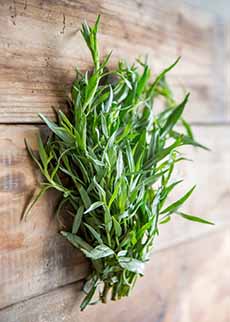
The original topping for the grilled oysters is a secret, but is a purée of several green vegetables: flat-leaf parsley, celery leaves, tarragon leaves, chervil and green onions, seasoned with salt, a dash of hot sauce, and anise liqueur.
There was no spinach, the green most often used in copycat versions.
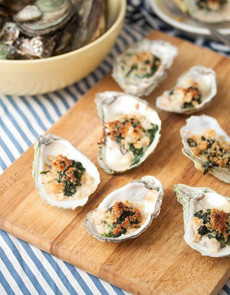
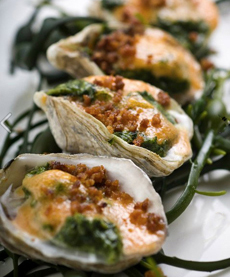
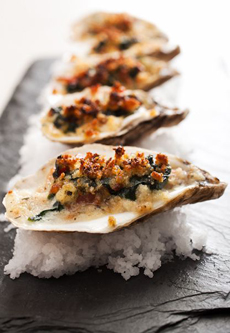
Oysters on the half-shell are topped with the sauce and bread crumbs, and then baked (now often broiled).
They are served as an appetizer, first course, or starter—different terms for the first dish of a multi-course sit-down meal.
Why Oysters “Rockefeller?”
The dish was named for the intense richness of its flavored roux (a paste, not a cream sauce, deemed “rich enough for Rockefeller”—John D. Rockefeller Sr., the richest man in history).
The greens contributed to the color of money. As with the escargots, there was anise liqueur.
From what can be deduced, in Antoine’s original Oysters Rockefeller recipe, oysters on the half shell are topped with herbed bread crumbs, butter and cream, then baked.
The herbs and proportions are secret, but sleuths have determined that they include flat-leaf Italian parsley, celery leaves, tarragon leaves, chervil and green onions. Seasonings included salt, pepper, and hot sauce.
This became a “wow” dish in New Orleans, where oysters were popularly served on the half shell, but not incorporated into complex recipes.
There is no record that Rockefeller (who died of arteriosclerosis) ever ate the dish.
Chefs Make Oysters Rockefeller Variations
A later variation of the recipe substituted spinach for most of the herbs, which is mainstream today.
Some leave off the bread crumbs and purée the green herbs/vegetables, creating a smooth green cloak over the entire oyster.
Some mince the greens and mix them into the bread crumbs.
Over the years, other chefs garnished the recipe with shredded Gruyère or Parmesan, some with a thick layer of melted cheese covering both the oysters and the sauce.
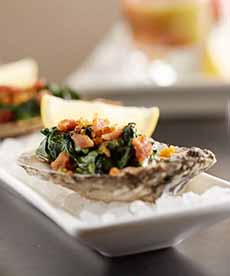
Bacon inevitably worked its way in.
You can make your own signature recipe (more about that below), working off of this template—which of course isn’t the secret recipe, but a re-imagining of Antoine’s recipe by Saveur magazine.
|