THE NIBBLE BLOG: Products, Recipes & Trends In Specialty Foods


Also visit our main website, TheNibble.com.

ELVIS RECIPE: Graceland Cupcakes & More Elvis Recipes

Elvis would be 82 today; “The King” was born January 8, 1935.

While Elvis Presley is not exactly known for being a foodie, we, along with millions of fans worldwide, like to celebrate his birthday with a few hours of Elvis tunes and his favorite snack food: a fried sandwich filled with peanut butter, sliced banana and bacon (photo #1: here’s the recipe).

This recipe was developed in honor of Elvis, whose favorite sandwich was PB, bacon and banana.

Past celebrations at THE NIBBLE have included an:

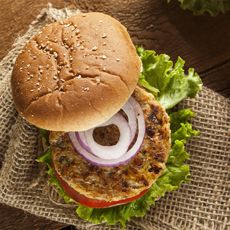
  • Elvis Burger
  • Elvis Sandwich
  • Elvis Sundae
  •  
    Inspired by the king of rock and roll, these cupcakes are packed to the core with peanut butter. Top them off with candied bacon for a royally delectable dessert.
     
     
    RECIPE: GRACELAND MINI CUPCAKES
    (BANANA CUPCAKES WITH PEANUT BUTTER & BACON)

    You can use lowfat versions of the sour cream and cream cheese; but why bother? These are mini cupcakes, after all (photo #3).

    Instead, have one with the diet version of one of his favorite soft drinks: Pepsi Cola, Nesbitt’s Orange and Shasta Black Cherry.

    For The Cupcakes

  • 2 cups all-purpose flour
  • 2 teaspoons baking powder
  • 1/2 teaspoon salt
  • 4 ripe bananas, the browner the better
  • 1/2 cup lite sour cream
  • 4 tablespoons unsalted butter at room temperature
  • 2 tablespoons canola oil
  • 3/4 cups sugar
  • 2 large eggs at room temperature
  • 1 large egg white at room temperature
  • 1 teaspoon vanilla extract
  •  
    Peanut Butter Filling

  • Approximately 1/4 cup creamy peanut butter
  •  
    Bacon Topping

  • 4 slices bacon
  • 1/2 cup brown sugar
  •  
    Frosting

  • 8 ounces low fat cream cheese
  • 1/2 cup butter
  • 1/2 cup creamy peanut butter
  • 2 teaspoon vanilla extract
  • 3/4 cups confectioners’ sugar
  •  

    Elvis Cupcakes

    [1] Graceland Cupcakes (photo and recipe © Peanut Butter Lovers).

    PB Banana Sandwich
    [2] The Elvis Sandwich. Here’s the recipe (photo © Hipsubwg | Blogspot)).

    Elvis Burger
    [3] If Elvis had only thought of it, he’d have liked this Elvis Burger, with bacon and peanut butter sauce (photo © Helen Graves | Food Stories.

     
    Preparation

    1. HEAT the oven to 350°F. Line cupcake tins with paper liners and lightly spray with cooking spray. Line a baking sheet with foil.

    2. MAKE the batter. In a medium size bowl combine the flour, baking powder and salt. Stir until blended.

    3. MASH the bananas and add sour cream in small bowl. Mix well and set aside.

    4. BEAT until incorporated, with an electric hand mixer, the butter, oil and sugar (3-5 minutes). Add the eggs, egg white and vanilla. Mix until combined. Slowly add half of the dry ingredients and mix until almost incorporated. Add the sour cream and banana mixture and gently fold into the batter. Add the rest of the dry ingredients until combined. Spoon the batter into lined cupcake pans.

    5. BAKE for 18 to 20 minutes and let cool (do not turn off the oven). Once cool (about 30-45 minutes), use a paring knife to cut a small circle in the middle of the top of the cupcakes and remove the plug, creating a well about halfway down the cupcake. Using a piping bag, pipe the peanut butter to fill each hole. Set aside.

    6. PLACE brown sugar in medium size bowl and dredge the bacon slices on both sides. Place them on the baking sheet and bake for 10 minutes. Flip bacon and bake for another 6-8 minutes. Remove bacon from oven and place on plate to cool. Do not put bacon on paper towels: It will stick. Once cool, chop the bacon and set aside.

    7. MAKE the frosting. In a large bowl combine the cream cheese, butter, peanut butter and vanilla extract. Mix until combined. Add the confectioners’ sugar and mix until well combined. Add to a piping bag. Pipe a dollop of frosting onto each cupcake and sprinkle with the candied bacon pieces.


    CHECK OUT WHAT’S HAPPENING ON OUR HOME PAGE, THENIBBLE.COM.


    Comments off

    Winter Panzanella (Bread Salad) & More Panzanella Recipes

    Winter Panzanella Salad With Squash
    [1] Panzanella with the wintery flavors of delicata squash and sage (photo © Good Eggs).

    Bread Salad Recipe
    [2] The bright colors in this winter panzanella are cubed beets and pomegranate arils. Here’s the recipe (photo © Food 52).

    Ham & Rye Panzanella Salad
    [3] “Ham on rye” bread salad with rye croutons and cubed ham. Enhance the effect by adding some Dijon mustard to the vinaigrette (photo: The Nibble).

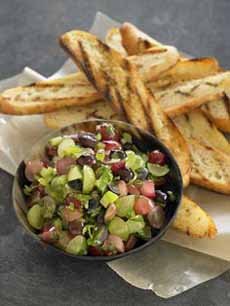
    Panzanella Crostini
    [4] Panzanella with a twist: Instead of bread in the salad, the salad is on top of crostini. At The Tuck Room | NYC.

    White Bean & Fried Egg Panzanella
    [5] This panzanella adds white beans and a fried egg, although you can certainly switch the protein (photo © Sunbasket).


    Bread salad, like French toast and croutons, is one of those delicious foods invented by necessity: Poor people needed to get another meal from bread that had gone stale.

    These days, people of means enjoy the salad at smart Italian cafes and at home. Below are some easy recipes.

    Below:

    > The history of panzanella salad.

    > Mix-and-match winter panzanella recipe.

    > More panzanella recipes.

    Elsewhere on The Nibble:

    > The history of panzanella.

    > The history of bread.

    > The different types of bread: a photo glossary.
     
    > The year’s 20+ bread holidays.

    > The difference between prosciutto and serrano ham.

    > The different types of ham: a photo glossary.
     
     
    THE HISTORY OF PANZANELLA SALAD

    While some type of bread salad likely cropped up wherever people ate bread, panzanella is a Tuscan-style bread salad made with a loaf of day-old (or older) Italian bread, cubed into large croutons and soaked in vinaigrette to soften it. Chopped salad vegetables are added.

    The translation we have found for “panzanella” is “bread in a swamp,” the swamp being the vinaigrette in which it the bread was soaked. When there wasn’t enough oil to spare, the bread was moistened in water.

    While today’s recipes are rich in ingredients, the original preparers foraged to pull together vegetables from the garden: cucumber, onion, tomato—and possibly purslane, a salad green that grows wild. Early recipes were heavy on the onions, the cheapest ingredient to pair with the bread.

    This peasant dish has become a popular first course in Italy. It doesn’t appear often on menus of U.S.-based Italian restaurants. That’s too bad, because it’s a dish worth knowing; but it’s also a salad that’s easy to make…

    Especially when you have a leftover baguette or other loaf, as we often do. (If you stick the leftovers in the freezer for some TBD use, put it to use!)

    While crusty Italian loaves were used in the original, you can use any bread from challah to semolina raisin to sourdough.

    Bread salad is not a lettuce salad. You should toss in some small greens with a bite—arugula, mustard greens and watercress, along with radishes and red onions. But keep the mesclun mix and romaine for lettuce salads.
     
     
    RECIPE: MIX-AND-MATCH WINTER PANZANELLA SALAD

    Winter is no time to repurpose summer vegetables like tomatoes, yellow squash and zucchini. Instead, look for year-round options and root vegetables. (Here’s a list of winter fruits and vegetables.)

    You can add the root vegetables raw or roasted. Carrots are a dual-usage veg, as are beets, celery roots and turnips—the latter ideally halved or cut into very thin slices.

    Pick Your Ingredients

  • Bell peppers
  • Capers
  • Celery
  • Cheese: cubed, shredded
  • Cherry or grape tomatoes
  • Citrus: orange or red grapefruit segments
  • Cucumbers
  • Crucifers: arugula, bok choy, broccoli, brussels sprouts, cabbage, cauliflower, collard greens, kale, kohlrabi, mizuna, mustard greens, radish, rapeseed/canola, rapini (broccoli rabe), rutabaga, tatsoi, turnips, watercress*
  • Herbs: basil, cilantro, dill, parsley, sage
  • Mushrooms
  • Onions
  • Protein: anchovies, chicken/turkey, ham, hard-boiled eggs, prosciutto, sardines, tuna
  • Non-crucifer root vegetables, raw or roasted: beets, carrots, Jerusalem artichokes, jicama, parsnips, radishes turnips
  • Spices: crushed coriander seeds, fennel seeds, red flakes
  • Winter greens: chard, collards, kale, rapini
  • Winter squash, roasted (acorn, butternut, etc.)
  •  
    Garnishes

  • Cheese: crumbled
  • Nuts and seeds, including pomegranate arils
  • Roasted garlic cloves
  • Herbs
  •  
    Plan a variety of colors; not just green but red (e.g. beets, bell pepper, grapefruit), orange (e.g. mandarins, oranges, winter squash) and yellow (beets, bell peppers, cherry/grape tomatoes).

    Don’t forget to season with salt and freshly-ground pepper.

    Vinaigrette

    Lastly, you need a good vinaigrette. Pick your favorite or use a the conventional red wine vinegar and EVOO, with or without an added half teaspoon of mushrooms.

     
    The emphasis is on “good”: Red wine vinegar can be stringent. Seek out the good stuff. Good doesn’t mean expensive:

  • Pompeian, about $2.60 for 16 ounces.
  • Holland House Red Wine Vinegar, about $3.29 for 12 ounces
  • Laurent du Clos, $5.49 for 16.9 ounces (worth it!)
  •  
    The traditional vinaigrette ratio is 3 parts oil to 1 part vinegar; the recipes above are written as such. But the important thing to keep in mind is that you are the only one who knows exactly how acidic and how viscous you want your dressing to be.

  • More oil will mute flavors but add body and mouthfeel.
  • More acidity can be helpful if the salad ingredients have stronger flavor (think heartier greens).
  • To add pungency (e.g., with mustard) or sweetness (e.g., with honey), start with a half teaspoon per half cup of vinaigrette. Taste and adjust to your preference.
  •   
     
    Panzanella With Burrata & Delicata Squash
    [6] Panzanella with burrata and roasted delicata squash (photo © Good Eggs).
     
    MORE PANZANELLA RECIPES

    Keep these on tap for warmer weather:

  • Summer Panzanella Salad
  • Basic Panzanella Salad (basil, cucumbers, onions, tomatoes)
  • Chicken Panzanella Salad
  • Panzanella & Fruit Salad
  • Peach Panzanella With Prosciutto & Mozzarella
  • Zucchini & Bell Pepper Panzanella
  •  
    ________________

    *Horseradish and wasabi are also cruciferous.
     

    CHECK OUT WHAT’S HAPPENING ON OUR HOME PAGE, THENIBBLE.COM.


    Comments off

    TIP OF THE DAY: Eat More Fish With Sashimi Salad

    If you want to eat more fish but don’t like cooking it, here’s an easy idea: sashimi salad.

    Just toss sliced fish over greens.

    Instead of opening a can or searing the fish tataki-style (briefly seared), sashimi salad is an easy alternative.

    A decade ago one of our favorite neighborhood sushi bars closed, taking with it one of our favorite foods, “marinated salmon”—was a mesclun salad with onions dressed in vinaigrette and topped with slices of salmon sashimi.

    It was deliciousness, low in calories, and had eye appeal: a culinary home run. We had it several times a week.

    When the restaurant was replaced by a cupcake parlor, we had to make it at home. Aside from fetching fresh salmon, it couldn’t have been easier.
     
     
    1. SELECT YOUR FISH.

    Ask for recommendations at the fish counter. The staff can also slice the salmon or tuna loins into sashimi-thickness slices.

    The typical sashimi slice is 2 inches by 1/16 inch, but you can have them sliced longer and thicker as you prefer (longer is also better to drape over a mound of salad, as in photo # 2).

    You can also consider the kaku-zukuri cut (“square slice”, photo #5) of 3/4-inch cubes (photos #1, #3 and #4).

    The sashimi sold in sushi restaurants in North America is flash-frozen, whether it is local or flown in from elsewhere. It is thawed before preparation. You can purchase flash-frozen fish in your supermarket, slowly thaw it overnight in the fridge and eat it the next day.

    You may also find live salmon and other varieties at Asian fish markets, where they can filet them for you.

     
    2. PICK YOUR GREENS.

    Are you in the mood for something more mild, like a mesclun mix; or a peppery arugula and watercress? A mixture is always a good idea.

    If you like crunch, consider shredded cabbage (cole slaw mix).

    We like onion in our salad. Japanese recipes use green onions (scallions); but you can add your allium of preference (the different types of onions).
     
     
    3. ADD OTHER VEGETABLES & FRUITS.

    Use whatever you have, or add whatever you like. We personally like:

  • Avocado
  • Baby beets
  • Blueberries and/or blackberries
  • Carrot curls
  • Cherry/grape tomatoes
  • Chinese vegetables: bamboo shoots, bok choy, napa cabbage, etc.
  • Diced honeydew
  • Edamame
  • Japanese pickles (oshinko and tsukemono, available online or at Asian food stores)
  • Lychees or rambutans
  • Mango or papaya
  • Orange or mandarin segments (particularly blood orange)
  • Radish slices, or shredded daikon (Japanese radish)
  • Seaweed salad or kimchi
  • Snow peas or sugar snap peas
  •    
    Sashimi Salad

    Sashimi Salad

    Sashimi Salad With Quinoa

    Sashimi Salad

    Square Cut Toro Sashimi
    [1] Mesclun with tuna cubes, at Kabuki Restaurants. [2] Conventional sashimi strips over a mounded salad, garnished with cherry tomatoes and tobacco, at Natsumi | NYC. [3] Double the nutrition: Sashimi salad over quinoa (or your whole grain of choice), at Sushi Samba. [4] Sashimi salad with wasabi & passionfruit dressing. Here’s the recipe from from Delicious | Australia. [5] kaku-zukuri, square-cut sushi; here, toro from Fish For Sushi.


    Shichimi Togarashi

    Nori Strips
    [6] Shichimi Togarashi, a blend of seven Japanese spices (photo courtesy Yahoo). [7] Nori strips, scissor-cut from nori sheets (photo courtesy Food Sharing With Little One).

      4. PICK YOUR DRESSING.

    Rice vinegar and/or lime juice with olive oil (and a splash of sesame oil if you have it) make an excellent basic vinaigrette for sashimi salad.

    You can also add salad oil to ponzu sauce.

    Here are some more-elaborate favorites:

  • Wasabi-passionfruit dressing.
  • Yuzu dressing.
  • Nobu’s sashimi salad dressing is simple: onion, rice vinegar, water, mustard and pinches of granulated sugar, sea salt and black pepper.
  • For something more lively, take a look at this mint cilantro vinaigrette.
  • This gluten-free ginger dressing uses tamari instead of soy sauce, plus green onions and a splash of sake.
  • If you like things spicy, check out spicy Korean sashimi salad, hwe dap bap, which uses gochujang, spicy red pepper paste.
  • Or, simply splash some sriracha into the vinaigrette. This fusion recipe combines soy sauce, olive oil, sesame oil, lime juice and sriracha.
  •  
     
    5. PICK YOUR GARNISH.

  • Citrus zest or julienned strips
  • Crispy Chinese noodle or wonton strips
  • Nori strips (photo #7)
  • Scallions, finely-sliced
  • Sesame seeds—black, white, regular or toasted
  • Shichimi togarishi, Japanese spice blend (red chili pepper, orange peel, sesame seeds, Japanese pepper, ginger and seaweed)
  • Tobiko (flying fish roe), available in different colors (green, orange, red, yellow) and flavors, like wasabi tobiko
  •  
     
    6. BEVERAGE PAIRINGS

  • Green tea or black tea, hot or iced (but no milk and sugar in the black tea). We especially like Genmaicha, green tea with toasted rice that gives it a lovely, nutty; flavor.
  • Mineral water, especially sparkling with a high level of minerals.
  • Rosé, sparkling wine or white wine.
  • Sparkling water/club soda, plain or citrus-flavored.
  •  


    Comments off

    The Nibble Webzine Of Food Adventures


    © Copyright 2005-2026 Lifestyle Direct, Inc. All rights reserved. All images are copyrighted to their respective owners.